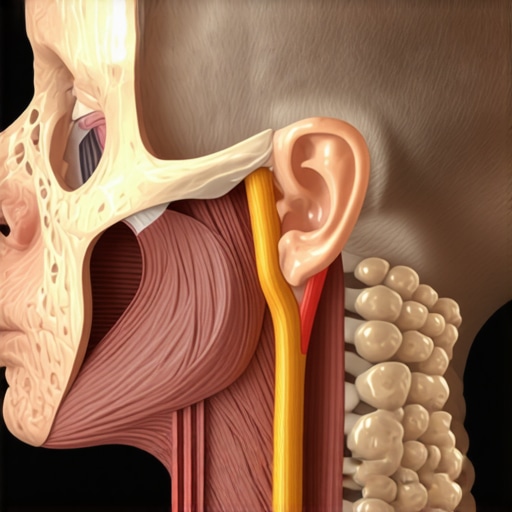
The 30-second move to stop a tension headache in its tracks
I remember one Tuesday afternoon vividly. I was three hours into a deep-work session, hunched over a spreadsheet, my shoulders up by my ears, and my jaw clenched tight. Suddenly, it felt like someone had driven a cold spike into the base of my skull. You know the feeling—that tightening band that wraps around your forehead like a headband that is three sizes too small. I used to think this was just the price of being a productive adult. I would pop a couple of ibuprofen, wash them down with lukewarm coffee, and pray for the best. That was my biggest mistake—treating the symptom while my neck was screaming for a real structural reset. Today, I am going to share the exact move that takes less than half a minute to reset your system and kill that tension before it turns into a day-ruiner. In this post, we are going to dive into the one move that can actually break that pain cycle. It is not a miracle cure, but it is the closest thing I have found to one.
Stop fighting your neck and start listening to it
Most of us are taught to treat pain as something to be silenced. We take a pill and keep working. I did that for a decade. What I did not know then was that my laptop height was ruining my middle back mobility and putting an impossible load on my upper neck. I was essentially asking my smallest muscles to do the job of my biggest ones. If you have ever felt that burning sensation between your shoulder blades, you know exactly what I am talking about. Why your shoulders hunch when you are stressed is not just about your boss—it is about a physical reflex that we can learn to override. My own journey of overcoming chronic neck discomfort taught me that the solution is rarely found in a bottle. I used to be terrible about my posture while washing dishes and basically every other daily task. Have you ever felt like no matter how much you rub your temples, the pain just will not budge?
Is this just another viral stretch that will not work?
Skepticism is healthy, especially when your head is throbbing. I used to roll my eyes at ‘quick fixes’ until I understood the basic anatomy of my spine. The Mayo Clinic notes that muscle tension in the neck and scalp is a primary driver for these tension-type episodes. By performing a specific, controlled release, we are not just stretching; we are performing a neurological reset. I used to make the mistake of stretching my neck too aggressively, which actually triggered a protective spasm. Have you ever tried to stretch out a ‘kink’ only to have it feel tighter ten minutes later? That is because you were likely attacking the wrong area. We need to be smarter about our neck pain relief. I finally had a lightbulb moment when I realized that the hidden link between neck pain and spinal health was the real key. I even spent years cracking my own neck every hour, thinking I was helping, but I was just destabilizing my joints. Once you learn how to tell if your headache is actually coming from your neck, you can stop guessing and start healing. Let us get into the specifics of this 30-second game changer.
Mastering the move that resets your nervous system
Think of your neck like a high-tension power line. When you hunch over a screen, that line is stretched to its breaking point. To fix it, we are not going to pull harder; we are going to create slack. The secret is not just moving your head, but stabilizing the platform it sits on. I once tried doing a version of this while slumped in a low beanbag chair at a friend’s house, and it was a total disaster—I ended up with a muscle cramp that felt like a lightning bolt because my base was unsupported. You need a stable seat or to stand tall. This move is a variation of the Brueggers relief move to reverse hours of hunched sitting, and it works by signaling your brain that the ‘threat’ of the forward-leaning posture is over.
Set your foundation by pinning your shoulder blades
Before you even touch your neck, you have to address the scapula. Imagine your shoulder blades are heavy weights that you want to slide into your back pockets. This is not a massive, aggressive squeeze that makes your chest pop out; it is a subtle downward glide. If you overdo it, you’ll just create new tension in your mid-back. Using the simple shoulder blade squeeze for instant neck relief as a starting point, you create a solid anchor. I remember being in a high-stakes meeting last year, feeling that familiar throb starting behind my left eye. I didn’t want to look like I was exercising, so I just quietly ‘dropped’ my shoulders into place. That alone stopped the tension from migrating up to my jaw. When you boost your back health with simple yet effective chiropractic hacks like this, you realize that the neck is often just the victim of what the shoulders are doing.
Execute the tuck without straining your throat
Now comes the ‘meat’ of the reset. Imagine your head is on a horizontal sliding track, like a drawer in a cabinet. Without tilting your chin up or down, slide your entire head straight back. You will probably create a very unattractive double chin—this is exactly what you want. It might feel weird, but this action stretches the tiny, overworked muscles at the very top of your spine while strengthening the deep flexors in the front of your neck. You should feel a gentle lengthening at the base of your skull. This is the core of the chin tuck drill to combat tech neck instantly. However, be careful not to jam your chin into your throat. I used to make the chin tuck mistake that is making your neck pain worse by using too much force, which actually caused my front neck muscles to spasm. Gentleness is your best friend here.

Why your breath is the secret trigger for relaxation
If you hold your breath while doing this, your nervous system stays in ‘fight or flight’ mode. To truly kill the tension, you have to layer in a specific breathing pattern. As you hold that tucked position for five seconds, take a deep breath into your lower ribs, not your upper chest. If your collarbones move up when you breathe, you are doing it wrong and actually tightening your neck further. Learning how to breathe properly to reduce tension in your shoulders is the final piece of the puzzle. I once spent an entire week wondering why my neck wouldn’t relax, only to realize I was shallow-breathing through my mouth like a goldfish every time I got stressed at work. Once I synced the tuck with a deep, diaphragmatic exhale, the relief was almost instantaneous. You are basically telling your brain, ‘We are safe, we are aligned, and you can let go now.’
Why stretching your tight muscles might be a massive mistake
Here is the hard truth that most ‘wellness influencers’ won’t tell you: if a muscle feels tight, stretching it is often the worst thing you can do. We are conditioned to think that tightness equals a short muscle that needs pulling, but frequently, that tension is actually a protective ‘brake’ applied by your nervous system. When you have poor stability in your core or mid-back, your brain locks down the neck muscles to prevent what it perceives as a potential injury. I see people make the chin tuck mistake that is making your neck pain worse by forcing a range of motion their body isn’t ready for. If you keep stretching a muscle that is trying to protect you, the brain just pulls the ‘brake’ even harder. This is why why your neck muscles tighten during stress; it is a defensive posture, not just a physical quirk.
The trap of chasing the pain instead of the source
The biggest ‘oops’ I see in clinical practice is ‘chasing the pain.’ If your neck hurts, you look at the neck. But the spine is a closed system. I once worked with a patient who had chronic migraines for three years. We eventually found that the hidden connection between your feet and mid-back pain was the real culprit. Her flat arches were causing a chain reaction that ended with her neck muscles working overtime just to keep her eyes level with the horizon. When we only treat the symptom, we are just rearranging deck chairs on the Titanic. You have to unlock neck pain relief by looking at the foundation. This nuance is why the hidden link between neck pain and spinal health is so critical—everything is connected.

Why do some ‘perfect’ adjustments seem to wear off so fast?
This is the question that separates the beginners from the experts. You get adjusted, you feel like a new person for two days, and then the ‘band’ starts tightening again. This happens because of proprioception—your brain’s internal map of where your body is in space. If you have spent ten years hunched over a laptop, your brain thinks ‘slumped’ is ‘normal.’ Research published in the Journal of Orthopaedic & Sports Physical Therapy suggests that thoracic spine manipulation can significantly improve cervical range of motion and decrease pain, but without retraining the motor patterns, the body reverts to its old ‘factory settings.’ This is why we focus on how chiropractic care enhances movement rather than just ‘popping’ joints. We have to teach the brain that this new, aligned position is safe. Once you learn how to tell if your headache is actually coming from your neck, you can start applying the right stabilizers instead of just guessing. Have you ever fallen into this trap? Let me know in the comments.
Once you have identified the source of your discomfort, the next battle is consistency. I used to be great at doing my exercises for three days and then forgetting as soon as the acute pain dulled. To stay ahead of it, I have had to build a personal arsenal of tools that do not just feel good—they actually reinforce the work my chiropractor does.
My must-have tools for a pain-free workstation
I realized early on that my environment was working against my recovery. I stopped trying to ‘will’ myself into better posture and started using a Roost laptop stand. This specific piece of kit is non-negotiable for me because it brings the screen to eye level without the bulk of a permanent monitor. When you learn how to set up your laptop at a coffee shop pain-free, you stop the cycle of forward head posture before it even begins. I also carry a small, high-density massage ball. I prefer the 5-inch version over a standard tennis ball because it does not compress under my weight. This tool is my secret weapon for revitalize your mobility proven strategies for back pain relief by hitting those trigger points in the rhomboids that a foam roller just cannot reach.

How do I maintain these results over the long haul?
Maintenance is where most people fail because it feels like a chore. I transformed my outlook by viewing it as ‘spinal hygiene.’ Just as you brush your teeth to prevent cavities, you must move your joints to prevent stiffness. I swear by the morning spinal hygiene routine every desk worker needs to lubricate the facet joints before the day starts. Dr. Stuart McGill, a world-renowned expert in spine mechanics and author of Back Mechanic, often points out that ‘proximal stiffness leads to distal mobility.’ This means your core needs to be a solid anchor for your neck and limbs to move freely. I have integrated his ‘Big Three’ exercises into my life, and the difference in my mobility mastery expert tips for back pain prevention and recovery has been night and day. You are essentially building a natural back brace made of muscle.
Biofeedback is the next frontier for your back
I predict that in the next five years, we will see a massive shift toward wearable biofeedback. We already have watches that track our steps, but soon, integrated sensors in our clothing will provide real-time haptic alerts when our shoulders start to round. This will bridge the gap between knowing you have bad posture and actually changing it. Until then, you have to be your own sensor. If you are struggling with recurring issues, I highly recommend checking out unlocking neck pain relief expert tips for lasting comfort to see how these habits stack up over time. If you want to take things to the next level, try this: set a timer on your phone for every 30 minutes. Every time it goes off, do one ‘cat-cow’ variation from your chair. It sounds small, but it prevents the soft tissues of your spine from ‘creeping’ into a permanent slumped shape. Using boost mobility ease pain chiropractic techniques unveiled in these micro-doses is far more effective than an hour of stretching once a week.
The hard truths I learned while chasing lasting relief
After years of trial and error, I realized that my neck was rarely the source of the problem—it was just the loudest symptom. One major ‘aha’ moment was discovering that my body was a single, interconnected chain. I also learned that forcing a stretch often backfires; your brain needs to feel safe before it will let go of a protective spasm. Another breakthrough came when I addressed my jaw; using the 10-second fix for jaw tension related to neck pain helped me realize how much stress I was holding in my face that translated directly to my cervical spine. Finally, I learned that pain is a conversation, not an attack. When you stop trying to silence the pain and start asking what your body needs, the healing actually begins.
The small toolkit that changed my daily life
I don’t believe in cluttering your home with every wellness gadget on the market, but three things made a massive difference for me. First, Dr. Stuart McGill’s book, Back Mechanic, which acts as the owner’s manual for the human spine. Second, a dedicated laptop stand is mandatory for anyone working remotely. Finally, I stopped ignoring my foundation. Checking how to tell if your sneakers are ruining your spinal alignment was a game-changer for my overall comfort. These aren’t just ‘products’; they are investments in a future where you aren’t constantly managing a headache or back ache.
#IMAGE_PLACE_HOLDER_E#
Your path to a lighter and more mobile future
You do not have to live in a state of constant ‘clench’. The journey to neck pain no more isn’t about one giant fix, but a series of small, intentional choices you make every single hour. By integrating these resets and truly understanding back pain and mobility, you are reclaiming your focus and your energy. Your spine is incredibly resilient—it just needs the right environment to thrive. Start today, stay consistent, and listen to the subtle cues your body gives you. Have you ever noticed that your neck pain gets worse after wearing a specific pair of shoes or during a certain task at work? Let me know in the comments below!