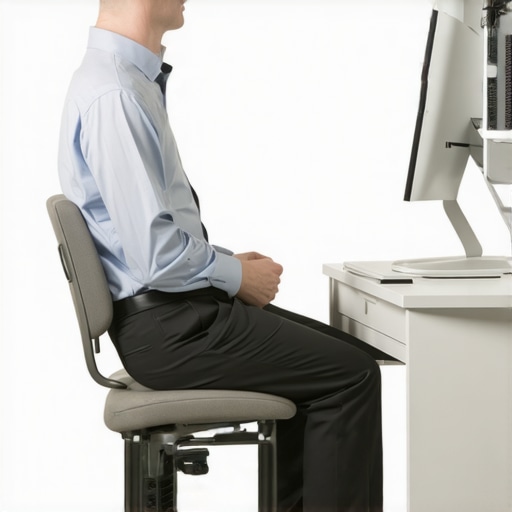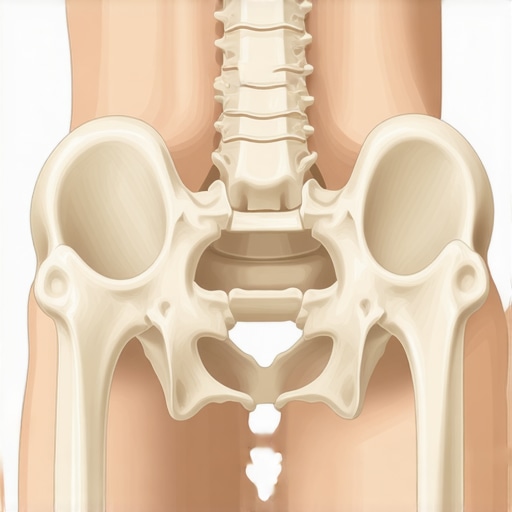
Why Your Shoulders Hunch When You Are Stressed
I remember sitting at my desk three years ago, staring at a stack of bills and a laptop screen that seemed to be mocking me. My neck felt like it was made of dry wood, and my shoulders were hiked up so high I could’ve whispered secrets into my own earlobes. I used to think this was just part of the job, but it wasn’t until I started dropping things because my hands were numb that I realized how much damage I was doing. If you’ve ever felt that burning sensation between your shoulder blades after a long day of meetings, you’re not alone, and you’re not broken. We’re going to fix this together. I spent years ignoring the signals my body was screaming at me, but once I figured out the why behind the hunch, everything changed. [IMAGE_PLACEHOLDER]
Stress Isn’t Just a Feeling—It’s a Physical Weight
When we get stressed, our bodies revert to a primal survival mechanism. We subconsciously protect our most vulnerable part: the neck. This startle response pulls the shoulders up and the head forward in a protective crouch. Early in my journey, I made the classic mistake of buying every posture corrector and back brace advertised on social media, thinking a few elastic straps would solve my problems. Spoiler alert: they didn’t. In fact, relying on those gadgets actually made my core muscles lazier because they stopped doing their job. It wasn’t until I understood why your neck muscles tighten during stress that I finally found relief. I had to learn to address the root cause—the nervous system—not just the symptom of a slumped back. Have you found yourself constantly rubbing your neck while checking emails?
Is it actually possible to relax when life is chaotic?
You might be thinking, that’s great, but my boss is still a nightmare and my kids are still loud. How am I supposed to relax? It’s a fair point. We can’t always change our environment, but we can change how our nervous system reacts to it. According to research published by Harvard Health, the fight-or-flight response triggers a cascade of hormones that physically tighten the upper trapezius and levator scapulae muscles. It’s an automatic reflex. My goal today is to give you the tools to interrupt that reflex. Have you ever noticed that your shoulder blades feel like they’re burning after typing for just twenty minutes? That’s your body sending a flare. The secret isn’t just standing up straight. It’s about retraining your brain to realize it’s not under attack. I spent years thinking taking ibuprofen for every back ache was the only way to get through the day. I was wrong. By implementing simple changes, like learning how to breathe properly to reduce tension in your shoulders and practicing the Brueggers relief move, I started seeing results in days, not months. We’re going to dive into the specific movements that actually work, starting with how you handle those tiny moments of tension before they snowball into full-blown chronic pain.
We need to shift from passive bracing to active release. Think of your muscles like a rubber band that’s been stretched to its limit for eight hours; you can’t just snap it back. You have to guide it. Most of us treat our desks like a battleground. We lean in, squint, and hold our breath. This creates a state of perpetual bracing where your core and neck are constantly ‘on’ and never get a chance to recover. To break this cycle, you need to implement a neurological reset. I used to think I needed a fancy ergonomic chair or a standing desk to survive my work week, but I eventually realized that even the best furniture won’t help if you’re not relieving neck and back discomfort through consistent movement instead of just sitting still.
Stop Bracing for Impact Every Time You Sit Down
When you’re in that hunched posture, your body is literally armored for a fight. To drop that armor, you have to consciously drop your ribs. When your ribs are flared and your chest is high, your lower back takes the hit. Practice knitting your ribs together. This simple shift engages your core naturally without you having to squeeze your abs into oblivion. Start by exhaling fully and slowly. When you hold your breath, your brain assumes there is a threat, which is why your shoulder feels heavy after typing for even a few minutes. It is your body’s way of telling you that the oxygen-deprived muscles are beginning to fail. Focus on deep belly breaths to signal to your nervous system that it is safe to relax.
The 30-Second Scapular Squeeze for Instant Relief
This is my go-to move. I remember a Tuesday last October—deadlines were piling up, and I could feel a familiar, sharp ping in my upper back every time I moved my mouse. I was one step away from a debilitating migraine. I stopped, sat up tall, and performed a scapular squeeze. You simply pull your shoulder blades down and back, as if you’re trying to tuck them into your back pockets. Hold for five seconds, release, and repeat five times. It’s not about force or straining; it’s about signaling to your brain that the ‘threat’ is over and the muscles can let go. This scapular squeeze that relieves mid-back tension saved my afternoon and kept my productivity from tanking. I felt the heat in my traps melt away, and my focus returned instantly. 
How to Hack Your Desk for All-Day Comfort
Your environment dictates your posture more than your willpower does. If your monitor is too low, your neck will naturally crane forward, leading to tech neck. You don’t need a thousand-dollar setup to fix this. Raise your laptop with a stack of books so the top third of the screen is at eye level. This prevents your deep neck flexors from overworking. I also recommend following the 20-20-20 rule for desk workers: every 20 minutes, look at something 20 feet away for 20 seconds. This relaxes the eye muscles, which are neurologically linked to the suboccipital muscles at the base of your skull. When your eyes relax, your neck often follows suit. If you learn how to sit at your desk with zero back fatigue, you’ll find that the 5 PM slump becomes a thing of the past.
Why Your Eyes Control Your Neck Position
It sounds strange, but where you look is where your head goes. If you are constantly looking down at a phone or a poorly placed tablet, your neck has to support up to sixty pounds of pressure. This is a primary driver for the hidden link between neck pain and spinal health. By simply adjusting your gaze and using these micro-resets, you’re not just stretching; you’re retraining your nervous system to stay calm under pressure. These essential chiropractic tips are about creating a sustainable relationship with your body, especially when life gets chaotic and the work starts to pile up. Use an external keyboard whenever possible so your hands stay low and relaxed, removing the leverage that pulls your shoulders toward your ears.
Let’s dig deeper into why simply standing up straight often fails to provide long-term relief. Most people think that if a muscle feels tight, the only solution is to pull on it until it lets go. This is the biggest trap in modern mobility work. I spent years aggressively stretching my hamstrings, only to find my lower back feeling more fragile than ever. The reality is that your brain often keeps muscles tight as a protective ’emergency brake’ because it senses instability in your spine. If you force that brake to release through passive stretching without providing a new source of stability, your body will just tighten up again—often even harder than before. Have you ever fallen into this trap of stretching a muscle that just won’t stay loose? Let me know in the comments.
Stop Stretching Your Stiff Hamstrings
When your lower back is unstable, your brain recruits your hamstrings to help hold your pelvis in place. By stretching them out, you’re actually removing your body’s primary defense mechanism. This is a nuance many beginners miss, and it is frequently why your core strength isn’t stopping your back from hurting. You might have strong abs, but if your deep stabilizers aren’t firing correctly, your larger muscle groups have to overwork. I used to think I was ‘fixing’ my neck by twisting it until it popped, but I eventually learned why you should never crack your own neck in the morning. Self-adjusting usually hits the joints that are already moving too much, while the truly ‘stuck’ segments remain locked, leading to a cycle of chronic inflammation. 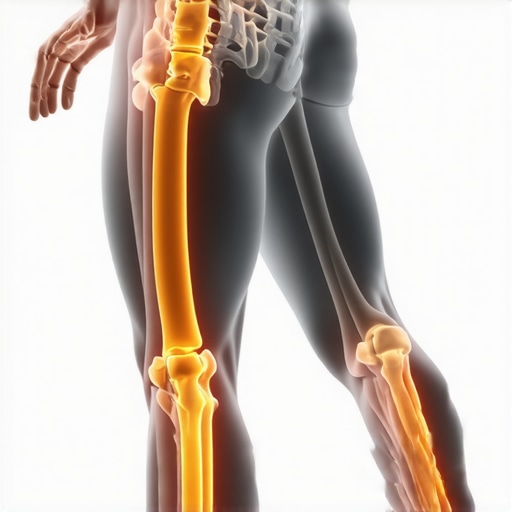
Why does my back still ache even though I workout every day?
It comes down to motor control versus raw power. You can have the strongest back in the gym, but if your nervous system doesn’t know how to coordinate that strength during a simple task like picking up a pen, you’re at risk. According to research from Harvard Health, spinal health is less about brute force and more about the coordinated ‘stiffness’ of the deep core cylinder. This is why I often tell my clients that your glute medius is more important than your abs when it comes to preventing the micro-shifts that cause disc irritation. If those side-glute muscles aren’t stabilizing your hips, every step you take sends a tiny shockwave up to your neck.
The Secret Link Between Your Feet and Your Neck
One of the most advanced mistakes people make is looking only at where it hurts. If your neck is burning, the problem might actually be starting at the floor. I’ve found that how your foot arch affects your lower back pain is a massive piece of the puzzle. When your arches collapse, it creates a chain reaction of internal rotation that ends with your head jutting forward. By addressing these foundational nuances and moving toward effective neck pain management, we stop chasing symptoms and start rebuilding the system. We’re moving beyond basic stretches into a world where we retrain the brain to hold the body with ease, even when the stress of the day tries to pull us back into that protective crouch.
Maintenance isn’t a chore; it’s a non-negotiable contract with your future self. I used to think I’d just ‘fix’ my back once and move on, but I quickly learned that spinal health is a lifestyle, not a destination. I shifted my focus to what Dr. Stuart McGill, a world-renowned expert in spine biomechanics and author of Back Mechanic, calls ‘spinal hygiene.’ His research highlights that our discs are most vulnerable first thing in the morning when they are fully hydrated and pressurized. This is why I started following the morning spinal hygiene routine every desk worker needs to avoid aggressive bending right after waking up. It’s a small shift that yielded massive long-term results for my disc health.
Build Your Own Daily Spinal Hygiene Routine
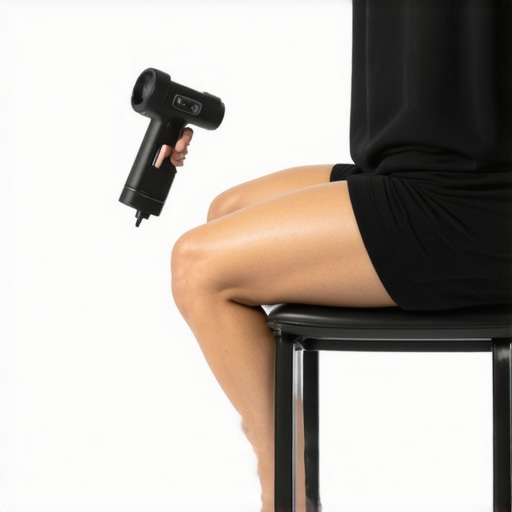
I don’t leave my mobility to chance anymore. Every single morning, I spend five minutes moving my spine through its full range of motion without adding extra weight. I also became very selective about my tools. For a long time, I was skeptical of the gadget industry, but I eventually looked into the truth about inversion tables for disc herniation and found that for certain people, that gentle decompression is a lifesaver. However, for my daily maintenance, nothing beats a high-quality massage gun—provided you aren’t just vibrating your vertebrae. I had to learn how to use a massage gun on your lower back safely by focusing on the glutes and the thick muscles flanking the spine rather than the bone itself. This precision is what separates a quick fix from mastering back and neck pain relief for good.
How do I keep my spine healthy for the next twenty years?
Consistency beats intensity every single time. You don’t need a grueling hour-long rehab session; you need two minutes of purposeful movement every few hours. I keep a lacrosse ball in my laptop bag at all times. If I’m in a meeting and feel that familiar burn, I use the ball against a wall to release my traps. By integrating these small ‘movement snacks,’ I’ve seen back pain recovery go from a dream to my daily reality. I also recommend checking out relieving neck and back discomfort through specific isometric holds that build endurance in those deep stabilizer muscles.
Why Wearable Tech is the Future of Posture
I predict we are about to see a revolution in how we monitor our alignment. We are moving away from ‘dumb’ chairs and toward AI-driven wearable sensors that track spinal shear and compression in real-time. Imagine a world where your phone gives you a gentle nudge the moment your lower back starts to round during a long flight. This shift toward proactive, data-driven health will make chronic issues a thing of the past. If you want to get ahead of the curve, my best advice is to start with one advanced tip: Tonight, instead of scrolling on your phone in bed, spend two minutes doing a ‘dead bug’ exercise to wake up your core. Your spine will thank you tomorrow morning.
The Hard Truths About Why Your Body Stays Tight
After years of trial and error, I realized that my body wasn’t failing me; it was trying to protect me. I learned that stretching a tight muscle is often the worst thing you can do if that muscle is tight to provide stability. This is often why your core strength isn’t stopping your back from hurting—your brain simply doesn’t trust your spine yet. Another lightbulb moment was discovering that my ‘stiff’ neck was actually a result of how I was sitting on various chairs throughout the day; learning the simple way to sit on a stool without pain changed my perspective on furniture entirely. Lastly, I had to accept that pain is a signal to change my environment, not just a symptom to suppress with pills or ignore until it becomes an emergency.
My Personal Toolkit for a Bulletproof Back
I rely on a few specific resources to keep my progress on track. First, I always recommend the ‘Back Mechanic’ by Dr. Stuart McGill; it is the gold standard for anyone serious about proven chiropractic strategies for long-term health. Second, a simple lacrosse ball for targeted myofascial release has been more effective than any expensive gadget I’ve ever bought. Finally, I follow a strict routine of expert mobility mastery tips to ensure my body stays resilient during high-stress weeks. These tools don’t just fix problems—they prevent them from ever starting. [IMAGE_PLACEHOLDER]
Your Path Toward a Life Without Constant Tension
You don’t have to live in a state of perpetual bracing. The journey to recovery isn’t about one massive overhaul, but rather the accumulation of tiny, smarter choices made every hour. By implementing effective neck pain management and listening to the subtle cues your body gives you, you can regain the freedom of movement you thought was gone forever. You have the tools now; it’s just a matter of putting them into practice. Remember that your health is an investment, not an expense. Which of these small changes are you going to try first at your desk tomorrow? Let me know in the comments!