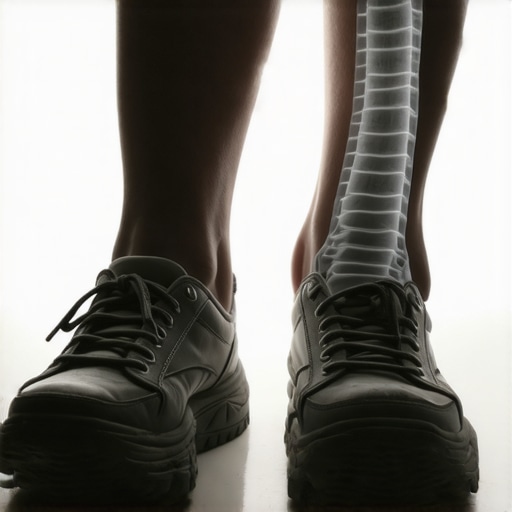
How to Tell if Your Sneakers Are Ruining Your Spinal Alignment
I was three miles into a brisk morning walk when it hit me—not a stroke of genius, but a sharp, biting pain right in my lumbar spine. I had just treated myself to a pair of those “cloud-like” sneakers that every influencer seems to be wearing lately. They felt great for the first ten minutes, but by mile three, my body felt like it was folding in on itself. I spent years thinking my back pain was just a “getting older” thing or a result of sitting too much at my desk, but the truth was literally right under my feet. It’s a hard pill to swallow, especially when you’ve spent a small fortune on footwear, but your shoes might be the very thing sabotaging your health. If you have been chasing relief through every stretch in the book and still feel “off,” it is time we talk about what you are wearing. Today, I am going to show you how to audit your shoe rack so you can finally stop the cycle of unnecessary spinal stress. Have you ever noticed your back feels worse after a day in your most “supportive” shoes? If so, you are definitely not alone.
Your Foundation Dictates Your Spinal Shape
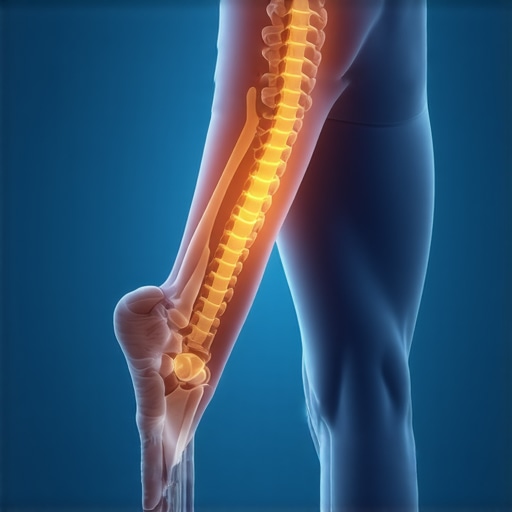
I made a massive mistake early in my fitness journey by equating “softness” with “support.” I bought a pair of maximalist runners with a huge heel-to-toe drop, thinking I was doing my knees a favor. Instead, those shoes pushed my pelvis into a permanent forward tilt. Think of your body like a skyscraper. If the foundation is slanted even by a fraction of a degree, the top floor—your neck and head—will be under immense pressure just to stay upright. I used to think my discomfort was just poor posture, but my shoes were the real saboteurs. Research published in the Journal of Foot and Ankle Research indicates that even minor changes in footwear geometry can significantly alter pelvic tilt and spinal loading. This isn’t just about sore toes; there is a hidden connection between your feet and mid-back pain that determines how you move every single day. When your footwear forces your weight forward, tight calves cause lower back tension that no amount of foam rolling can truly fix. To find the secret to walking without lower back fatigue, we have to look at the wear patterns on your soles.
Do High-Priced Sneakers Actually Guarantee Better Support?
You might be wondering if spending more money is the ultimate solution. I certainly did, thinking a higher price tag meant a safer spine. But here is the reality: price tags do not measure biomechanical compatibility. Some of the most expensive shoes on the market are designed for specific athletic bursts, not for your unique spinal alignment or daily walking mechanics. When your sneakers don’t support your arch correctly or provide too much artificial stability, your body compensates in ways that lead to long-term wear and tear. I remember standing in front of my mirror, trying to figure out why my right hip always seemed higher than my left, only to realize my favorite sneakers were worn down on one side, forcing my entire skeleton to lean. It is a subtle shift, but one that can cause a cascade of issues from your ankles to your ears. We often look for complex solutions to our back problems, but sometimes the answer is as simple as the rubber and foam we strap to our feet every morning.
Perform a Three-Point Footwear Audit to Save Your Spine
To stop the cycle of back pain, you need to look at your current rotation with a critical eye. I start by lining up my most-worn shoes on a flat table. If they wobble when you touch them or lean to one side without any weight in them, you have already found a structural problem that is translating directly to your vertebrae.
Flip Your Shoes Over to See Where You Are Leaning
The wear pattern on the bottom of your shoe is a literal map of your gait. I once took a pair of my favorite daily trainers and realized the outer heel was almost entirely ground away. This uneven wear was forcing my ankle to roll outward, which sent a chain reaction of compensations up to my pelvis. You can check this yourself: look for areas where the tread has disappeared. If you see significant wear on the inside or outside edges, you are likely dealing with overpronation or supination. This misalignment is often how to tell if your back pain is serious enough to require a professional look, as it directly impacts your sacrum’s stability and shock absorption.
Check the Flexibility and Twist of the Sole
A shoe that is too rigid turns your foot into a brick, forcing your lower back to absorb every ounce of shock from the pavement. Conversely, a shoe that is too soft fails to provide a stable base for your joints. I use the Twist Test: grab the shoe at the toe and heel and try to wring it like a towel. It should have some give in the middle but offer firm resistance. If it folds in half like a piece of paper, it is not protecting your arches. Improving this foundational stability is a core part of mobility mastery and expert tips for back pain prevention and recovery. Without a stable base, your body tries to find stability elsewhere, often leading to a situation where your glute medius is more important than your abs for back health because it is working overtime to keep you upright.
Give Your Toes the Room They Need to Work
Most modern shoes are shaped like triangles, pinching your toes together. When your big toe cannot lay flat and push off correctly, your gait shortens, and your hip flexors tighten to compensate. This is why the pelvic tilt secret for effortless posture while walking starts with a wide toe box that allows for natural splay. I switched to shoes that actually look like the shape of a human foot, and the relief in my lumbar spine was almost immediate. When your toes can move, your weight is distributed evenly, and you will find why your back feels better when you keep moving rather than standing still in restrictive footwear. I remember the first week after switching my work shoes; my toes felt alive for the first time in years, and that nagging ache in my mid-back finally started to dissipate because my pelvis was not being yanked forward with every single step.
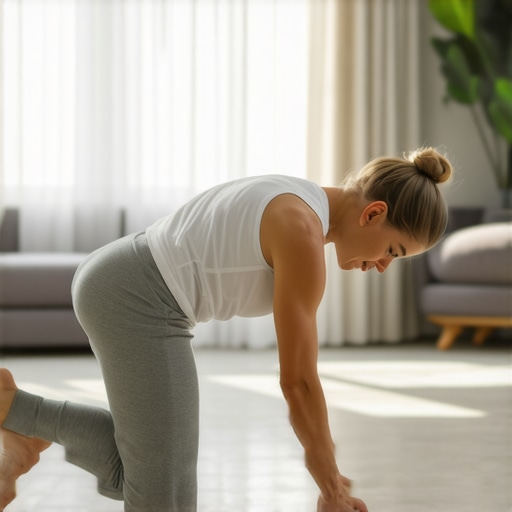
Now that we have audited your footwear, let’s dig deeper into the most common mistake I see people make once they decide to take their spinal health seriously: the ‘stretch it out’ fallacy. We have been conditioned to believe that if something feels tight, we must pull on it until it lets go. In my early days of dealing with lumbar issues, I spent thirty minutes every morning aggressively reaching for my toes. I thought I was being proactive, but I was actually making my spine more vulnerable.
Stop Stretching Your Pain Away
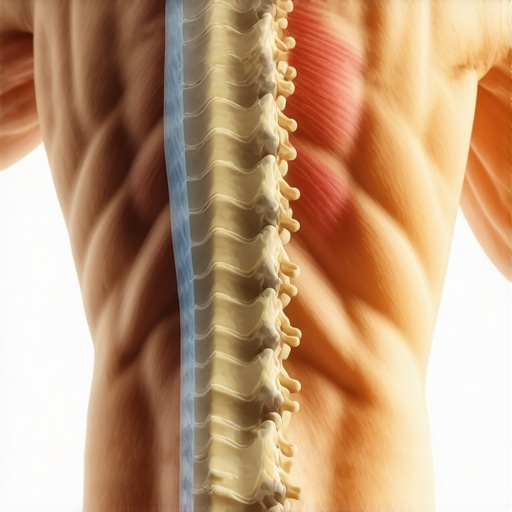
The contrarian truth is that most chronic back pain is a result of too much micro-movement in the spine, not too little. When your muscles feel tight, it is often your brain’s way of ‘splinting’ an unstable joint. If you force that muscle to relax through intense stretching, you are essentially removing the only thing keeping your vertebrae in place. To truly revitalize your mobility with proven strategies for back pain relief, you have to prioritize stability over flexibility. A seminal study by Dr. Stuart McGill in the Journal of Biomechanics emphasizes that spinal stability, rather than a massive range of motion, is the primary predictor of long-term back health. I had to learn the hard way that relieving neck and back discomfort using these expert methods often involves doing less stretching and more bracing.
Why Your Hamstrings Aren’t Actually the Problem
One of the biggest ‘traps’ is the obsession with hamstring flexibility. I see runners and office workers alike cranking on their legs, hoping it will release their lower back. However, if your pelvis is already out of alignment due to poor shoes or a weak core, your hamstrings stay tight to prevent you from falling over. This is exactly why stretching your hamstrings won’t fix your lower back pain. In fact, over-stretching can irritate the sciatic nerve, mimicking the very pain you are trying to solve. I used to think I was just ‘inflexible,’ but I was actually just ‘unstable.’ This nuance is where most people fail. They push through what they think is ‘good pain’ during a workout, only to find that their yoga flow might be stressing their sacroiliac joint rather than helping it.
Does Your Core Work Hard Enough to Protect Your Spine?
If you are still feeling ‘brittle’ despite your best efforts, you need to ask if your strength is functional or just for show. High-level spinal health requires the deep stabilizers to fire before the big movement muscles take over. Often, your core strength isn’t stopping your back from hurting because you are using your rectus abdominis (the six-pack muscles) instead of the deep transverse abdominis. Transitioning your focus to moves like the dead bug variation that actually protects your back will do more for your pain levels than an hour of toe touches ever could. This same principle applies to the upper body, where effective neck pain management requires strengthening the deep neck flexors rather than just rubbing the sore spots on your traps. Have you ever fallen into this trap of stretching a ‘tight’ muscle only to have it feel worse the next day? Let me know in the comments.
Once you escape the trap of over-stretching and start focusing on stability, the real challenge begins: how do you keep it that way? I used to be the person who would feel great for two days after an adjustment and then spiral right back into stiffness. The missing piece for me wasn’t more appointments; it was the specific, low-effort tools I used at home to reinforce my progress. I’ve realized that proven strategies for back pain relief only work if you can integrate them into a life that doesn’t revolve around the gym.
The Gear That Lives in My Daily Bag
I don’t believe in buying every gadget on the market, but there are three things I never travel without. First, a standard lacrosse ball. It is far more effective than a foam roller because it allows for precision. I use it for about two minutes every evening for releasing hip flexor tension that builds up from sitting. Second, I’ve replaced my traditional office chair with a simple stool that encourages active sitting, which taught me the simple way to sit on a stool without pain by forcing my core to engage naturally. Lastly, I use a dedicated monitor stand. If your screen isn’t at eye level, you are fighting a losing battle against gravity every single day.
How do I keep my spine healthy during a busy work week?
Maintenance doesn’t have to mean a sixty-minute workout. My personal rule is ‘Spinal Hygiene’—a concept championed by many in the industry to describe small, non-negotiable movements. I follow the morning spinal hygiene routine every desk worker needs to lubricate my joints before I even check my email. This isn’t about fitness; it’s about brushing your teeth, but for your vertebrae. As Dr. Kelly Starrett, author of Becoming a Supple Leopard, emphasizes, the goal is to ‘normalize your range of motion’ through consistent, small interventions rather than occasional, massive ones. I find that taking ten seconds to perform the 10-second breath fix for rib pain during a stressful meeting does more for my nervous system than a long weekend massage ever could.
Looking ahead, I predict we are going to see a massive shift toward wearable biofeedback. We already track our steps and heart rate, but the next frontier is real-time sensors that alert you when your pelvis has tilted or your neck has drifted too far forward. This technology will take the guesswork out of posture. Until then, we have to rely on our own internal ‘software.’ If you feel a flare-up starting, don’t panic and go back to aggressive stretching. Instead, try the lat stretch that frees up your lower back instantly using a door frame—it targets the fascia without putting your lumbar discs at risk. My biggest piece of advice? Pick one move from this list and commit to doing it every time you boil the kettle or wait for your coffee to brew. That is how you turn a ‘fix’ into a permanent lifestyle.
The Truth About Why Your Back Still Hurts After Stretching
Looking back at my own journey, I realized that I spent years treating symptoms instead of the source. One thing what your chiropractor wishes you knew about heavy lifting is that your spine thrives on stability, not just flexibility. I used to think I needed to be looser, but I actually needed to be stronger in the right places. Another lightbulb moment was the realization that my desk setup was a slow-motion injury; following the 20-20-20 rule for desk workers and neck health saved me more grief than any expensive massage ever did. Lastly, remember that your body is a closed kinetic chain; if your feet are unhappy, your neck will eventually pay the price.
The Three Resources I Actually Use Every Week
I don’t recommend tools lightly, but a few have earned a permanent spot in my life. First, I always suggest investing in a dedicated stand because learning how to adjust your monitor to avoid eye and neck strain is the easiest win for your posture. Second, for those seeking mobility mastery and expert tips for back pain prevention and recovery, the biomechanics books by Dr. Stuart McGill are non-negotiable for understanding real stability. Finally, a simple lacrosse ball for rolling out your lats and glutes is the most effective way to manage tension at home. #IMAGE_PLACEHOLDER_E#
Reclaim Your Life from Chronic Discomfort
You don’t have to live in a state of constant management. By choosing better footwear, focusing on core stability, and adopting a few daily habits, you are actively participating in your own back pain recovery and how chiropractic care transforms lives. It starts with one small change today. Whether it is swapping your sneakers or setting a timer to stand up, your future self will thank you for the relief you are building right now. Have you ever found that a specific pair of shoes was the secret culprit behind your back flare-ups? Let me know your experience in the comments below!