Why Your Lower Back Aches After Standing for 10 Minutes
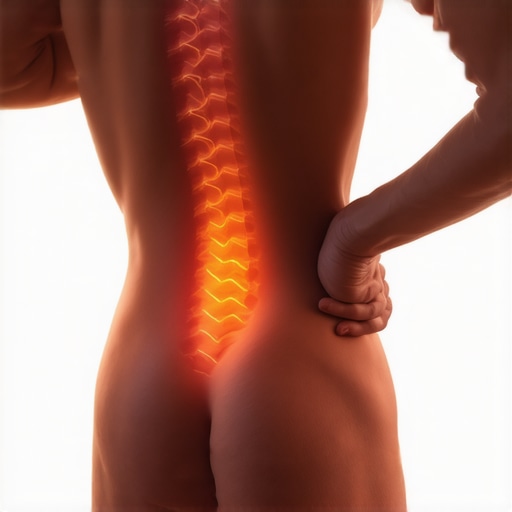
I remember standing in the checkout line at the hardware store, just ten minutes in, feeling like my lumbar spine was literally collapsing into my pelvis. It wasn’t a sharp pain, but a deep, heavy throb that made me want to double over right there next to the candy bars. I felt like a fraud. I hit the gym, I watched my posture, yet here I was, defeated by a slow cashier and gravity. If you’ve ever found yourself frantically shifting your weight from foot to foot or looking for a wall to lean against just to survive a short wait, you aren’t alone. Today, we are going to dive into why your body seems to ‘turn off’ when you aren’t moving and how we can actually flip that switch back on.
Stop Blaming Your Shoes for That Dull Ache
Early on, I fell into the classic trap of thinking my footwear was the enemy. I spent hundreds of dollars on orthopedic sneakers and gel insoles, convinced that if I just cushioned my feet enough, the back pain would vanish. It didn’t. In fact, sometimes it got worse. I realized I was just putting a band-aid on a much deeper structural issue. Most of us suffer because we’ve lost the ability to engage our core and glutes while stationary. We end up ‘hanging’ on our ligaments and joints rather than using our muscles to stay upright. This often links back to how we walk without lower back fatigue and whether our foundation is actually stable. Have you ever felt that same frustration, buying all the ‘right’ gear only to still feel like your back is failing you after a few minutes? Drop a comment below if you’ve been there too.
Is my spine actually damaged or am I just getting old?
This is the fear that kept me up at night. I worried that my ten-minute limit was a sign of a herniated disc or some permanent decay. But here is the reality: static standing is actually harder on your body than movement. Research from the Journal of Biomechanics indicates that prolonged standing increases muscle fatigue in the lower back and can lead to significant discomfort even in healthy individuals without prior injury. It’s not necessarily that you’re ‘broken’; it’s that your postural endurance has hit a wall. When our glutes won’t fire, the lower back has to pick up all the slack, and it’s a job it wasn’t designed to do alone. We also see this when people transition to new habits, like why standing desks cause hip pain when not used correctly. The good news is that we can fix this by learning the pelvic tilt trick for instant lumbar relief, which changes the game for how your spine handles gravity. Let’s look at why your body is actually sounding this alarm.
Standing still is actually a skill, not just the absence of movement. Think of your spine like the mast of a ship; if the supporting ropes go slack, the mast takes the full brunt of the wind. When you stand like a statue, those ‘ropes’—your core and glutes—often go dormant, leaving your vertebrae to grind under the weight of your torso. To fix this, we need to stop being passive observers of our own posture and start actively managing the load.
Turn Your Spine into a Spring Instead of a Pillar
The biggest mistake I see is the ‘locked-out’ stance. This is where your knees are snapped back and your lower back is arched like a bow. To break this habit, you have to find a neutral base. Start by slightly unlocking your knees—just a fraction of an inch. This immediately transfers the weight from your joint capsules into your leg muscles. Once you do this, you can apply the pelvic tilt trick for instant lumbar relief. I remember practicing this while waiting for a flight at Eppley Airfield. At first, I felt like I was doing a weird dance move in the security line, but within sixty seconds, that burning sensation in my sacrum simply evaporated. It’s about creating space in the joint rather than crushing it.
Find Your Neutral With a Simple Tailbone Tuck
If you feel like your belly is spilling forward, your pelvis is likely tilted too far down in the front. Imagine your pelvis is a bucket of water; you don’t want the water pouring out over your toes. Gently tuck your tailbone under you until the ‘bucket’ is level. This engagement is one of the most simple yet effective chiropractic hacks you can use anywhere. It’s a subtle shift that moves the stress away from your L5-S1 disc and back into your abdominal wall.
Wake Up the Sleeping Giants in Your Hips
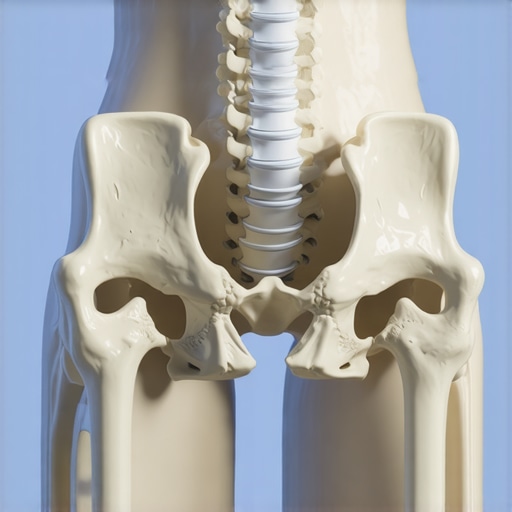
Your glutes are the primary stabilizers of your lower back, but for many of us, they’ve gone on permanent vacation. If you’re standing and your butt feels soft to the touch, your back is doing 100% of the work. You need to ‘fire’ them. A great trick is to imagine you are trying to screw your feet into the ground away from each other without actually moving them. This external rotation tension wakes up the gluteus medius. If you find your glutes won’t fire despite this, it’s often because your hip flexors are too tight from years of sitting. Strengthening this connection is the difference between standing for ten minutes and standing for two hours without a thought.
Fill the Balloon in Your Lower Back
Most people breathe into their chest, which actually tightens the neck and shoulders. Instead, try to send your breath all the way down into your waistband. Use the technique to breathe into your lower back to reduce muscle spasms. Visualize a balloon inside your lower abdomen; as you inhale, the balloon expands against your spine from the inside out. This creates ‘intra-abdominal pressure,’ which acts like a natural weightlifting belt, supporting your spine from the front. Combine this with the Brueggers relief move to reverse hours of hunched sitting by opening your palms and pulling your shoulder blades back while you breathe. It resets the entire system in about thirty seconds.
While the breathing and pelvic tilt techniques are great starting points, we need to address a common myth that keeps people stuck in a cycle of discomfort. Most people believe that if a muscle feels ‘tight,’ the solution is to stretch it until it gives up. This is often the exact opposite of what you should do. In many cases, that tightness is actually ‘protective tension.’ Your brain is tightening those muscles to act as a splint because the underlying joint is unstable. If you force a stretch on a muscle that is trying to protect your spine, your body will respond by tightening up even harder the next day. I see this all the time with people trying to restore your back mobility by cranking on their hamstrings, only to find their back pain intensifies. Have you ever fallen into this trap of stretching a ‘tight’ muscle only to feel worse? Let me know in the comments.
Stop Self-Cracking Your Neck for Quick Relief
The ‘Oops’ factor most people ignore is the habit of self-adjusting. We’ve all done it—that quick twist of the head to get a satisfying ‘pop.’ While it feels like a release, you are likely only moving the joints that are already too loose (hypermobile) while the stuck, restricted joint remains jammed. This creates a dangerous imbalance. Over time, this habit can lead to ligament laxity, making your neck even less stable. Instead of seeking that temporary pop, focus on how to strengthen your deep neck flexors to provide real, structural support. Professional care is about targeting the specific segment that isn’t moving, rather than just making noise in the ones that are.

Can a misalignment in my neck actually cause my hands to go numb?
This is a sophisticated question that points to the complexity of the ‘kinetic chain.’ The answer is a resounding yes. The nerves that control your hands exit from the lower part of your cervical spine. If your posture is off—perhaps because your laptop stand is still causing neck strain—those nerves can become compressed. This is why we adjust your neck to fix your numb hands rather than just treating the wrist. A study published in the Journal of Manipulative and Physiological Therapeutics found that cervical spine manipulation can significantly improve nerve conduction and reduce symptoms in the extremities, proving that the site of the pain isn’t always the source of the problem.
Your Feet Are Secretly Controlling Your Head Position
Another nuance often missed is the relationship between your foundation and your crown. If your arches collapse or you have a ‘proprioceptive’ imbalance in your feet, your entire spine has to compensate. This is why we look at your feet to solve your neck issues. If your base is tilted, your head—which weighs about as much as a bowling ball—will shift forward to maintain balance. This ‘forward head posture’ puts massive strain on the upper traps and the suboccipital muscles at the base of your skull. You can spend years getting massages, but if you don’t address the hidden link between neck pain and spinal health starting from the ground up, the tension will always return. Real mobility mastery involves looking at the body as a single, interconnected unit rather than a collection of separate parts.
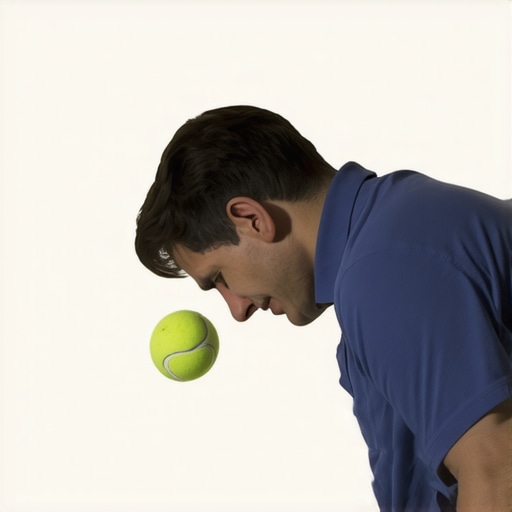
I’ve spent years experimenting with every gadget on the market, from vibrating foam rollers to expensive ergonomic chairs that look like they belong in a cockpit. What I found is that the simplest tools are often the most effective because they actually get used. For me, a standard tennis ball is more valuable than a $5,000 chair. I use it to target the ‘rhomboid burn’ that many desk workers feel. When you use a tennis ball to fix that spot under your shoulder blade, you’re providing a specific mechanical input that a generic massage chair just can’t mimic. It’s about pinpointing the exact knot that is holding your mobility hostage.
Beyond local relief, we have to look at the environment where we spend the most time. If your workstation is a disaster, your spine will be too. I tell people to perform the 5-second check to see if your monitor is too low every single morning. If you’re looking down even slightly, you’re adding ten to twenty pounds of effective weight to your cervical spine. I personally use a gas-spring monitor arm because it allows me to shift my gaze throughout the day, preventing my neck from ‘freezing’ in one spot. This flexibility is key to mobility mastery and preventing the cumulative fatigue that leads to chronic pain.
How do I maintain my spinal health without a daily gym routine?
The secret isn’t more exercise; it’s better stability. Dr. Stuart McGill, a world-renowned expert in spine biomechanics and author of Back Mechanic, emphasizes that the spine needs ‘stiffness’ from the surrounding musculature to thrive. This doesn’t mean being tense; it means having a core that can brace instinctively. Incorporating simple yet effective chiropractic hacks into your daily life—like the ‘Big Three’ stability exercises—builds that ‘internal corset.’ This is the foundation of back pain recovery. Maintenance is just the consistent application of small, active movements rather than waiting for a crisis to restore your back mobility after an injury.
Looking forward, I predict we are moving toward a world of ‘bio-feedback wearables’ integrated into our clothing. Imagine a small sensor on your shirt that gives a tiny haptic buzz the moment your glutes stop firing or your head drifts forward. We won’t have to rely solely on our own fading body awareness because technology will bridge the gap. Until then, you have to be your own sensor. I challenge you to try the ‘tennis ball’ trick today—find that one spot that’s been nagging you and apply pressure for 90 seconds while breathing deeply. You’ll be amazed at how much the rest of your spine relaxes once that single trigger point lets go.
What I Finally Learned After Years of Chasing Quick Fixes
The biggest lightbulb moment for me was realizing that my back wasn’t weak—it was just unprotected. I spent years stretching every muscle I could find, only to realize I was making my joints less stable. True restoring your back mobility isn’t about being a gymnast; it’s about building a solid foundation where your muscles can relax because they trust your structure. I also realized that my neck issues were almost always linked to how my pelvis sat while I was standing. Everything is connected, and the hidden link between neck pain and spinal health starts at your feet and moves upward through the entire kinetic chain. When you stop chasing the pain and start addressing the foundation, the relief actually sticks.
#IMAGE_PLACEHOLDER_E#
The Essential Toolkit for a Pain-Free Life
If you want to move from surviving to thriving, you don’t need a gym full of equipment. I personally swear by three things. First, the work of Stuart McGill—his insights are the gold standard for back pain recovery and changed how I move daily. Second, a simple high-quality tennis ball for targeted release of those stubborn trigger points. Third, staying informed on the latest essential chiropractic tips for 2025 to keep your adjustments on track. These aren’t just gadgets; they are the tools that help you become the expert on your own body and take control of your recovery.
You Have the Power to Rewrite Your Pain Story
Don’t let a bad day or a sudden flare-up convince you that you are broken. Your body is incredibly resilient and is always trying to heal; it just needs the right environment and consistent signals to do so. By focusing on small, consistent shifts in how you stand, breathe, and move, you are achieving true mobility mastery. You aren’t just managing symptoms—you are building a better, more stable future for your spine. Have you ever tried a specific movement or adjustment that gave you instant relief from that deep standing throb? Let me know in the comments below!