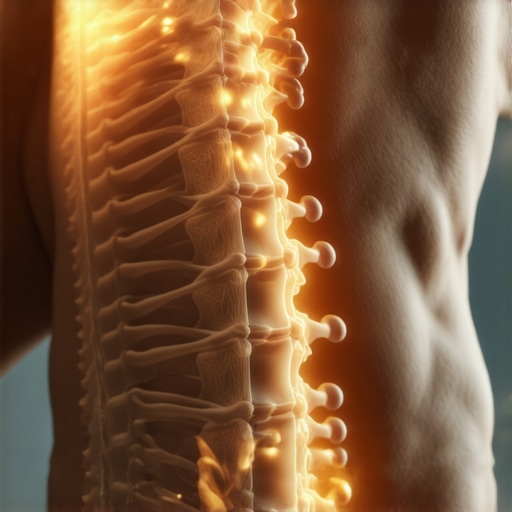
Why your mid-back feels like it needs to pop
I remember sitting at my desk three years ago, literally twisting myself into a pretzel trying to get that one elusive ‘pop’ between my shoulder blades. It felt like a physical itch inside my joints that I just couldn’t scratch. I would lean over the back of my office chair, hearing a dull thud instead of a crisp release, and the frustration was almost worse than the dull ache itself. I spent years thinking I just needed a deeper stretch or a stronger person to walk on my back. I was wrong. That constant urge to crack your mid-back isn’t usually about a bone being ‘out of place’; it is a cry for help from a system that has lost its ability to move through its full range. Today, I am going to show you exactly why that pressure builds up and how you can [restore your back mobility with proven chiropractic strategies](https://quackersspinal.com/restore-your-back-mobility-proven-chiropractic-strategies) that actually last longer than five minutes. Have you ever spent your entire lunch break trying to ‘crack’ your own spine just to feel normal again?
The Real Reason Your Thoracic Spine Is Screaming for Help
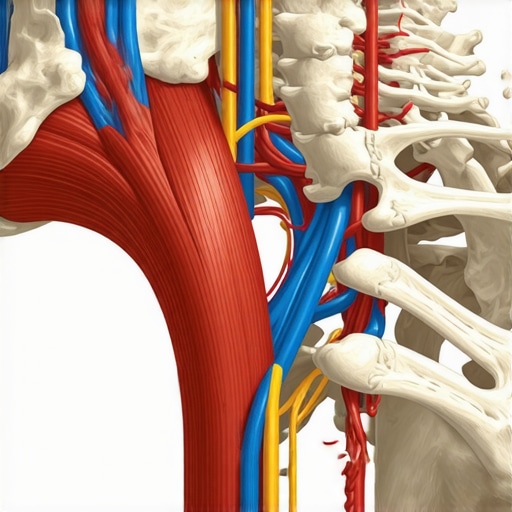
It took me a long time to realize that my mid-back tension wasn’t actually a mid-back problem. One of the biggest mistakes I made early on was obsessively attacking the spot that hurt. I would spend twenty minutes a night on a piece of plastic, but I was doing it all wrong. In fact, learning [the proper way to use a foam roller on your upper back](https://quackersspinal.com/the-proper-way-to-use-a-foam-roller-on-your-upper-back) changed everything for me because it taught me that localized pressure isn’t the same as functional movement. Your thoracic spine is designed to rotate and extend, but when we sit for hours, it essentially ‘freezes’ to protect itself. This creates a build-up of gas in the joint capsules—that’s what you’re hearing when it pops—but the relief is temporary because the underlying stiffness remains. Interestingly, research suggests that the thoracic spine is the most restricted area of the human frame due to its attachment to the rib cage, making it a prime candidate for chronic ‘stuckness.’ This is often why [we check your pelvis to solve mid-back tension](https://quackersspinal.com/why-we-check-your-pelvis-to-solve-mid-back-tension), as a tilted base forces the middle of your back to work twice as hard to keep you upright.
Is all this self-cracking actually making things worse?
Let’s be honest: that pop feels amazing. It releases endorphins and provides an instant ‘reset’ for your nervous system. But if you find yourself needing to do it every twenty minutes, you aren’t fixing anything; you are likely creating hypermobility in some segments while the truly stuck ones stay jammed. When I stopped forcing the cracks and started focusing on [enhancing mobility naturally with chiropractic care](https://quackersspinal.com/enhance-mobility-naturally-with-chiropractic-care), the ‘need’ to pop slowly vanished. We need to move away from chasing the sound and start chasing the function. If your mid-back feels like a rusted hinge, oiling it with the right movements is always better than trying to kick the door open.
Reclaim Your Movement by Focusing on the Foundation First
When I first started focusing on my mid-back, I made the classic mistake of thinking the pain was the problem. I bought the hardest foam roller I could find and rolled my spine until I had actual bruises on my ribcage. It was miserable. It wasn’t until I visited a colleague who pointed out that my pelvis was tilted so far forward that my upper back had no choice but to lock up to keep me from falling on my face. That’s when I realized that we check your pelvis to solve mid-back tension for a very specific reason: your spine is a chain, and the middle won’t move if the bottom is jammed. If you want to stop the cycle of ‘cracking’ and start feeling fluid, you have to address the anchors holding your thoracic spine hostage.
Stop ignoring your hips when your shoulders ache
Think of your spine like a mast on a ship. If the base of the mast—the pelvis—is leaning to one side, the ropes at the top have to pull extra tight to keep it upright. This is exactly why tight hip flexors are the real cause of your lower back arch and mid-back stiffness. When your hips are locked forward, your thoracic spine loses its ability to extend. To fix this, I stopped focusing on my shoulder blades and started releasing my psoas. Once my pelvis sat level, the ‘knot’ between my shoulder blades magically felt about 50% less intense without me even touching it.
Use your breath as a mechanical crowbar
Most of us are chest breathers, which means we use our neck and upper back muscles to pull the ribcage up 20,000 times a day. This keeps the thoracic joints in a constant state of tension. Instead, you need to learn how to breathe through your diaphragm to reduce lower back pressure. By expanding your ribs laterally (to the sides) rather than just lifting your chest, you create an internal expansion that stretches the intercostal muscles from the inside out. It is the only way to ‘stretch’ the joints that a foam roller can’t reach. I tell my patients to imagine their ribcage is an umbrella opening in all directions; this simple shift can do more for your mobility than any manual adjustment ever could. 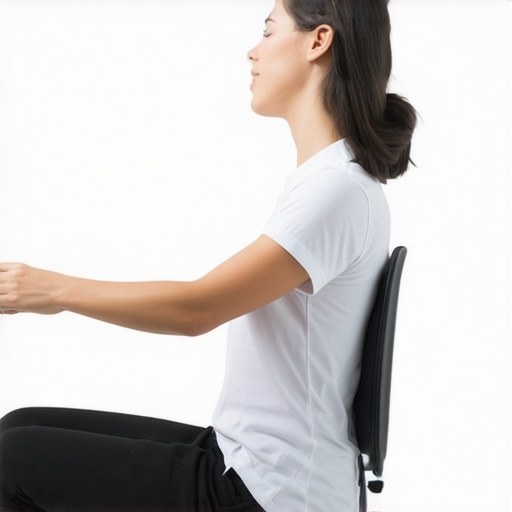
Replace the foam roller with functional rotation
Rolling up and down is fine for a quick massage, but it doesn’t teach your joints how to rotate. I used to spend hours on the floor, but my back would just tighten back up an hour later. The breakthrough came when I started using the 30-second move to stop mid-day shoulder burn, which focuses on seated rotation. By pinning your hips in a chair and rotating only from the bra-line up, you isolate the thoracic segments. This is one of the best exercises to keep your spine young because it forces the nervous system to regain control over the end-range of motion.
Small workspace tweaks that save your spine
You can have the best mobility routine in the world, but if you spend eight hours a day hunched over a laptop, you’re fighting a losing battle. When I was struggling, I realized my screen was about four inches too low. Learning how to set up your home office on a budget—even just propping my monitor up on a stack of books—changed the resting tension in my spine. It stopped the ‘creeping’ stiffness that would peak by 3 PM every single day.I see it every single day in the clinic: patients who are so focused on “correcting” their alignment that they’ve become rigid statues. They’ve heard for decades that they need to pull their shoulders back and tuck their chin, but this obsession with static positioning is one of the biggest myths in modern wellness. In fact, why your perfect posture is actually making you stiff is a conversation I have almost hourly. Research published in the British Journal of Sports Medicine has highlighted that there is no single ‘correct’ posture that prevents pain; rather, the best posture is your next posture. If you aren’t moving, you’re decaying.
The trap of stretching a muscle that actually needs strength
This is the “Oops” factor that keeps people in a cycle of chronic pain. You feel a tight “knot” in your neck or mid-back, so you stretch it. It feels good for thirty seconds, then it tightens right back up. I spent years doing this before I realized that why stretching a tight muscle isn’t always the answer comes down to neurology. Often, that muscle is tight because it is weak and trying to create stability where none exists. By stretching it, you’re actually pulling the alarm bell even harder. This is why the difference between muscle soreness and spinal pain is so vital to understand before you reach for that yoga strap.
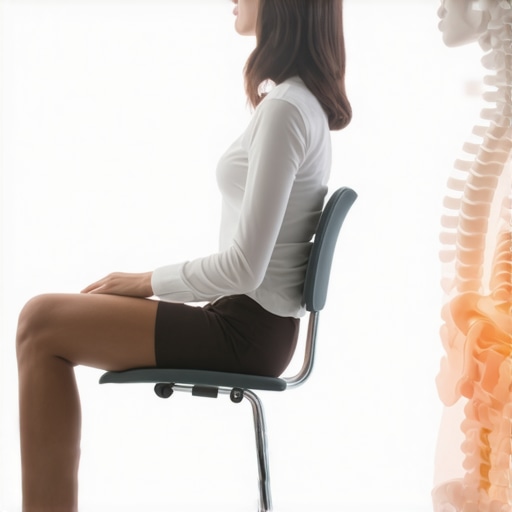
Why your “iron core” might be your spine’s worst enemy
We’ve been sold the idea that a rock-hard core is the ultimate protector of the back. But in my experience, a core that is always “on” is just as dangerous as one that is “off.” I’ve treated elite athletes with six-packs who have the spinal mobility of a 90-year-old because they don’t know how to relax. Understanding why your strong core might actually be too rigid is a game-changer. Your spine needs to be like a whip—capable of being stiff when you lift something heavy, but fluid and supple when you’re just walking or breathing. If you’re constantly bracing, you’re crushing your own discs from the inside out.
Does a rigid core actually prevent injury during daily life?
The short answer is: no, not if it sacrifices movement. True resilience comes from adaptability, not armor. When you use boost mobility ease pain chiropractic techniques unveiled in our sessions, we aren’t just “cracking” bones; we are retraining your nervous system to know when to engage and when to let go. Have you ever fallen into this trap? Have you spent months stretching a spot that never seems to loosen up? Let me know in the comments—I’d love to help you figure out the “why” behind your stiffness. If you’re ready to stop the guesswork and start moving again, restore your back mobility with proven chiropractic strategies that address the root cause, not just the symptom.
I have spent thousands of dollars on fancy ergonomic chairs and vibrating massage guns, but if I am being honest, my most valuable tool cost me about three dollars at a sporting goods store. When you are looking to scale your progress and move from ‘pain-free’ to ‘bulletproof,’ you need a maintenance kit that actually addresses the mechanical realities of your joints. For me, that meant mastering how to use a tennis ball to release upper back tension. By taping two balls together to create what we call a ‘peanut,’ you can create a channel for your spinal processes to sit in, allowing you to apply pressure directly to the stiff muscles on either side without bruising the bone. This specific mechanical advantage is why I prefer it over the broad surface of a foam roller for pinpoint thoracic extension.
How do I keep my spine feeling young for the next decade?
Maintenance isn’t about doing a two-hour workout once a week; it is about the micro-adjustments you make to your daily hygiene. Dr. Stuart McGill, a world-renowned expert in spinal biomechanics, often talks about ‘spinal hygiene’—the idea that how you brush your teeth or tie your shoes matters more for your long-term disc health than your deadlift form. I’ve integrated the 3-minute morning routine to lubricate your joints into my life because it treats the spine like a biological machine that needs priming before it carries a load. This proactive approach is the key to mobility mastery expert tips for back pain prevention and recovery. If you wait for the pain to return before you move, you’re already behind the curve.

One of the most overlooked pieces of equipment is actually sitting in your office right now. Most people use their chair’s lumbar support incorrectly, which actually pushes the spine into an artificial curve that causes more fatigue. I’ve found that learning the correct way to use a lumbar roll in your office chair acts as a constant biofeedback loop; it’s not there to hold you up, but to remind your muscles to stay engaged. When you combine this with the 5-minute desk reset for busy professionals, you effectively break the ‘creep’—the slow stretching of ligaments that happens when we sit too long. This is how you achieve chiropractic secrets to regain full mobility after injury: you stop the injury from recurring in small, manageable increments.
The future of back health is predictive, not reactive
Looking ahead, I see the industry moving away from just ‘fixing’ a hurt back and toward predictive analytics. We are already seeing wearable sensors that track your ‘cumulative spinal load’ rather than just your steps. In the next few years, your watch will likely vibrate to tell you that your lumbar discs have reached their compression limit for the day, prompting you to move before the pain even starts. This shift toward data-driven movement is why I am so obsessed with revitalize your mobility proven strategies for back pain relief today—we are preparing your body for a longer, more active life than previous generations. If you want to stay ahead of the curve, I challenge you to try the 5-minute reset today; don’t wait for the burning sensation between your shoulders to tell you that you’ve sat too long. You can find more targeted help through our contact page to build a personalized plan.
The Painful Lessons I Learned While Chasing the ‘Perfect’ Crack
Looking back at my journey from a ‘stiff pretzel’ to a mobile human, there are a few things I wish someone had told me early on. First, chasing the sound is a distraction. We often equate the loud ‘pop’ with success, but that sound is just a pressure change. True success is when you can reach for a coffee mug or turn to check your blind spot without that ‘catch’ in your ribs. It took me years to realize that understanding back pain a guide to better posture and mobility isn’t about standing like a soldier; it’s about learning how to listen to the body’s whispers before they become screams.
Second, symmetry is a myth. I used to panic because my right side felt tighter than my left. I spent hours trying to make them ‘even,’ only to realize that as a right-handed person, my body is naturally biased toward certain patterns. Forcing symmetry often creates more tension than it solves. Finally, I learned that even my sleep setup was a massive variable; discovering how to choose the right pillow height for your body type saved my neck while my back was healing. If your foundation is off for eight hours a night, no amount of daytime stretching will fix it.
My Non-Negotiable Kit for a Resilient Spine
I don’t believe in cluttering your house with expensive gadgets, but there are three things I personally trust and use every single week. The first is a homemade ‘Peanut’ (two tennis balls taped together). It is the only tool that allows you to target the thoracic paraspinals without putting direct pressure on the spinous processes. Second, I recommend a simple lumbar roll for any chair you sit in for more than thirty minutes. It acts as a passive reminder for your nervous system to stay alert. Lastly, I advocate for diaphragmatic breathing as a mechanical tool. If you’re tired of the temporary fixes, seeing how back pain recovery how chiropractic care transforms lives can help you visualize a future where movement is a joy, not a chore.
Your Path to Living Without the Constant Need for a Reset
You don’t have to live in a state of constant ‘stuckness.’ The urge to crack your back is simply a signal that your system is looking for a way to create space. By using the strategies we’ve discussed—focusing on your hips, fixing your breath, and adjusting your environment—you can finally restore your back mobility with proven chiropractic strategies that stick. Don’t be afraid to start small; a single 30-second rotation is better than a hour-long routine you never actually do. Your spine is incredibly resilient; it just needs the right inputs to thrive. What is the one movement or habit that always seems to set off your mid-back tension? Let me know in the comments below!