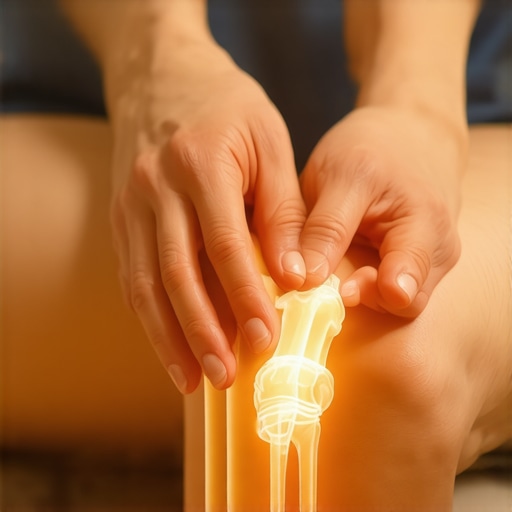
Why We Adjust Your Ankles to Fix Chronic Hip Issues
I vividly remember the morning I almost gave up on my daily walk because my hip felt like it was being squeezed in a rusty vice. I had spent months—and way too much money—on deep tissue massages and fancy foam rollers, specifically targeting the spot that hurt. I was convinced my hip was the villain. I even fell into the trap of thinking stretching my hamstrings endlessly was the magic bullet. It wasn’t. The real lightbulb moment came when a mentor looked at how my foot hit the floor and asked, “When was the last time you actually moved your ankle?” I realized I had been trying to fix the roof of a house while the foundation was sinking into the mud.
Your Hips Are Just Following Orders from Below
If you’ve been struggling with that nagging, deep ache in your pelvis, you’ve probably tried everything to “loosen it up.” But here is the cold, hard truth: your hips are often the victims, not the criminals. When your ankle joints are stiff or misaligned, your body doesn’t just stop moving; it finds a workaround. Usually, that means your hip has to twist, tilt, or absorb double the impact it was designed for. I made the classic mistake of ignoring my stiff calves for years, not realizing that tight calves often lead to massive tension further up the chain. Today, we are going to stop chasing the symptom and start addressing the structural cause that most people miss.
Will adjusting a joint so far away really matter?
It sounds like a stretch, right? How could a quick adjustment to the talus or calcaneus—those bones in your foot and ankle—possibly stop your hip from clicking? The answer lies in the kinetic chain. According to the American Academy of Orthopaedic Surgeons, the foot and ankle provide the base of support for the entire body, meaning any structural misalignment there creates a ripple effect. When I finally got my first ankle adjustment, the “tightness” in my hip vanished almost instantly because the nervous system finally felt stable. It is exactly like the way your foot arch dictates your back health; everything is connected.
Stop Ignoring the Foundation
Think about your last workout. Maybe you noticed that your ankle mobility was making your squats look shaky, but you ignored it because your hip was the thing that actually hurt the next day. That is the trap. I spent three years doing “hip openers” while my ankles were essentially locked in blocks of ice. We are going to dive into why your chiropractor looks at your shoes and your gait before they even touch your spine. Have you ever felt like you were stretching a muscle that just refused to “let go” no matter how many hours you spent on the floor?
Rebuilding the Chain from the Ground Up
To fix a “hip problem,” you have to stop looking at the hip. Imagine your leg is a multi-story building. If the first floor (your ankle) is slanted, every floor above it has to lean the other way just to keep the roof level. When you walk, your ankle needs to move through a specific range of motion called dorsiflexion—that is the ability to pull your toes toward your shin. If you lack this, your body compensates by turning your foot outward or “collapsing” your arch. This isn’t just a foot issue; it forces your femur to rotate internally, putting a massive, grinding strain on your hip socket. I spent years ignoring the fact that my left ankle was stiff from an old high school soccer injury, wondering why my right hip was always the one screaming. It turns out, how your sneakers fit and support you dictates how every joint above them behaves.
Test your big toe extension right now
This sounds ridiculous until you realize the big toe is the “anchor” of your entire gait cycle. If your big toe cannot bend upward at least 60 degrees, your foot cannot “push off” correctly. This forces your hip flexors to do double the work to pull your leg forward. I remember a specific patient who came in for chronic bursitis in his hip. He had been through three rounds of cortisone shots. When I looked at his feet, his big toe was almost fused in place by tight connective tissue. We focused on foot mobility and restoring his natural range of motion, and the “bursitis” disappeared in three weeks. He didn’t have a hip disease; he had a toe that wouldn’t budge.
Address the tension in your lower leg
If you feel like your hips are constantly “tight,” the culprit is often hiding in your calves. The gastrocnemius and soleus muscles are incredibly powerful. When they are shortened from sitting or wearing shoes with a high heel-to-toe drop, they lock the ankle in a downward position. This creates a “tug-of-war” that travels all the way up to your pelvis. I used to think foam rolling my TFL—that muscle on the side of the hip—was the answer, but I was just treating the symptom. You need to understand that tight calves often lead to massive tension that manifests as hip and back pain.
Practical Steps for Instant Relief
Start by checking your “arch integrity.” Stand in front of a mirror and watch your feet. Does your arch vanish when you put weight on it? If so, your hip is likely rotating inward with every step. You can use nerve flossing techniques for stubborn leg pain to help calm down the signals being sent from your lower back to your feet. Another massive win is the “Wall Ankle Mobility Test.” Stand five inches from a wall and try to touch your knee to the wall without your heel lifting. If you can’t do it, your hip is paying the price for that lack of mobility.
Why a manual adjustment is the missing piece
Sometimes, no amount of stretching can fix a bone that is physically restricted in its joint capsule. The talus bone in your ankle can get “jammed” forward, especially if you have ever had an ankle sprain. A chiropractor can perform a specific adjustment to seat that bone back where it belongs. This instantly clears the “pathway” for the rest of your leg to move. It is why specific chiropractic techniques are so effective—they reset the mechanical foundation so your exercises actually work. I have seen people walk into the clinic with a limp and walk out moving fluidly because we addressed the ankle, not the hip.
Here is where most people get it wrong: they assume that because their lower back or hip is screaming, the solution must lie in doing more planks. We have been conditioned to believe that core strength is the holy grail of stability, but why your core strength isnt stopping your back from hurting is often because the foundation is fundamentally broken. If your foot isn’t interacting with the ground correctly, no amount of abdominal bracing will save your hip from the resulting sheer force. In fact, why your glute medius is more important than your abs for back health becomes obvious when you realize that the glute medius acts as the stabilizer that prevents your pelvis from dropping every time your foot hits the pavement.
Why do your joints feel locked even when the scans look perfect?
This is the most common frustration I hear from patients. They have an MRI that shows a ‘pristine’ hip joint, yet they can barely climb stairs. This happens because most imaging is static—you are lying down, not moving. A study published in the Journal of Orthopaedic & Sports Physical Therapy highlighted that excessive foot pronation (the foot rolling inward) directly correlates with increased internal rotation of the femur, which can lead to functional hip impingement even if the bone structure is healthy. This is the ‘hidden nuance’ of movement: your pain isn’t coming from a damaged structure; it’s coming from a dysfunctional pattern.
Avoid the stretching trap
The ‘Oops’ factor for most people is stretching a muscle that is actually trying to protect them. If your hip flexors feel tight, your first instinct is likely to lunge into a deep stretch. But if that tightness is a neurological ‘brake’ applied because your ankle is unstable, stretching the muscle actually makes the joint more vulnerable. You are essentially removing the only thing holding you together. Instead of blindly stretching, I recommend you how to balance on one leg to check your spine and see if your foot wobbles. If it does, your hip ‘tightness’ is actually a cry for stability, not a need for more length. Using restore your back mobility proven chiropractic strategies that focus on the whole chain is the only way to break this cycle. Have you ever fallen into this trap of stretching a ‘tight’ muscle only for it to feel worse an hour later? Let me know in the comments. We need to stop treating our bodies like a collection of separate parts and start seeing the hidden link between your feet and mid-back pain as the key to long-term relief.
The Gear That Actually Lives in My Gym Bag
Once you’ve addressed the foundational mechanical issues in your ankles and feet, the challenge becomes staying mobile without needing a daily appointment. I am incredibly picky about the tools I use. I don’t care about the latest ‘smart’ vibrating rollers; I care about what physically changes the tissue. For me, a solid wooden slant board set at a 25-degree angle is non-negotiable. Most people use cheap foam wedges, but they compress under weight, losing the specific leverage needed to keep the ankle joint open. This simple daily habit is how I revitalize your mobility proven strategies for back pain relief by ensuring the kinetic chain never starts to rust again. I used to wear the most cushioned running shoes I could find, thinking I was protecting my joints. It was a mistake. Those thick soles were numbing the proprioceptors in my feet, making my brain ‘tighten’ my lower back to create artificial stability. Now, I use boost mobility ease pain chiropractic techniques unveiled to keep the joints fluid, but wide toe-box shoes are the daily insurance policy that prevents my toes from being squished into a cast.
How do I keep my joints from locking up again?
Maintenance isn’t about doing sixty minutes of yoga; it’s about micro-dosing movement throughout the day. I recommend a ‘bottom-up’ approach. Every two hours, I spend 30 seconds on a lacrosse ball, rolling out the plantar fascia. Why? Because the connective tissue on the bottom of your foot is the start of the superficial back line that ends at your eyebrows. If you loosen the foot, you relieve neck back discomfort using these expert methods almost instantly. I’ve seen this personally—when my feet are happy, my chronic neck tension stays at bay. For long-term results, you have to look at your footwear as a medical device. According to a study in the Journal of Foot and Ankle Research, footwear that mimics barefoot conditions significantly improves foot strength and postural stability. If your toes can’t splay, your hip can’t stabilize, and your lower back will eventually pay the price.
The Future of Your Movement Strategy
In the next few years, I predict we will see a massive shift toward wearable biomechanics—smart socks or insoles that track your ‘ground contact time’ and ‘pronation velocity’ in real-time. We won’t have to guess why our back hurts; our phones will tell us we’ve been leaning too heavily on our left heel for the last three hours, causing a pelvic tilt. Until that tech is standard, you need to be proactive. If you’ve spent years in ‘heel-heavy’ shoes, you’ll likely need enhance mobility naturally with chiropractic care to reset the talus bone that’s been jammed forward by poor mechanics. You can also try mobility mastery expert tips for back pain prevention and recovery to bridge the gap between your office desk and your gym sessions. Stop waiting for the pain to return before you decide to move. Grab a lacrosse ball right now, put it under your arch, and lean in for two minutes. Your hips and your spine will thank you before you even finish your next cup of coffee. To really lock in these gains, you should also learn to restore your back mobility proven chiropractic strategies that focus on the transition from the floor to a standing position.
The Hardest Truth About Chronic Stiffness
After years of working with patients, I have realized that the biggest barrier to healing isn’t a lack of effort—it is misplaced effort. We often treat the body like a collection of isolated parts where you can simply swap out a ‘bad’ hip, but joints are part of a continuous conversation. If your ankle is ‘quiet’ and immobile, your hip has to scream to be heard. One lightbulb moment for me was realizing that my own recurring back tension was actually a neurological ‘protective brace’ because my big toe couldn’t stabilize my weight during my stride. When we use tools to relieve neck back discomfort using these expert methods, we must look at how that tension cascades from the ground up. You simply cannot force a joint to relax if the brain thinks your foundation is about to crumble.
The Gear That Keeps Me Moving Pain-Free
If you want to maintain the progress you make in the clinic, you need to curate an environment that supports your feet. I personally swear by three specific tools that live in my daily rotation. First, a firm lacrosse ball is my go-to for daily foot maintenance; it breaks up the ‘fascial glue’ that limits your natural range. Second, I have transitioned almost entirely to shoes with a wide toe box. If your toes are squished, your balance is compromised, and your glute medius simply will not fire correctly. Finally, I recommend pairing restore your back mobility proven chiropractic strategies with a simple wooden slant board. This combination ensures that the structural changes made during an adjustment actually ‘stick’ because you are reinforcing them with better mechanical leverage every single day.
Your Path to a Resilient Body Starts Now
True recovery is not about finding a single magic stretch; it is about reclaiming the natural harmony of your kinetic chain. When you stop fighting your symptoms and start supporting your foundation, the deep ‘stiffness’ you have lived with for years can evaporate surprisingly fast. You have the innate power to enhance mobility naturally with chiropractic care and simple, consistent lifestyle shifts. Do not let a stiff ankle or a collapsed arch dictate the health of your entire spine. It is time to move with the fluid confidence your body was originally designed for. Have you ever noticed your hip pain flare up after wearing a specific pair of shoes or standing on hard floors for too long? Let me know your story in the comments below!