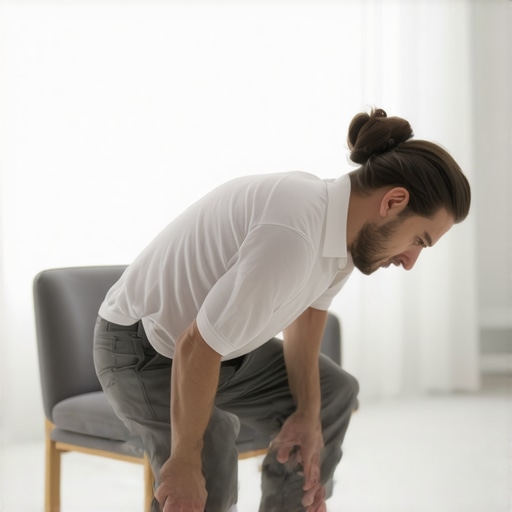
How to handle a sudden back spasm when you are alone
I was just reaching for a rogue sock behind the dryer. That’s all it took. One minute I was a functional human being; the next, I was a human-shaped pretzel frozen in place, unable to take a full breath without a lightning bolt of pain shooting through my lower back. The worst part? The house was silent. My wife was out, the kids were at practice, and I was staring at the dust bunnies under the laundry machine, wondering if this was how I’d spend the rest of my Saturday. If you’ve ever felt that sickening “grab” in your spine, you know the immediate, primal panic that follows. You feel incredibly vulnerable when you’re alone and your own body decides to stage a coup.
Stop Moving and Breathe Before You Do Anything Else
The first thing I did—and the first thing you probably did, too—was try to “shake it out.” That is a massive mistake. I tried to twist my torso to see if I could “pop” it back into place, but all I did was send my nervous system into a full-scale riot. When a spasm hits, your muscles are essentially acting as a biological cast. According to experts at the Cleveland Clinic, these involuntary contractions are often a protective mechanism to prevent further injury to the spine. You need to respect that protection. Instead of fighting it, I want you to find the nearest flat surface—even if it’s the floor—and just breathe. We aren’t looking for “perfect posture” yet; we are looking for a ceasefire.
How I Almost Ruined My Recovery in the First Ten Minutes
Early in my journey of dealing with these flares, I thought I was being smart by immediately grabbing the coldest pack in the freezer. I figured, “It’s inflamed, so freeze it, right?” Wrong. For a sudden, muscular “clamping” sensation, the truth about using heat versus ice for back injuries is that ice can sometimes make those already-angry muscles tighten up even more. I spent forty minutes shivering on an ice pack only to find I was stiffer than when I started. Now, I know better. Once the initial “lightning” fades, the correct way to use a heating pad for muscle spasms is to encourage blood flow and tell those muscles it’s okay to let go.
Is this sudden pain actually worth the panic?
It’s easy to spiral into thinking you’ve herniated a disc or that you’ll never walk straight again. Trust me, I’ve been there, staring at the ceiling and planning my life in a wheelchair. But most of the time, this is a mobility red flag that’s been waving for weeks. Maybe you’ve been ignoring how your couch is the worst place for your spine, or perhaps you haven’t realized that understanding back pain is more about nervous system regulation than just “fixing” a bone. Have you ever been stuck like this, wondering if you should call an ambulance or just wait it out? It’s a lonely, scary spot to be in, but you’re going to get through this.
The Goal for the Next Hour
Our objective right now isn’t to run a marathon. It’s to get you from the floor to a position of comfort without triggering another wave of spasms. We’re going to focus on gentle resets. I’m going to walk you through the exact sequence I use to “talk” my nervous system down from the ledge so you can regain your independence.
How to Move Without Re-Triggering the Lightning
When you’re stuck on the floor, your first instinct is to try and sit up like a normal human. Don’t do it. A standard crunch-style sit-up puts massive pressure on your lumbar discs. Instead, you need to master the log-roll. I remember the time I threw my back out reaching for a heavy cast iron skillet; I tried to sit up straight and nearly blacked out from the shock. Now, I know better. You have to move your shoulders and hips as one solid unit. Imagine your torso is a literal log of wood—no twisting, no independent movement of the ribcage. You roll onto your side, use your arms to push your upper body up while your legs swing down toward the floor. This is exactly the proper way to get out of bed to protect your discs, and it’s your only safe exit strategy when you’re in a flare. 
Resetting Your Foundation from the Ground Up
Your spine doesn’t live in a vacuum. It’s the middle of a kinetic chain that starts at your big toe and ends at the base of your skull. If you’re feeling a ‘clamping’ in your lower back, we have to look at the anchors. I once worked with a guy who had chronic lower back stiffness for a decade, only to realize his ankles were as stiff as concrete blocks. When your ankles don’t bend, your lower back has to pick up the slack every time you take a step. It’s a cascading failure. Understanding how a single tight ankle can cause chronic back pain is the ‘aha’ moment for most people. While you’re recovering, avoid walking in flimsy slippers or going barefoot on hardwood floors, as why your slippers might be causing your lower back stiffness often comes down to a lack of arch support that forces your spine to overcompensate.
The Hidden Connection Between Your Ribs and Your Hips
Think of your torso like a soda can. If the top (your ribcage) and the bottom (your pelvis) are aligned and pressurized, the can is incredibly strong. If you crush or tilt one side, the whole structure collapses. This is why we look at your ribcage movement for better mobility during a recovery phase. If you can’t expand your ribs when you breathe, you’re likely using your lower back muscles to pull air into your lungs. That’s 20,000 ‘reps’ of back strain every single day just from breathing.
Why Your Bracing Strategy Might Be Backfiring
You’ve probably been told to ‘tighten your core,’ but most people do this by sucking their belly button in. This actually thins out your support system. Real stability comes from an outward ‘brace,’ like you’re preparing to be poked in the stomach. If you feel like your middle is weak despite doing planks, it’s worth investigating why your core isn’t engaging during your workouts correctly. Once you find that 360-degree expansion, you can start using the isometric hold that builds a bulletproof core to lock everything in place while you navigate the house.
Managing the Mental Spike of a Flare-Up
Lastly, you have to address the stress. When you’re in pain, your brain enters survival mode, which dumps cortisol and adrenaline into your system, making your muscles even tighter. It’s a vicious cycle. I’ve noticed in my own life that why your neck hurts more when you are stressed is often because your shoulders have migrated up to your ears without you realizing it. Low, slow nasal breathing isn’t just ‘woo-woo’ advice; it’s a physiological override that tells your nervous system to stand down.
Now that the initial panic has subsided, we need to talk about the ‘logic’ we use when our bodies fail us. Most people assume that if a muscle feels tight, it needs to be stretched. This is perhaps the most common trap in the world of mobility. I spent years trying to touch my toes to ‘cure’ my stiffness, only to find that why stretching a tight muscle isn’t always the answer is because that tension is often a protective ’emergency brake’ pulled by your brain. If your spine feels unstable, your nervous system will tighten the surrounding muscles to prevent you from snapping a disc. When you stretch those muscles, you’re essentially cutting the brake lines on a car parked on a hill.
Don’t Stretch That Tight Muscle Just Yet
The most frequent mistake I see—the ‘oops’ factor that keeps people in a cycle of chronic pain—is the obsession with the hamstrings. You feel a tug in your lower back, so you immediately start reaching for your feet. However, why stretching your hamstrings won’t fix your back pain often comes down to pelvic positioning. If your pelvis is tilted forward, your hamstrings are already being pulled taut like a guitar string. Stretching them further just irritates the sciatic nerve and destabilizes your base. In my own recovery, I had to learn that the goal isn’t to be ‘flexible’; it’s to be ‘adaptable.’ Dr. Stuart McGill, a leading expert in spine biomechanics, notes that many patients with back issues actually have *too much* mobility in certain spinal segments, not too little. They need stiffness, but the right kind of functional stiffness.
The Mistake of Forcing Your Spine into a Straight Line
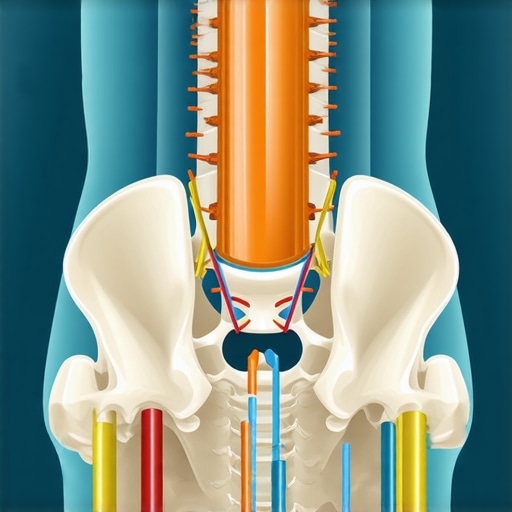
We’ve been told since kindergarten to ‘sit up straight,’ but why your perfect posture is actually making you stiff is a nuance most people miss. When you force a military-straight spine, you’re often ‘hinging’ at a single vertebrae and cutting off the natural shock-absorption of your spinal curves. This creates ‘hot spots’ of pressure. Furthermore, if you are constantly bracing, you might find why your strong core might actually be too rigid. A core that can’t relax is just as dysfunctional as a core that can’t engage. You need to be able to move through your mid-back without over-taxing your lumbar. This is why back pain recovery is less about ‘fixing’ a bone and more about retraining how you load your body.
Is your quest for ‘perfect’ alignment actually causing your stiffness?
Many of my readers ask if they should just buy a better chair or a corset. The truth is, no piece of equipment can compensate for a lack of movement variety. Another classic trap? The foam roller. I beg you: stop rolling your lower back on a hard foam roller. The lumbar spine doesn’t have the protection of the ribcage like the upper back does. When you mash a hard cylinder into those vertebrae, you’re just bruising the soft tissue and potentially causing more inflammation. Have you ever fallen into this trap of stretching a ‘tight’ spot only for it to feel worse an hour later? Let me know in the comments. We need to move away from the ‘no pain, no gain’ mentality and toward a ‘listen and adapt’ strategy. Understanding these nuances is the difference between a three-day recovery and a three-month ordeal.
Once you’ve successfully navigated the acute crisis of a back spasm, the real work begins. It’s easy to become complacent once the ‘lightning’ stops, but that’s exactly when you’re most at risk for a relapse. I’ve found that my own longevity depends on a few non-negotiable tools and a shift in perspective from ‘fixing’ to ‘maintaining.’ If you want to keep the progress you’ve made, you have to look at your environment as either a supporter or a saboteur of your recovery.
The Three Tools I Use to Stop Flares Before They Start
I don’t just recommend a lumbar roll because I’m a posture geek; I use one because, without it, my L5-S1 joint feels like it’s being ground into dust after twenty minutes of emails. I personally use a high-density foam roll specifically designed for the lumbar curve. Knowing the correct way to use a lumbar roll in your office chair is a game-changer because it prevents the ‘C-shape’ slump that overstretches your posterior ligaments. I also swear by a simple, firm wedge for my car seat to keep my hips slightly higher than my knees, which prevents my pelvis from tucking under and pulling on my lower back.
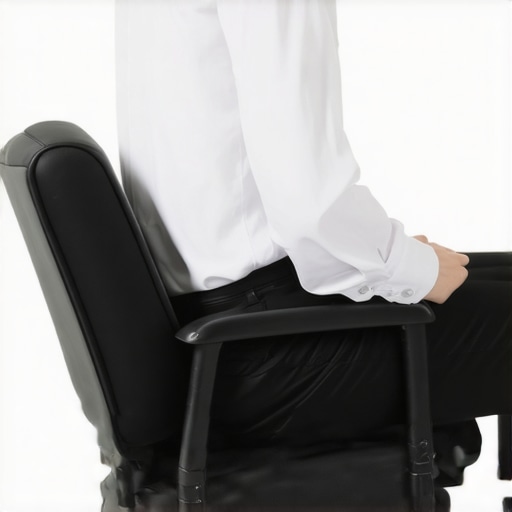
Beyond external supports, I’ve found that strengthening your glutes to take the pressure off your spine is the ultimate long-term tool. Your glutes are the engines of your movement; when they go offline, your lower back tries to do their job, which it was never designed for. Movement expert Dr. Kelly Starrett, author of Becoming a Supple Leopard, emphasizes that ‘all human beings should be able to perform basic maintenance on their own bodies.’ For me, that means a daily dose of the 90/90 hip stretch and a focused commitment to the 3-minute morning routine to lubricate your joints. It’s about creating a ‘movement snack’ habit rather than a once-a-week buffet of exercise.
How Can I Keep My Spine Working in a Desk-Heavy World?
Consistency is the only currency the nervous system accepts. You can’t out-adjust a lifestyle that involves sitting for ten hours a day in a poorly designed setup. This is why I tell everyone to audit their workstation immediately. If your monitors are too low, you’re inviting a host of cervical issues; understanding why your screen height is the real cause of your headaches can save you years of chronic tension. We are also seeing a massive trend toward AI-driven posture sensors—wearable tech that vibrates when your shoulders round or your head drifts forward. While tech can help, it shouldn’t replace your internal awareness. I predict that in the next few years, ‘proprioceptive training’ will be as common as heart-rate monitoring for anyone serious about spinal health.
Ultimately, restore your range how chiropractic care enhances movement by treating the cause, not just the symptom. If you find yourself slipping back into old patterns, try this right now: perform the 10-second posture check you can do anywhere. It’s the fastest way to reset your brain-body connection. If you’re dealing with lingering stiffness, don’t wait for the next lightning strike to find neck pain no more expert chiropractic solutions that work for your specific needs. Maintenance isn’t a chore; it’s the price of admission for a body that allows you to do what you love.
The Painful Truths I Learned the Hard Way
After years of cycling through “good” weeks and “crippled” weekends, I realized that my back wasn’t actually broken; it was just communicating in the only way it knew how. One of the biggest shifts for me was realizing that movement variety is more important than holding a stiff, perfect position. If you stay in one spot too long, your brain sends a threat signal. I also learned that relieve neck back discomfort using these expert methods requires addressing the lifestyle habits, not just the symptom. Another huge realization? My “tightness” was actually weakness in disguise. When I stopped stretching and started stabilizing, the constant low-grade ache finally vanished.
My Daily Arsenal for a Bulletproof Spine
I don’t leave my spinal health to chance anymore. My toolkit is simple but non-negotiable. First, I always have a McKenzie Lumbar Roll attached to my office chair to maintain that natural curve. #IMAGE_PLACE_HOLDER_E# I also rely on the best exercises to keep your spine young, like the Bird-Dog and Dead Bug, to keep my core firing without straining my discs. Lastly, I use a high-quality firm wedge in my car, which changed the game for my commute. These aren’t just gadgets; they are structural insurance policies.
Take Back Control of Your Movement Today
A back flare-up feels like the end of the world when it’s happening, but it’s actually an opportunity to recalibrate. You aren’t fragile, and you aren’t destined to live in pain. By implementing mobility mastery expert tips for back pain prevention and recovery, you can move from a place of fear to a place of function. Remember that back pain recovery is a journey of small, consistent wins. Trust the process, listen to your body, and don’t be afraid to move again. You’ve got this.
Have you ever found that a specific tool or habit completely changed how often you experience back flares? Let me know in the comments below!