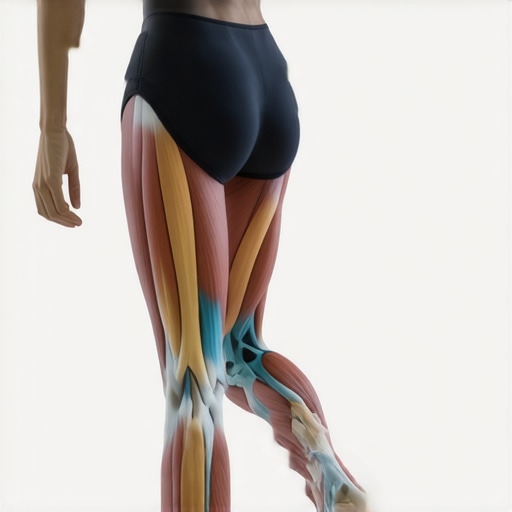
How to use a tennis ball to fix that spot under your shoulder blade
I spent years trying to reach that one specific spot—the one that feels like a hot marble wedged between your spine and your shoulder blade. I once tried to use the end of a broomstick to poke it into submission, which, as you can imagine, went about as well as a screen door on a submarine. It’s a miserable sensation that makes every minute at your desk feel like an endurance test. Today, I’m going to show you how a yellow ball from the bottom of your garage can do more for your mobility than those hundred-dollar vibrating massage guns ever did. We’re going to pinpoint the exact muscle, find the “sweet spot,” and actually get it to release without making things worse.
Get Rid of That Persistent Burn Under Your Shoulder Blade
Most people assume that when their back hurts, they need to stretch it out or perhaps roll it flat. I made the classic mistake of thinking that rolling my lower back would somehow fix the tension creeping up into my neck. I was wrong. That “spot” is usually a trigger point in your rhomboids or your levator scapulae, and standard stretching often just pulls on the muscle without actually releasing the knot. If your mid-back feels like it needs to pop constantly, you’re likely dealing with a muscle that has simply forgotten how to relax. The reason we’re using a tennis ball instead of a lacrosse ball or a foam roller is simple: it has just enough “give” to be effective without being so hard that it causes your body to guard and tense up even more. Have you ever tried to use a hard tool and ended up feeling more bruised than better?
Is a Five-Dollar Sports Ball Really Better Than a Professional Massage?
It sounds like a gimmick, but the science of myofascial release is pretty solid. According to research published in the Journal of Bodywork and Movement Therapies, localized pressure on trigger points—known as ischemic compression—can effectively reduce pain and improve range of motion by temporarily restricting blood flow and then “flushing” the tissue when the pressure is released. While a massage is great, you can’t take your therapist home and put them between you and your office chair. This DIY method is about consistency and precision. We often find that screen height issues and poor desk ergonomics are the root causes, but the tennis ball is your tactical tool for immediate relief. If you’ve been wondering why your shoulder blades start burning by 2 PM every single day, it’s time to stop ignoring it and start addressing the tissue quality directly. Let’s look at the exact mechanics of how to set this up against a wall so you don’t accidentally send the ball flying across the room.
Lean Into the Wall Instead of the Floor
When you’re first starting out, ignore the urge to lie flat on the ground. Gravity is a harsh mistress, and putting your full body weight onto a tennis ball usually triggers a protective reflex where your muscles clinch up even tighter. Instead, stand against a smooth wall. Think of the wall as your volume knob; you can lean in for more intensity or step back to ease off. I usually tell people to start by placing the ball right between the spine and the inner edge of the shoulder blade. If you go too far over and hit the bone, it’ll feel like a sharp toothache—move back toward the meaty part of the muscle. This is the same principle we use when we check your pelvis to solve mid-back tension, looking for the root of the mechanical snag rather than just rubbing the surface. 
Find the Sweet Spot Without Overdoing It
Once the ball is tucked into that burning zone, don’t start rolling wildly. This isn’t a pizza dough exercise. You want to hunt for the ‘trigger point’—the part that makes your breath hitch slightly. When you find it, stay there. You are looking for a ‘productive pain,’ something around a four out of ten. If you go to an eight, your nervous system flips into fight-or-flight mode, and the muscle won’t release. This is a common pitfall when people try the proper way to use a foam roller on your upper back; they go too hard too fast. I remember my first real attempt at this; I was so desperate for relief that I leaned back with everything I had. The ball shot out from behind me like a projectile, nearly breaking a vase, and my back felt like I’d been punched the next morning. I learned the hard way that ‘gentle and sustained’ beats ‘aggressive and brief’ every single time.
The Pin and Stretch Motion
Now for the secret sauce: the movement. While keeping the ball pinned against that specific knot, slowly reach your arm across your chest as if you’re trying to grab the opposite shoulder. Then, reach that same arm up toward the ceiling. This is called a ‘pin and stretch.’ By holding the trigger point in place with the ball while moving the muscle underneath it, you are manually breaking up the adhesions. It’s like holding a garden hose down while you pull the kinks out. This creates a much deeper release than just static pressure. If you’ve been relying on the 30 second move to stop mid-day shoulder burn, adding this tennis ball technique will feel like upgrading from a candle to a spotlight. It’s also important to remember that why stretching a tight muscle isnt always the answer—sometimes the muscle is already overstretched and weak, and it needs this specific ischemic compression to reset its resting length. Spend about 90 seconds on each side, breathing deeply into your belly to signal to your brain that it’s safe to let go.If you’ve been doing these tennis ball releases for a week and the pain keeps coming back, we need to talk about why ‘more stretching’ is often a trap. Most people treat their body like a piece of old leather that just needs to be pulled and softened. But your nervous system is more like a high-end security system. If it senses instability elsewhere, it will ‘bolt the doors’ by tightening your upper back. This is why stretching a tight muscle isnt always the answer. In fact, research in the *International Journal of Sports Physical Therapy* suggests that over-stretching a muscle that is already in a lengthened, weak state—like your rhomboids after a day of slouching—can actually trigger more pain, not less. You aren’t fixing a ‘short’ muscle; you’re aggravating an exhausted one.
Why Does My Neck Still Hurt Even After My Back Feels Better?
The ‘Oops Factor’ I see most often is what I call ‘chasing the ghost.’ You feel the burn under your shoulder blade, so you attack that spot relentlessly. But the body is a closed kinetic chain. Often, your upper back is working overtime because your pelvis is out of alignment, forcing your spine to compensate. This is precisely why we check your pelvis to solve mid-back tension. If your foundation is tilted, the top of the tower has to lean to stay upright. You might spend hours on a tennis ball, but if you don’t address the hidden link between neck pain and spinal health, you’re just putting a band-aid on a structural leak. 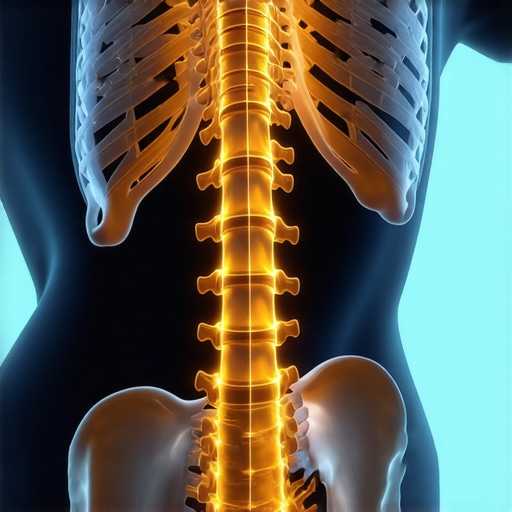 Another subtle nuance is the ‘Perfect Posture Trap.’ I’ve seen patients try so hard to ‘sit up straight’ that they create massive amounts of rigidity in their ribcage. This actually limits your ability to breathe deeply, which then keeps your nervous system in a state of high alert. It’s a vicious cycle where your perfect posture is actually making you stiff. True mobility is about the ability to move through ranges of motion, not staying frozen in one ‘correct’ position. This is why how chiropractic care enhances movement is so effective—it’s about restoring the *function* of the joints, not just the appearance of the spine. Have you ever fallen into this trap of trying to force yourself into a ‘perfect’ posture only to end up with more headaches? Let me know in the comments. If you’re tired of the DIY guesswork and want a professional look at the root cause, feel free to contact us to see how we can help you revitalize your mobility.The tennis ball is your emergency ‘reset’ button, but if you want to stop that burning from coming back every Monday morning, you have to look at the gear you use for eight hours a day. I’ve seen people spend two thousand dollars on a mesh chair only to end up with the same mid-back tension because the ‘lumbar support’ was in the wrong place for their height. This is why I advocate for the McKenzie Lumbar Roll. Unlike the squishy foam built into your seat, a firm, portable roll provides a specific mechanical stop that keeps your vertebrae from slouching into a C-shape. I personally use one in my truck because even the best car seats are designed for ‘average’ heights, and I’m definitely not average. When you learn the correct way to use a lumbar roll in your office chair, you’re effectively taking the load off your spinal discs and putting it back onto the bone-on-bone support system of your skeleton. It’s a game changer for anyone who is understanding back pain at a deeper, functional level. The truth is, most ‘ergonomic’ chairs are marketing masterpieces but mechanical nightmares. They are built to look supportive in a showroom, but they don’t account for the fact that your spine is a dynamic system. When you rely on the truth about built-in lumbar support in modern chairs, you’re often settling for a fixed curve that doesn’t match your unique anatomy. By using a portable roll, you can move it up or down an inch to find where your specific vertebrae need the most help. This is part of the process of how chiropractic care enhances movement—it’s about giving your body the right input at the right time.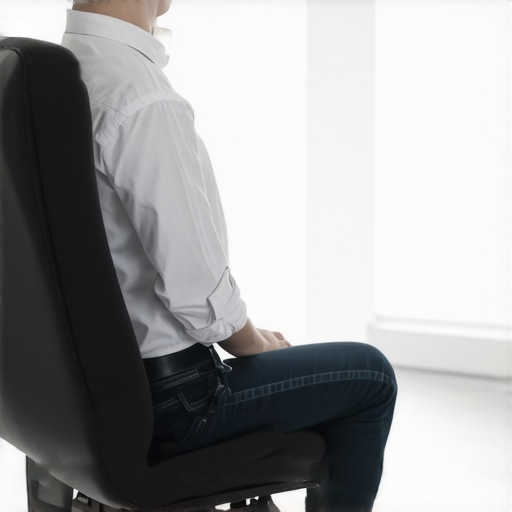
How do I maintain my spinal mobility over time?
The biggest mistake people make is thinking they can ‘bank’ their mobility. You can’t just do one intense hour of yoga on Sunday and expect it to protect you while you hunch over a laptop for the next forty hours. Maintenance is about ‘micro-dosing’ movement throughout the day. I recommend setting a timer for every 45 minutes to perform the 30-second reset for tech neck fatigue. It sounds too simple to work, but consistency is what signals your nervous system to stay ‘open’ rather than ‘locked.’ According to technical data from the McKenzie Institute International, repetitive strain is best countered by regular, opposite-direction movements—meaning if you spend your day bent forward, you must spend your breaks moving backward. This is exactly how to stay mobile when you have a desk job and no time for the gym. If you skip these tiny windows of movement, you’re essentially allowing your fascia to ‘shrink-wrap’ around your bad habits.
Why the Future of Back Health Is Actually Low-Tech
We are seeing a massive influx of AI-posture trackers and vibrating sensors that tell you when you’re slouching, but I predict we will eventually swing back toward more tactile, ‘passive’ corrections. Your brain is much better at responding to the physical sensation of a lumbar roll than it is to a digital notification on your watch. In the next few years, I expect ‘active sitting’ to become the norm—stools that wobble slightly to keep your core engaged, rather than chairs that do all the work for you. My advanced tip for you this week: spend your next three phone calls standing up and pacing around the room. It resets your pelvis and takes the pressure off those rhomboids we’ve been talking about. If you haven’t yet, give the towel trick a try in your car today—your lower back will thank you before you even pull out of the driveway.
Why Chasing the ‘Perfect Spot’ Actually Delayed My Recovery
I spent years thinking that if I just pressed harder on that burning knot, it would eventually disappear for good. I was wrong. The biggest realization I had was that intensity does not equal healing. If you push a muscle into a state of guarding, you are fighting against your own nervous system. I also learned that the spot that hurts is rarely the spot that started the fire; often, checking your pelvis to solve mid-back tension reveals the real culprit. Finally, I realized that my back wasn’t ‘short’ or ‘tight’ in the traditional sense—it was exhausted from being held in a rounded position for ten hours a day. It needed blood flow and gentle movement, not just more aggressive stretching.
The Minimalist Tools I Use Every Day to Stay Mobile
To keep my spine in check without spending a fortune, I rely on three simple things. First is the classic tennis ball, which I keep in my laptop bag for quick resets. Second, I never drive more than twenty minutes without using a rolled-up towel to fix your car’s lumbar support if I don’t have my McKenzie roll handy. Third, I highly recommend reading up on back pain recovery and how chiropractic care transforms lives to understand the long-term structural changes you can make. These tools aren’t just gadgets; they are ways to provide your body with the mechanical hygiene it craves.
Your First Step Toward a Pain-Free Afternoon
You don’t need to be an expert in anatomy to start feeling better; you just need to be willing to listen to what your body is telling you. That burning sensation under your shoulder blade is a signal, not a life sentence. By incorporating these small resets and focusing on revitalizing your mobility through consistent movement, you can break the cycle of chronic tension. Remember, the goal isn’t just to get through the day—it’s to thrive in your body. If you’re ready to look deeper into the hidden link between neck pain and spinal health, we are here to guide you. Have you ever had a tennis ball shoot across the room like I did, or are you already a pro at finding that sweet spot? Let me know in the comments below!