The proper way to carry a toddler without straining your spine
I was standing in the middle of the grocery store when it happened. My two-year-old, Maya, reached up her chubby arms, and like any tired parent, I obliged. I scooped her up, felt a sickening ‘thud’ in my lower back, and spent the next three days practically crawling to the coffee machine. It was a wake-up call. We spend so much time worrying about the ‘right’ stroller or the ‘safest’ car seat, yet we rarely think about the mechanical toll of hoisting a wriggling, growing human forty times a day. If you have ever felt that sharp pinch in your lower back the second you lifted your little one, you know exactly what I am talking about. Today, I am sharing the hard-won secrets that took me from constant ibuprofen use to actually enjoying those ‘carry me’ moments again. We are going to talk about the mechanics, the mindset, and why your hip is not a shelf.
My Spine Met Its Match in a 25-Pound Human
For the longest time, I was the king of the ‘hip-shove.’ You know the move—you pop your hip out to one side and let the toddler rest there like a sack of potatoes while you try to stir a pot of pasta or check your email. I did this for months, oblivious to the fact that I was basically asking for a scoliosis-style disaster. I made the classic mistake of thinking my body was invincible because I used to hit the gym, but a toddler’s weight is ‘dead weight’ in the most challenging way. It shifts, it kicks, and it pulls you out of alignment before you can even say ‘don’t touch that.’ I realized that understanding back pain wasn’t just for people in their 60s; it was a survival skill for me right now as a parent in the trenches. According to Harvard Health, leaning even slightly forward while holding a load can increase the pressure on your spinal discs by four times. Multiply that by a 25-pound kid who is actively fighting a diaper change, and it is no wonder our backs are screaming. I used to think I could just power through it, but pain is a loud messenger that we often choose to ignore until we literally cannot stand up straight.
The One Hip Habit That Ruined My Posture
My biggest failure was the total lack of symmetry in how I moved. I always carried Maya on my left side. Always. My left hip became a permanent shelf, and my right side became a stretched-out rubber band that had lost its snap. This created a massive imbalance that led to what my chiropractor called ‘functional compensation.’ Basically, my body was twisting itself into a pretzel just to stay upright. I had to learn expert methods to relieve neck and back discomfort because the pain eventually started traveling upward into my shoulder and neck. It is funny how we learn the hard way, isn’t it? I used to think reading about how to pick up your laundry basket without the burn was a bit excessive, until I realized that those tiny repetitive movements are exactly what wear us down. We have to stop treating our bodies like rusty cranes and start treating them like the precision instruments they actually are. When we carry a child, we aren’t just holding weight; we are managing a shifting center of gravity.
Can a simple shift in weight really fix this?
You might be skeptical. You might think, ‘Look, I have a kid, my back is just going to hurt for the next five years, that is just the price of admission.’ I thought that too. I figured a heating pad and a grimace were my new best friends. But once I started applying proven chiropractic techniques to my daily movement, everything changed. It isn’t about being a perfect athlete; it is about being an intentional parent. Have you found yourself leaning to one side just to compensate for the weight of your child, even when you aren’t holding them? If so, you are already halfway to a major flare-up. We are going to fix that right now by looking at the ‘center-carry’ and the ‘pelvic-tuck’ methods that saved my mobility and allowed me to keep being the ‘fun’ parent without the debilitating ‘day-after’ soreness.
Stop Turning Your Hip into a Permanent Shelf
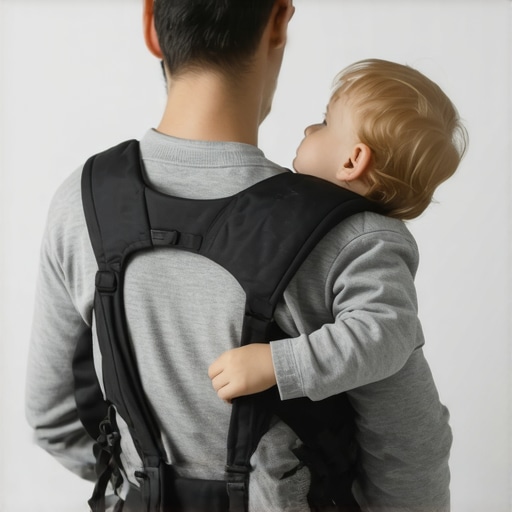
The biggest shift I made wasn’t some complex workout; it was simply moving Maya from my hip to my center. Think of your body like a tower of blocks. When you pop your hip out, you’re kicking the foundation out from under the structure. Instead, I started using the ‘Center-Carry.’ You pull the child directly against your chest, keeping their weight distributed across your sternum and both hips simultaneously. This prevents that localized pressure on the SI joint that leads many of us to seek proven chiropractic strategies to fix our alignment. When I first tried this at a chaotic birthday party, I felt like a human shield, but my back felt… nothing. No twinge, no pull, just solid support.#IMAGE_PLACE_HOLDER_B#
Keep the Bowl Level to Save Your Lumbar
Imagine your pelvis is a bowl filled to the brim with water. When most parents lift, they tip the bowl forward, letting the water spill out the front. This arches your back and puts every ounce of the child’s weight directly onto your lowest vertebrae. I had to learn to ‘tuck the tailbone’—a slight rotation that levels the bowl. This engages the deep stabilizers. If you’ve ever wondered why your core routine is failing your spine, it’s usually because you aren’t activating these muscles during the actual lift. I remember the first time I consciously tucked my pelvis while Maya was mid-tantrum; the weight suddenly felt lighter because it was being held by my glutes and abs rather than my literal spine.
The Hip Hinge Is Your New Best Friend
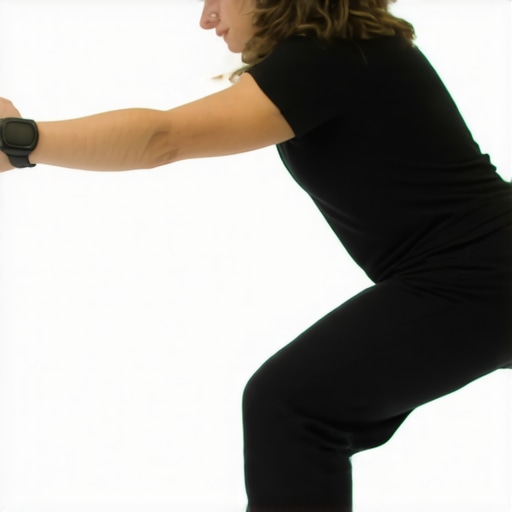
Most of us bend at the waist like a folding chair. That’s a recipe for a disc herniation. Instead, use the ‘hip hinge.’ Imagine there is a button on the wall behind you and you have to press it with your butt. This forces your hips to do the work while your spine stays as straight as a ruler. This is the same hip hinge trick for pain-free gardening and it works just as well for picking up a 30-pound human off the playroom floor. When I started doing this, the ‘burn’ moved from my lower back to my hamstrings—which is exactly where it belongs.
Why Symmetry Matters for Your Neck Too
Believe it or not, how you hold your child affects your head. When you’re lopsided, your neck has to tilt the opposite way to keep your eyes level. This is why we look at your pelvis when your neck hurts in a clinical setting. I spent weeks trying to rub out a knot in my shoulder, only to realize it was there because I was constantly tilting my torso to the left. By focusing on tips from the pros on bilateral movement, I noticed that my ‘tension headaches’ virtually disappeared. It wasn’t stress; it was just bad physics.It is a common misconception that if a muscle feels tight, you should stretch it until it screams for mercy. In my early days of toddler-toting, I would spend twenty minutes every night cranking on my hamstrings, thinking I was helping my lower back. I was wrong. Often, why stretching a tight muscle isn’t always the answer comes down to protective tension. Your brain is essentially ‘locking’ those muscles to protect an unstable spine. If you force them to loosen without addressing the underlying stability, you are removing the only thing keeping your discs safe. This is where proven strategies for back pain relief move past simple stretches and into neurological resets.
The Myth of Sitting Perfectly Still
Most of us were told to ‘sit up straight’ like we are in the Victorian era, but this rigid approach is a fast track to chronic fatigue. When you lock your spine into one ‘perfect’ position, you are creating a static load that prevents blood flow to the discs. I used to think my ergonomic chair was the problem, but why your perfect posture is actually making you stiff is really about a lack of micro-movements. Your spine thrives on variety, not static perfection.
Why does my back hurt even when I am sitting up straight?
The ‘military posture’ trap forces your muscles to work in a way they were not intended for. Research from Dr. Stuart McGill, a world-renowned expert in spine biomechanics, shows that excessive ‘bracing’ or ‘hollowing’ of the stomach can lead to high levels of spinal compression. If you find yourself holding your breath to maintain a straight back while the kids play around you, your strong core might actually be too rigid. This rigidity prevents the natural shock absorption your body needs. #IMAGE_PLACE_HOLDER_C#
Unlock Movement Instead of Forcing It
Real progress happens when you stop fighting your body and start listening to the neurological signals it sends. Another hidden nuance is ‘gluteal amnesia’—the phenomenon where your brain ‘forgets’ how to fire your butt muscles because you have been sitting or carrying with heavy compensation for too long. To truly enhance movement, you need to re-establish that mind-muscle connection. It is the difference between a sharp twinge when you lift your child and feeling like you have a solid, stable base. Have you ever fallen into this trap of over-stretching or trying to maintain a ‘perfect’ posture only to feel more stiff the next day? Let me know in the comments, because I suspect many of us are making these ‘advanced’ mistakes without even realizing it. It is time to move beyond the basics.
Why a Tennis Ball Is My Most Important Parenting Tool
It sounds ridiculous, but alongside the diaper wipes and the spare change of clothes, I keep a standard yellow tennis ball in my bag. Why? Because after three hours of carrying a toddler through the zoo, that knot under my shoulder blade starts to feel like a hot coal. I learned how to use a tennis ball to fix that spot under your shoulder blade by leaning against a wall and letting the pressure do the work. It is a targeted, pinpoint release that a massive foam roller just can’t touch. This isn’t just about ‘feeling good’; it is about preventing the compensatory patterns that eventually lead to neck and back discomfort. If I can release that specific trigger point in two minutes, I won’t spend the rest of the night leaning to the left and ruining my alignment.
Don’t Roll Your Lower Back With a Foam Roller
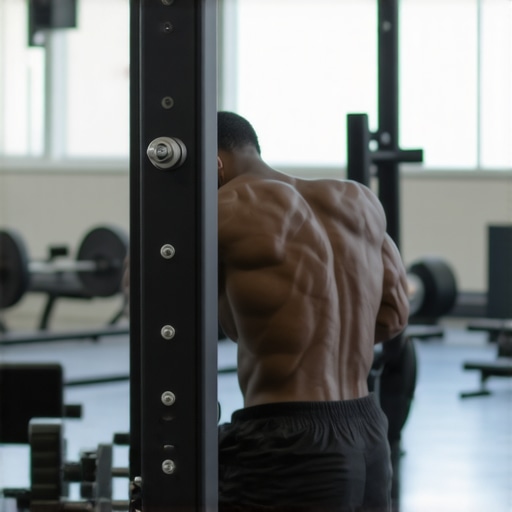
I see so many parents at the gym or in the living room trying to fix their aches by rolling their lower back over a plastic cylinder. Please, stop. Your lumbar spine is meant for stability, and smashing it with a roller often causes the muscles to guard even harder. Instead, I focus on the proper way to use a foam roller on your upper back to open up the thoracic cage. This indirectly takes the pressure off the lower back. As Dr. Kelly Starrett of The Ready State often emphasizes with his ‘one-joint rule,’ keeping the spine in a braced, neutral position while moving the hips or shoulders is the key to longevity. When we lose that thoracic mobility because we are hunched over a crib, our lower back has to move in ways it was never designed for.#IMAGE_PLACE_HOLDER_D#
How do I maintain this mobility over time?
The secret isn’t a 90-minute yoga class once a week; it is the 30-second resets. I have integrated mobility mastery into my daily routine. For example, every time I go to pick up Maya’s toys from the floor, I perform one perfect hip hinge. When I am standing at the kitchen counter, I do a quick check of my pelvic tilt. These micro-habits ensure that regaining full mobility isn’t a one-time event, but a continuous state of being. I also make it a point to see my chiropractor once a month, not because I am in pain, but because testing your balance during a spinal checkup can reveal tiny neurological shifts before they turn into a full-blown spasm.
The High-Tech Future of Your Low-Back Health
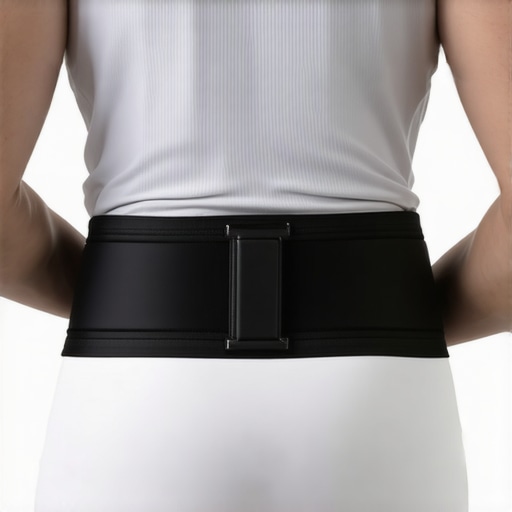
Looking ahead, I believe we are moving away from ‘one-size-fits-all’ posture braces and toward bio-individual feedback. We are already seeing wearable sensors that vibrate when your spinal alignment shifts into a ‘high-load’ position. While I love the tech, I still believe the ‘internal’ sensor of proprioception is your best defense. The future of parenting without back pain lies in combining these chiropractic techniques with a heightened awareness of how we move in the mundane moments. My challenge to you today: the next time you pick up your child, consciously ‘tuck your tailbone’ and feel your glutes do the heavy lifting. Your spine will thank you tomorrow morning.
The Hardest Lesson I Learned While Hoisting a Toddler
Looking back, I realize I spent years treating the symptoms of my discomfort rather than the source. One of the biggest shifts came when I stopped guessing about temperature; I found that the truth about using heat versus ice is often the difference between a muscle that relaxes and one that stays in a protective spasm. I also learned that the environment matters more than we think. For example, walking on concrete while carrying a heavy toddler adds a layer of joint compression that simply isn’t there on grass or carpet. Finally, I stopped ignoring my equilibrium. I realized that testing your balance during a spinal checkup can identify the tiny postural shifts you make to compensate for a wiggly two-year-old before they turn into a permanent injury.
The Recovery Gear I Keep in My Diaper Bag
If you want to stay mobile in the trenches of parenting, you need a toolkit that works as hard as you do. I never leave home without a tennis ball—it is the only way to reach that deep, burning spot between the shoulder blades. You can see how to use a tennis ball for relief and keep your upper back from locking up. I also swear by a small lumbar roll for the car; learning the correct way to use a lumbar roll saved me from the dreaded ‘car-seat slouch’ that ruins my posture before I even get to the park. For my morning routine, I’ve replaced static stretching with the Spider-Man stretch to wake up my hips and spine before the morning chaos begins.
#IMAGE_PLACE_HOLDER_E#
You Don’t Have to Trade Your Health for These Memories
Parenting is a physical marathon, but your body is designed to handle the load if you give it the right support. By integrating these chiropractic techniques into your daily life, you aren’t just managing back pain; you are investing in your future ability to stay active with your children as they grow. You deserve to enjoy these moments without the constant shadow of a flare-up hanging over your head. Remember, your spine is the foundation of every hug, every lift, and every game of chase. Treat it with the respect it deserves, and it will carry you through these years with ease. Which ‘lifting mistake’ are you most guilty of—the hip-shelf or the straight-leg bend? Let me know in the comments below!