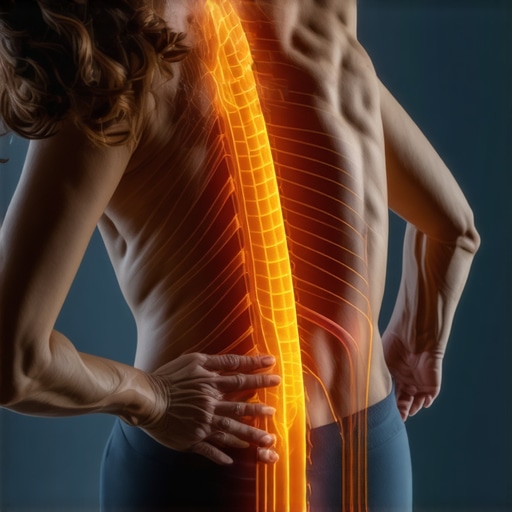
How to pick up your laundry basket without the burn
I was standing there, staring at a mountain of damp towels, feeling like an absolute champion until I reached down to grab the plastic handles. Pop. That familiar, agonizing zing shot right through my lower back, leaving me frozen in place like a poorly constructed mannequin. It is genuinely embarrassing, isn’t it? We survive the gym, we survive the daily commute, and then we get taken down by a load of whites. I spent years making the classic mistake of rounding my spine like a scared cat every time I approached the hamper, thinking my core was “strong enough” to handle it. This moment was my rock bottom in the laundry room, leading to three days of hobbling around and regretting every life choice.
The Laundry Room Shouldn’t Be a Danger Zone
Today, I want to show you exactly how to stop that “laundry day burn” for good. We aren’t just talking about bending your knees; we are talking about a total shift in how you move through your house. I realized that understanding back pain means recognizing that every small movement counts, especially when you are tired or in a rush. When I finally stopped ignoring the little twinges and started using effective chiropractic hacks in my daily routine, everything changed. According to the Bureau of Labor Statistics, overexertion and bodily reaction are leading causes of nonfatal workplace injuries, and the same biomechanical rules apply to your hallway as they do to a warehouse. If you are tired of feeling like you need a heating pad just to get through a simple chore, you are in the right place. We are going to look at the geometry of your spine and why that basket is actually a lever working against you.
Is a plastic basket really heavy enough to ruin your week?
You might think I am being dramatic. It’s just laundry, right? But the repetitive nature of lifting, twisting, and carrying awkward loads is exactly what causes the most chronic trouble. Many people assume their muscles are just tight, but why stretching your hamstrings wont fix your back pain is a lesson I learned the hard way. I used to stretch for hours thinking it would loosen my spine, but the real issue was my lack of a functional hinge. Have you ever felt that sudden “twinge” while just trying to get the chores done? It’s a sign your body is screaming for a better approach. Using the hip hinge trick isn’t just for yard work; it is the ultimate tool for moving a full basket from the washer to the dryer without that dreaded spinal flare-up. When I first started practicing this, I felt silly, but my back stopped screaming at me, and that is the only metric that matters. Let’s dive into the mechanics of why your back is currently protesting and how we can fix it before the next load is dry.
Bring the Basket to Your Level
The biggest mistake most of us make is treating the floor as the starting line. When you reach all the way down to a low basket, you are essentially asking your lower back to act as a crane while it is in its most vulnerable, stretched-out position. Instead, I started using a sturdy chair or even a folding table to keep the basket at waist height. This simple change removes the deep flexion that puts so much pressure on your lumbar discs. If you find yourself constantly reaching for the floor, you might notice the specific reason your lower back hurts after washing dishes is often the same culprit: prolonged, slight forward leaning. By elevating the load, you keep your spine in a neutral ‘stack’ rather than a precarious curve.
The Hinge That Protects Your Spine
If you absolutely must reach low, you have to ditch the ‘reach and grab’ and adopt the hip hinge. Think of your hips as a high-quality door hinge and your spine as the solid door itself. The door shouldn’t bend in the middle; the movement should happen entirely at the hinge. When I first tried this, I felt like I was sticking my butt out way too far in the middle of the laundry room, but that is exactly the point. You want to shift your weight into your heels and let your glutes take the strain. I used to think my core was doing the work, but often why your strong core might actually be too rigid is because you aren’t allowing your hips to move freely. 
Keep the Load Close to Your Center
Physics is a cruel mistress when it comes to spinal health. The further a heavy object—like a wet bundle of towels—is from your body, the more ‘leverage’ it has to pull your vertebrae out of alignment. I learned this the hard way during a chaotic Sunday morning when I tried to snatch a heavy basket of damp jeans while reaching over the side of the washer. I felt a pop that grounded me for a week. Now, I make it a rule to hug the basket close to my belt buckle. This keeps the center of mass over your base of support. Whether you are doing laundry or learning the best way to carry a heavy box up stairs, the rule is the same: the closer the weight, the lighter the load on your spine.
Why Your Pelvis is the Secret to Lower Back Safety
Most people focus on their shoulders or their lower back, but the real power (and protection) comes from the pelvis. If your pelvis is tilted too far forward or backward, your spine has no foundation. In my own journey, I realized that why we check your pelvis to solve mid-back tension is because everything is connected. When you are lifting that laundry, try to keep your pelvis ‘level’ like a bowl of water you don’t want to spill. This engages the deep stabilizing muscles naturally without you having to overthink it. By strengthening your glutes to take the pressure off your spine, you create a natural brace that handles the weight of the laundry so your delicate spinal joints don’t have to. I once spent an entire afternoon trying to ‘ninja’ a double load of laundry by twisting my torso while my feet were planted. It was a disaster that ended in a heating pad and regret. Now, I pivot my whole body with my feet, ensuring my nose and toes are always pointing in the same direction.We’ve all heard it: “Sit up straight!” But here is the nuance most people miss: forcing yourself into a rigid, military-style posture can actually be the very thing keeping you in pain. I spent months trying to maintain a perfect 90-degree angle at my desk, only to find that why your perfect posture is actually making you stiff is because muscles aren’t meant to be isometric anchors for eight hours a day. In fact, a landmark study published in the British Journal of Sports Medicine found that “good” posture is a myth; instead, the most effective way to prevent pain is to prioritize movement variability over a single fixed position. If you are constantly bracing while doing simple chores, why your strong core might actually be too rigid becomes a real problem because you’re essentially creating a pressure cooker in your lumbar spine that limits blood flow and natural joint glide. 
Does your back feel stiffer the harder you try to sit up straight?
This is what I call the Posture Trap. When you force a position, you often recruit the wrong muscles. I see people all the time trying to fix their neck pain by pulling their shoulders back with all their might, not realizing that the hidden link between neck pain and spinal health often starts with how your ribcage moves, not just the position of your chin. Another massive “oops” factor is the obsession with stretching everything that feels tight. We think if it’s tight, we must pull on it. But why stretching a tight muscle isn’t always the answer is because that muscle might be “locked long”—it’s already stretched to its limit because your pelvis is out of alignment, and your brain is tightening it to prevent further instability. Pulling it even further is like tugging on the ends of a frayed rope. Instead, you need to look at why we check your pelvis to solve mid-back tension to find the root cause. This is where advanced chiropractic logic beats basic gym advice every time. We aren’t just looking for what hurts; we are looking for why your body is over-compensating elsewhere. If you are constantly rubbing your neck while doing laundry or dishes, you might need to learn how to tell if your headache is starting in your neck or if it is a symptom of a deeper mobility gap in your mid-back. When we look at mobility mastery, it’s about having the capacity to move through messy, real-world positions without your brain hitting the panic button. If you find yourself obsessing over every millimeter of your spine, you are likely creating anticipatory guarding, which makes you more fragile, not less. Focus on the 3-minute morning routine to lubricate your joints so that movement feels fluid and natural. Have you ever fallen into the trap of trying to have perfect posture only to end up in more pain? Let me know in the comments.Once you’ve moved past the initial ‘oh no, my back!’ panic, the real work begins: the boring, daily maintenance that keeps you from ever seeing that heating pad again. I’ve found that the secret isn’t a thousand-dollar ergonomic chair; it’s a few cheap tools and a relentless commitment to revitalize your mobility. For me, the game-changer was finally learning the correct way to use a lumbar roll in your office chair. I spent years just shoving a decorative pillow behind me, but that often led to making my back stiffer because it wasn’t providing specific support to the natural lumbar curve.
Stop Chasing Short-Term Relief
I also had to stop the ‘weekend warrior’ mentality with my foam roller. You see people at the gym rolling their lower back like they’re trying to tenderize a steak, but you should really stop rolling your lower back on a hard foam roller. The lumbar spine doesn’t have the protection of a ribcage, and you’re often just jamming joints together. Instead, I pivoted to focusing on the proper way to use a foam roller on your upper back, which is where the real mobility wins are hidden. When your mid-back can actually move, your lower back doesn’t have to overcompensate. 
How do I maintain these spinal gains over the long haul?
Maintenance isn’t about two-hour gym sessions; it’s about micro-habits. According to Dr. Stuart McGill, a world-renowned spine biomechanics expert and author of Back Mechanic, the key to a resilient spine is building ‘proximal stiffness for distal mobility.’ This means your core needs to be a stable anchor so your limbs can move freely. If you skip the stabilizing work, you’re just building a house on sand. I’ve integrated boost your back health strategies into my morning coffee routine, using mobility mastery drills while the pot brews.
The Low-Tech Gadget That Actually Works
Looking ahead, I predict we are moving toward ‘smart ergonomics’ where wearable tech will use haptic feedback to warn us about poor posture. But until then, your best tool is your own awareness. If you find yourself slipping into old habits, you need a quick reset. I swear by neck and back pain solutions that focus on the eyes and jaw, as they dictate so much of our spinal tone. My challenge to you is simple: try the 10-second posture check every time you check your phone today. It’s the fastest way to recalibrate your nervous system and ensure your body isn’t working against itself.
Hard Truths from My Years in the Laundry Trenches
One of the biggest ‘aha’ moments I had was realizing that my back didn’t just ‘go out’—it was usually invited out by months of micro-stress and poor habits. We often think of injury as a single explosive event, but it is typically the result of your body finally saying ‘no more’ to repetitive strain. Another major lesson was that back pain recovery isn’t about becoming fragile or moving like a robot; it is about building enough resilience so you can move without overthinking every single step. I also learned that if I waited for the pain to be completely gone before I started moving again, I would be waiting forever. Movement is the medicine that facilitates the healing, not just the final goal of the process.
The Daily Maintenance Toolkit I Swear By
I no longer leave my spinal health to chance, and you shouldn’t either. My first recommendation is the book Back Mechanic by Dr. Stuart McGill; it is a masterclass in understanding how to move without triggering pain. For my workspace, using a lumbar roll correctly has been a lifesaver during the hours I spend planning and writing. I also highly suggest carving out space for a 3-minute morning routine to lubricate your joints before the day’s demands begin. Finally, pay attention to your feet; I found that improving your gait and wearing supportive shoes even inside the house can significantly reduce the load on your lower lumbar spine during long chore sessions.
Your Path to a Spine That Doesn’t Complain
You do not have to live in constant fear of the laundry hamper or the dishwasher. By applying these small shifts in how you hinge, lift, and carry, you are reclaiming your physical independence and taking the target off your back. Managing back pain is a continuous journey of self-discovery, and every time you choose a better movement pattern, you are investing in a future where you can stay active and pain-free. You have the tools and the plan—now it is just about taking that first intentional step. Which household chore usually sets off your back pain first? Let me know in the comments below!