How to breathe into your lower back to reduce muscle spasms
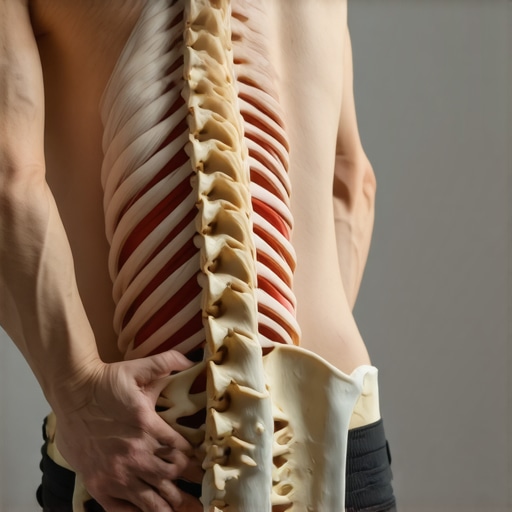
I was leaning over the kitchen sink, scrubbing a stubborn lasagna pan, when it happened. A sudden, white-hot flash in my lumbar spine that literally took my breath away. It’s a terrifying feeling, isn’t it? One second you’re fine, and the next, you’re wondering how to handle a sudden back spasm when you are alone without calling for help. For years, I made the mistake of thinking I just needed to “stretch it out” or pull my knees to my chest, but stretching a tight muscle isn’t always the answer, especially when the muscle is trying to protect you. What I finally discovered—and what we are going to fix today—is that your breath is the only tool that works from the inside out to create space where there is currently only tension. [image_placeholder_1]
Your Ribcage is Trapping Your Lower Back
Most of us are “chest breathers.” We take shallow sips of air, our shoulders shrug up toward our ears, and our lower back stays locked tight like a drum. When I first started looking into the connection between shallow breathing and back pain, I felt a bit foolish. How could something as basic as air be the reason for my lower back hurting after washing dishes? The truth is, your diaphragm is physically connected to your spine. If it isn’t moving right, your lumbar muscles have to pick up the slack. Research from the National Institutes of Health suggests that diaphragmatic breathing can significantly reduce the physiological effects of stress and muscular tension. Have you ever felt like your back was a ticking time bomb just waiting for one wrong move to go off?
Does breathing actually work or is it just hype?
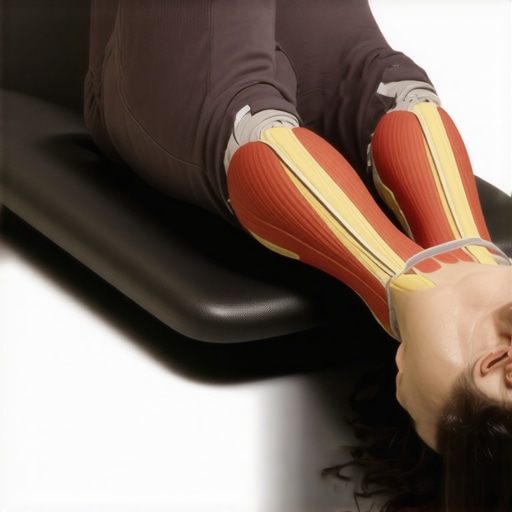
I get it. When you’re in the middle of a spasm that feels like a vice grip, “just breathe” sounds like the most useless advice on the planet. I used to roll my eyes at it too. But I’m not talking about deep sighs or meditative humming. I’m talking about a mechanical expansion of the lower ribcage that physically pushes back against those spasming muscles. It’s like using an internal balloon to create a buffer between your vertebrae. Once I stopped trying to force my back to relax and started using my breath to *make* it relax, everything changed. We’re going to walk through exactly how to send that air down into your “basement” so you can finally get some relief.To start, you need to get on the floor. I know, when your back is screaming, the floor feels a million miles away, but it’s the only place where your spine can actually neutralize without fighting gravity. I remember one Tuesday afternoon, staring at a pile of laundry I couldn’t pick up, feeling like a brittle piece of old wood. I finally sank onto the hard kitchen tile. It wasn’t graceful—I actually knocked over a box of cereal in the process—but the flat surface gave me the immediate feedback I needed. This is essentially a 5-minute reset for a stiff lumbar spine that you can do anywhere, even in your office if you have a private corner. Lie on your back with your knees bent and feet flat; this ‘hook-lying’ position takes the immediate pull off your psoas muscle, which is often the culprit behind that deep, internal back ache.
Breathe Into Your Hands Not Your Chest
Most people think deep breathing means a big chest heave. If your shoulders move toward your ears, you’re just creating more neck tension and keeping your back in a state of high alert. Place your hands on the very bottom of your ribcage, right where the bone meets the soft tissue of your waist. When you inhale, your goal isn’t to push your belly up like a balloon; it’s to push your hands *out* to the sides. This is the lateral move that opens up a tight rib cage and creates internal space where your nerves are feeling pinched. I’ve seen so many patients struggle with this because they’ve been told to ‘keep a tight core’ their whole lives to protect their backs. However, why your strong core might actually be too rigid is a real problem when those muscles refuse to let go for a full breath cycle. You need to give yourself permission to be soft for a moment.
The 360-Degree Expansion Method
Think of your torso like an old-fashioned accordion. When you pull the handles apart, air rushes into the center and the whole unit expands in every direction. Your ribs should do the same. If you only breathe into the front of your body, you’re only using half the bellows and putting more pressure on the front of your discs. You need to feel your back physically pressing into the floor with every inhale. We often find that why we look at your ribcage movement for better mobility is because a ‘frozen’ ribcage is often the primary suspect in chronic lower back stiffness. If your ribs can’t move, your lumbar spine has to move too much to compensate for every step you take, leading to that ‘ticking time bomb’ feeling I mentioned earlier.
Master the Long Exhale
The inhale creates the space, but the exhale is where the neurological ‘let-go’ happens. You want your exhale to be twice as long as your inhale. Try breathing in for a count of four and out for a count of eight. As you blow that air out—slowly, like you’re breathing through a tiny straw—imagine the muscles along your spine melting into the floor like wax. When I first tried this during a particularly nasty flare-up, I actually felt a small, painless ‘pop’ in my mid-back. It was like a stuck gear finally clicking into place after years of being jammed. This is why restore your back mobility proven chiropractic strategies always focus on more than just the bones. It’s about sending a clear signal to your nervous system that the danger has passed and the muscles can stop guarding the area. Without that signal, no amount of stretching will make the tension stay away.We’ve talked about breathing, but let’s look at the biggest lie in the fitness and wellness industry: the idea that every tight muscle needs to be stretched. I used to be a “stretch-aholic.” If my neck felt stiff, I’d pull it to the side for thirty seconds. If my back felt tight, I’d reach for my toes. But here is the nuance: tension is often a symptom, not the primary problem. When your brain senses instability in your spine, it orders your muscles to “splint” the area—essentially turning them into a biological cast. If you try to stretch that “cast” away, your brain panics and makes the muscle even tighter. This is exactly why stretching a tight muscle isn’t always the answer.
The Posture Trap Making You Stiffer
Another trap I see all the time is the “military posture” obsession. We’ve been conditioned to think that “straight” equals “healthy,” but your spine is designed to be a series of curves, not a steel rod. When you force yourself into that hyper-upright position, you’re actually loading your facet joints and fatiguing your spinal stabilizers. Research published in the Journal of Biomechanics suggests that rigid, static postures—even “good” ones—can increase intradiscal pressure and lead to early fatigue. In my experience, why your perfect posture is actually making you stiff is one of the hardest myths to debunk because it feels like you’re doing the “right” thing while you’re actually suffering.
Is my expensive ergonomic chair actually making things worse?
It’s a fair question. You spent a fortune on a chair, yet your neck still burns by 3 PM. The nuance here is that your body craves variability, not just support. No chair can save you if your pelvis is out of alignment from the ground up. I often find that why we look at your feet when your neck hurts is the “hidden” key most people miss. If your arches are collapsing, it creates a kinetic chain reaction that ends with your neck muscles straining to keep your eyes level. This is the hidden link between neck pain and spinal health that a fancy lumbar support simply cannot fix. To truly restore your back mobility proven chiropractic strategies must address these neurological locks rather than just chasing the pain. Have you ever fallen into this trap of over-stretching or forcing “perfect” posture only to feel worse? Let me know in the comments.Once you stop chasing the “perfect” posture and start moving your ribcage, you’ll feel an immediate shift. But how do you stop the old patterns from sneaking back in while you’re focused on a deadline? I rely on a few low-tech “anchors” that keep my nervous system from hitting the panic button. For me, it’s not about a $2,000 chair; it’s about how to stay mobile when you have a desk job and no time for the gym. One of my favorite tricks is remarkably simple: how to use a rolled-up towel to fix your cars lumbar support. I don’t just use it in the car; I use it at my desk to provide a gentle “reminder” to my lower spine to stay neutral without being rigid.
How do I keep my back from seizing up again?
Consistency beats intensity every single time. You don’t need a grueling hour-long routine. I personally spend about three minutes every morning doing a quick scan. I look for where my weight is shifting—because the secret to better balance starts with your big toe. If I’m gripping the floor with my toes, I know my calves are tight, which means my hamstrings are pulling on my pelvis. Dr. Stuart McGill, a world-renowned spine biomechanist, often emphasizes “spinal hygiene” in his work—the idea that it’s not just about the big workout, but the small movements we repeat throughout the day that determine our health. This is why restore your back mobility proven chiropractic strategies are so effective; they address the cumulative micro-stresses that build up while you’re just living your life.
Skip the Fancy Tech and Grab a Bath Towel
If you are going to use a tool, use it with intention. I see people hacking away at their spine with hard rollers, often doing more harm than good. I always teach the proper way to use a foam roller on your upper back, which involves supporting the neck rather than rolling over the lumbar region where you have no ribcage for protection. Remember, your body is an interconnected web; sometimes why we adjust the pelvis to fix neck tension is because the foundation is skewed.
The Next Decade of Spinal Longevity
I predict we are moving toward “active feedback” systems. In the next five years, I think we’ll see wearable sensors that don’t just tell you to “sit up,” but actually vibrate when your diaphragm stops moving correctly or when your pelvic tilt exceeds a certain degree. We are moving away from passive treatments and toward real-time neurological awareness. If you want to start now, try this: set a timer for 20 minutes and, whenever it goes off, simply take one 360-degree breath and check if your jaw is clenched. It’s the most advanced maintenance tool you own, and it’s completely free. These small resets are what keep you from needing an emergency visit later on.
The Hardest Lessons My Spine Ever Taught Me
For years, I believed that if I just worked hard enough at my desk or stretched enough after a workout, my back would eventually fall in line. I was wrong. The most transformative lesson I learned is that pain is a messenger, not a malfunction. When I realized that why your perfect posture is actually making you stiff was a result of me forcing my body into a rigid shape, I finally started to heal. I also had to accept that the source of the pain is rarely where the problem actually lives; for instance, understanding why we look at your feet when your neck hurts changed my entire approach to daily movement. Lastly, I stopped trying to force my way out of tension. Learning why stretching a tight muscle isn’t always the answer helped me stop the cycle of re-injury and start focusing on neurological safety instead of just muscular length. [image_placeholder_final]
My Simple Toolkit for a Resilient Spine
You do not need a garage full of expensive gadgets to maintain a healthy back. I rely on a few high-value items that provide the best ROI for my time. First is a simple tennis ball; using it to release tension under the shoulder blade is far more effective than most massage chairs. Second, I swear by a standard bath towel rolled up to support my lumbar curve while driving or working. I also recommend following the work of Dr. Stuart McGill, whose research on spinal hygiene is the gold standard for anyone serious about longevity. Finally, I always keep a mental checklist for how to stay mobile when you have a desk job and no time for the gym, which ensures that even on my busiest days, my spine isn’t paying the price for my productivity.
Take the First Step Toward Real Relief
Recovery is rarely a straight line, but it is always possible when you stop fighting your body and start listening to it. By integrating these breathing techniques and movement shifts, you aren’t just masking symptoms—you are changing the way your nervous system interacts with your environment. You deserve to move without the constant fear of a