
Why your pillows should be replaced every eighteen months
I used to be the person who kept a pillow until it looked like a thin, yellowed piece of ancient parchment. I thought I was being frugal, but in reality, I was just paying for it with a neck that felt like it had been through a car compactor every single morning. I remember one specific Tuesday where I couldn’t even turn my head to check my blind spot while driving. I blamed my desk chair, my posture, and even my gym routine, but the culprit was right under my head for eight hours a night. We often forget that the very thing meant to support us can eventually become our biggest literal pain in the neck. Today, I am going to show you exactly why that eighteen-month mark is the tipping point for your spinal health and how a simple swap can do more for your mobility than a dozen expensive gadgets. Have you ever actually looked at the tag on your pillow and realized it has been with you through three presidential elections?
Your Morning Neck Pain Isn’t Just Old Age
It is so easy to fall into the trap of thinking those morning ‘twinges’ are just a natural part of getting older. I made that exact mistake for years, stubbornly clinging to a high-end down pillow I bought back in 2018 because it cost me a fortune. I figured if it was expensive, it had to be durable. I was wrong. When I finally sought out neck pain no more expert chiropractic solutions that work, the first thing my practitioner asked wasn’t about my workstation, but about what I was resting my head on. A pillow’s primary job is to keep your cervical spine in a neutral position. After about eighteen months, the structural integrity of the fill—whether it is foam, feathers, or polyester—simply gives up. Once that support vanishes, your neck muscles have to work overtime all night long just to keep your head level. This is often the hidden link between neck pain and spinal health that most people ignore until they can’t move.
Is the eighteen month rule just a marketing gimmick?
I get the skepticism; I really do. It feels like another way for companies to get into our wallets. However, the science behind it is pretty hard to argue with. Beyond the loss of physical support, there is a hygiene factor that is frankly a bit stomach-turning. According to research cited by the Sleep Foundation, an old pillow can literally double its weight over time due to the accumulation of dust mites, dead skin cells, and fungal spores. This isn’t just about allergies; this buildup changes the density and feel of the pillow, making it less responsive to your movements. If you have why your pillow choice matters more as you age on your mind, remember that your skin and your spine are both voting for a replacement. When you combine the loss of loft with the weight of debris, you end up with a head-rest that forces your spine into awkward angles. I’ve found that even if you stop sleeping on your stomach if you want to fix your back, a dead pillow will still sabotage your progress.
The Science of the Smashed Support System
Think of your pillow like the tires on your car. You wouldn’t drive on bald tires and wonder why you’re hydroplaning. After a year and a half of supporting the average ten-pound human head, the material reaches its fatigue point. This is especially true if you aren’t using the side sleepers guide to pillow placement correctly. When the material flattens, your head tilts toward the mattress, overstretching the muscles on the top side and compressing the joints on the bottom side. This creates a chronic cycle of inflammation that no amount of morning stretching can fully resolve. I spent months trying to find relieve neck back discomfort using these expert methods without realizing that my foundation was crumbling every night. The goal is to keep your ears, shoulders, and hips aligned. If your pillow is older than eighteen months, chances are it’s actively pushing you out of that alignment, leading to those ‘mysterious’ headaches and that heavy feeling in your shoulders before the day has even begun.
Fold Your Pillow to See if It Is Actually Dead
Before you go out and spend a hundred dollars on a new ergonomic setup, you need to perform the ‘Fold Test.’ This is the simplest way to see if the internal structure of your pillow has reached its expiration date. Take your pillow, fold it in half, and squeeze out the air. If it springs back to its original shape immediately, it still has some life left. If it stays folded like a sad taco, the internal fibers or foam cells have collapsed. I remember doing this with my favorite ‘luxury’ pillow about two years ago. I was convinced it was fine because it still felt soft, but when I folded it, it just lay there, completely lifeless. This lack of resilience is exactly why I was struggling with effective neck pain management a step-by-step guide in my daily routine. A dead pillow cannot resist the weight of your skull, which means your cervical vertebrae are essentially bottoming out against the mattress all night long. 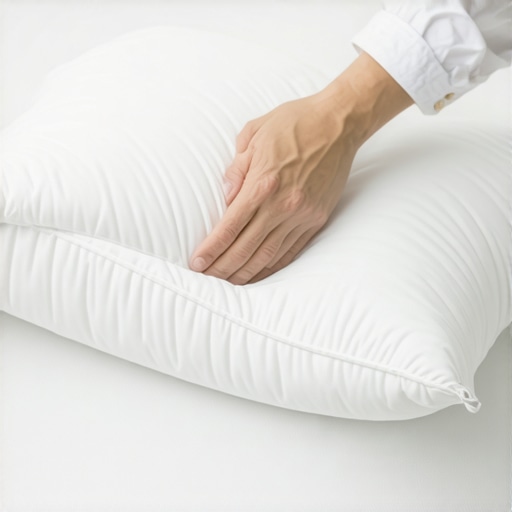
Memory Foam Loses Its Memory Faster Than You Think
While down pillows are notorious for losing their loft, memory foam has a different failure mode. Instead of flattening entirely, it loses its ‘rebound’ rate. If you press your hand into the foam and the indent stays there for more than a few seconds, it is no longer providing active support. It has become a static mold of your bad posture. This is a critical factor in unlocking neck pain relief expert tips for lasting comfort because the pillow needs to move with you as you shift positions. When the foam gets ‘stuck,’ it traps your neck in one angle, leading to that localized stiffness that feels like a rusted hinge in the morning.
Pick a Loft That Keeps Your Spine Straight
The most important ‘how-to’ for your next purchase is matching the loft—or thickness—to your primary sleeping position. This is the foundation of the side sleepers guide to pillow placement. If you sleep on your side, the pillow must be exactly as thick as the distance from your ear to the outside of your shoulder. If it is too thin, your head tilts down; too thick, and it tilts up. Back sleepers need something much lower, usually with a contour to support the natural curve of the neck. When I finally matched my loft to my actual frame, the difference was instant. It felt like my neck muscles finally got permission to clock out for the night. This kind of alignment is essential to restore your back mobility proven chiropractic strategies that actually stick.
Stop Your Shoulders From Propping Up Your Head
One common mistake I see people make is pulling their pillow down under their shoulders. Your shoulders should never be on the pillow. The pillow is for your head and neck only. When your shoulders are on the pillow, you are essentially creating a ramp that pushes your neck into a forward-leaning ‘tech neck’ position while you sleep. To fix this, pull the pillow into the crook of your neck so the base of the pillow touches the top of your shoulders but doesn’t go under them. If you feel like you need to prop yourself up higher, you might actually need the 5-minute reset for a stiff lumbar spine to address mid-back tension that is making you feel uncomfortable while lying flat.
Little Adjustments That Save Your Neck
If you aren’t ready to buy a new pillow today, you can temporarily hack your current one by adding a rolled-up hand towel inside the pillowcase. Place the roll right where your neck sits to provide that extra bit of cervical support that the old fill is no longer offering. This isn’t a permanent fix, but it can bridge the gap while you shop. We often find that why we adjust your mid back to help your lower back recover applies here too; if your neck isn’t supported, your mid-back will tighten up to compensate, creating a chain reaction of discomfort throughout your entire spine.I used to think the answer to my pain was simply forcing myself to sit like a statue with my shoulders pinned back. But here is the nuance most people miss: posture is not a static destination, it is a dynamic ability to move. Everyone tells you to sit up straight, but I’ve found that why your perfect posture is actually making you stiff is a real phenomenon. When you lock yourself into a “perfect” position, you are actually creating a state of chronic muscle tension that mimics the very injury you’re trying to avoid. True boost mobility ease pain chiropractic techniques unveiled focus on the body’s ability to transition between positions without snagging, not on holding one pose for eight hours.
Stop Obsessing Over Sitting Straight Up
We’ve been conditioned to believe that slouching is the ultimate sin. However, the real “Oops” factor is the rigid over-correction. When you force your shoulders back, you often flare your ribcage and put a massive amount of sheer stress on your mid-back. This is why why we look at your ribcage movement for better mobility is so vital. If your ribs can’t move, your neck has to work twice as hard. I’ve seen patients who have “military-grade” posture but can barely turn their heads because their muscles are perpetually “on.” 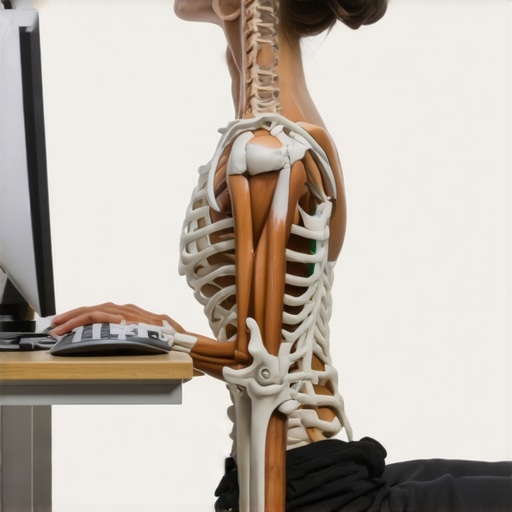
Why Your Morning Stretch Might Be Ruining Your Progress
Another common trap is the urge to stretch a muscle just because it feels tight. This is where most people go wrong. If a muscle feels tight, it might actually be “long-weak”—meaning it’s already overstretched and is screaming for stability, not more length. This is why stretching a tight muscle isnt always the answer. If you keep pulling on a muscle that is already at its limit, you’re just triggering a protective spasm. A study published in the Journal of Manipulative and Physiological Therapeutics suggests that spinal health is more about proprioception—your brain’s awareness of your joints—than it is about raw flexibility. If your brain doesn’t feel safe in a position, it will tighten everything up to protect you. Instead of mindless stretching, you should focus on chiropractic secrets to regain full mobility after injury that retrain the nervous system.
Can You Have Severe Pain With a Clean X-Ray?
This is the advanced question I get all the time. People walk in frustrated because their doctor said their scan looks “perfect,” yet they can’t sleep through the night. The nuance is that X-rays show structure, but they don’t show function. You can have a perfectly straight spine that moves like a rusted gate. This is why revitalize your mobility proven strategies for back pain relief focuses on how you move, not just how you look on a screen. If your joints are “locked” but aligned, the pain is just as real. Have you ever fallen into the trap of stretching a “tight” spot only to have it feel worse the next day? Let me know in the comments.Thinking your spine is fixed just because the sharp pain stopped is the most dangerous stage of recovery. I’ve learned the hard way that mobility is like a bank account; you have to keep making small deposits, or you’ll quickly end up in the red. Once I moved past the crisis phase, I shifted my focus to a ‘maintenance toolkit’ that keeps my joints moving without requiring two hours at the gym every day.
How do I maintain my spinal health over the long haul?
The key isn’t intensity; it is consistency. I personally rely on a simple lacrosse ball more than any thousand-dollar massage chair. If I feel that familiar pinch between my shoulder blades after a long writing session, I don’t just ignore it. I use the wall to pin a ball against the tight spot. This is why learning how to use a tennis ball to fix that spot under your shoulder blade is probably the highest ROI skill you can acquire. It’s about interrupting the pain signal before it becomes a full-blown spasm. This proactive approach is the core of mobility mastery expert tips for back pain prevention and recovery.
Don’t Let Your Lumbar Roll Become a Crutch
Another tool I swear by is a simple D-shaped lumbar roll for my office chair. However, most people use these wrong. They shove them too low or lean back so hard they actually increase their intradiscal pressure. I’ve found that how to use a lumbar roll without making your back stiffer involves placing it slightly higher than you think—right in the small of your back—to encourage a natural curve rather than a forced arch. This aligns with the ‘Big 3’ protocols developed by Dr. Stuart McGill, a leading expert in spine biomechanics. In his research published in the Journal of Bodywork and Movement Therapies, he emphasizes that building ‘stiffness’ or stability in the core is actually more protective for the spine than being excessively flexible. 
The 10-Second Resets That Save My Workdays
I don’t believe in the ‘perfect’ workstation because it doesn’t exist. Instead, I use ‘movement snacks.’ Every hour, I perform the 10-second reset for when your shoulder blades start burning. It’s a simple retraction and depression of the scapula that tells my nervous system to stop using my upper traps for breathing. If I’m feeling particularly tight in the chest from typing, I’ll drop everything for the 5-minute doorway stretch for rounded shoulders. These tiny interventions are how you stay ahead of the curve. Looking forward, I predict we are going to see a massive surge in haptic-feedback wearables. Soon, your shirt will give you a tiny vibration the moment your cervical spine shears forward, essentially acting as an external nervous system to keep you aligned.
Stop Overthinking and Start Moving
If you take one thing away from my journey, let it be this: your body is incredibly resilient if you give it the right inputs. Whether you are overcoming chronic neck discomfort insights from top chiropractors or just trying to prevent that first morning twinge, the tools are already in your hands. I want you to try one thing right now: grab a tennis ball or even a rolled-up sock, find a spot on the wall, and spend two minutes leaning into those tight muscles behind your shoulder. Your neck will thank you before you even finish reading.
The Hardest Lesson I Learned About Protecting My Spine
After years of trial and error, I realized that spinal health is never a one-off fix. One of the most eye-opening moments for me was discovering that why your perfect posture is actually making you stiff is a common hurdle for many of us. I used to think standing like a soldier was the goal, but true health is about fluidity and movement. Another massive lightbulb moment was learning that the body is a single connected chain; for instance, why we look at your feet to solve your neck issues becomes incredibly clear when you realize a fallen arch can tilt your entire frame and cause compensatory neck tension. I also learned that why stretching a tight muscle isnt always the answer—sometimes that muscle is just desperately trying to stabilize a weak joint and needs rest or strengthening rather than more length.
My Tried and Tested Recovery Toolkit
I don’t believe in cluttering your home with expensive gadgets, but these three items are non-negotiable for my daily maintenance. First, a simple tennis ball is my best friend for myofascial release; knowing how to use a tennis ball to fix that spot under your shoulder blade can save you from a week of tension headaches. Second, I always keep a lumbar roll in my car and office chair to maintain a healthy curve. If you aren’t sure of the placement, check out the correct way to use a lumbar roll in your office chair to avoid making your back stiffer by forcing the wrong angle. Finally, my morning ritual always includes the spider-man stretch that clears up morning stiffness, which wakes up my hips and spine simultaneously and prepares me for the day. #IMAGE_PLACEHOLDER_E#
The Future of Your Mobility Starts Tonight
Your journey toward a pain-free life doesn’t require a total lifestyle overhaul. It starts with one better decision—like finally tossing that flattened pillow or taking ten seconds to reset your shoulders. By focusing on understanding back pain a guide to better posture and mobility, you are giving your body the respect it deserves. We are all aiming for mobility mastery expert tips for back pain prevention and recovery, and every small adjustment adds up to long-term health. Don’t wait for a crisis to start listening to what your spine is trying to tell you. Have you ever tried the ‘Fold Test’ on your current pillow? What did you find? Share your results in the comments below!