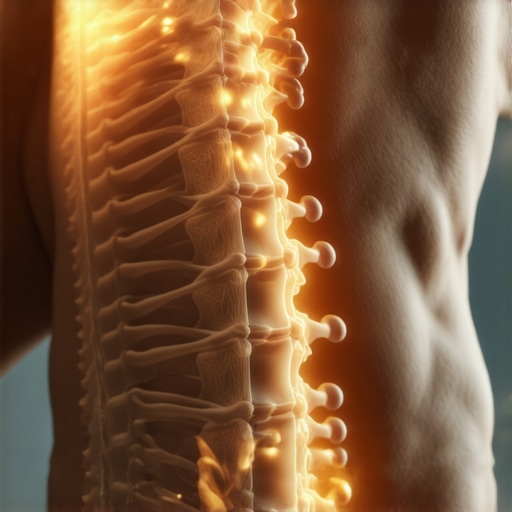
Why We Test Your Reflexes During a Back Exam
I remember sitting on that crinkly paper on the exam table, feeling every bit of my lower back throbbing after a weekend of “light” yard work. I just wanted the pain to stop, but instead, the doc was tapping my knees with a little rubber hammer. It felt ridiculous. Like checking the tire pressure on a car with a blown engine. I was so focused on the fire in my lumbar spine that I didn’t realize the smoke was showing up in my legs. Look, I get it. You’ve got bills to pay, kids to pick up, and a lawn that won’t mow itself. You don’t have time for diagnostic games. But I once spent three months trying to “stretch out” what I thought was a tight calf, only to realize later it was a compressed nerve in my back causing a weak reflex. It was a humbling lesson in how the body actually communicates. Today, we’re going to clear up the mystery of why we check those kicks and how it saves you from months of useless treatments.
Your nerves are talking and we need to listen
The reflex test isn’t just a tradition; it’s a direct line to your spinal cord. When I first started looking into spinal health, I made the classic rookie mistake of chasing the pain. If my back hurt, I rubbed my back. Simple, right? Wrong. By the time I learned that how to tell if your back pain is serious often depends on these neurological signals, my recovery speed doubled. That little hammer tap is checking your “deep tendon reflexes.” If the message from the hammer tap doesn’t travel up to the spine and back down to the muscle instantly, it tells us exactly which nerve root is being pinched or irritated. I’ve been there, lying on the floor because I thought I could outsmart my own nervous system by ignoring these little signs. Don’t be that person.
Can a simple tap really predict a disc problem?
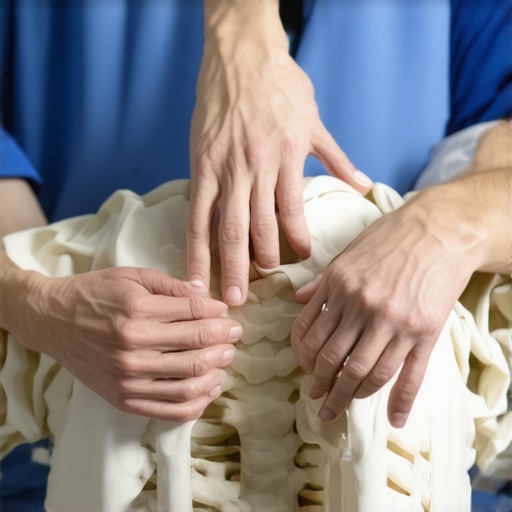
It sounds too simple to be true, doesn’t it? You’re in agony, and a tiny clonk on the knee is supposed to be the answer. But according to the American Academy of Neurology, these tests are highly reliable for identifying radiculopathy—that’s the fancy word for a pinched nerve. I’ve seen people try to revitalize their mobility for years without realizing their “weak” ankle was actually a back issue in disguise. We use these tests to make sure we aren’t just putting a band-aid on a symptom. Have you ever felt like your doctor was looking at everything except the spot that actually hurts? It’s frustrating, I know, but there’s a method to the madness. We aren’t just looking for a good kick; we are looking for symmetry. If one leg jumps and the other just sits there like a wet noodle, we know exactly where to look in your spine. This keeps us from guessing. I used to think why stretching your hamstrings won’t fix your back pain was a confusing concept until I saw how a nerve adjustment could instantly bring a reflex back to life. [image_placeholder_1] Understanding this connection is the first step to moving without fear again.
Follow the signal from your brain to your toes
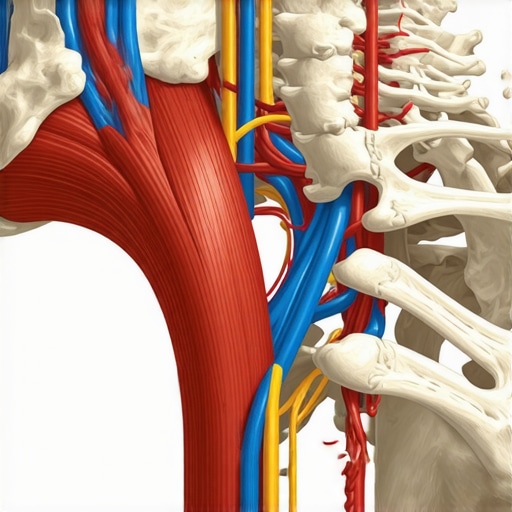
Think of your nervous system like a high-speed fiber-optic cable running through a chaotic construction zone. If a worker—in this case, a misaligned vertebra—drops a heavy brick on that line, the internet in the back bedroom, which might be your big toe or your calf, starts buffering. We use specific neurological checks to find exactly where that brick fell. During a thorough exam, we aren’t just looking for where it hurts; we are looking for the “interruption.” I once worked with a local carpenter who came in for what he thought was a simple ankle sprain that just wouldn’t heal after two months of icing. When I asked him to how to balance on one leg to check your spine, he toppled over instantly toward his left side. It wasn’t a weak ankle at all; his L5 nerve root was so compressed it wasn’t telling his brain where his foot was in space. This is exactly why we test your balance during a spinal checkup. It gives us an objective, honest map of your neurological health before we even touch your back. If the signal is weak, the muscle simply cannot function at 100 percent, no matter how many calf raises you do.
The three tests that tell the real story
To get the full picture, we focus on three specific layers: motor strength, sensory input, and those deep tendon reflexes. Motor strength is about whether your “engine” can still produce power. If you find yourself tripping over the edge of the rug or feeling like one leg is “heavier” than the other while walking, that’s a motor signal failure. Sensory input is all about the quality of the line—numbness, tingling, or that “crawling” feeling is like static on a radio. Then there’s the reflex, the hammer tap. This is the “automatic” response that bypasses your conscious thought. By combining these three data points, we can boost mobility and ease pain through chiropractic techniques that target the specific level of the spine that is under siege. I’ve seen patients regain full strength in a “weak” arm almost immediately after an adjustment because we cleared the interference at the neck.
Why we obsess over your leg length
You might wonder why we check your leg length during every visit. It’s not because one leg actually grew shorter or longer since your last appointment. It’s because when your pelvis or lower spine is out of alignment, the deep stabilizing muscles in your hips go into a protective spasm. This tension literally pulls one leg up higher into the hip socket, creating a functional imbalance. I remember a marathon runner who swore she had a permanent “short leg” and had been wearing a thick shoe lift that was actually causing a new hip impingement. Once we addressed the underlying pelvic tilt, her legs leveled out within three visits, and her hip pain vanished. This kind of structural check helps restore your range and how chiropractic care enhances movement by ensuring your foundation is actually level. Without this balance, every step you take is essentially an uneven load on your spinal discs.Most people think that if they just force their shoulders back and sit like a statue, their pain will vanish. In reality, why your perfect posture is actually making you stiff is because you’re creating constant isometric tension that starves your spinal discs of the nutrients they get through movement. I see patients all the time who are ‘posture-perfect’ but can’t bend over to tie their shoes without a wince. This leads to what I call the ‘Rigidity Trap.’ When you focus so much on being upright, you might find why your strong core might actually be too rigid, locking your vertebrae in place instead of allowing them to glide naturally. This tension often transfers directly up to the neck, creating a secondary cycle of discomfort that most people fail to associate with their stiff lumbar spine.
The diagnostic trap that wastes your time and money
The biggest ‘oops’ factor I see in modern spinal health is the obsession with imaging. We get so caught up in the structural image—the MRI or the X-ray—that we forget how the body actually functions. It’s a common mistake to see a disc bulge on a scan and assume that’s the only source of pain. However, research published in *The Spine Journal* highlights that a significant percentage of asymptomatic individuals have disc abnormalities that don’t cause any issues at all. As noted in a landmark study in *The New England Journal of Medicine*, many people with significant disc protrusions on MRIs have no back pain at all, suggesting that the image is just a snapshot, not a diagnosis. If we only treat the picture, we miss the patient. This is why chiropractic secrets to regain full mobility after injury always involve functional testing, like those reflex and balance checks we discussed earlier, over just looking at a static film. When we chase the shadow on an MRI instead of the signal in the nerves, we end up in a cycle of useless treatments.
Can a perfectly designed workstation actually cause more harm than good?
It sounds like heresy, but your $1,000 chair might be part of the problem. I’ve seen executives spend a fortune on ergonomics only to wonder why your perfect office chair is still making you slouch by the end of the day. The nuance lies in ‘static loading.’ Your body was designed to move, not to be perfectly supported in a single position for eight hours. Even the best chair can’t replace the need for movement breaks. Have you ever fallen into this trap of buying better gear instead of moving better? Let me know in the comments. We need to shift from ‘fixing’ our sitting to prioritizing how we restore your range and how chiropractic care enhances movement through dynamic habits. Real relief comes from mobility mastery expert tips for back pain prevention and recovery that emphasize the ‘next posture is the best posture’ philosophy rather than clinging to a rigid, unnatural ideal of sitting up straight.I’ve spent years testing every gadget from inversion tables to five-hundred-dollar pillows, and I’ve learned one expensive lesson: gear doesn’t fix a lack of movement. However, specific tools can act as ‘reminders’ for your nervous system. I personally carry a lumbar roll in my laptop bag everywhere. It’s not about the foam; it’s about maintaining that natural lordotic curve so your muscles don’t have to work overtime just to keep you upright. If you’re on a budget, you can learn how to use a rolled-up towel to fix your cars lumbar support and get 90% of the benefit for zero dollars. The goal is to offload the discs before the pain signal even starts.
Skip the fancy chair and grab a towel instead
Many people ask me if they should buy those ‘kneeling chairs’ or standing desks. My answer is always the same: it doesn’t matter what you sit on if you stay there for four hours. I prefer simple, tactile tools. For instance, knowing the correct way to use a lumbar roll in your office chair can save your lower back from that afternoon ache more effectively than a high-tech mesh seat. We have to stop looking for a passive cure and start using tools that encourage active alignment. As Dr. Stuart McGill, a leading expert in spine biomechanics, notes in his research for the Journal of Applied Biomechanics, the key to spinal health is building ‘sufficient stiffness’ through core stability rather than just chasing flexibility. This is why I focus on tools that support your natural structure rather than ones that let you collapse into them.
How do I maintain my spinal mobility over the long haul?
Maintenance is where most people fail because they think of it as a workout routine rather than a lifestyle shift. You don’t need an hour in the gym; you need sixty seconds every hour. I swear by the 20-20-20 rule for desk workers and neck health to keep the cervical spine from locking up. Over time, these micro-adjustments prevent the ‘creep’—that’s the technical term for when your ligaments actually start to stretch and deform from bad posture. In the near future, I suspect we will see AI-integrated wearables that provide real-time haptic feedback the moment your spinal alignment shifts, but for now, you have to be your own sensor. You can achieve mobility mastery expert tips for back pain prevention and recovery by simply changing how you move during mundane tasks. For example, mastering the hip hinge trick for pain free gardening or housework will protect your discs more than any supplement ever could. If you want to start today, I challenge you to try the 30-second reset for tech neck fatigue every time you finish a phone call. It’s a small win that pays massive dividends in how your neck feels by 5:00 PM.
The Hard Lessons My Spine Taught Me While I Was Not Looking
I spent years thinking that if I could just push through the discomfort, my body would eventually figure it out. I was wrong. The first big lesson I learned is that pain is a terrible compass; it is usually the last thing to show up and the first thing to leave, even if the underlying structural issue remains. I also realized that my constant muscle “tightness” was often a defensive guard from my brain, not a lack of flexibility. When my reflex was slow or asymmetric, it was a clear sign that my nervous system was trying to protect me from further injury by slowing down the communication. Lastly, I discovered that symmetry is king. You do not necessarily need the strength of a professional athlete; you just need your left side to be in sync with your right. By focusing on how to restore your back mobility through these small neurological checks, I finally stopped guessing and started the actual healing process.
A Few Essentials That Keep My Spine Happy
Over the years, I have narrowed down my “daily drivers” to just a few items and resources that actually make a difference in my quality of life. I never travel or sit for long periods without implementing the correct way to use a lumbar roll in your office chair, and I have shared the secret of how to use a tennis ball to fix that spot under your shoulder blade with more people than I can count. For deep dives into biomechanics, I always trust sources that prioritize stability over simple stretching, which is a core part of mobility mastery expert tips for back pain prevention and recovery. I also keep a simple firm wedge in my car for long commutes to prevent my pelvis from tucking under, which is a total game-changer for back pain management.
Turning Awareness Into Your New Superpower
Your body is constantly sending data—those little twinges, the slight loss of balance during a quick turn, or the way your leg feels “heavy” after a long day at the office. These are not just signs of getting older; they are signals. Embracing chiropractic care is not just about the occasional adjustment; it is about fine-tuning your internal communication system so you can move with total confidence. When you understand the “why” behind the diagnostic tests and the hammer taps, you stop fearing the discomfort and start managing your health proactively. You now have the perspective needed to enhance mobility naturally with chiropractic care and build a foundation that lasts. Have you ever noticed one leg feeling weaker or “slower” than the other while you are out for a walk? Let me know your experience in the comments below!