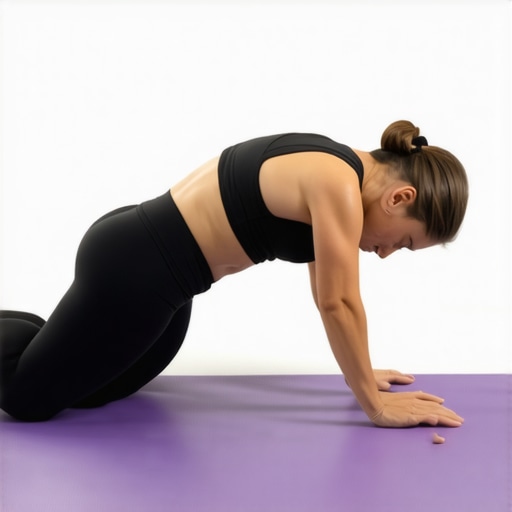
The Single Best Exercise for Thoracic Mobility
I remember the moment I realized I was truly stuck. I was trying to merge onto the highway, and as I turned my head to check the lane, my entire upper back seized like a rusted engine. It wasn’t just a twinge; it was a physical wall. I actually had to rotate my whole body, steering wheel and all, just to see if a car was coming. It was terrifying and, frankly, pathetic for someone in their thirties. I’d spent months making the mistake of rolling my lower back, hoping for a miracle, but I was looking in the wrong place entirely. The problem wasn’t my neck or my lower spine; it was my frozen thoracic cage. Today, I’m sharing the one move that finally let me breathe and move like a human being again.
Your mid-back is the secret to fixing your neck
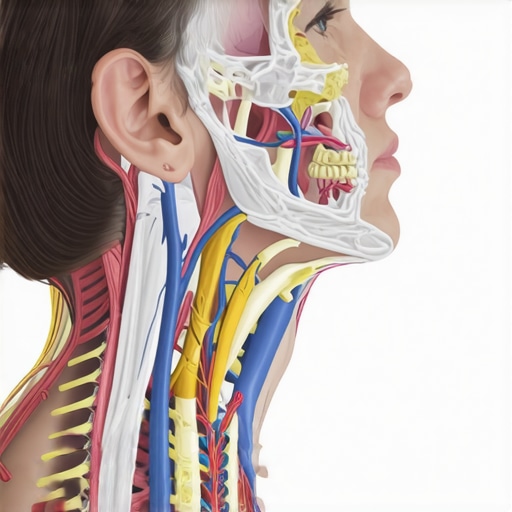
Most people don’t realize that the middle of the back is designed to be the most mobile part of the spine. When it turns into a block of wood, your body has to find that movement somewhere else, usually by over-stretching the neck or straining the lower back. This is often why your mid-back feels like it needs to pop constantly—it’s gasping for air. Research in the Journal of Manual & Manipulative Therapy suggests that thoracic spine intervention can provide immediate relief for mechanical neck pain, proving that the mid-back is the real MVP of your daily comfort. We often blame our pillows, but usually, it’s just tech-neck fatigue from staring at our phones that has locked us in a literal cage. [image-placeholder] Have you ever felt like your upper body was encased in lead? I’d love to hear if you’ve been chasing neck relief without ever looking at your mid-back.
Is this move actually worth the hype?
You might be skeptical because the fitness world is full of complicated routines. But the Open Book stretch—the single best exercise for thoracic mobility—is surprisingly simple. My biggest mistake early on was rushing through it. I used to just wave my arm in the air like I was hailing a cab, barely rotating my torso. The real magic happens when you pin your hips and let your rib cage expand. It isn’t about how far your hand reaches; it’s about how much your spine can actually spiral. It’s time to stop wasting your energy on doorway stretches that only hit the surface and instead restore your range from the inside out.
Get Into Position and Lock the Foundation
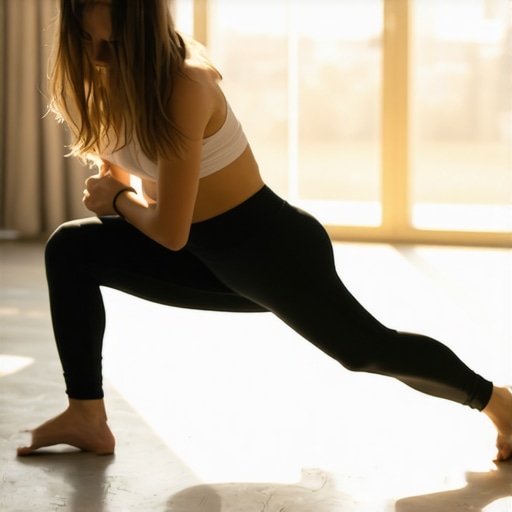
To start the Open Book stretch, you need to lie on your side with your knees tucked toward your chest at a ninety-degree angle. Think of your lower body as the anchor of a ship; if the anchor drags, the ship doesn’t stay put. I remember one evening trying this on my living room rug while half-watching a documentary. I felt like a pro because my hand was practically touching the floor behind me. It wasn’t until I looked down and realized my top knee had drifted three inches off the bottom one that I knew I was cheating. By letting my hips move, I was bypassing my stiff mid-back entirely and just cranking on my shoulder. To fix this, squeeze a foam roller or even a firm pillow between your knees. This simple addition is a part of effective neck pain management a step-by-step guide because it forces the rotation to happen exactly where you’re stuck: the thoracic spine.
Let Your Ribs Lead the Way
Once your hips are locked, extend both arms out in front of you. As you peel your top arm back, don’t just reach for the floor with your hand. Instead, imagine your rib cage is a spiral staircase. Your goal is to rotate the ribs, one by one, toward the ground. This is why we look at your ribcage movement for better mobility during an exam; if those ribs are fused together like a suit of armor, your neck has to work double time to compensate. If you feel a sharp pinch, stop and back off a few inches. You can also try a lateral move that opens up a tight rib cage first to loosen the intercostal muscles between the ribs. 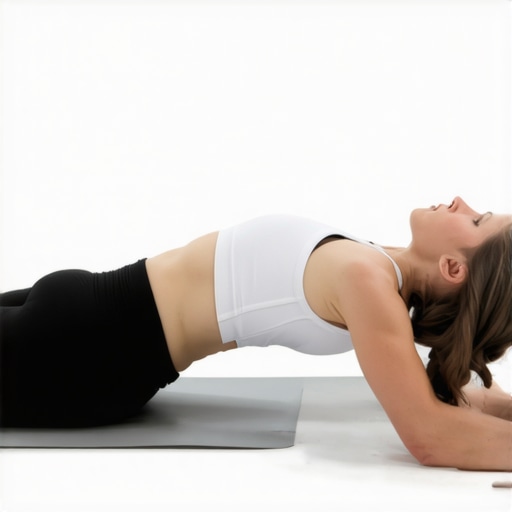
Breathe Into the Tight Spots for Real Release
The biggest mistake people make is holding their breath while they rotate. When you hold your breath, your nervous system perceives a threat and tells your muscles to tighten up to protect you. It’s the exact opposite of what we want. Instead, as you reach the point of tension, take a deep breath into the side of your lungs. This internal pressure acts like a jack from the inside, gently pushing against those stiff joints. If you’ve spent all day hunched over, why your phone is making your upper back round becomes obvious as you feel that intense stretch across your chest. For those deeper knots that won’t budge, you might need to learn how to use a tennis ball to fix that spot under your shoulder blade before the stretch feels smooth. When I finally combined the breathing with the pinned-hip technique, I heard a series of tiny, soft pops—not the scary kind, but the kind that felt like a rusty gate finally swinging open. For the first time in weeks, the constant pull at the base of my skull simply vanished.But here’s the thing: while that Open Book stretch was a game-changer for me, I soon realized that no amount of stretching could overcome a fundamental misunderstanding of how our bodies actually work. We’ve been sold a lie about what good spinal health looks like. We’re told to pull our shoulders back and sit like we’ve got a rod through our spine, but this is exactly why your perfect posture is actually making you stiff. In my years of clinical observation, the people with the most perfect desk setups are often the ones in the most agony. Why? Because the human spine craves variability, not static perfection. Research published in the Journal of Orthopaedic & Sports Physical Therapy has shown that there is no single correct posture that prevents back pain. In fact, obsessing over it often leads to a phenomenon I call functional bracing—where you’re so afraid of slouching that you keep your muscles in a state of perpetual low-level contraction. 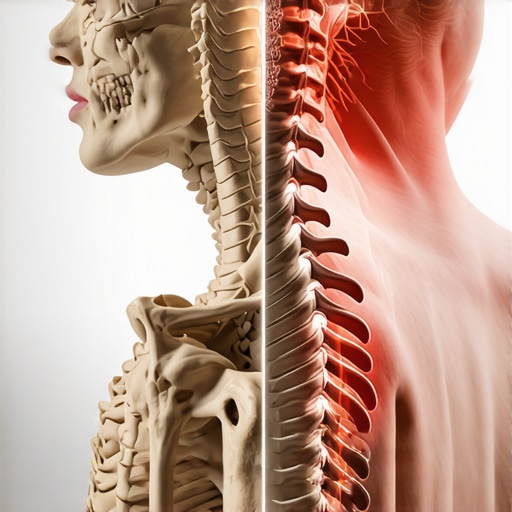
Stop trying to sit up perfectly straight
When you force yourself into that military-straight position, you aren’t actually helping your discs; you’re just fatiguing your spinal extensors. This constant tension is a major reason for understanding back pain a guide to better posture and mobility begins with movement, not stillness. If you’ve ever wondered why your mid-back feels like a solid sheet of lead even though you bought a high-end chair, this is your answer. You’re likely over-correcting and creating a new set of problems. You might be falling into the structural trap where you assume every pain corresponds to a physical knot or a bone out of place. The Oops factor often comes into play when we try to solve a problem with the very thing that created it. For instance, if your neck is stiff because your mid-back isn’t moving, stretching your neck muscles is like pulling on a knot to untie it—it just makes the knot tighter. By the time many people come to us for unlocking neck pain relief, they’ve often over-stretched their ligaments while their joints remain stuck.
Does my MRI actually explain why I’m in pain?
This is the advanced question I get most often. A patient comes in with a clean scan but feels like they’re falling apart. The nuance here is that pain is often more about function and sensitivity than it is about structural damage. This is where we boost mobility and ease pain through chiropractic techniques that address how the nervous system is firing. A trap many people fall into is thinking that if it hurts, they must stretch it. But if your hamstrings feel tight, why stretching your hamstrings won’t fix your back pain is because that tightness is often a protective tension your brain creates to stabilize a weak lower back.
Why a rigid core is a recipe for a locked-up back
We’ve all been told to engage our core for everything from lifting a pencil to walking the dog. However, why your strong core might actually be too rigid is a nuance that even seasoned athletes miss. If your abdominal muscles are constantly on, your spine loses its ability to absorb shock. It’s like driving a car with no suspension. To truly restore your range, you have to learn when to let go and allow the spine to breathe. Have you ever fallen into this trap of trying to correct your posture so hard that you actually felt worse? Let me know in the comments.Transitioning from constant pain to fluid movement didn’t happen because I found a magic pill; it happened because I stopped treating my body like a statue and started treating it like a dynamic system. Once I moved past the ‘perfect posture’ obsession, I realized that the real secret lies in how we manage the gaps between our movements. I’ve found that the best tools aren’t the most expensive ones. In fact, my go-to for maintenance is a simple, high-density lacrosse ball.
How I stay mobile when I’m too busy for the gym
For most of us, the reality is a desk and a screen. I used to think I needed an hour of yoga to undo the damage of an eight-hour workday, but now I know how to stay mobile when you have a desk job and no time for the gym by using micro-breaks. Every ninety minutes, I grab that lacrosse ball and spend exactly sixty seconds on the muscles between my shoulder blades. Learning how to use a tennis ball to fix that spot under your shoulder blade was the most cost-effective healthcare I’ve ever invested in. It breaks up the fascial adhesions that form when we stay in one position too long. [image-placeholder]
Why I stopped buying fancy chairs and started moving my feet
I’ve seen people spend thousands on ergonomic setups, yet why your perfect office chair is still making you slouch is often a matter of sensory deprivation. If your chair is too comfortable, your brain stops receiving signals from your joints, and you drift into a ‘melted’ position. Dr. Stuart McGill, a world-renowned expert in spine biomechanics and author of Back Mechanic, emphasizes that ‘spinal hygiene’—the way we move, sit, and stand throughout the day—is far more important than the specific exercises we do once a week. This is why I focus on mobility mastery expert tips for back pain prevention and recovery that emphasize frequent, small adjustments rather than one big ‘fix.’ I predict that in the next few years, we’ll see a massive shift toward bio-feedback wearables that monitor our diaphragm expansion rather than just our steps. We are starting to understand that the connection between shallow breathing and back pain is the primary driver of mid-back stiffness.
How do I keep these results from fading by next week?
Maintenance is about consistency over intensity. I’ve found that if I go more than three days without a ‘spinal reset,’ my rib cage starts to feel like it’s being shrink-wrapped. To prevent this, I use revitalize your mobility proven strategies for back pain relief like the 10-second breath fix. It’s a simple technique where you inhale deeply into your lower ribs while maintaining a slight abdominal brace. This keeps the joints of the mid-back from ‘settling’ into a stuck position. If you really want to level up your long-term comfort, I challenge you to try the 10-second breath fix for rib pain every time you finish a phone call today. It’s a small move, but it’s the difference between a spine that functions like a well-oiled machine and one that feels like a rusted hinge.
The Hardest Lesson I Learned About Chasing Relief
After years of trial and error, I realized that focusing on the spot that hurts is usually a trap. If you’re currently struggling with relieving neck and back discomfort, the source is rarely the neck itself—it is the foundation below it. I spent thousands on gadgets when the real fix was simply learning to breathe into my ribs. I also learned that ‘protecting’ my back by moving like a robot actually made me more fragile. You have to trust your body’s ability to adapt through back pain recovery rather than fearing every twist and turn. Resilience comes from movement, not from staying as still as a statue.
The Tools That Kept Me Out of the Doctor’s Office
I don’t believe in expensive fads or complicated machinery. My ‘mobility kit’ is intentionally minimalist and grounded in practical science. First, a high-density lacrosse ball is non-negotiable; it is the only tool that can effectively pinpoint the deep trigger points in my mid-back. Second, I swear by the work of Dr. Stuart McGill, particularly his insights on ‘spinal hygiene,’ which provide neck and back pain solutions that actually stick over the long term. Finally, I use a standing desk not to stand all day, but to make it easier to shift my weight and stay dynamic. This approach helps enhance mobility naturally with chiropractic care principles without needing a daily appointment. [image-placeholder]
Stop Feeling Like Your Spine Is a Suit of Armor
You weren’t meant to live in a state of perpetual bracing or the mental fog that comes with chronic stiffness. By unlocking your mid-back and letting go of the ‘perfect posture’ myth, you can finally move with the fluidity you had years ago. It’s about small, consistent wins—the breaths, the stretches, the micro-breaks—that add up to a life without physical limitations. Start today by just letting your shoulders drop and your ribs expand. Have you ever felt like your attempt at ‘perfect posture’ was actually making your back feel tighter and more fatigued? Let me know your experience in the comments below!