The ‘Bruegger’s Relief’ Move to Reverse Hours of Hunched Sitting
I sat there, frozen. My chin was tucked into my chest, my shoulders were hiked up to my ears, and my mid-back felt like it was being pulled apart by invisible pliers. It was 3:00 PM on a Tuesday, and I had officially become a human gargoyle. I tried to shake it off, but the stiffness was deep. For years, I made the mistake of thinking I could out-buy my bad habits. I bought the lumbar pillows, the standing desks, and even those weird kneeling chairs. None of it mattered because I didn’t understand that your phone is making your upper back round and your desk is just finishing the job. Today, I’m going to show you the one move—the Bruegger’s Relief—that actually broke that cycle for me. It’s not a workout; it’s a nervous system reset.
Your Spine is Not Meant to be a Question Mark
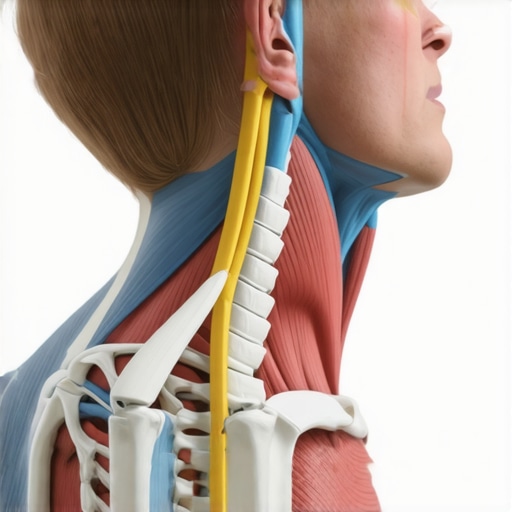
We’ve all heard that ‘sitting is the new smoking,’ but that’s a bit dramatic, isn’t it? I prefer to think of it as ‘sitting is the new casting.’ When you sit for hours, your fascia and muscles literally start to ‘set’ in that hunched position. I used to think a quick shoulder roll once an hour was enough. It wasn’t. According to a study published in the Journal of Physical Therapy Science, for every inch your head moves forward, it gains about 10 pounds of ‘effective weight’ on the cervical spine. If you’re leaning in to read an email, your 12-pound head suddenly feels like it weighs 40 pounds. No wonder my neck was screaming. I had to find a way to reset my posture while driving and working without needing a 20-minute yoga break every hour.
Can a 30-second move really undo eight hours of slouching?
I get it. It sounds like one of those ‘one weird trick’ late-night infomercials. I was the biggest skeptic out there, especially after my failed attempts at using a laptop stand that still caused neck strain. But the Bruegger’s Relief move works because it targets the ‘antagonist’ muscles—the ones that are being overstretched and weakened while you’re slumped over. It’s about more than just sitting up straight; it’s about opening the chest and reactivating the mid-back. Have you ever felt like you’re literally stuck in your chair, unable to take a full breath? That’s what we’re fixing today. Tell me, have you ever caught your reflection in a window while walking and been shocked at how much you were slumping? I’ve been there, and it’s a wake-up call. We need to tackle tech neck fatigue before it turns into chronic pain. Let’s get into the mechanics of how this move actually works.
The Anatomy of an Instant Reset
The beauty of this move is that it doesn’t require a gym membership or a chiropractor on speed dial, though it certainly complements your sessions. Think of your spine as a coiled spring that has been compressed for far too long. To decompress it, we have to move in the exact opposite direction of our slouch. This isn’t just about sitting up straight; it is about a structural overhaul that starts from your pelvis and ends at the top of your skull. When you master the mechanics, you are essentially providing a dose of understanding back pain a guide to better posture and mobility in real-time.
Slide Your Hips to the Edge of the Seat
First, scoot your butt forward. If you are leaning against the backrest, your pelvis is likely tucked under you like a scared dog’s tail. This rounds the lower back and sets off a chain reaction up the spine. By sitting on the very edge of your chair, you force your feet to take some of the weight. Your knees should be wider than your hips, turned out slightly. This creates a stable tripod between your feet and your sit bones. It feels awkward at first, like you are about to stand up, but that active stance is exactly what keeps your lumbar spine from collapsing into a C-curve.
Rotate Your Palms to Kill the Slouch
Here is where we address the gorilla posture. When we type, our shoulders rotate inward. To fix this, let your arms hang at your sides, then rotate your hands so your palms face forward or even slightly outward. This simple twist engages the scapular squeeze that relieves mid-back tension by pulling your shoulder blades down and back toward your opposite back pockets. Imagine you are trying to show off a necklace; you want your collarbones to feel wide. 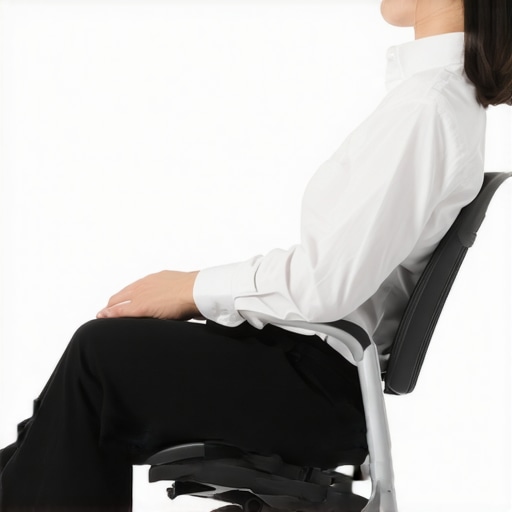
Tuck the Chin and Grow Two Inches
This is the hardest part to get right because we usually just tilt our heads back. Instead, imagine a string pulling the crown of your head toward the ceiling. Pull your chin straight back—as if you are trying to make a double chin—without looking down. This is how to strengthen your deep neck flexors, which act as the internal guy-wires for your neck. I remember doing this during an intense three-hour coding session. My neck felt like it was made of concrete. After three reps of this chin tuck, the fogginess in my brain actually lifted because I stopped pinching the nerves at the base of my skull.
The Secret Power of the Lower Rib Breath
While holding this open position, take a deep breath, but do not lift your shoulders. You want to breathe into your sides and back. We often focus on the spine, but why we look at your ribcage movement for better mobility becomes clear here. Expanding the ribs from the inside out provides a 360-degree stretch to the tight fascia around your mid-back. If you feel a sharp catch, try the 10 second breath fix for rib pain by exhaling fully and letting the ribs drop before the next inhale. Hold the full Bruegger’s position for 30 seconds, then return to your work. You will find you cannot immediately slump back into your old ways; your body has been reminded of what neutral actually feels like.
Stop Stretching Your Lower Back If It Already Hurts
Most people I talk to have the same knee-jerk reaction when their back feels tight: they reach for their toes. It seems logical, right? If a muscle feels tight, you should pull on it until it lets go. But here is the contrarian truth that most beginners miss: your back often feels tight because it is being overstretched, not because it’s short. When you sit in that ‘question mark’ posture, the muscles along your spine are pulled taut like a bowstring. If you add more stretching to an already over-lengthened muscle, you aren’t providing relief; you are increasing the strain. This is exactly why your foam roller might be hurting your lower back if you’re using it to ‘crack’ your lumbar spine into submission. Instead of mindless stretching, we need to focus on how chiropractic care enhances movement by restoring the proper joint mechanics that allow muscles to relax naturally.
How do you know if your tension is structural or neurological?
This is the advanced question that separates temporary relief from permanent recovery. Structural tension is a physical shortening of the tissue, but neurological tension is your brain’s way of ‘braking’ your movement because it doesn’t feel stable. If your brain senses that your spine is vulnerable, it will tighten the surrounding muscles to act as a natural brace. According to Dr. Stuart McGill, a world-renowned expert in spine biomechanics, ‘proximal stiffness’ (core stability) is what actually creates ‘distal mobility’ (moving your limbs freely). If you try to force mobility without having that underlying stability, your nervous system will just lock you down even tighter the next day. I’ve seen patients work themselves into a frenzy trying to boost mobility through chiropractic techniques, only to realize that your strong core might actually be too rigid, preventing the very fluidity you’re chasing. 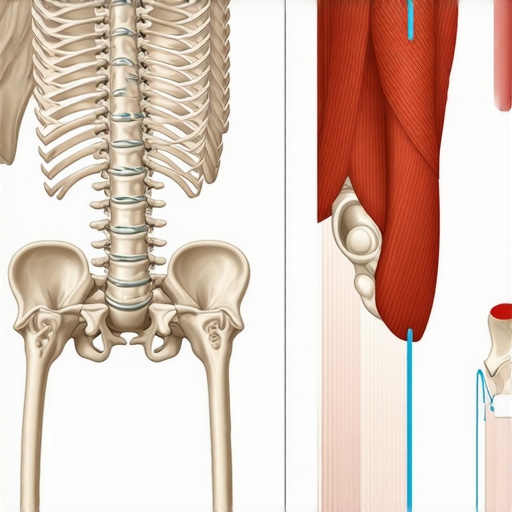
The Dangerous Trap of Chasing the Self-Pop
We’ve all done it. You’re sitting at your desk, you feel a pinch, and you twist your torso until you hear that satisfying crack. It feels great for about ten minutes, and then the urge returns. This is the ‘Oops’ factor that keeps people stuck in a cycle of chronic discomfort. When you ‘pop’ your own back, you are almost always moving the segments that are already too loose (hypermobile). The segments that are actually stuck—the ones causing the problem—remain frozen. By constantly hitting the easy-to-move joints, you’re just making the area more unstable, which is why your mid-back feels like it needs to pop every few hours. Real progress comes from targeted adjustments that hit the specific, restricted joints, not the ones that are already doing too much work. Have you ever fallen into this trap of constant self-cracking with zero long-term progress? Let me know in the comments. We need to move away from the ‘more is better’ mentality and toward a ‘precise is better’ approach. If you’re struggling with a mattress that’s making things worse, you might also find that your SI joint hates your soft mattress, adding another layer of neurological ‘noise’ that prevents your back from ever fully relaxing.I’ve spent thousands of dollars on gadgets, and the most effective tool I own cost me three bucks: a lacrosse ball. Most people use a foam roller to roll out their back, but as we discussed earlier, that often just aggravates the lumbar spine. Instead, I use a lacrosse ball or a tennis ball specifically to pin down the rhomboids. It is the only way I’ve found to fix that spot under your shoulder blade that feels like a hot needle. If you want to keep the progress you’ve made through proven chiropractic strategies, you have to treat your body like an athlete would. This means using tools that offer precision, not just broad pressure. I also keep a simple, firm lumbar roll in my car. It’s not fancy, but it prevents that ‘car-seat slump’ that ruins a perfectly good morning. When you revitalize your mobility with the right habits, you stop viewing your body as a problem to be solved and start seeing it as a machine to be maintained. 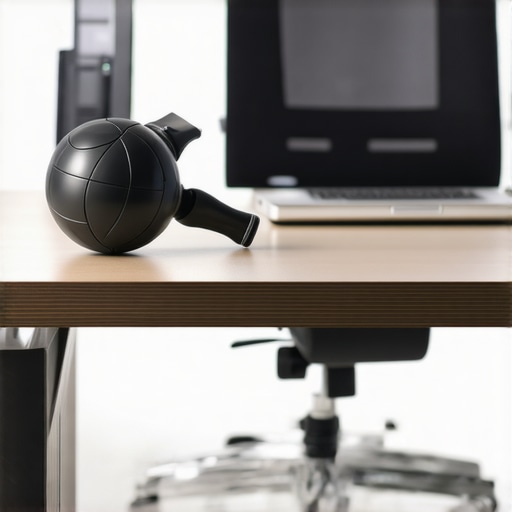
How do I stay consistent when life gets chaotic?
The secret isn’t a longer workout; it’s a higher frequency of ‘micro-breaks.’ I follow a modified version of the 20-20-20 rule for desk workers where every twenty minutes, I don’t just look away from the screen, I perform a single, five-second Bruegger’s Relief. This keeps the neurological pathways for ‘good posture’ firing throughout the day. I also use a massage gun, but I’m incredibly careful with it. You should never use it directly on your spine or neck. Instead, I focus on the hips and thighs because using a massage gun on your lower back safely actually involves targeting the glutes to release the pull on the sacrum. Dr. Kelly Starrett, author of Becoming a Supple Leopard, emphasizes that most of our ‘back’ issues are actually ‘upstream’ or ‘downstream’ issues—meaning we need to look at our hips and shoulders to save our spines.
The Future of Posture and Personalized Biofeedback
Looking ahead, I predict we are going to see a massive shift toward wearable biofeedback. We are already seeing shirts with integrated sensors that vibrate when your shoulders round forward. This ‘active’ feedback is far superior to ‘passive’ supports like back braces, which actually cause your muscles to atrophy over time. If you want expert tips for lasting comfort, focus on building the internal awareness that these future gadgets will eventually provide.
Try the ‘Wall Test’ tonight
Before you go to bed, try this: stand with your heels, butt, and head against a flat wall. If you can’t keep all three touching while looking straight ahead, your thoracic spine is still too tight. This is your baseline. Your goal is to make this position feel effortless. To get there faster, enhance mobility naturally with chiropractic care to ensure your joints are actually capable of that range of motion. Start today by setting a timer for 20 minutes and doing just one reset.
The Hard Truths About Spinal Health I Had to Learn the Hard Way
Looking back on my journey from a ‘human gargoyle’ to someone who can sit through a workday without a migraine, I realized that I was my own worst enemy for a long time. First, I had to accept that consistency is more important than intensity. Doing a 30-second reset ten times a day will do more for your nervous system than a grueling hour-long yoga class once a week. My body didn’t need a massive overhaul; it needed frequent reminders that it was safe to be upright. Second, I learned that pain is a signal, not a life sentence. If you feel a pinch, it’s not always a sign of damage; sometimes, it’s just your brain’s way of asking for more variety in your movement. Finally, I discovered that true mobility mastery expert tips for back pain prevention and recovery start with the things you do when you aren’t even thinking about your back, like how you breathe into your belly while stuck in traffic.
My No-Nonsense Toolkit for Daily Mobility
I’ve trimmed the fat over the years and narrowed my recovery gear down to a few essentials that actually deliver results. I keep a lacrosse ball in my desk drawer at all times; it is the most effective way to target those stubborn knots that standard stretching can’t reach. I also highly recommend the book Becoming a Supple Leopard by Dr. Kelly Starrett—it’s essentially the owner’s manual for the human body that we should have been given in high school. For those moments when I feel my progress slipping, I turn to mastering back neck pain relief tips from the pros 300 to get my alignment back on track. My final must-have is a simple, firm lumbar roll for the car. It prevents the car-seat slump that used to ruin my mornings before I even reached the office. #IMAGE_PLACEHOLDER_E#
It’s Time to Stop Settling for a Stiff Back
You don’t have to accept a life of stiffness as the price of being a modern professional. Your spine is incredibly resilient, and it wants to find its way back to neutral. By integrating small, purposeful moves like the Bruegger’s Relief, you are giving your nervous system the permission it needs to let go of that chronic tension. You deserve to feel light, tall, and capable of moving through your day without that nagging weight on your shoulders. Start your first 30-second reset right now, and you’ll find neck pain no more expert chiropractic solutions that work better when you take an active role in your recovery. Your future, upright self will thank you for the work you’re doing today to restore your back mobility proven chiropractic strategies. Have you ever noticed that your back feels tighter on high-stress days compared to slow ones? Let me know in the comments below!