
Why your SI joint hates your soft mattress
I vividly remember the morning I had to literally roll out of bed and crawl toward the coffee maker. My lower back felt like it had been fused together with cheap wood glue overnight. At thirty-two, I shouldn’t have felt like a century-old barn door. I’d spent three thousand dollars on a mattress that felt like a giant marshmallow, thinking I was treating myself to the height of luxury. I was wrong. It turns out, that plush, “cloud-like” surface was actually a trap for my sacroiliac joint. If you’ve ever felt that sharp, stabbing pinch right where your spine meets your pelvis, you know exactly what I’m talking about. Today, we are going to dive into why your spine needs more than just a soft place to land and how you can reclaim your mornings.
Your Plush Bed is a Nightmare for Your Pelvis
The problem with a soft mattress is what I call the “hammock effect.” When you sink in too deep, your heavy pelvis drops lower than your torso and legs. This creates a mechanical disadvantage that puts your SI joint in a constant state of micro-strain for eight hours straight. I made the classic mistake of equating softness with healing, assuming that if I felt “cozy,” my joints were happy. They weren’t. In reality, your understanding back pain requires recognizing that your joints need a stable foundation to recover from the day’s movement. A landmark study published in The Lancet indicated that people using medium-firm mattresses reported significantly less pain while lying in bed and less pain-related disability compared to those on soft mattresses. We need to stop the sink if we want to learn how to get out of bed without that morning back twinge.
Is a firm bed actually worth the adjustment period?
I get it. You’re skeptical. Switching from a marshmallow to something with actual structural integrity feels like moving from a hug to a wooden bench. You might fear that a firmer surface will just trade your back pain for sore shoulders. However, your SI joint is a weight-bearing stabilizer; it craves support. When the surface beneath you gives way, your secondary muscles—like your glutes and deep stabilizers—have to work overtime all night just to keep you from folding into a V-shape. This constant activation is why tight hip flexors are the real cause of your lower back arch and why you wake up feeling like you’ve run a marathon. If you also stop sleeping on your stomach, you’ll double down on that relief. Have you ever spent a fortune on a high-end bed only to find your back pain actually got worse? I’d love to hear your story.
Fix the Gap Between Your Knees Tonight
To stop the sacroiliac joint from shearing while you sleep, you have to treat your legs like bookends for your pelvis. When you lie on your side without support, your top leg slides forward and down, rotating your lower spine and tugging on the SI ligaments. I learned this the hard way during my ‘minimalist phase’ when I tried sleeping on a thin tatami mat on the floor. I thought harder was better, but without a pillow between my knees, I woke up feeling like my hips were being twisted in opposite directions by a medieval rack. The fix is a specific type of pillow placement that keeps your knees and ankles stacked. Think of your spine as a suspension bridge; if the main cables—your hips and legs—are out of sync, the whole structure sags and vibrates with pain. By keeping your hips neutral, you allow the local inflammation to subside rather than re-aggravating it every time you roll over.
Wake Up Your Glutes to Save Your Spine
If you want to stop the cycle of morning stiffness, you have to address the ‘sleepy’ muscles that refuse to support you when you stand up. Your glutes are the primary stabilizers of the pelvis, and when they are weak, your lower back takes the brunt of every step. This is why strengthening your glutes to take the pressure off your spine is non-negotiable. Before you even leave the bedroom, I recommend performing a few gentle glute bridges while still lying in bed. This wakes up the neural pathways between your brain and your backside, ensuring that when your feet hit the floor, your muscles are ready to work. It’s the difference between a car starting smoothly and one that sputters and stalls in the driveway. This simple activation prevents that sharp catch that often happens during the first few steps of the day.
The Spiderman Stretch for Instant Relief
Once you are upright, your priority is to lengthen the tissues that tightened up overnight. My go-to move is what I call the Spider-Man stretch that clears up morning stiffness. It targets the hip flexors and the thoracic spine simultaneously. When I first started doing this, I was so stiff I could barely get into the lunge position. I felt like a rusty Tin Man. But after just three days of consistent effort, the ‘stabbing’ sensation in my lower back during my morning coffee ritual vanished. You aren’t just stretching; you are using chiropractic techniques unveiled through movement to reset your joint receptors.
Why Your Pelvis Holds the Key to Neck Comfort
It might seem counterintuitive to look at your hips when your neck feels stiff, but the spine is a closed kinetic chain. If your foundation is crooked, the top of the tower will lean. This is exactly why we adjust the pelvis to fix neck tension. A tilted pelvis forces the neck muscles to work double-time just to keep your head level with the horizon. If you’ve been chasing neck pain with endless massages to no avail, the culprit is likely the very SI joint issues we’ve been discussing. You have to stabilize the basement before you can fix the cracks in the attic.I vividly remember the morning I had to literally roll out of bed and crawl toward the coffee maker. My lower back felt like it had been fused together with cheap wood glue overnight. At thirty-two, I shouldn’t have felt like a century-old barn door. I’d spent three thousand dollars on a mattress that felt like a giant marshmallow, thinking I was treating myself to the height of luxury. I was wrong. It turns out, that plush, “cloud-like” surface was actually a trap for my sacroiliac joint. If you’ve ever felt that sharp, stabbing pinch right where your spine meets your pelvis, you know exactly what I’m talking about. Today, we are going to dive into why your spine needs more than just a soft place to land and how you can reclaim your mornings.
Your Plush Bed is a Nightmare for Your Pelvis
The problem with a soft mattress is what I call the “hammock effect.” When you sink in too deep, your heavy pelvis drops lower than your torso and legs. This creates a mechanical disadvantage that puts your SI joint in a constant state of micro-strain for eight hours straight. I made the classic mistake of equating softness with healing, assuming that if I felt “cozy,” my joints were happy. They weren’t. In reality, your understanding back pain requires recognizing that your joints need a stable foundation to recover from the day’s movement. A landmark study published in The Lancet indicated that people using medium-firm mattresses reported significantly less pain while lying in bed and less pain-related disability compared to those on soft mattresses. We need to stop the sink if we want to learn how to get out of bed without that morning back twinge.
Is a firm bed actually worth the adjustment period?
I get it. You’re skeptical. Switching from a marshmallow to something with actual structural integrity feels like moving from a hug to a wooden bench. You might fear that a firmer surface will just trade your back pain for sore shoulders. However, your SI joint is a weight-bearing stabilizer; it craves support. When the surface beneath you gives way, your secondary muscles—like your glutes and deep stabilizers—have to work overtime all night just to keep you from folding into a V-shape. This constant activation is why tight hip flexors are the real cause of your lower back arch and why you wake up feeling like you’ve run a marathon. If you also stop sleeping on your stomach, you’ll double down on that relief. Have you ever spent a fortune on a high-end bed only to find your back pain actually got worse? I’d love to hear your story.
Fix the Gap Between Your Knees Tonight
To stop the sacroiliac joint from shearing while you sleep, you have to treat your legs like bookends for your pelvis. When you lie on your side without support, your top leg slides forward and down, rotating your lower spine and tugging on the SI ligaments. I learned this the hard way during my ‘minimalist phase’ when I tried sleeping on a thin tatami mat on the floor. I thought harder was better, but without a pillow between my knees, I woke up feeling like my hips were being twisted in opposite directions by a medieval rack. The fix is a specific type of pillow placement that keeps your knees and ankles stacked. Think of your spine as a suspension bridge; if the main cables—your hips and legs—are out of sync, the whole structure sags and vibrates with pain. By keeping your hips neutral, you allow the local inflammation to subside rather than re-aggravating it every time you roll over.#IMAGE_PLACE_HOLDER_B#
Wake Up Your Glutes to Save Your Spine
If you want to stop the cycle of morning stiffness, you have to address the ‘sleepy’ muscles that refuse to support you when you stand up. Your glutes are the primary stabilizers of the pelvis, and when they are weak, your lower back takes the brunt of every step. This is why strengthening your glutes to take the pressure off your spine is non-negotiable. Before you even leave the bedroom, I recommend performing a few gentle glute bridges while still lying in bed. This wakes up the neural pathways between your brain and your backside, ensuring that when your feet hit the floor, your muscles are ready to work. It’s the difference between a car starting smoothly and one that sputters and stalls in the driveway. This simple activation prevents that sharp catch that often happens during the first few steps of the day.
The Spiderman Stretch for Instant Relief
Once you are upright, your priority is to lengthen the tissues that tightened up overnight. My go-to move is what I call the Spider-Man stretch that clears up morning stiffness. It targets the hip flexors and the thoracic spine simultaneously. When I first started doing this, I was so stiff I could barely get into the lunge position. I felt like a rusty Tin Man. But after just three days of consistent effort, the ‘stabbing’ sensation in my lower back during my morning coffee ritual vanished. You aren’t just stretching; you are using chiropractic techniques unveiled through movement to reset your joint receptors.
Why Your Pelvis Holds the Key to Neck Comfort
It might seem counterintuitive to look at your hips when your neck feels stiff, but the spine is a closed kinetic chain. If your foundation is crooked, the top of the tower will lean. This is exactly why we adjust the pelvis to fix neck tension. A tilted pelvis forces the neck muscles to work double-time just to keep your head level with the horizon. If you’ve been chasing neck pain with endless massages to no avail, the culprit is likely the very SI joint issues we’ve been discussing. You have to stabilize the basement before you can fix the cracks in the attic.
Ditch the Perfect Posture Myth
One of the most persistent myths in the wellness world is that every tight sensation needs to be aggressively stretched out. I see people daily who spend twenty minutes every morning pulling at their hamstrings or neck, yet they never actually feel looser. This is because why stretching a tight muscle isnt always the answer; often, your brain is holding that muscle in a protective tonic state to brace an unstable joint nearby. If you force it to stretch, your body just clinches harder to compensate for the perceived threat. Truly mastering back neck pain relief tips from the pros requires identifying where your body is weak, rather than punishing the muscles that are trying to help. This is where I see the foam roller trap. Many people try to iron out their lumbar spine with maximum pressure, but why your foam roller might be hurting your lower back is that the lower spine requires stability, not more aggressive manipulation.Then there is the posture trap. We have been told to sit up straight since kindergarten, but hyper-focusing on a rigid, upright position can be just as damaging as slouching. In my experience, why sit up straight is actually bad advice for some becomes clear when you see the massive amount of muscular effort required to maintain that static pose. You aren’t a statue; your spine was designed to be a dynamic, shock-absorbing whip. When you try to hold it in a perfect position, you shut down the natural micro-movements needed for disc hydration and nutrient flow.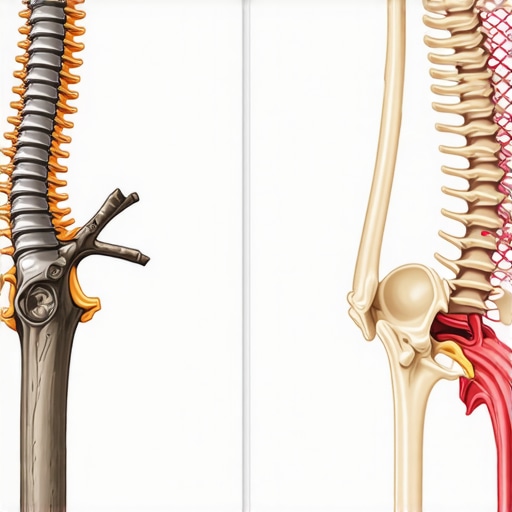
Why does your strong core feel like a suit of armor?
Many of my most athletic clients come in with the worst back pain because they have over-trained their core to be a rigid, unyielding wall. While stability is vital, why your strong core might actually be too rigid is a nuance often missed in the local gym. If your abdominal wall doesn’t know how to relax and expand with your breath, your spine cannot move through its full natural range of motion. A landmark study published in the Journal of Biomechanics demonstrated that excessive trunk stiffness actually increases the compressive load on spinal discs during simple movements, potentially accelerating wear and tear. You want to be a willow tree—flexible but strong—not a brittle oak that snaps under pressure. This structural balance is also why we check your leg length during every visit; if your foundation is uneven, your core will lock up as a secondary defense mechanism. Have you ever fallen into the trap of trying to force your posture into place and ended up feeling stiffer than before? Let me know in the comments.Once you realize that your body isn’t a fragile vase but a dynamic system, the focus shifts from ‘fixing’ to ‘maintenance.’ I spent years looking for a magic bullet before I realized that the best tools were already in my house. If you are stuck at a desk all day, you don’t necessarily need a thousand-dollar ergonomic throne. Most of the time, the factory support in chairs is in the wrong place. This is why learning the correct way to use a lumbar roll in your office chair changed everything for me. It’s about filling the specific void in your unique spinal curve, not just adding padding for the sake of it. When I’m on the road, I don’t even pack a roll; I’ve mastered how to use a rolled-up towel to fix your car’s lumbar support. It’s a five-second hack that prevents that deep, aching throb after a two-hour commute. According to technical guidelines from the Occupational Safety and Health Administration (OSHA), proper lumbar support should be adjustable enough to fit the small of your back specifically to prevent disc compression—a standard most ‘luxury’ chairs ironically fail to meet.
How do I maintain my mobility without a daily hour-long routine?
This is the question I get most often, and my answer is always ‘micro-dosing’ movement. You don’t need a marathon session; you need high-frequency, low-duration resets. I keep a tennis ball in my desk drawer at all times. Knowing how to use a tennis ball to fix that spot under your shoulder blade allows me to break up muscle adhesions the moment they start to form, rather than letting them fester until my next appointment. This is the core of mobility mastery. If you can integrate how to stay mobile when you have a desk job into your actual workday—think 30-second stretches between meetings—the need for intensive recovery drops off a cliff. 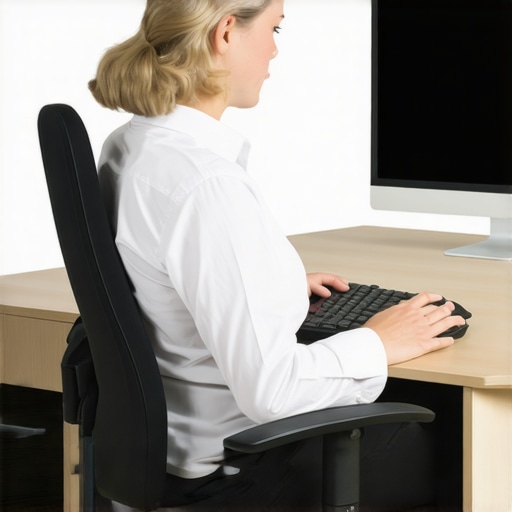
The Future of Smart Mobility and Wearable Feedback
I predict that in the next five years, we will move away from static ‘posture correctors’ and toward active biofeedback. We are already seeing the beginning of this with sensors that track pelvic tilt and weight distribution in real-time. I’m particularly excited about technology that helps users understand how to fix your gait for better spinal alignment by analyzing foot strike patterns on the fly. When your phone can tell you that you’re leaning 2% more on your right hip before your back even starts to hurt, we will truly be in the era of preventative care. This aligns perfectly with the chiropractic techniques unveiled in modern clinics today, where we look at the body as a holistic, moving machine rather than a collection of parts. Tonight, I want you to try one thing: grab a tennis ball and spend just two minutes on that tight spot between your shoulder blades. You’ll be amazed at how much lighter your neck feels tomorrow morning.
The Shifts That Finally Stopped the Morning Stabs
After years of trial and error, I’ve realized that consistency beats intensity every single time. You don’t need a grueling gym session to fix your alignment; you need a series of small, intentional wins throughout your day. First, I stopped viewing my back as ‘broken’ and started seeing it as ‘unsupported.’ This shift in mindset changed how I approached every movement, from picking up a laundry basket to sitting in a meeting. Second, I learned that my body was literally molding itself into the shape of my desk chair. If you don’t provide a counter-stimulus, your muscles will accept that slouched position as the new ‘normal.’ By focusing on mobility mastery, I gave my joints the variety they craved.
Another major lightbulb moment was realizing that understanding back pain means acknowledging the role of your environment. If you spend eight hours on a mattress that acts like a hammock, no amount of morning stretching will fully undo that damage. You have to stop the injury at the source. It’s also vital to remember that to relieve neck back discomfort using these expert methods isn’t a one-time event; it’s a lifestyle of micro-adjustments.
My Non-Negotiable Kit for a Resilient Spine
I don’t believe in expensive gadgets when simple tools do the job better. Here is what I actually use to keep my spine in check:
- The Humble Tennis Ball: This is my go-to for breaking up adhesions under the shoulder blade. It’s portable, cheap, and more effective than many high-end massage guns for specific trigger points.
- A Reliable Lumbar Roll: Whether it’s a dedicated roll or a rolled-up towel, I never sit in a car or office chair without it. It’s the easiest way to maintain your natural lumbar curve without effort.
- Fresh Support: Many people forget that pillows should be replaced every eighteen months because they lose the structural integrity needed to support your neck’s delicate curve.
These tools are part of my broader strategy for mobility mastery and long-term joint health.
Give Your Pelvis the Break It Deserves
Reclaiming your life from chronic stiffness isn’t about finding a miracle cure; it’s about making peace with your anatomy. Your spine is incredibly resilient, but it needs you to be its advocate. Start tonight with one small change—a pillow between your knees or a two-minute glute bridge. These tiny actions compound over time, leading to mornings where you can actually walk straight to the kitchen without a single ‘ouch.’ You have the power to change how your body feels. Don’t let another day of avoidable back pain hold you back from the activities you love.
Have you tried the pillow-between-the-knees trick yet, or did it just end up on the floor by 3 AM? Let me know your experience in the comments below!