What Your Walking Pattern Says About Your Spinal Health
I used to think my “clunky” walk was just a personality trait. I would scuff my left heel on the pavement until my shoes wore down unevenly, laughing it off as being a bit clumsy or tired. But when my lower back started screaming every time I stood up from the dinner table, I realized my gait wasn’t a quirk—it was a warning siren. I remember the exact moment I realized my body was sending me SOS signals through my feet. I was walking through a quiet grocery store aisle and I could hear it: scuff, step, scuff, step. My left heel was dragging just a fraction of an inch more than my right. I didn’t connect it to the dull ache in my hip or the way my neck felt like it was made of dry wood every morning. It took a massive flare-up that left me stuck on the floor for me to finally see the truth. Your walking pattern is the most honest diagnostic tool you own, and most of us are completely illiterate when it comes to reading it. Today, I am going to show you how to decode your stride and fix the foundation of your health.
Stop Ignoring the Way Your Feet Hit the Pavement
If you feel like you are constantly fighting a losing battle with back pain, the answer might be literally under your feet. I spent years buying expensive chairs and ergonomic gadgets, only to realize I was ruining my spinal alignment because of a slight limp I did not even know I had. When your gait is off, your spine has to compensate for every single step. Think about it: you take thousands of steps a day. If each one is slightly crooked, you are essentially hammer-drilling stress into your vertebrae. Today, I am going to help you translate what your stride is trying to tell you so you can finally revitalize your mobility and live without that constant background noise of pain.
Is my walking style actually worth worrying about?
You might think that because you have walked this way since you were ten, it does not matter now. The reality is that your body is a master of compensation—until it isn’t. Early in my journey, I made the huge mistake of thinking that because I could still get around, my walking pattern was fine. I ignored how tight calves cause lower back tension until I could not even stand for ten minutes without agony. According to research published in the Journal of Biomechanics, even minor deviations in gait can significantly increase the load on the lumbar spine, leading to premature wear and tear. Have you ever noticed your shoes wearing out faster on one side than the other? Tell me in the comments, because that is the first smoking gun we need to discuss.
The Hidden Connection Between Your Stride and Your Spine
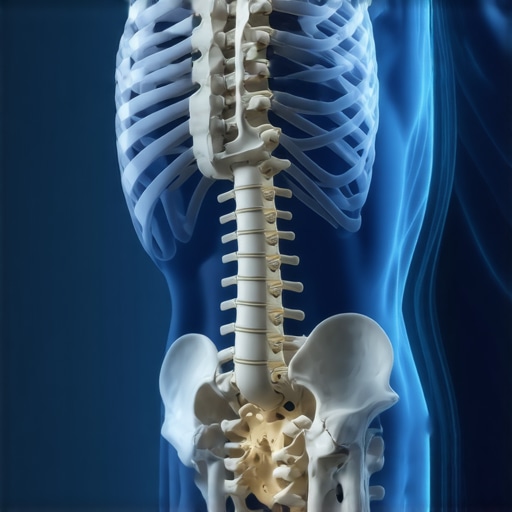
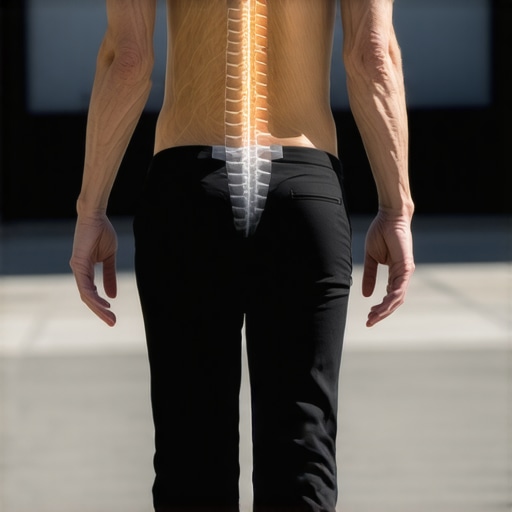
It is all a chain reaction. If your foot arch is collapsing, your knee rotates inward, your hip drops, and your spine has to curve to keep your head level. I used to think my neck pain was just from tech neck, but it turned out my pelvis was tilted because of how I stepped. Learning the pelvic tilt secret for effortless posture changed everything for me. It was not just about standing straighter; it was about moving smarter. When you fix the foundation, the rest of the house—your spine—finally gets a chance to settle into its natural, pain-free position.
Turn Your Shoes Over to Find the Problem
The very first thing I want you to do is go to your closet and grab the pair of shoes you wear most often. Look at the soles. Are they worn down on the outer edge of the heel? Or maybe the inner front? This is your data. If you see extreme wear on one side, you are essentially walking on a slanted foundation. When I first looked at mine, the outer heel of my left sneaker was almost bald, while the right looked brand new. This explained why I was ruining my spinal alignment with every mile. Your shoe is a map of your dysfunction. If the wear is uneven, your weight isn’t distributing through your midfoot, which sends a shockwave of force straight up to your L5-S1 disc. 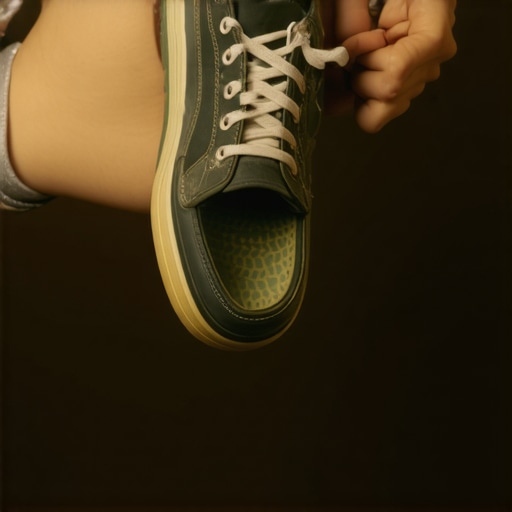
Treat Your Foot Like a Rocking Chair
Most people ‘slap’ the ground with their feet. This is loud, jarring, and kills your momentum. Instead, you need to visualize your foot as a rocking chair. Your heel should make the initial contact, and then your weight should roll smoothly through the arch and onto the big toe for the push-off. If you skip the roll and go straight to the slap, you’re missing out on the natural shock absorption your body was designed for. I found that when I focused on that smooth roll, my tight calves causing lower back tension finally started to loosen up. It takes conscious effort at first, but eventually, it becomes muscle memory.
My Failed Experiment with Forced Alignment
A few years ago, I decided I was going to fix my ‘duck feet’—where my toes point outward—by sheer force of will. I spent an entire week forcing my feet to point perfectly straight. It was a disaster. By Wednesday, my knees were throbbing, and my lower back felt like it was in a vice. I learned the hard way that you can’t just ‘pivot’ your feet without addressing the hips. This is where you need to restore your back mobility through actual movement, not just rigid positioning. You have to work with your natural anatomy while gently encouraging better patterns. If your hips are locked, your feet will flare out to compensate.
Wake Up Your Glutes Before You Head Out
Walking is a glute-driven activity, but most of us are ‘quad dominant.’ We pull ourselves forward with our thighs rather than pushing off with our backside. To fix this, you need to master the pelvic tilt secret for effortless posture. Before you even take a step, tuck your tailbone slightly—think about bringing your belt buckle toward your chin. This engages your core and puts your glutes in the ‘ready’ position. When I started doing this, I noticed I could walk twice as far without that familiar ‘burning’ sensation in my lower back. If you find your progress stalling, it’s often because your glutes won’t fire properly due to hours of sitting.
Focus on the Mid-Back Rotation
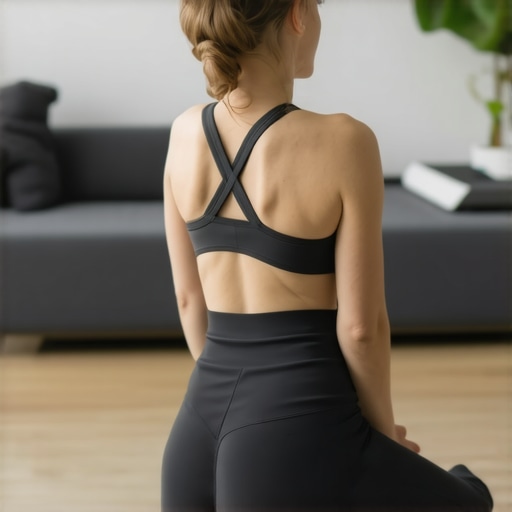
Your arms shouldn’t just hang there like dead weight. A healthy walk involves a gentle counter-rotation between your shoulders and your hips. When your left foot steps forward, your right shoulder should naturally move forward too. This ‘wringing out’ of the spine is actually what keeps your discs hydrated and healthy. If you walk stiffly, like you’re wearing a suit of armor, you’re missing out on this natural lubrication. By using proven strategies for back pain relief, you can unlock that mid-back stiffness and let your body rotate the way it was built to. It feels weirdly rhythmic at first, but once you find that flow, you’ll feel lighter on your feet than you have in years. If you’re struggling to get that rotation, you might need to look at chiropractic techniques to clear the blockages in your thoracic spine.
People often tell me they spend twenty minutes every morning touching their toes to ‘loosen up’ their spine before a walk. But here is the contrarian truth that most ‘fitness gurus’ miss: for many of us, stretching your hamstrings won’t fix your lower back pain, and in some cases, it might actually make it worse. If your hamstrings feel tight because your pelvis is already tilted too far forward, stretching them is like pulling on a rope that is already at its breaking point. You aren’t releasing tension; you are increasing instability. This is the biggest ‘trap’ I see in the wellness world—treating the symptom of tightness without asking why the muscle is guarding in the first place. When I stopped forcing the stretch and started to restore my back mobility through functional movement that respects my natural anatomy, that stubborn ‘tightness’ finally vanished on its own.
The stability trap that leaves fit people in pain
I used to think my ‘abs of steel’ would protect my spine like a natural corset, but the reality is that your core strength isn’t stopping your back from hurting if your gait is broken. A fascinating study published in the Archives of Physical Medicine and Rehabilitation highlights that spinal stability is less about the sheer force of your muscles and much more about the timing and coordination of ‘micro-adjustments’ during movement. If your neurological timing is off because of a stiff ankle or a locked jaw, no amount of planks will save your L5 disc from the impact of a thousand steps. We focus so much on ‘strengthening’ when we should be focusing on ‘coordinating.’ This is where mobility mastery truly happens—it’s the art of letting your body move as a single, fluid unit rather than a collection of parts.
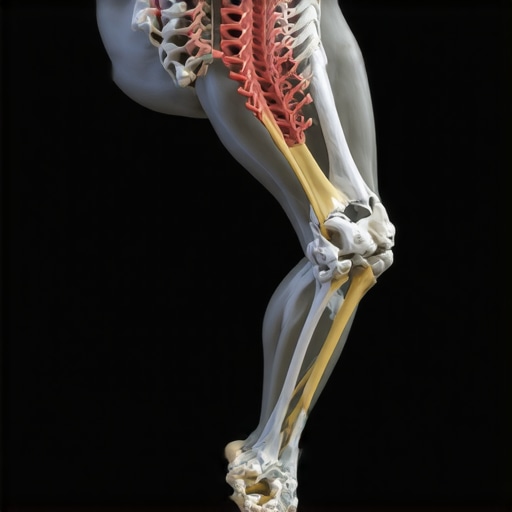
Is your ankle mobility the real reason your squat feels lopsided?
We often look at the site of the pain, but the culprit is usually a few joints away. I’ve seen countless people try to fix a ‘weak’ lower back when the actual issue was that their ankles were as stiff as concrete. If you can’t flex your foot properly, your body will steal that range of motion from your knees and your lumbar spine. It’s a game of anatomical musical chairs. In fact, why your ankle mobility is secretly destroying your squat form is the same reason you might be feeling that sharp pinch in your hip when you walk uphill. The body is a master of compensation, and it will sacrifice your back to keep you moving forward. The biggest mistake is over-correcting by tensing up. If you are ‘holding’ your posture like a soldier, you are just creating a different kind of tension that leads to intense neck pain. Have you ever fallen into this trap of trying to ‘force’ your body into a position it wasn’t ready for? Let me know in the comments, because identifying that ‘manual override’ is the first step toward genuine, effortless relief.
I used to think that once I fixed my walk, I was done. But life happens—we get tired, we carry heavy groceries, or we spend too long scrolling in a hunched position. To keep my spine in check and ensure my gait doesn’t degrade over time, I rely on a few ‘non-negotiable’ tools. I don’t mean those fancy vibrating foam rollers that cost a fortune. I’m talking about a simple lacrosse ball. I use it daily to target the trigger points in my glute medius because your glute medius is more important than your abs for back health. If that muscle is locked, your stride collapses instantly, and you’ll find yourself back in that cycle of compensation. I also keep a massage gun in my gym bag, but I never use it directly on the bone. Instead, I focus on the soft tissue around the hip and upper thigh to use a massage gun on your lower back safely. It’s about desensitizing the nervous system so it doesn’t ‘freak out’ and tighten up during my next long walk or run. 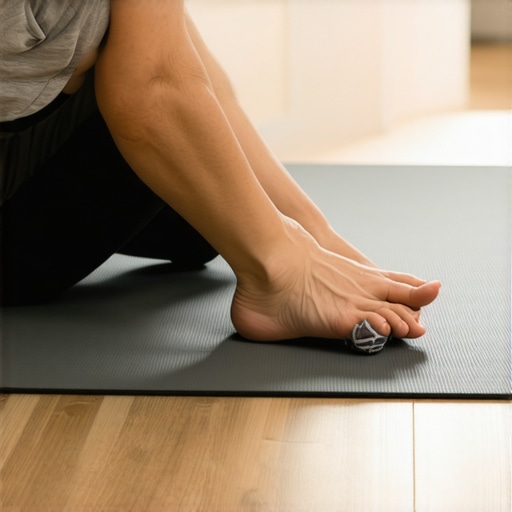
The gear I actually use to stop my spine from seizing up
For footwear, I’ve stopped chasing the latest ‘maximalist’ cushion trends. While they feel like clouds at first, too much foam can actually mask the feedback your brain needs from the ground. I prefer shoes with a wider toe box that allow my feet to splay naturally. This prevents the ‘scrunching’ that leads to tight calves causing lower back tension. If your toes can’t move, your ankles can’t flex, and your lower back will always pay the price. I also swear by a simple wedge for my desk chair. It’s a tiny adjustment, but the simple change to your desk chair keeps my pelvis in a neutral position, so I don’t start my afternoon walk with a ‘pre-stiffened’ spine.
How do I keep my gait from slipping back into old habits?
Maintenance isn’t a one-and-done deal; it is a lifestyle of ‘Spinal Hygiene.’ Just like you brush your teeth to prevent decay, you need to clear the mechanical ‘plaque’ from your joints before it turns into a permanent restriction. I schedule regular check-ins because chiropractic care enhances movement by ensuring the joints that should move actually do move. This prevents the ‘compensation creep’ where your neck starts hurting simply because your hip is slightly stiff. Dr. Stuart McGill, a world-renowned spine biomechanist, emphasizes in his seminal work Back Mechanic that ‘tuning’ the body’s movement patterns and maintaining ‘spine-sparing’ habits is far more effective than any single surgical intervention for chronic mechanical pain.
Smart insoles will soon be your new physical therapist
Looking ahead, I think we’re moving toward a world where your shoes will talk directly to your phone. Smart insoles that measure your ‘center of pressure’ and ‘heel-strike velocity’ in real-time are becoming more accessible. Instead of guessing if you’re scuffing your heel or leaning too far forward, you’ll get a subtle buzz on your wrist or an alert in your earbuds. This real-time biofeedback will revolutionize how we manage mobility mastery. Until that technology is perfected, you have to be your own biofeedback loop. Use the morning spinal hygiene routine to prime your nervous system before you even put your shoes on. My challenge to you today: grab a tennis ball or lacrosse ball and spend exactly three minutes rolling out the bottom of each foot. Focus on the area just in front of the heel. You’ll be amazed at how much lighter and more fluid your steps feel immediately after. It’s the easiest way to revitalize your mobility with zero financial investment.
Three Truths My Feet Taught Me the Hard Way
After years of trial and error, I realized that walking isn’t just something we “do”—it is a skill that can be refined or neglected. First, I learned that stress has a physical footprint. When I’m anxious, my toes tend to “claw” at the ground inside my shoes, which creates a chain reaction of tension all the way up to my neck. Second, I discovered that walking on varied surfaces is nature’s physical therapy. Pavement is predictable but punishing; whenever possible, I take my stride to grass or dirt to force those small stabilizer muscles to wake up. Finally, I realized that silence is the ultimate goal. A heavy, “slapping” footfall is usually a sign of poor shock absorption, while a quiet, rhythmic roll indicates you are moving in harmony with your joints. Gaining this level of understanding back pain allowed me to stop fighting my body and start listening to it.
My Daily Toolkit for Spinal Resilience
You don’t need a gym full of equipment to maintain a healthy gait, but a few specific tools made a massive difference for me. I keep a lacrosse ball under my desk at all times. It’s the perfect way to use a massage ball to break up the “glue” in your fascia that keeps your feet stiff. I also highly recommend the book “Back Mechanic” by Dr. Stuart McGill; it is the gold standard for anyone trying to decode their own mechanical triggers. In terms of footwear, switching to wide-toe-box shoes was a revelation. When your toes can splay, your foundation widens, which stops your body from needing those weird chiropractic hacks just to get through the day. Lastly, don’t overlook your joints; sometimes we have to adjust your ankles to ensure the rest of the kinetic chain isn’t being dragged down by a single stiff hinge.
#IMAGE_PLACEHOLDER_E#
Your Future Self Will Thank Your Feet
Fixing your gait isn’t about achieving a “perfect” aesthetic; it’s about giving your spine the longevity it deserves. It takes patience to overwrite decades of movement habits, but the reward is a life where a long walk feels like a recharge rather than a risk. As you move forward, remember that every step is an opportunity to revitalize your mobility and protect your discs. Don’t wait for a flare-up to start paying attention—start today, one mindful step at a time. Have you noticed a specific pattern of wear on the bottom of your favorite shoes lately? Let me know in the comments below!