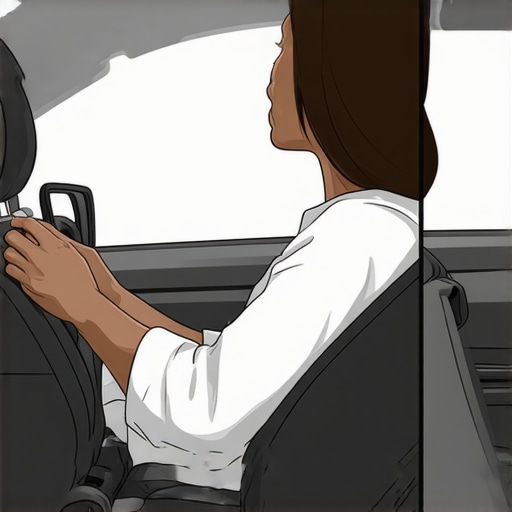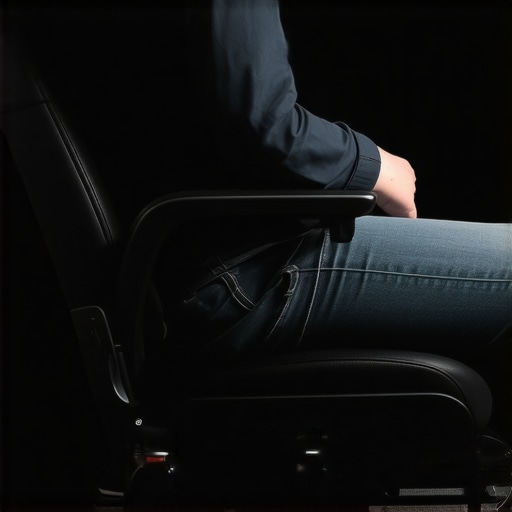
How to Sit in a Bucket Seat Without Lower Back Spasms
It happened three miles outside of town—that sudden, electric jolt in my lumbar that told me my afternoon was ruined. I was trapped in the deep, supportive embrace of my car’s bucket seat, and my back was screaming. It’s funny how a car designed for performance can make your body perform so poorly. I spent years thinking my car was the problem, when really, it was my lack of a strategy. I loved the way the bolsters held me through the corners, but I hated how they forced my pelvis into a tucked, ‘C’ shape. I’m here to tell you that you don’t have to sell your favorite ride just to save your spine. We’re going to walk through how to outsmart those racing-style seats today.
Have you ever had to pull over on the shoulder just to walk off a back cramp that felt like a hot poker?
Stop letting your car seat dictate your posture
I made a massive mistake early on: I thought more padding was the answer. I bought every ‘orthopedic’ pillow on the market and shoved them behind me. All I did was push my torso further away from the pedals, straining my neck and making my legs work harder. It was a disaster. According to a study published by the National Center for Biotechnology Information (NCBI), prolonged sitting in a fixed, slumped posture significantly increases intradiscal pressure, which is exactly what happens when those high side bolsters pin you into a fixed position. To fix this, you first need to get a handle on why your posture is collapsing in the first place. You need to create a foundation before you start adding accessories. Bucket seats are notorious for creating a ‘bucket’ for your hips to sink into, which naturally rounds the lower back and strains the ligaments.
Is a fancy ergonomic cushion actually worth the money?
Most people think they can buy their way out of pain with a $50 memory foam wedge. The truth? It depends on where your pelvis is. If your seat pan is tilted back too far, no cushion will save you. I found that mastering the pelvic tilt trick was far more effective than any store-bought pillow. It’s about active engagement, not just passive lounging. We want to find that sweet spot where your spine keeps its natural curve even when the road gets bumpy. Learning how to drive for hours without that nagging stiffness isn’t just a dream; it’s a mechanical adjustment you can make right now. You have to stop viewing your car seat as a couch and start viewing it as a workstation for your body.The first move is to stop fighting the seat and start neutralizing it. Think of your pelvis like a bowl of water; if the seat pan is tilted too far back, that water spills toward your spine, causing that painful rounding that ruins your day.
Level the playing field for your pelvis
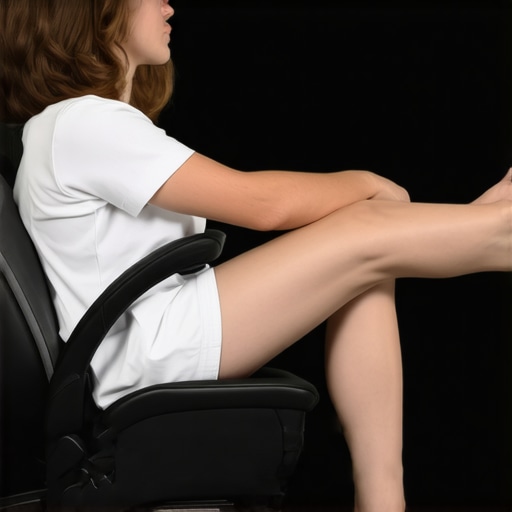
Most performance seats have a “rake” that is far too steep for long-term comfort. You want to adjust the seat bottom so it’s as level as possible to prevent your hips from sinking below your knees. If your seat doesn’t allow for a mechanical tilt adjustment, this is where a firm foam wedge actually helps—not for softness, but to change the geometry of your interface with the car. I once spent a grueling six-hour drive through the Rockies feeling like my hip flexors were being stapled to my spine. I eventually pulled over, grabbed a rolled-up gym towel, and shoved it into the deepest part of the “bucket” to lift my sit-bones. By filling that gap, I forced my skeleton to take the weight instead of my soft tissues. If you’ve ever wondered why your tailbone hurts after sitting for 10 minutes, it’s almost always because the seat is swallowing your hips and putting direct pressure on the coccyx. 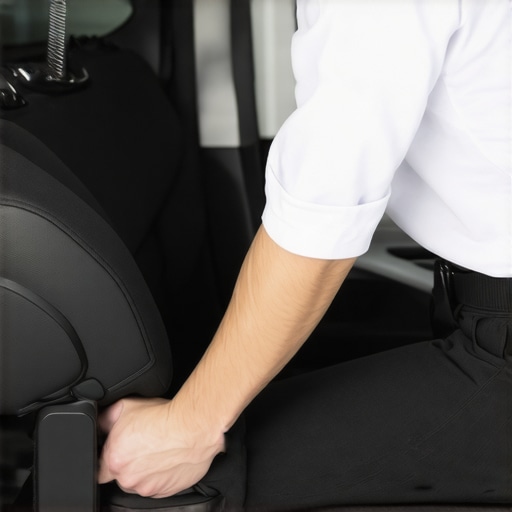
Kill the reaching habit to save your sciatic nerve
Your distance to the pedals is the silent architect of lower back health. If your leg is fully locked out or “reaching” when you press the brake or clutch, you are overextending your hamstrings and pulling your pelvis into a painful posterior tilt. This constant tension travels straight up the kinetic chain. It’s a similar mechanical failure to why stretching your hamstrings wont fix your lower back pain—you’re treating the symptom of a bad position rather than the mechanical cause. You want a clear, slight bend in the knee even at full pedal depression. This allows the glutes to stay active and supportive, acting as the primary shock absorbers for your spine.
Position the steering wheel to protect your neck
Many drivers pull the steering wheel too far away or set it too high, which forces the shoulders to round forward and the chin to poke out. This “hunch” creates a massive amount of tension in the upper traps and the base of the skull, leading to that heavy, burning sensation. If you find yourself needing effective neck pain management after a short commute, check your elbow angle. Your elbows should have a relaxed, 90-to-120-degree bend while holding the wheel at 9 and 3. This keeps the weight of your arms supported by the seat back rather than dangling from your neck muscles. It’s the same logic used when learning how to sit at your desk with zero back fatigue. When your arms are reaching, your spine is leaning and your core is switching off.
Master the active micro-break behind the wheel
You cannot remain static for three hours and expect your body to feel like a spring. Even with a perfect ergonomic setup, your discs need movement to stay hydrated and healthy. Every twenty minutes, perform a version of the pelvic tilt trick for instant lumbar relief by gently arching and then flattening your back against the seat. This small “pump” action helps move nutrient-rich fluid through the spinal discs, preventing them from becoming stiff and brittle. If you’re stuck at a long red light, try a few reps of the simple shoulder blade squeeze for instant neck relief. These aren’t just “stretches”; they are essential maintenance reps for your nervous system. By staying mobile while seated, you prevent the “setting” of muscle tension that leads to that embarrassing post-drive “stiff-man” walk when you finally exit the vehicle.
Most ‘experts’ will tell you that the secret to a pain-free drive is building a core like a professional athlete. I call BS on that. I’ve seen powerlifters with abs of steel who can’t sit in a sedan for twenty minutes without their legs going numb. The ‘Oops’ factor here is confusing raw strength with motor control. If your brain doesn’t know how to keep your glutes active while your feet are on the pedals, all the crunches in the world won’t save your lumbar discs. In fact, why your core strength isnt stopping your back from hurting is often because you’re bracing too hard, creating internal pressure that actually irritates the nerves further. You need to stop thinking about power and start thinking about efficiency.
Will a stronger core really fix my driving fatigue?
A study published in the journal Spine found that for many chronic back pain sufferers, there was no significant difference in long-term outcomes between those who did specific ‘core stability’ exercises and those who engaged in general physical activity. The hidden nuance? It’s about timing, not raw power. Your muscles need to fire at the right micro-second to support your spine against the vibrations of the road. This is why back pain recovery often starts with neurological re-education rather than just lifting heavy weights. If your nervous system is on high alert, your muscles will stay guarded and stiff regardless of how many planks you can hold.
The trap of stretching through the pain
One massive mistake I see drivers fall into is the ‘hamstring stretch’ obsession. You feel tight in your lower back or down your leg, so you reach for your toes. But if that tightness is actually coming from your sciatic nerve being pinched or compressed by a bucket seat, you aren’t stretching muscle—you’re yanking on a sensitized nerve. This is why stretching your hamstrings wont fix your lower back pain and might even make it worse. Instead of traditional static stretching, I found that the nerve flossing technique for stubborn leg pain provides that ‘release’ feeling without the trauma to the nerve. It’s about movement, not tension.
Wake up your glutes to protect your lumbar
You also have to look at the ‘forgotten’ muscles. If you spend all day driving, your glutes eventually ‘forget’ how to turn on, a phenomenon often called gluteal amnesia. When your glutes go on vacation, your lower back has to do all the work of stabilizing your entire torso against the car’s movements. Learning why your glutes wont fire and how to fix it is the real key to lasting comfort. By waking up these powerful muscles, you take the sheer force off your spine and put it where it belongs. Have you ever fallen into this trap of over-stretching or over-bracing? Let me know in the comments.
If you’re serious about long-term spinal health, you need more than just good intentions; you need a toolkit. I don’t mean a bag of tools in the trunk, I mean a set of habits and hardware that keep you from regressing. One tool I never leave home without is a high-density, small-diameter lumbar roll. Unlike those giant pillows that push you forward, a slim roll targets the specific apex of your lumbar curve. I personally use a firm D-section roll because it doesn’t roll away while I’m navigating traffic. This isn’t just about comfort; it’s about mechanical integrity. A study in the Journal of Physical Therapy Science demonstrated that using a lumbar support roll significantly maintains the natural lordotic curve and reduces disc pressure compared to sitting without one. When you maintain that curve, you’re essentially giving your discs a breather.
The one piece of gear that changed everything
For those of us who deal with lingering stiffness after a long haul, I’ve found that using a massage gun can be a game-changer—if you know what you’re doing. You can’t just hammer away at your spine. Learning how to use a massage gun on your lower back safely is crucial because you want to target the muscles around the bone, not the vertebrae themselves. I use it on my glutes and hip flexors immediately after getting out of the car to ‘re-set’ the muscle tone. It’s part of a broader strategy of understanding back pain as a management issue rather than a one-time fix.
How do I maintain my back health on 10-hour road trips?
The secret is what I call ‘forced variability.’ You have to break the static hold. I adapted the 20-20-20 rule specifically for driving: every 20 minutes, I slightly shift my weight or adjust the seat rake by just one degree. It sounds neurotic, but it prevents any single tissue from bearing the load for too long. If you combine this with expert methods to relieve neck and back discomfort, you can actually arrive at your destination feeling better than when you left. It’s about being proactive rather than waiting for the pain to scream at you. We should also be looking at advanced chiropractic techniques that focus on joint play, ensuring that your pelvis isn’t just ‘aligned’ but actually mobile.
The future of car seats might actually do the work for you
I predict that in the next five years, we’ll see ‘active seats’ become standard in more than just high-end luxury cars. We are moving toward seats with integrated sensors that detect where your posture is failing and use micro-pneumatic adjustments to shift your weight for you. This will be a massive leap for neck pain relief in 2025 and beyond. Until then, the responsibility is on us. My challenge for you: Next time you hit a red light, don’t check your phone. Do three pelvic tilts and a 10-second glute squeeze. It sounds silly until you realize you’ve arrived home without that ‘electric’ nerve pain.
The Harsh Truth About Performance Bolsters
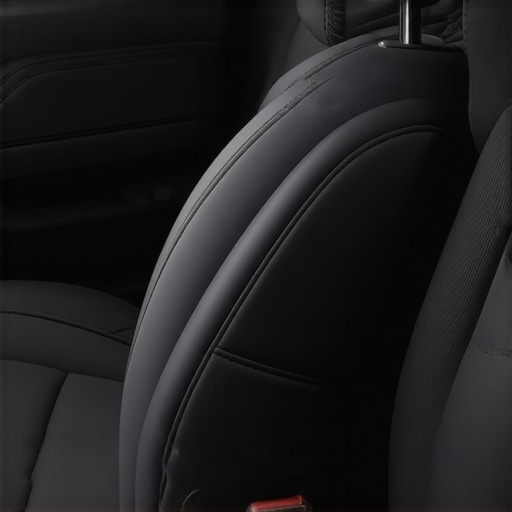
I used to think my car’s aggressive side bolsters were a badge of honor, but they were actually a straightjacket for my spine. One of the biggest lessons I learned is that “hugging” isn’t the same as “support.” If you can’t breathe deeply or expand your ribcage because the seat is too narrow, your muscles will stay in a state of high alert. This is why understanding your posture is more about creating space and less about being pinned in place. Another lightbulb moment? My rearview mirror. If I adjust it when I first start the car, I can tell I’m slouching 30 minutes later because I can no longer see the traffic behind me without sitting back up. It’s a built-in postural alarm system that costs zero dollars.
The Only Gear Worth Keeping in Your Glovebox
You don’t need a trunk full of expensive gadgets, but two things changed my life on long hauls. First, a firm D-section lumbar roll. It fills the void that bucket seats create, allowing your spinal discs to rest rather than compress. Second, I keep a high-rebound massage ball in the side pocket. Knowing how to use a massage ball to release hip flexor tension during a gas station break is the difference between walking into your destination or crawling into it. I also recommend applying the logic behind the simple change to your desk chair to your vehicle; the principles of seat pan height and hip-to-knee ratios are identical whether you are in an office or a cockpit.
#IMAGE_PLACEHOLDER_E#
Stop Surviving the Drive and Start Enjoying the Road
The road doesn’t have to be your enemy. When you combine smart mechanical adjustments with expert methods to relieve discomfort, you regain control over your body’s experience. Driving should be an act of freedom, not a physical penance. Start with one small change today—whether it’s the mirror trick or the five-second glute squeeze at red lights—and watch how your nervous system responds. You’re not just a driver; you’re the pilot of a complex biological machine that needs the right settings to perform. Have you found a specific seat adjustment or a homemade hack that finally killed your sciatica on long trips? Let me know in the comments below.