Why Your Tailbone Hurts After Sitting for 10 Minutes
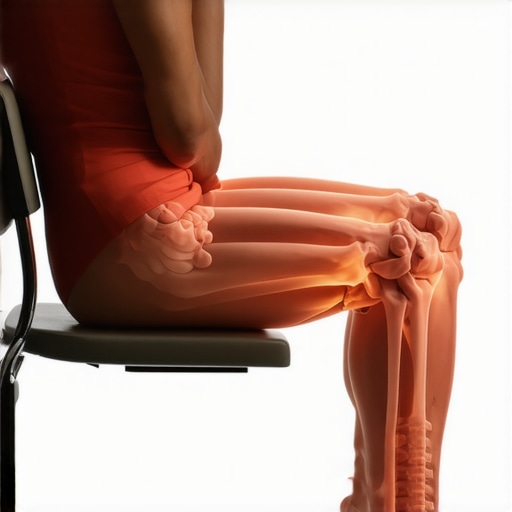
I was halfway through a standard thirty-minute sitcom when it started—that sharp, nagging throb right at the base of my spine. It wasn’t a dull ache; it felt like my tailbone was trying to punch its way through the upholstery. I’ve been there, shifting from left cheek to right, trying to find a “sweet spot” that simply doesn’t exist. If you’ve ever felt like your body is betraying you after just ten minutes of sitting, I want you to know you aren’t alone, and it’s usually not just a “bad chair” problem. Today, we’re going to peel back the layers on why your coccyx is screaming for help and, more importantly, how to actually make it stop so you can enjoy a meal or a movie without dreading the rise from your seat. [image]
Your Chair Isn’t the Only Culprit Behind That Sharp Sting
I used to make the classic mistake of blaming my furniture for everything. I bought the most expensive ergonomic chair I could find, yet the pain persisted. What I didn’t realize back then was that my own habits were the real issue. For instance, I spent years ignoring the danger of sitting with a wallet in your back pocket, which tilted my pelvis just enough to put agonizing pressure on my tailbone. It’s often these tiny, overlooked movements—or lack thereof—that create the perfect storm for coccydynia. According to the Cleveland Clinic, coccydynia is five times more common in women than men, often due to the broader structure of the female pelvis, but no one is truly immune when our posture goes south. When we slouch, we shift our weight directly onto the coccyx instead of our sit-bones, and that’s when the clock starts ticking. Understanding back pain isn’t just about reading a manual; it’s about recognizing how your specific sitting style, perhaps even why your couch is the worst place for your spine, is contributing to that ten-minute fuse. Have you ever found yourself standing up at a restaurant just to get a moment of relief?
Is this pain actually permanent or just a sign of aging?
I hear this a lot from my neighbors: “Maybe I’m just getting old.” We tend to write off physical discomfort as an inevitable part of the calendar flipping over. But let me tell you, that’s a trap. While our ligaments can lose some elasticity over time, tailbone pain is usually a mechanical signal, not a life sentence. If we don’t address the underlying alignment, we end up in a cycle of temporary fixes. I’ve seen people try every donut pillow on the market, only to find the ache returns the moment they sit on a flat surface. We need to look at strengthening your glutes to take the pressure off your spine rather than just padding the seat. It’s about restoring the natural balance so your tailbone can do its job without being crushed.
Move Your Weight Off the Tailbone Instantly
To stop the pain, you first have to understand the mechanics of the ‘Pelvic Rock.’ Imagine your pelvis is a shallow bowl filled with water. When you slouch, you are effectively tipping that water out the back of the bowl, which forces your tailbone to act as a kickstand for your entire upper body. It isn’t designed for that load. To fix this, you need to locate your ‘sit-bones’—the hard bony protrusions at the bottom of your pelvis. I remember sitting through a grueling four-hour flight to Seattle where my tailbone felt like it was being pressed into a branding iron. I spent the last hour subtly rocking my pelvis forward until I felt those sit-bones take the weight. The relief wasn’t just physical; it was a mental ‘aha’ moment. By simply shifting the weight forward, you create a physical gap between your coccyx and the chair. This is why the simple way to sit on a stool without pain often comes down to this single pelvic tilt. 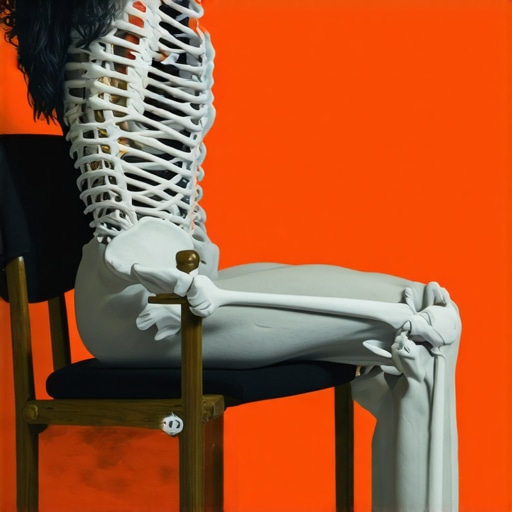
Treat Your Spine Like a Suspension Bridge
A common mistake is trying to sit perfectly vertical, like a flagpole. A flagpole takes all the force at its base, which in your case, is the very area that hurts. Instead, think of your spine as a suspension bridge. A bridge stays stable because the weight is distributed across cables and supports. Your ‘cables’ are your core and glute muscles. If they are ‘off-line,’ the bridge collapses onto the tailbone. This is why why we adjust your mid-back to help your lower back recover is a core concept in my practice; if your upper back is stuck, your lower back overcompensates. You can also look into the link between ankle mobility and lower back stability because if your feet aren’t planted firmly to support your weight, your pelvis will naturally roll back into that painful slouched position.
Reset Your Clock Every Twenty Minutes
The human body has a ‘static load’ limit. Even with the best posture, sitting for hours creates a stagnant environment for your nerves. I used to be a ‘power-through-it’ worker until my back spasms became so frequent I couldn’t drive. Now, I live by the 20-minute reset. Every twenty minutes, you must change the pressure point. This doesn’t mean you need a full gym session; it means a quick decompression. If you are stuck behind the wheel, knowing how to reset your posture while driving can be the difference between arriving refreshed or arriving in a limp.
Use Your Breath to Create Internal Space
Most people don’t realize that their breathing pattern is directly tied to their tailbone pain. When you are in pain, you tend to breathe shallowly into your chest, which keeps your pelvic floor in a state of constant tension. This tension pulls on the coccyx from the inside. I’ve coached patients through how to breathe into your lower back to reduce muscle spasms, and the results are often faster than any topical cream. By expanding your lower ribs and belly as you inhale, you create internal pressure that pushes back against the spine, effectively ‘inflating’ the space around your tailbone and giving those compressed nerves some much-needed breathing room.
Stop Obsessing Over Sitting Straight
Most people think the ultimate goal of spinal health is to look like a soldier on parade. However, why your perfect posture is actually making you stiff is one of the most common secrets I share with my long-term patients. When you force yourself into a rigid, vertical position, you are essentially engaging a ‘static hold’ on your spinal muscles. This doesn’t help; it creates a lack of blood flow and increases muscle fatigue. The real key is variability. Your spine was designed for movement, not for being a statue. If you find yourself constantly adjusting but never finding comfort, you might be over-correcting. Have you ever fallen into this trap? Let me know in the comments.
The Hidden Danger of a Bulletproof Core
There is a massive industry built around ‘core stability,’ but here is the ‘oops’ factor: why your strong core might actually be too rigid. If your abdominal muscles are always braced, your spine loses its ability to rotate and absorb shock. Think of a high-performance sports car; the suspension needs to be firm, but it also needs to give. If it is a solid block of steel, the whole car rattles apart. A study published in the Journal of Biomechanics found that excessive trunk stiffness can actually increase the compressive load on your lumbar discs, leading to the very pain you are trying to avoid. Instead of just ‘tightening,’ we need to look at restore your back mobility proven chiropractic strategies that allow for fluid movement. 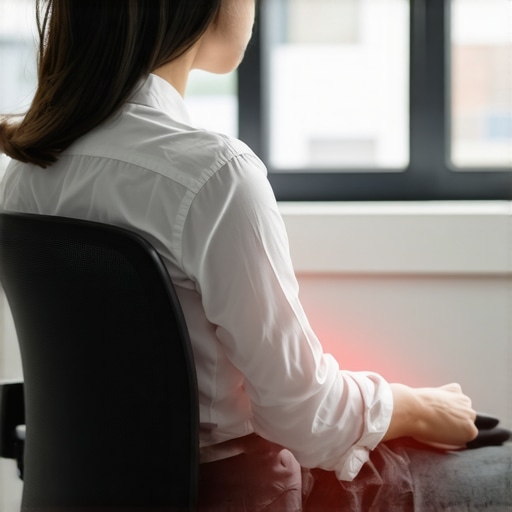
Why does my neck still ache when my posture looks perfect?
This is the sophisticated question that separates the beginners from the pros. You can have a perfectly ergonomic desk and a lumbar support that cost more than your computer, but if your foundation is off, the pain will travel up. This is why we look at your feet to solve your neck issues. If your arches are collapsing or your ankles are stiff, it changes the way your pelvis sits, which then forces your neck to crane forward to keep your eyes level. It is a kinetic chain reaction. Another common trap is focusing on the wrong muscles for relief. For example, why stretching your hamstrings won’t fix your back pain is a nuance many miss. Often, the hamstrings feel tight because they are desperately trying to stabilize a pelvis that is being tilted by something else entirely, like why tight hip flexors are the real cause of your lower back arch. If you keep stretching the ‘tight’ muscle without addressing the ‘short’ muscle (the hip flexor), you are just spinning your wheels. Advanced recovery involves looking at these hidden connections—like the jaw, the feet, and the diaphragm—to ensure your tailbone and neck aren’t just the victims of a structural imbalance elsewhere. If you’ve been chasing relief with the truth about inversion tables for sciatica without seeing progress, it is time to dig into these mechanical nuances.
Once you stop the immediate fire of tailbone or neck pain, the real work begins: the maintenance phase. I used to think that feeling better meant I was done, but I quickly learned that my spine is like a high-performance engine that requires regular tuning. If you just return to your old habits the moment the sharp stings fade, you are essentially waiting for the next breakdown. Real progress happens when you integrate small, highly specific tools into your environment so that your body doesn’t have to fight against your surroundings every single hour. For me, the game-changer wasn’t a thousand-dollar chair; it was learning the correct way to use a lumbar roll in your office chair to maintain that natural curve without straining my muscles. It is about working smarter, not harder, to keep those results long-term.
The Two Simple Tools That Actually Saved My Back
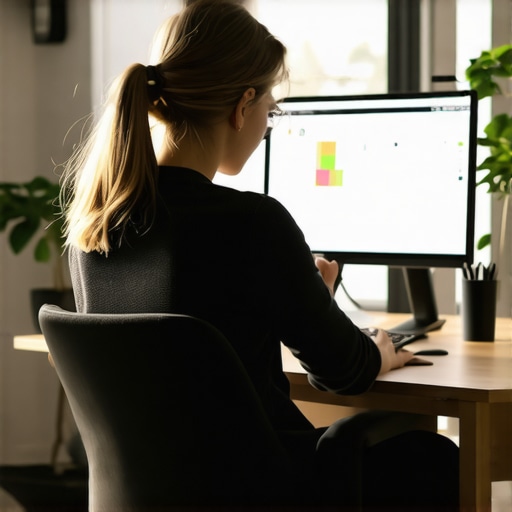
I am often asked what equipment I use personally to prevent my own old injuries from resurfacing. First, I focus on eye level. I realized that my neck fatigue was a direct result of my screen being just two inches too low. I highly recommend performing the 5-second check to see if your monitor is too low every time you sit down at a new workstation. It’s a small adjustment that prevents your head from drifting into that heavy ‘forward’ position. Second, I keep a firm lumbar support handy for any drive longer than fifteen minutes. When we sit in a car, the bucket seats often collapse our lower back into a ‘C’ shape, which is a disaster for disc health. By using boost your back health simple yet effective chiropractic hacks, like a simple rolled towel or a dedicated lumbar support, you can maintain your spine’s integrity even during a grueling commute.
How do I keep my spine healthy for the long haul?
Maintenance isn’t about doing more; it’s about being consistent with the right moves. You don’t need a full hour of yoga every morning to stay mobile. In fact, most of my successful patients find that mobility mastery expert tips for back pain prevention and recovery often involve micro-breaks rather than long sessions. Dr. Stuart McGill, a world-renowned expert in spinal biomechanics, often states that ‘the best posture is the next posture.’ This means the most important tool in your arsenal is actually your movement frequency. I personally use the 20-20-20 rule for desk workers and neck health to ensure my joints never stay under static load for too long. If you can commit to the 30-second reset for tech neck fatigue just three times a day, you are doing more for your long-term health than someone who hits the gym once a week but sits rigid the rest of the time. This consistency is what allows you to restore your back mobility proven chiropractic strategies and keep them functional as you age.
Your Future Desk Might Correct Your Posture for You
I predict that in the next five to ten years, we will see a massive shift toward ‘active furniture’—desks and chairs equipped with haptic sensors that gently vibrate when they detect your pelvis tilting into a high-pressure position. We are moving away from passive supports and toward bio-feedback. Until then, you have to be your own sensor. According to a study in the Journal of Physical Therapy Science, even a minor 10-degree adjustment in monitor height can significantly reduce the activation of the upper trapezius, which is often the root of those nagging tension headaches. I want you to try one thing today: set a timer on your phone for 20 minutes. Every time it goes off, perform a quick ‘pelvic rock’ and check your monitor height. Don’t wait for the pain to remind you; be proactive about your comfort.
The Counterintuitive Truths That Finally Stopped My Tailbone Throb
After years of trial and error, I realized that the most intense relief didn’t come from a new gadget, but from a shift in perspective. First, I had to stop treating the tailbone as an isolated part. If you only look at where it hurts, you miss why it hurts. I learned that my stiff ankles were forcing my pelvis to tilt, which in turn crushed my coccyx. Second, I discovered that ‘resting’ a sore back often makes it more brittle. Your spine needs the ‘grease’ of gentle movement to heal.
Another major lightbulb moment was realizing that my focus on ‘perfect’ posture was actually causing muscle fatigue. Instead of holding a rigid pose, I started prioritizing variability. By using revitalize your mobility proven strategies for back pain relief, I moved from a state of constant bracing to one of fluid support. It is about building a body that can handle the unexpected, not just one that looks good in a mirror.
My Minimalist Toolkit for a Resilient Spine
You do not need a gym full of equipment to maintain a healthy back. I personally rely on three core items that have never let me down. First, a simple tennis ball is my secret weapon; learning how to use a tennis ball to fix that spot under your shoulder blade can release tension that travels all the way down your spine. Second, I never sit for a long commute without knowing the correct way to use a lumbar roll in your office chair or car seat. It keeps the natural curve of my spine without me having to think about it.
Finally, I swear by the clock. Implementing the 20-20-20 rule for desk workers and neck health ensures that I never stay in one position long enough for my ligaments to ‘creep’ or deform under load. These are not just tips; they are the fundamental habits that keep me from returning to those days of sharp, stabbing tailbone pain.
Start Reclaiming Your Comfort Today
Pain has a way of shrinking your world, making you say ‘no’ to dinners or movies because you are afraid of the chair. But you have the tools now to change that narrative. Your body is incredibly resilient when you give it the right mechanical signals. Take it one pelvic rock at a time, and do not be afraid to listen to what your spine is trying to tell you.
Which of these sitting habits was the biggest ‘lightbulb moment’ for you? Have you ever noticed your tailbone pain flaring up after a long day at your desk? Let me know in the comments below!