The Simple Pivot Move for Pain-Free Gardening
I remember the exact moment my relationship with my backyard changed. It was a Saturday morning, the sun was hitting the hydrangeas just right, and I was in the zone. Then, I reached for a heavy bag of potting soil while my feet were firmly planted in the opposite direction. A sharp, lightning-bolt sensation shot through my hips, and suddenly, I wasn’t a gardener anymore—I was a statue. I spent the next forty-eight hours wondering how to tell if your back pain is serious while my spouse did all the heavy lifting. It was the ultimate wake-up call. I realized that my passion for the soil was literally breaking my body because I was treating my spine like a swivel chair that didn’t actually swivel.
Stop Torturing Your Back with the ‘Twist and Reach’
We’ve all been there. You’re deep in the weeds—literally—and you need that trowel just out of reach. Instead of moving your whole body, you keep your knees locked and twist your torso. This creates a massive amount of “shear force” on your intervertebral discs. According to the American Chiropractic Association, back pain is the single leading cause of disability worldwide, and many of these injuries happen during mundane, repetitive tasks like yard work. I used to think I was “efficient” by reaching across my body. In reality, I was just fast-tracking a trip to see someone for back pain recovery.
Today, I want to share the one mechanical shift that allowed me to get back into the dirt without fear. We’re going to master the “Simple Pivot Move.” It’s not a workout; it’s a way of moving that protects your lumbar spine by using your largest joints—your hips and ankles—to do the heavy lifting. If you’ve ever felt that dull ache or sharp zing after a few hours of planting, this is for you. Have you ever had to cut a gardening session short because your back just couldn’t take it anymore?
Is one tiny foot movement actually worth the hype?
I get the skepticism. When my neighbor first told me to “stop twisting and start stepping,” I rolled my eyes. I thought the solution was more “core strength” or a fancy belt. In fact, for a long time, I believed why your core strength isn’t stopping your back from hurting was because I wasn’t doing enough crunches. I was wrong. The mistake I made early on was focusing on muscle power rather than joint alignment. Even the strongest core can’t compensate for bad leverage. When you learn to pivot, you stop fighting your own anatomy and start working with it. This move isn’t just about avoiding pain; it’s about enhancing mobility naturally so you can keep doing what you love well into your seventies.
The Moment Everything Clicked
The transition wasn’t overnight. I had to unlearn decades of bad habits. I used to think that why your back feels better when you keep moving only applied to walking, but it applies to the micro-movements of weeding and pruning too. By shifting my weight and pointing my toes toward my work, I finally stopped waking up the next morning feeling like I’d been in a car wreck. If you’re tired of the “gardening hangover,” it’s time to change the way you move. Let’s break down how to actually perform this pivot so you can revitalize your mobility and get back to your flowerbeds.
Keep Your Nose Over Your Toes
The simplest rule for spinal safety is also the most ignored: your nose should always follow your toes. Think of your spine like a skyscraper. It’s incredible at handling vertical pressure from gravity, but it’s not designed to survive a wrecking ball hitting it from the side. When you twist your upper body while your feet are glued to the grass, you are essentially hitting your own spinal discs with a wrecking ball of torque. If you’ve ever wondered why your lower back throbs after gardening, this torque is usually the culprit. To fix this, you must treat your body as a single, solid unit from the hips up. If you need to move a bag of mulch to your left, don’t reach—step. Literally pick up your left foot and point your toes toward the bag before you even think about bending down. This small adjustment ensures that your hips, which are built for rotation, handle the movement instead of your fragile lumbar vertebrae.
Turn Your Hips Into a High-Performance Hinge
Most of us were taught to “bend at the knees,” but that’s only half the story. If you bend your knees without hinging your hips, you’ll eventually tip over or strain your quads. The hip hinge is the secret sauce. Imagine there is a string attached to your tailbone pulling you straight back toward the fence behind you. As you reach for the soil, your butt should move backward, keeping your spine neutral and flat like a tabletop. I learned this the hard way last April when I tried to reposition a fifty-pound ceramic planter. I felt that familiar, sickening ‘tightening’ in my low back because I was rounding my spine like a fishing rod. I stopped, reset my stance, and focused on pushing my hips back while keeping my chest up. The difference was night and day; the weight suddenly felt like it was being carried by my glutes—the strongest muscles in the body—rather than my spine. This is exactly what your chiropractor wishes you knew about heavy lifting: your glutes are your back’s best bodyguards.

The Three-Foot Rule for Garden Tools
We often get into a flow state where we don’t want to stop and move our bodies, so we overextend. I call this the “radius of regret.” If a tool, a weed, or a plant is more than three feet away from your center of gravity, do not reach for it. Every inch you reach forward or to the side multiplies the weight of your own arms and torso on your lower back. By maintaining a tight “strike zone” directly in front of you, you restore your range by preventing the micro-tears that happen during overextension. When I’m weeding now, I treat it like a slow-motion dance. I weed a small patch, then I physically crawl or shuffle my kneeling pad six inches forward. It feels slower at first, but it’s much faster than being stuck on the sofa for three days with a heating pad. If you want to boost your back health, you have to prioritize these small, repetitive movements over the desire to finish the row quickly.
Use Your Eyes to Protect Your Neck
It’s not just about the lower back; your neck takes a beating when you’re staring at the ground for hours. Most gardeners suffer from “turtle neck,” where the head hangs forward, putting massive strain on the cervical spine. To avoid this, try to move your eyes more than your head. Instead of tucking your chin to your chest to see a stubborn dandelion, keep your head in a relatively neutral position and look down with your gaze. This prevents the upper back from rounding and keeps the tension from migrating up into your shoulders. This simple shift in perspective is one of many proven strategies for back pain relief that focuses on the entire kinetic chain from your skull to your heels.
Speaking of the kinetic chain, we need to talk about the most common ‘fix’ that actually causes more harm than good: stretching your hamstrings. We’ve been conditioned to believe that ‘tightness’ always requires more stretching. However, in my years of trial and error (and a lot of research), I’ve learned that why stretching your hamstrings won’t fix your lower back pain is often because those muscles are acting as a protective brake. If your lumbar spine is unstable, your hamstrings tighten up to prevent you from over-flexing. When you force them to ‘relax’ through static stretching, you’re essentially taking the brakes off a car parked on a hill. You might feel a fleeting sense of relief, but you’re actually leaving your discs vulnerable during your next gardening session.
Why Stretching Your Hamstrings Might Be Backfiring
According to research published in the Journal of Orthopaedic & Sports Physical Therapy, aggressive static stretching in the presence of lumbar instability can increase neural tension rather than reduce muscle stiffness. This is a nuance many beginners miss. Instead of trying to lengthen the muscle, focus on mobility mastery through active movements. If you’re constantly reaching for your toes and wondering why the ache won’t leave, you might be trapped in a cycle of micro-trauma. Have you ever fallen into this trap? Let me know in the comments.
Is your core stability actually masking a deeper pelvic issue?
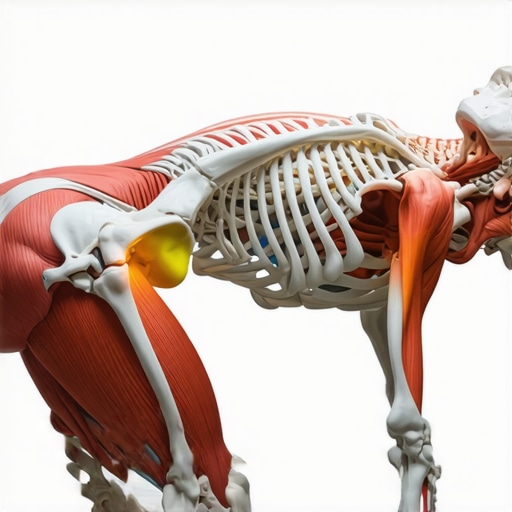
This is the question for the gardener who has ‘tried everything.’ You do your planks, you use your ‘nose over toes’ rule, and yet the pain persists. The ‘Oops’ factor here is often the SI (sacroiliac) joint. Many people mistake SI joint dysfunction for a disc issue. I’ve seen enthusiasts dive into intense routines only to find why your yoga flow might be stressing your sacroiliac joint instead of helping it. The trap is assuming that more movement is always better. In reality, some joints need stability while others need mobility. If you are over-stretching a joint that is already hypermobile, you are fast-tracking a visit for back pain recovery.
Stop Trying to Fix Back Pain with Endless Yoga
While yoga is fantastic, ‘powering through’ poses when your back is already inflamed is a recipe for disaster. The hidden nuance of spinal health is that your body often uses ‘tightness’ as a signal, not a problem to be solved with force. When I was struggling, I thought I just needed to be more flexible. The truth was that I needed to be more integrated. By focusing on understanding back pain as a communication from my nervous system, I stopped fighting my body. This shift from ‘stretching it out’ to ‘stabilizing the core’ is one of the most effective chiropractic hacks you can implement today. It’s not about how far you can bend; it’s about how well you can control the bend.
The Danger of the Over-Corrected Slump
Another trap is what I call the ‘military posture.’ People get so afraid of slouching that they arch their backs excessively, creating a deep curve in the lumbar spine. This puts immense pressure on the facet joints—the small stabilizing joints between your vertebrae. If you’ve transitioned from a desk job to a weekend in the garden, you might be over-correcting your posture into a position that is just as damaging as the slump. This is often linked to overcoming chronic neck discomfort as well, since an arched lower back usually forces the head forward to maintain balance. To truly enhance mobility naturally, you need to find a ‘neutral spine’—a middle ground where your weight is distributed evenly across your joints, not jammed into the back of your vertebrae.
Once you find that neutral spine, the challenge becomes keeping it while the weeds are winning. I used to think I could out-muscle the pain with grit, but I eventually realized that my tools were working against my anatomy. I’ve since traded my traditional straight-handled trowels for ergonomic tools with an ‘O-handle’ grip. Unlike standard tools that force your wrist into a weak, cocked position, these allow you to keep your wrist neutral and use your larger forearm muscles. This subtle shift is vital because when your grip fatigues, your form collapses, and that is exactly when you lose the battle of understanding back pain as a functional issue rather than just a muscle ache.
The Gear That Actually Saved My Season
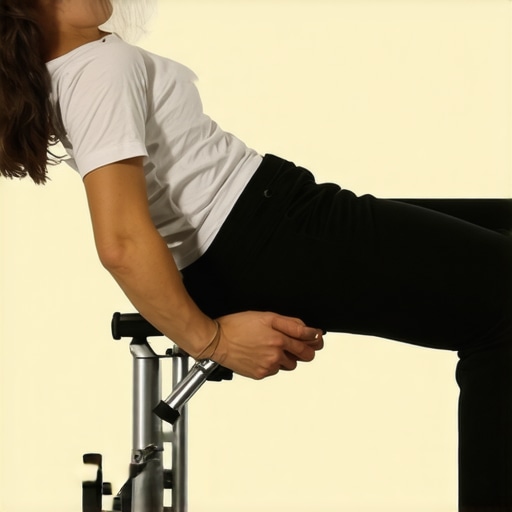
If you are still kneeling directly on the grass, you are inviting pelvic misalignment. I personally use a rolling garden seat with a height-adjustable swivel. This allows me to keep my feet flat—which is essential for maintaining that ‘nose over toes’ rule we discussed—while keeping my work at a comfortable height. By eliminating the constant up-and-down of kneeling, I can restore your back mobility by preventing the hip flexors from shortening and pulling on the lumbar spine. If a rolling seat isn’t your style, at least invest in a high-density foam pad. It’s not just about comfort; it’s about creating a stable base so your spine doesn’t have to compensate for an uneven surface.
How do I keep my spine feeling this good year-round?
Maintenance is where most people fail. They wait until they are ‘statues’ again before thinking about their alignment. I’ve adopted what I call the ‘Spinal Seasonality’ approach. During the winter, when the garden is dormant, I double down on mobility mastery. This means I don’t just sit on the couch; I treat my body like an athlete in the off-season. I swear by the morning spinal hygiene routine every desk worker needs, even if I’m not at a desk. It keeps the joints lubricated so that when the first tulip pops up, my back isn’t shocked by the sudden activity. This proactive approach is a cornerstone of simple yet effective chiropractic hacks that prevent the ‘spring boom’ of injuries I used to see every year.
As noted by Dr. Stuart McGill, a leading expert in spine biomechanics, the ‘cumulative load’ is what eventually breaks you. It’s not just the one heavy bag of mulch; it’s the four hours of micro-twisting that preceded it. This is why I predict the next big trend in gardening won’t be a new fertilizer, but wearable haptic sensors. We are already seeing tech that vibrates when your posture slumps, and soon, we will have garden-specific wearables that alert you the moment you start to ‘twist and reach.’ Until then, we have to be our own sensors. This self-awareness is how you go from a weekend warrior to a lifelong enthusiast. I’ve found that overcoming chronic neck discomfort and back issues requires this 24/7 mindset. If you really want to lock in these gains, I challenge you to try the dead bug variation that actually fixes lower back instability before your next session in the dirt; it’s the ultimate ‘activation’ move to ensure your core is actually awake before you pick up a shovel.
Hard Truths My Spine Taught Me Between the Flowerbeds
Reflecting on my years in the garden, I’ve realized that pain wasn’t an inevitable part of the hobby; it was a feedback loop I was choosing to ignore. One of the hardest lessons I learned was that more ‘grit’ doesn’t lead to a better harvest if you’re too stiff to enjoy the fruits of your labor. I now know that mobility mastery is about the small, intentional pivots, not the heavy lifting. I also discovered that my ‘tight’ muscles were often just my body’s way of protecting an unstable joint. Instead of fighting that tension, I started listening to it. If you find yourself constantly reaching for the heating pad, it’s a sign that your mechanics need a tune-up, not just your muscles.
The Gear That Keeps My Knees and Back from Quitting
I don’t step into the dirt without a few non-negotiables. First, my rolling garden seat is a lifesaver—it keeps my feet flat and my spine neutral, which is essential to boost your back health naturally. Second, I’ve replaced my standard hand tools with ergonomic O-handles to prevent the wrist strain that eventually migrates up to the neck. For those struggling with upper body tension, I highly recommend looking into overcoming chronic neck discomfort by adjusting your tool height. These aren’t just gadgets; they are investments in your ability to garden for the next twenty years. I trust these tools because they respect human anatomy rather than forcing the body to adapt to a poor design.
Your Garden Is Waiting for the Pain-Free Version of You
You have the power to change the narrative of your ‘gardening hangover’ starting today. By prioritizing your alignment and using movements like the dead bug variation that actually protects your back, you can ensure your spine stays as resilient as your perennials. Don’t wait for a crisis to start caring for your movement. Reclaim your sanctuary and get back to the soil with confidence. Your passion for gardening should nourish you, not break you. Which of these ergonomics shifts are you going to try first this weekend? Let me know in the comments below!