The simple move that fixes tight hips while you watch TV
I used to think that getting old just meant my hips were destined to feel like they were rusted shut. I would spend my evenings slumped on the sofa, and by the time the credits rolled on a movie, standing up felt like an Olympic event. It was embarrassing. My lower back would throb, and honestly, I was worried I was losing my ability to just move normally. I even fell into the trap of thinking stretching my hamstrings was the magic bullet, but the relief never lasted more than ten minutes. I was missing the bigger picture entirely.
Your Couch is Killing Your Hips and You Do Not Even Know It
The truth is, most of us are literally molding our joints into a cramped C-shape for hours every day. When you sit, your hip flexors stay in a constantly shortened state. Over time, they tighten up so much that they start yanking on your pelvis, which is exactly why your lower back aches even when you are just standing in the kitchen. I made the massive mistake of trying to power through with aggressive gym workouts, but that just added fire to the inflammation. Real relief does not come from intensity; it comes from clever, low-stress movement. Have you ever felt that sharp pinch in your groin or a dull ache in your glutes after a long Netflix marathon? If so, you are the exact person I wrote this for.
Is a 30-Second Move Really Better Than an Hour of Yoga?
You might be skeptical. I certainly was. I used to think if I was not sweating in a hot yoga class for ninety minutes, I was not doing real mobility work. But consistency beats intensity every single time. A study in the Journal of Physical Therapy Science highlights that prolonged sitting significantly decreases hip flexor flexibility, leading to a cascade of lower back issues. By performing a simple, targeted movement while you are already relaxed—like during a commercial break—you are teaching your nervous system to let go of that tension without the stress of a full workout. You do not need a massage ball or a fancy gym membership to start feeling human again. Today, I am going to show you how to reclaim your range of motion without even changing out of your pajamas.
Reset Your Pelvis Before You Even Leave the Sofa
Think of your pelvis like a bucket filled with water. When those hip flexors are tight from hours of sitting, they act like heavy chains pulling the front of that bucket down. This spills the ‘water’ forward, creating a massive arch in your lower back that pinches your nerves and leaves you feeling like a 90-year-old. To stop this, you need the pelvic tilt trick for instant lumbar relief. While you are sitting there, simply try to tuck your tailbone under you as if you are trying to hide a tail. It is subtle, but it shuts off the alarm bells in your brain and levels out the bucket. I used to do this obsessively during my afternoon meetings, and it was the first time I noticed my lower back did not feel ‘spent’ by 5:00 PM.
The Couch Stretch That Changed Everything for Me
I remember being at a Super Bowl party three years ago, and my back was so tight I could not even enjoy the snacks. I ended up sneaking into the host’s guest room just to put one knee on the carpet and my foot up against the base of their sofa. I held it for two minutes while pretending to check my phone. When I walked back out, the ‘stabbing’ sensation in my hip was gone and I could actually stand straight for the first time in hours. That is the power of the couch stretch. You place your knee on the floor or a cushion, prop your rear foot up against the couch, and squeeze your glutes hard. It forces the front of your hip to open up like a rusted gate finally getting a dose of WD-40. 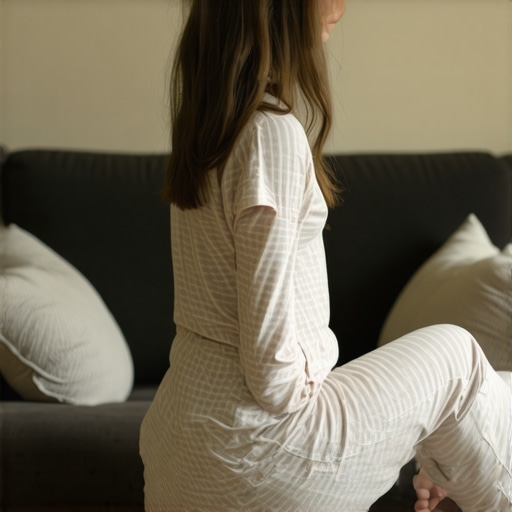
Focus on Your Glutes to Save Your Spine
Most people think they need rock-hard abs to fix back pain, but why your glute medius is more important than your abs for back health becomes obvious once you start moving. Your glutes are the anchor. If they are ‘asleep’ from sitting, your lower back has to do all the heavy lifting during basic tasks like walking or standing. I used to make the mistake of just stretching, but adding a simple bridge or a side-lying leg lift right after that couch stretch ‘locked in’ the new range of motion. This is a core part of the morning spinal hygiene routine every desk worker needs to survive a 9-to-5 without ending the day in a ball of pain.
Ditch the Foam Roller for a Direct Hit
If the stretch feels too intense or you hit a ‘wall’ of tension, you might need to break up the literal knots in the tissue first. I spent months rolling around on a foam roller like a piece of dough, but it was too broad to be effective. Knowing how to use a massage ball to release hip flexor tension is a total game-changer. You find that soft spot just inside your hip bone, lay face down on a tennis ball or lacrosse ball, and just breathe into the pressure. It is uncomfortable for ten seconds, then suddenly, the muscle lets go. It feels like someone finally let the emergency brake off your legs. By combining this release with your daily movement, you are not just masking the problem; you are understanding back pain at a mechanical level and fixing the root cause.
The biggest lie we are often told in the fitness world is that ‘tight’ always equals ‘short.’ If you feel tight, you stretch, right? Wrong. In many cases, that feeling of tightness is actually ‘protective tension.’ Your brain is literally tightening your muscles to act like a biological splint because it does not trust your joints to stay stable. If you keep stretching a muscle that the brain is trying to keep tight for safety, you are essentially fighting your own nervous system. This is why stretching your hamstrings won’t fix your lower back pain if the root cause is an unstable pelvis or neural irritation.
Stop Fighting Your Nervous System
One of the most common traps I see people fall into is ‘over-stretching’ directly into their pain. I used to do this with my neck every single morning, thinking if I just pulled harder, the knot would disappear. Instead, I was just aggravating the nerves and increasing inflammation. If the tightness is coming from a nerve being pinched, stretching the muscle around it only makes the nerve scream louder. Instead of pulling, you should be looking at the nerve gliding exercise to calm down sciatica or similar techniques that floss the nerve through the tissue rather than yanking on it.
Can Your Jaw Actually Change the Way Your Hips Move?
It sounds like science fiction, but the human body is a single, interconnected kinetic chain. Research published in the Journal of Manipulative and Physiological Therapeutics suggests that temporomandibular joint (TMJ) dysfunction can actually alter postural stability and gait patterns. This is precisely why we adjust the jaw to fix chronic headaches and even underlying postural issues that seem unrelated. If your bite is off, your neck compensates, and eventually, your lower back pays the price. You have to stop looking at your body as a collection of separate parts and start seeing the ‘hidden’ links. 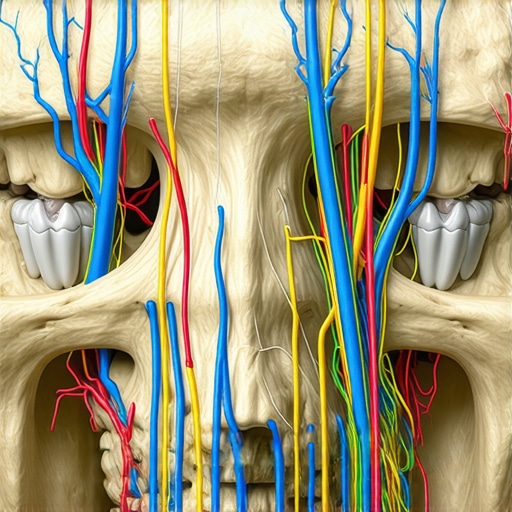
The Dangerous Myth of the Strong Core
The real ‘oops’ factor for many is thinking that more ‘core strength’—in the sense of six-pack abs—is always the answer to back health. In reality, sheer strength without coordination is useless. If you have a bulging disc, traditional crunches are like sandpaper on an open wound. You need to stop doing sit-ups if you have a bulging disc and switch to movements that create ‘stiffness’ in a protective way. This involves why your core strength isn’t stopping your back from hurting and how to pivot toward stability instead. Have you ever fallen into this trap of over-stretching or over-training a painful area only to have it feel worse the next day? Let me know in the comments.
Look at Your Feet Before You Blame Your Back
I spent years focused on my lumbar spine, but I never looked down. It turns out, why we look at your arch height to solve your back issues is one of the most overlooked nuances in chiropractic care. If your arches collapse, your knees rotate inward, your hips drop, and your lower back is forced to work overtime just to keep you upright. Professional mobility mastery involves addressing these foundational issues rather than just chasing the symptoms where they happen to manifest. By integrating the hidden link between neck pain and spinal health with a solid foundation from the ground up, you can finally move past the beginner-level fixes and get lasting results.
Keeping it working isn’t about doing an hour of rehab every morning. It is about building ‘spinal hygiene’ into the cracks of your day. For me, that meant finally admitting that my car seat was a disaster for my L5-S1 disc. I had to learn how to sit in a bucket seat without lower back spasms by using a firm foam wedge to level out my pelvis. It felt weird for a week, and then suddenly, my legs did not tingle after driving. This is the essence of how chiropractic care enhances movement—it identifies those environmental stressors you have just been putting up with. For my home office, a monitor arm that keeps the screen at eye level is the only way I have achieved effective neck pain management for my daily workflow. If you are still relying on a stack of books, your upper traps are paying the price every time you glance down.
How do I maintain my spinal mobility over the long haul?
The secret is movement variability. You do not need a standing desk as much as you need a ‘changing positions’ desk. A study published in the Journal of Bodywork and Movement Therapies by Dr. Robert Schleip highlights that our fascia thrives on varied loading, not static positions. This is why I rotate between a stool, a standard chair, and standing every 45 minutes. It is also why I swear by the 10-minute walk routine to decompress your spine immediately after work. That short walk acts like a hydraulic pump for your intervertebral discs, moving fluid through the tissue before you settle into the evening sofa slump.
Tools That Actually Earned a Spot in My Daily Routine
I have wasted hundreds of dollars on vibrating gadgets and ‘posture correctors’ that are basically glorified rubber bands. Now, I keep it simple. A high-density lacrosse ball is my go-to for pinpointing knots in my glutes or between my shoulder blades. I also always have a moist heat pack ready. Understanding how to use heat and ice for maximum relief changed everything for me; I stopped icing my chronic stiffness—which just made me feel tighter—and started using heat to bring blood flow back into the tissue. These tools are not magic, but they provide the ‘maintenance’ that keeps my body from reverting to that rusted-shut feeling. 
Where the Science of Spine Health is Heading Next
I predict that in the next few years, we will move away from ‘posture perfection’ and toward AI-driven wearable biofeedback. We are moving toward sensors that do not just tell you to ‘sit up’ but actually measure micro-tensions and suggest a specific ‘micro-break’ movement based on your real-time muscle fatigue. It is an exciting shift from reactive treatment to proactive optimization. Until then, you are your own best sensor. If you feel that familiar burn between your shoulder blades, do not ignore it. My best advice? Try the 10-minute walk routine for just three days in a row. It is the simplest way to see if your ‘back pain’ is actually just chronic fatigue from lack of movement.
The Hard Truths About Healing That Most People Ignore
After years of trial and error, the biggest ‘aha’ moment for me was realizing that pain is often a protective alarm, not necessarily a sign of permanent damage. If you stop fighting the alarm and start listening to what it needs—usually movement and stability—the volume turns down naturally. I also had to accept that why taking ibuprofen for every back ache is not a solution became clear once I realized it was just masking the feedback my body was trying to give me. Real progress only happened when I committed to restore your back mobility with proven chiropractic strategies rather than just looking for a quick fix.
Gear That Actually Earned a Permanent Spot in My Bag
I have tested almost everything on the market, but only a few things survived the cut. First, a simple lacrosse ball for pinpoint glute release is non-negotiable for my mobility mastery. Second, I have learned that how to use heat and ice for maximum relief is more about context; heat for the stiff mornings and ice only for the rare acute flare-up. Finally, a firm foam wedge is the only reason I can drive for hours without my legs going numb. These tools are not flashy, but they work because they address the daily stressors we all face. #IMAGE_PLACEHOLDER_E#
Why Your Next Decade Can Be Better Than Your Last
The most encouraging thing I can tell you is that your body is remarkably adaptable, no matter how long you have felt ‘stuck.’ I used to think my best years of movement were behind me in my twenties, but through consistent spinal hygiene and professional back pain recovery, I actually move better now in my forties than I did a decade ago. You do not have to settle for a life of ‘managing’ discomfort. Start with one small change today—whether it is the 10-minute walk or a quick pelvic tilt—and watch how those small wins compound into a totally different quality of life. What is the one ‘nagging’ pain you have been ignoring because you thought it was just part of getting older? Let me know in the comments below.