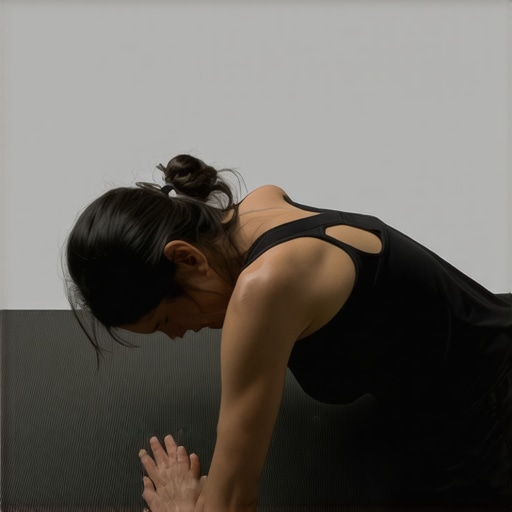
How to Pick Up Your Laundry Basket Safely
I remember the exact moment my perspective on housework changed forever. I was reaching down for a heavy pile of damp towels, my mind already on what to cook for dinner, when a sudden, sickening “pop” echoed in my quiet hallway. I didn’t fall; I just froze. I was stuck in a half-bent position, clutching a plastic basket, while a white-hot needle of pain shot from my lumbar spine down to my toes. It’s embarrassing to admit that a load of whites nearly put me in the hospital, but that’s the reality for so many of us. We treat our bodies like they’re invincible until they aren’t. That moment of total helplessness—staring at a pile of socks while my back screamed in protest—was the start of my journey into functional movement.
The Day the Laundry Basket Put Me on the Floor
That morning was a painful wake-up call that forced me to re-evaluate every single move I made in my house. I spent years thinking that as long as I wasn’t lifting 200 pounds at the gym, my form didn’t matter. I was wrong. It’s the repetitive, “small” movements—the twisting, the reaching, and the awkward carries—that eventually wear us down. I want to help you avoid that frozen moment in the hallway. Today, we’re going to walk through the mechanics of movement so you can finally learn how to pick up your laundry basket without the burn. We aren’t just talking about chores; we’re talking about protecting your independence and mobility. My goal is to make sure your next trip to the washing machine doesn’t end with a week on the heating pad.
Is a Plastic Basket Actually Heavy Enough to Break You?
You might be skeptical. You’ve probably carried thousands of baskets without a second thought. But it’s not always about the weight; it’s about the leverage. When you reach far away from your center of gravity, even a relatively light load can exert hundreds of pounds of pressure on your lower spinal discs. According to researchers at Harvard Health, the most common cause of back pain is simply moving the wrong way during routine tasks. Have you ever felt that terrifying “twinge” while just trying to get the whites into the dryer? If so, you aren’t alone, and it’s a signal your body is sending you to change your tactics before something truly snaps. Ignoring those little warnings is exactly how I ended up stuck in my hallway.
Stop Using Your Spine Like a Construction Crane
One of the biggest mistakes I made early on was relying entirely on my back muscles to do the heavy lifting. I used my spine like a rusty construction crane, bending at the waist and hoping for the best. I ignored the fact that my legs are the strongest part of my body. I used to think that why stretching your hamstrings won’t fix your back pain was just a catchy headline, but I realized that mobility is about how all these parts work together. If your hips are locked up, your back takes the brunt of the force every time you reach for that detergent. It’s a similar concept to the hip hinge trick for pain-free gardening; once you master the hinge, the world becomes much less dangerous. Truly understanding back pain means realizing that your spine is a stabilizer, not a forklift. When I finally sought help, I learned that back pain recovery is as much about education as it is about physical healing. Let’s dive into the first steps of reclaiming your chore day without the fear.
Hinge Your Hips to Protect Your Discs
The secret to a pain-free lift isn’t in your biceps; it’s in your glutes. Most people reach for a basket by rounding their spine like a question mark. Instead, you need to think of your hips as a high-quality door hinge. When I first tried this, it felt incredibly awkward. I stood there in my laundry room, sticking my butt out toward the dryer, feeling like I was doing a gym workout in my pajamas. But it worked. By shifting your weight backward, you’re strengthening your glutes to take the pressure off your spine. It turns out that the hip hinge trick for pain-free gardening is exactly the same mechanic you need for a load of towels. You aren’t bending over; you are sitting back into the movement.

Hug the Basket Like a Long-Lost Friend
Distance is the enemy of your lumbar spine. Every inch the basket moves away from your belly button adds exponential stress to your lower back. I remember a specific Tuesday when I was rushing to finish three loads before a meeting. I grabbed the basket by the handles with straight arms, trying to keep the wet clothes from touching my work shirt. I felt that sharp “warning” pinch immediately. I stopped, pulled the basket flush against my torso, and the pain vanished. When you keep the load close, you’re utilizing revitalize your mobility: proven strategies for back pain relief techniques that treat your body as a single, integrated unit. If you find this difficult, it might be a sign that you need to work on the lateral move that opens up a tight rib cage to ensure your upper body can handle the bracing required.
Drive Through Your Heels Not Your Toes
Once you’ve hinged and hugged the basket, the actual lift happens in the legs. Imagine your feet are roots growing into the subfloor. If you lift from your toes, you shift your center of gravity forward, which forces your back to overcompensate. I spent years unaware that the link between ankle mobility and lower back stability was the reason I kept wobbling during chores. When you drive through your heels, you engage the posterior chain—those massive muscles in your legs and backside designed for heavy work. This is the core of understanding back pain; it’s often just a series of small mechanical failures piling up. By focusing on your feet, you provide the stable base your spine needs to stay neutral.
Avoid the Deadly Twist and Shout
The most dangerous move in the laundry room isn’t the lift itself; it’s the pivot. We often lift the basket and then immediately twist our torso to reach the counter or the stairs. This shearing force is a disc’s worst nightmare. I learned the hard way that you must move your feet, not your waist. If I need to turn, I step my whole body around like a soldier on parade. It might look a bit stiff at first, but it beats the alternative of a month in physical therapy. If you’re struggling with the coordination of these moves, looking into restore your range: how chiropractic care enhances movement can help unstick those joints that make fluid motion feel impossible. Remember, your spine is meant to rotate, but not while it’s under a heavy load.
Even if you master the hip hinge for your laundry, you might still be sabotaging your recovery by falling for the ‘perfect posture’ trap. Most people believe that standing as straight as a board is the gold standard for health, but in my experience, this rigidity is a hidden catalyst for chronic tension. When you force your spine into a static, military-style position, you’re actually creating isometric stress that never lets your muscles rest. I’ve seen countless patients who were baffled by their discomfort because they ‘always sit up straight.’ The truth is that why your perfect posture is actually making you stiff is one of the most overlooked hurdles in modern ergonomics.
Stop Trying to Stand Like a Statue
A 2020 study published in the British Journal of Sports Medicine debunked the idea that there is one universal ‘correct’ posture. The researchers highlighted that movement variability—the ability of your body to shift and change positions—is far more important for pain prevention than any rigid aesthetic standard. When we obsess over ‘correcting’ our spine to look a certain way, we often ignore the fact that our bodies crave micro-movements. If you find yourself constantly adjusting, it might not be a failure of willpower; it’s likely your nervous system demanding a change in load. This is why I often suggest that enhancing mobility naturally with chiropractic care focuses on restoring the ability to move rather than just ‘fixing’ a static pose.
Why Does Your Mid-Back Hold the Key to Your Neck?
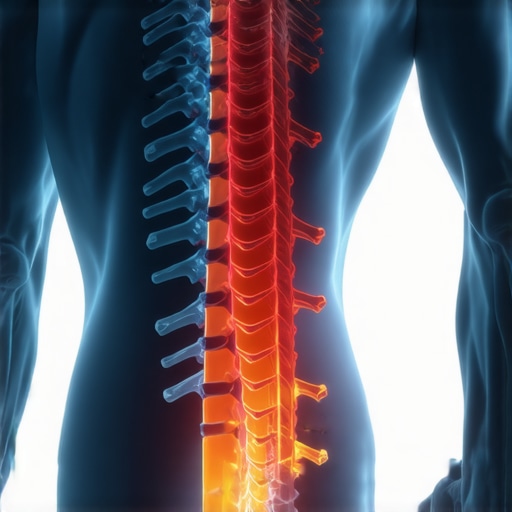
One of the most advanced nuances I discuss with my clients is the relationship between the thoracic spine (your mid-back) and the cervical spine (your neck). Many people come in seeking essential chiropractic tips for neck pain, only to be surprised when I start working on their ribs and shoulder blades. If your mid-back is locked up, your neck has to over-rotate to compensate for that lack of range. This is exactly why we look at your ribcage movement for better mobility. Without that central pivot point functioning correctly, your neck and lower back are essentially left to do all the work, leading to that chronic ‘burning’ sensation between your shoulder blades.
The Dangerous Myth of the Always-On Core
There is a massive ‘oops’ factor currently trending in the fitness world: the idea that you should keep your core braced and ‘tight’ at all times. I’ve seen people walking through the grocery store with their abs sucked in so hard they can barely breathe. This constant bracing actually increases intra-abdominal pressure and can lead to pelvic floor issues and even more back pain. Understanding why your strong core might actually be too rigid is a game-changer. Your core should be like a dimmer switch—turning up the intensity when you lift that laundry basket, but dimming back down when you’re just walking or sitting. This over-bracing often goes hand-in-hand with the connection between shallow breathing and back pain, as you cannot fully expand your diaphragm if your abdominal wall is constantly locked.
Is Your Recovery Actually Hitting a Plateau?
If you feel like you’ve tried every stretch in the book and your mobility still isn’t returning, you might be focusing on the symptoms rather than the global mechanics. For instance, many people don’t realize the truth about weightlifting belts and spinal stability also applies to how we use our own internal ‘belts.’ If you rely on external supports or rigid bracing instead of functional movement, you never truly master the expert tips for back pain prevention. True recovery involves retraining the brain to trust the spine through various ranges of motion, not just protecting it from every possible move. Have you ever fallen into this ‘perfect posture’ trap or the ‘always-on’ core mistake? Let me know in the comments below!
If you’ve hit that recovery plateau, the solution usually isn’t another expensive gadget; it’s often a return to the basics of spinal hygiene. I’ve wasted thousands on ‘ergonomic’ chairs that promised to cure me, only to find that a simple, ten-dollar lumbar roll was far more effective. I often tell my patients that learning the correct way to use a lumbar roll in your office chair is more valuable than any high-end mesh seat. If you are constantly on the go, you can even learn how to use a rolled-up towel to fix your car’s lumbar support. It’s about creating that consistent curve that supports your discs without forcing your muscles into that stiff, statue-like pose we discussed earlier.
Ditch the Expensive Chair and Grab a Towel
Once you have the support down, we need to address the mechanical tension that builds up during the day. I live and breathe by my foam roller, but there is a major catch that most people miss. If you are rolling your lower back, you are likely doing more harm than good by placing unnecessary pressure on your lumbar vertebrae. Instead, I focus exclusively on the proper way to use a foam roller on your upper back to unlock the thoracic cage. This allows my neck and lower back to stop overcompensating for a rigid mid-section. Avoiding the common pitfalls of why your foam roller might be hurting your lower back is the difference between true relief and a secorndary flare-up.

Use a Tennis Ball to Find the Real Problem
For those stubborn spots between the shoulder blades that feel like a hot coal, I recommend a simple tennis ball. It is the ultimate low-tech tool for myofascial release. By pinning the ball between your back and a wall, you can target the precise insertions of the rhomboid muscles. This is a key component of mobility mastery and expert tips for back pain prevention because it gives you autonomy. You don’t have to wait for your next appointment to find relief; you have the tools to manage your own tension in real-time.
How do I stay mobile as I get older?
Maintenance is a lifelong conversation between your brain and your nervous system. Dr. Stuart McGill, a leading authority on spine biomechanics and author of The Back Mechanic, suggests that ‘spinal hygiene’ is about avoiding the micro-trauma of poor movement patterns throughout your entire day, not just during a workout. I predict that in the next few years, we will see a surge in biofeedback wearables that provide real-time data on spinal load—essentially a digital version of that ‘warning pinch’ I felt in the laundry room. Until that tech is standard, we rely on mechanical consistency. Regularly incorporating the 3-step morning routine for hip mobility ensures your joints stay prepared for daily life. I challenge you today: take ten seconds to try the 5-minute reset for a stiff lumbar spine and see how much lighter your movement feels. These effective chiropractic hacks are the foundation for anyone who wants to stay active well into their eighties.
The Hardest Lessons Learned on My Way to Total Mobility
Looking back at that day my back gave out, I realize I was missing the forest for the trees. Here are the “lightbulb moments” that changed everything for me:
- Pain is a GPS, not a roadblock: That sharp twinge I used to ignore was actually my body’s way of saying I was out of alignment. Once I started listening, my back pain recovery became much faster.
- Small movements are the real killers: It wasn’t the heavy lifting that broke me; it was the thousands of tiny, sloppy rotations I did every day. Total mobility mastery comes from the chores, not just the gym.
- Perfection is a trap: Striving for that rigid “ideal” posture was actually making me stiffer. Finding “active rest” and micro-movements throughout the day was the real secret to boosting mobility and easing pain.
The Simple Gear That Actually Keeps Me Moving
I’ve tried the expensive chairs and fancy gadgets, but the most effective tools in my arsenal cost less than a lunch. If you’re looking to build your own toolkit, here is what I personally swear by:
- A Standard Tennis Ball: It’s the perfect density for trigger point release under the shoulder blade. Knowing how to use a tennis ball for that spot under your shoulder blade can stop a headache before it starts.
- The Humble Lumbar Roll: Whether it’s a store-bought version or a rolled-up towel for your car, maintaining that natural curve is vital.
- The Floor: Seriously. Spending five minutes sitting on the floor (properly!) forces your stabilizer muscles to wake up in a way no couch ever will.
Step Into Your Most Mobile Future
Reclaiming your life from chronic discomfort isn’t about one giant leap; it’s about the hundred small steps you take every time you reach for a laundry basket or sit at your desk. You have the power to restore your back mobility by simply paying attention to the way you move through your own home. Don’t wait for a “pop” in the hallway to start caring for your spine. Your future self—the one who can still bend down to play with grandkids or garden for hours—is counting on the choices you make today. Have you ever felt that “warning pinch” while doing a simple household chore? Let me know in the comments below!