How your phone screen brightness affects your neck tension
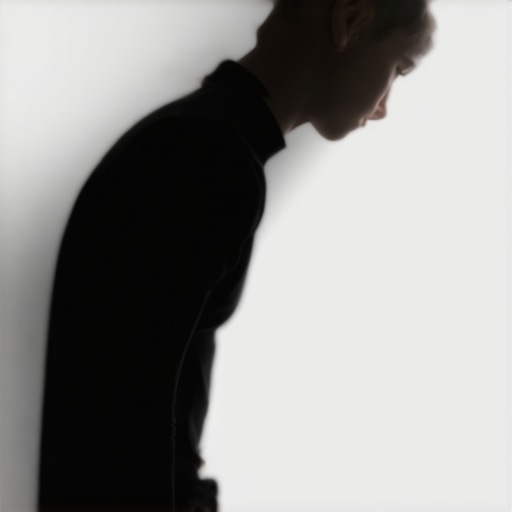
It was nearly midnight, and I was deep into a rabbit hole of travel videos, the screen of my phone glowing like a miniature sun in my pitch-black bedroom. My eyes were stinging, but more than that, I felt a familiar, throbbing ache creeping up from the base of my skull. For months, I’d blamed my pillow, my desk chair, and even my old high school sports injuries. It wasn’t until I caught my reflection in a darkened window that I saw it: I was hunched over, chin jutting out, eyes squinting intensely at that blaring light. That was my lightbulb moment. I realized that my struggle with chronic stiffness wasn’t just about how I sat, but how my eyes were forcing my body to move. Today, I’m going to show you exactly why that blinding screen is wrecking your mobility and how a few simple adjustments can provide the lasting comfort you’ve been searching for.
How Squinting Triggers Your Tech Neck
Most of us think about ‘tech neck’ as a result of looking down, but we rarely talk about the visual trigger. When your screen is too bright—especially in low-light environments—your pupils constrict and your facial muscles tighten. This creates a chain reaction. You naturally lean closer to the light source to compensate for the glare and visual strain. I made the massive mistake of thinking I could just ‘power through’ the eye fatigue, but my body paid the price in knots that felt like concrete. This habitual leaning leads to a forward head posture that puts immense pressure on the cervical spine. It’s a major reason why your neck muscles tighten during stress or even during a simple evening of relaxation. According to a study published in the Journal of Physical Therapy Science, visual fatigue is a direct contributor to postural instability and increased muscle activity in the upper trapezius. Essentially, your brain prioritizes vision over posture every single time. Have you ever noticed that sharp, nagging pinch behind your ear after a long session of late-night scrolling?
Is screen brightness actually the culprit or just a minor annoyance?
It might seem hard to believe that a slider on your phone settings could be as impactful as a chiropractic adjustment, but the two are deeply linked. If you are constantly fighting your environment, your spinal alignment will never hold. When I started matching my screen brightness to the ambient light in the room, the frequency of my tension headaches plummeted. We often look for complex medical solutions when the answer is literally in the palm of our hand. Understanding how your vision impacts your neck position is the first step toward reclaiming your range of motion. [image_placeholder_1]
Stop Fighting the Glare to Save Your Spine
The goal isn’t to stop using technology, but to stop letting technology dictate your physical health. When your screen is at 100% brightness in a dark room, you are essentially inducing a low-level ‘fight or flight’ response in your ocular nerves. This tension doesn’t stay in your eyes; it radiates downward into your jaw and shoulders. If you’ve been searching for expert chiropractic solutions, you must also address these daily environmental stressors. I spent years getting adjusted only to go home and ruin the progress by squinting at a laptop for six hours straight. Once you align your visual habits with your physical goals, you’ll find that your body stays relaxed much longer.
Match Your Screen Brightness to Your Surroundings
Think of your eyes as the lead horse in a carriage team; where they go, the rest of the body inevitably follows. If you are squinting because your screen is a blinding white rectangle in a dim room, your cervical spine will naturally ‘creep’ forward to try and stabilize the image. This is a primary driver of the tension that many people try to fix solely through stretching, yet they ignore the visual input that caused the tension in the first place. The rule is simple: your screen should never be the brightest thing in the room, nor should it be significantly darker than the background. I remember one rainy Tuesday in Omaha when I tried to work from my porch. The glare was so intense I spent four hours hunched into a literal ball just to read my emails. By 4 PM, my mid-back felt like it was on fire. I didn’t need more ‘strength’; I needed to move to a spot where my eyes weren’t at war with the sun. This is why understanding back pain starts with auditing your environment, not just your muscles.

Lift Your Device to the Natural Horizon
If you keep your phone in your lap or your laptop flat on a table, you are forcing your neck into a ‘C-curve’ that puts up to 60 pounds of pressure on your discs. Instead, treat your device like a piece of fine art you’re inspecting at eye level. Use a stack of books or a dedicated stand to bring the top third of the screen to your natural horizontal gaze. When I finally committed to this change, the constant ‘crunching’ sound in my neck—what experts call crepitus—actually began to soften. You can learn more about why your neck crunches when you turn your head, but the immediate fix is removing the downward pull of gravity. This is especially vital if you spend time playing games, as how your vision impacts your neck position determines if you’ll finish your session feeling refreshed or wrecked.
Use the Bruegger’s Move to Reset Your System
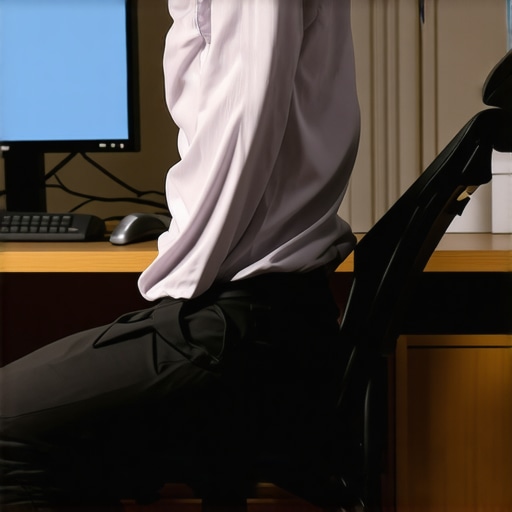
Action is better than passive rest when it comes to spinal health. Every 30 minutes, you need to perform a neurological reset. Sit on the edge of your chair, spread your knees, and turn your palms outward while pulling your shoulder blades back and down. This isn’t just a stretch; it’s an ‘un-slumping’ signal to your brain. This specific technique, known as the Bruegger’s relief move, reverses the internal rotation of the shoulders and the forward shear of the neck. When I started setting a timer for this, my dependency on heat packs dropped overnight. While why heat packs are better than ice is a great topic for recovery, preventing the tension from building up is the ultimate goal. You’re essentially telling your nervous system that the ‘threat’ of the screen is over and it’s safe to let go of that protective guarding.
Stop the Self-Cracking Habit
When the tension builds up, the temptation is to grab your own chin and ‘pop’ your neck for a quick hit of relief. Stop. This is a short-term dopamine fix that creates long-term ligament laxity and instability. If you feel that urge, it’s a sign that your mid-back is locked up, and your neck is trying to compensate for the lack of movement elsewhere. Instead of self-adjusting, try the scapular squeeze that relieves mid-back tension. This addresses the root cause rather than just chasing the symptom. Remember, why you should never crack your own neck in the morning is about protecting the delicate joints that support your skull. Focus on mobility and let the professionals handle the alignment.
We often hear that a ‘strong core’ is the ultimate shield against injury, but here is a nuance I see missed every single day in the clinic: rigidity is not the same as stability. When I first started focusing on my mobility, I made the classic mistake of keeping my abs ‘turned on’ at 50% all day long. I thought I was protecting my spine, but I was actually suffocating it. This constant tension prevents the natural, subtle rotations your vertebrae need to absorb the shock of every step you take. This is exactly why your core strength isn’t stopping your back from hurting—your muscles are acting like a suit of armor that’s three sizes too small. True mobility mastery comes from the ability to engage the core when needed and fully relax it when it’s not. Have you ever fallen into this trap of over-bracing? Let me know in the comments.
Why does my lower back throb after just ten minutes of standing?
It’s a question I get constantly from people who are otherwise fit. The culprit is often a lack of ‘reflexive’ stability. Instead of your deep stabilizers firing automatically, your large superficial muscles (like the erector spinae) are doing all the heavy lifting to keep you upright. This is why your lower back aches after standing for 10 minutes; those big muscles aren’t designed for endurance. A study in the Journal of Electromyography and Kinesiology suggests that over-active superficial muscles can actually increase compressive loads on the lumbar discs. To fix this, you need to master the pelvic tilt trick for instant lumbar relief, which helps redistribute that load back to the skeleton and deep tissues.

The Chin Tuck Error That Stiffens Your Neck
In our quest to fix tech neck, many of us have been taught the ‘chin tuck’ exercise. However, there’s a massive ‘oops’ factor here: most people do it by jamming their chin down and back toward their throat with too much force. This doesn’t just fix posture; it actually compresses the upper cervical spine and can trigger headaches. It is a prime example of the chin tuck mistake that is making your neck pain worse. Instead of a forceful shove, think about growing ‘tall’ through the crown of your head while keeping your jaw relaxed. Speaking of the jaw, did you know that your bite can dictate your neck tension? It’s another hidden nuance that most people overlook, which is why we adjust the jaw to fix chronic headaches. When your TMJ is out of alignment, your neck muscles have to work overtime to stabilize your skull. Finally, don’t ignore the foundations. You might find that why your glute medius is more important than your abs becomes obvious once you realize it’s the anchor for your entire pelvis. Stop chasing the symptom and start looking at the system.
The Software That Finally Stopped My Eye Strain
I used to think blue light glasses were the ultimate fix, but they only tackle one part of the problem. If you really want to stop the ocular-driven neck tension we’ve been discussing, you need to change how your screen behaves. I personally swear by f.lux, a software that doesn’t just turn your screen orange; it actually maps your screen’s color temperature to your local sunset and sunrise. This reduces the harsh contrast that causes you to squint and lean forward. When your eyes aren’t fighting to process high-intensity blue light at 9 PM, your upper trapezius can finally relax. This is a huge part of effective neck pain management because it removes the visual ‘threat’ that keeps your muscles guarded. I also moved away from working solely on a laptop. I invested in a gas-spring monitor arm that allows me to adjust my screen height by the millimeter. If you’re still hunched over a kitchen table, learning how to set up your laptop at a coffee shop or at home without strain is the best gift you can give your cervical discs. The goal is to make the correct posture the easiest path for your body to take.
How do I maintain these mobility gains over time?
Consistency beats intensity every single time. You don’t need a two-hour gym session to fix your back; you need a three-minute morning spinal hygiene routine that you actually do. I look at spinal health like brushing my teeth—it’s non-negotiable. According to Dr. Jeffrey Anshel, a renowned expert in visual ergonomics and the creator of the 20-20-20 rule, the visual system is essentially a distance-oriented mechanism. Forcing it into near-field focus for eight hours a day creates a ciliary muscle spasm that propagates through the suboccipital muscles at the base of the skull. This is why lasting comfort is impossible if you ignore your eyes. To maintain your progress, you must implement ‘movement snacks.’ Every time you finish a task, perform the simple shoulder blade squeeze for instant neck relief. These micro-adjustments prevent the ‘setting’ of fascia into a slumped position, which is the secret to mobility mastery.
The Future of Posture in a World of Spatial Computing
As we move toward augmented reality (AR) and devices like the Apple Vision Pro, the way we think about ‘tech neck’ is going to shift radically. We are moving from a world of ‘looking down’ to a world of ‘looking through.’ My prediction is that while we might solve the downward-gaze problem, we will face new challenges with head-mounted weight distribution. This makes chiropractic tips for 2025 more relevant than ever. We need to focus on deep neck flexor endurance to stabilize the added weight of these headsets. If you haven’t started yet, I highly recommend implementing proven strategies for back pain relief that focus on the posterior chain. The stronger your foundation, the less the next wave of technology will impact your alignment. Don’t wait until the pain returns to start these habits. Try this right now: Lift your phone to eye level, take a deep breath into your belly, and let your shoulders drop. That five-second reset is the first step toward a pain-free life.
The Hardest Lessons I Learned About Chronic Stiffness
For years, I thought ‘good posture’ was about being as stiff as a board. I would force my shoulder blades together until they burned, thinking I was doing myself a favor. I eventually realized that rigidity is the enemy of healing. True movement enhancement comes from staying loose and allowing your spine to move naturally. Another lightbulb moment was realizing that my ‘ergonomic’ setup was useless because I was still squinting at a screen that was too bright, causing my neck to jut forward reflexively. I had to stop looking for a magic chair and start looking at my light settings. Lastly, I discovered that transformative chiropractic care only sticks when you address the environmental triggers—like blue light glare—that pull you out of alignment every single day.
My Daily Toolkit for Total Mobility Mastery
Maintaining a pain-free life doesn’t require hours of effort; it just requires the right tools. I swear by the 20-20-20 rule to keep my eyes from dragging my neck into a slump. Beyond that, I use a high-quality monitor arm to ensure I’m never looking down. For those moments when I feel a pinch starting, I rely on simple back health hacks that I can do right at my desk. If I’ve been sitting too long, I immediately go for the best move for thoracic mobility to open up my chest and reset my mid-back. These tools combined create a lifestyle where stiffness never has the chance to turn into chronic pain.
Your Future Without the Constant Tech Neck Ache
The transition from a stiff, aching neck to a fluid, comfortable spine starts with a single decision. It’s about more than just stretches; it’s about choosing to be mindful of how your environment impacts your body. As you implement these changes, you’ll find that your energy levels improve and your focus sharpens. This path toward lasting comfort is open to anyone willing to look at their screen habits with a fresh set of eyes. You have the power to break the cycle of tension and reclaim your range of motion. Have you ever noticed that your neck tension gets significantly worse after a long evening of scrolling in a dark room? Let me know your experience in the comments below!