Why we look at your arch height to solve your back issues
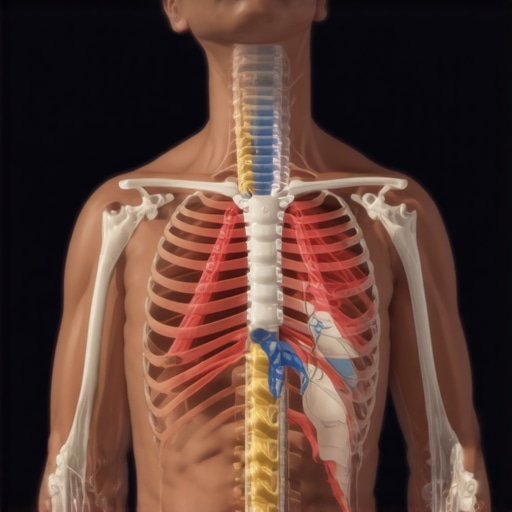
I was thirty years old, leaning over my kitchen sink to rinse a coffee mug, and I suddenly realized I couldn’t stand back up straight. It wasn’t some dramatic weightlifting accident or a car crash. I had simply spent the previous afternoon walking around a local street fair in a pair of trendy, flat-soled canvas sneakers. That was my visceral “lightbulb moment.” My back wasn’t weak; my foundation was crumbling. I spent the next two weeks aggressively seeking back pain recovery through every stretch and heating pad I could find, but the electric zing in my lumbar region wouldn’t budge. It wasn’t until a mentor of mine pointed at my feet that I understood the real problem. Today, I am going to show you exactly why we investigate your arch height to solve your spinal woes, and how fixing your feet can finally bring you the relief you have been chasing.
Your Spine Is Only as Stable as the Ground Beneath It
Honestly, I made a massive mistake early in my journey by assuming that “good shoes” just meant having more cushion. I went out and bought the softest, most pillowy sneakers on the market, thinking I was doing my spine a favor. I was wrong. In fact, I was making it worse. By adding cushion without addressing my collapsed arches, I was essentially building a house on top of shifting sand. When your arches drop, your shins rotate inward, your knees follow, and your pelvis tilts forward. This creates a massive amount of tension in the small of your back that no amount of Ibuprofen can fix. This is why understanding back pain requires looking far away from the actual site of the ache.
Do my arches really matter that much?
You might be skeptical. It sounds a bit like a reach, right? But the biomechanics don’t lie. A study published in the Journal of Foot and Ankle Research confirms that foot posture—specifically pronation or flat feet—is significantly associated with chronic low back pain, as the body struggles to maintain balance. If your foundation is slanted, the rest of the structure has to lean to stay upright. That lean is what causes your muscles to scream at the end of a long day. You might even find that stretching your hamstrings won’t fix your lower back pain because the tight muscles are just a symptom of your feet failing to support your weight. We are going to dive deep into how your foot arch affects your lower back pain so you can stop wasting time on temporary fixes. Have you ever noticed that your back starts throbbing after standing on a hard floor for only ten minutes, even if you aren’t doing any heavy lifting?
The first step in reclaiming your mobility isn’t doing more crunches or buying a fancy ergonomic chair; it is performing a simple audit on the two things that actually touch the ground. If you want to know how to stand in one place for hours without back pain, you have to start by diagnosing the collapse. Think of your foot arch like a shock absorber on a car. When that spring loses its tension, every bump in the road sends a jarring vibration straight into the frame—in this case, your lumbar spine. I remember standing in the middle of a big-box retail store, trying on three different pairs of cross-trainers. I felt like a fool, but I took my socks off right there in the aisle to see how my weight shifted when I stood on one leg. I realized that my left arch didn’t just flatten; it vanished. That was the day I stopped buying shoes based on the color and started buying them for the structure.
The Three-Second Check for Flat Feet
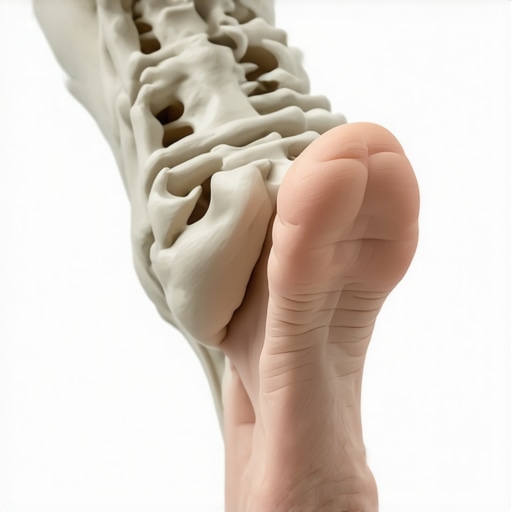
You don’t need a medical degree to see if your foundation is failing. The easiest way to check is the ‘Wet Foot Test.’ Simply wet the bottom of your feet and step onto a piece of cardboard or a dry concrete surface. If the footprint looks like a solid blob without a distinct inward curve where the arch should be, you are likely over-pronating. This collapse is a primary reason why your lower back aches after standing for 10 minutes. When the arch falls, the kinetic chain breaks. Your ankle rolls in, which forces your femur to rotate, essentially ‘locking’ your SI joint and forcing your lower back muscles to work overtime just to keep you upright. Identifying this early allows you to enhance mobility naturally with chiropractic care before the compensations become permanent postural habits.
Stop Buying Shoes Based on Cushion Alone
We have been conditioned to think that ‘soft’ equals ‘good,’ but for someone with back issues, too much cushion is a trap. I found this out the hard way when I bought a pair of high-end running shoes that felt like walking on clouds. Within three days, I couldn’t even bend over to tie them. Because the sole was so soft, my foot had no feedback from the ground, causing my arch to collapse even further into the foam. You need to learn how to tell if your sneakers are ruining your spinal alignment by checking the heel counter and the mid-sole rigidity. If you can fold the shoe in half easily, it isn’t providing the lateral support your spine needs. A firm base acts like a kickstand for your body, preventing the pelvic tilt that leads to those agonizing morning spasms.
Rebuild Your Arch with Short Foot Exercises
Once you have the right footwear, you need to retrain the muscles that actually hold the arch up. The ‘Short Foot’ exercise is my go-to recommendation for anyone trying to restore your back mobility with proven chiropractic strategies. While sitting or standing, try to pull the ball of your foot toward your heel without curling your toes. You are essentially trying to make your foot ‘shorter’ and ‘taller.’ This engages the intrinsic muscles that support the medial arch. When I started doing this while brushing my teeth every morning, the ‘burning’ sensation in my lower back during my commute started to fade. It’s about building a ‘built-in’ orthotic out of your own muscle tissue. This subtle shift in engagement is often the missing piece for people who find that stretching your hamstrings won’t fix your lower back pain, because the tension is actually a protective response to a shaky base.
Why Ankle Mobility is the Secret Weapon
Most people focus so much on the arch that they forget the ankle. If your ankle is stiff, your foot has to over-pronate just to allow your body to move forward. This is why your ankle mobility is secretly destroying your squat form and, by extension, your back health. If you can’t drive your knee forward over your toes without your heel lifting or your arch collapsing, your lower back is going to take the hit every time you sit down or pick up a laundry basket. Using a simple wall-stretch for your calves can offload the pressure from your plantar fascia and, miraculously, reduce the tugging sensation in your mid-back.
Let’s dig deeper into a common misconception: the idea that a ‘six-pack’ will save your spine. I’ve seen countless patients who can hold a three-minute plank but can’t walk two miles without their lumbar region catching fire. This happens because why your core strength isnt stopping your back from hurting is often a matter of mechanics, not just muscle. If your feet are failing, your core has to work double-time to compensate for the instability, leading to early fatigue and eventual injury. In my experience, focusing solely on the trunk while ignoring the foundation is like trying to fix a leaning tower by reinforcing the top floor; you’re ignoring the very thing that determines the structure’s verticality.
Stop Obsessing Over Your Core Alone
Most people are told that back pain is a sign of a weak stomach. While stability is vital, why your glute medius is more important than your abs for back health often comes down to how your body manages ground-reaction forces. When your feet hit the pavement, that energy has to go somewhere. If your arches are collapsed or your ankles are locked, that energy bypasses your natural shock absorbers and slams into your lower back. A 2015 study in the Journal of Physical Therapy Science found that arch height significantly impacts the angle of the pelvis, proving that your lumbar spine is literally at the mercy of your footprint. This is why mastering back neck pain relief requires a full-body assessment, not just a set of crunches.
High Arches Can Be Just as Damaging as Flat Feet
We often focus on ‘flat feet’ because they are so common, but having a high arch (Pes Cavus) presents a different set of dangers. While a flat foot is too ‘loose,’ a high arch is too ‘rigid.’ It doesn’t dissipate shock, meaning every step sends a mini-earthquake up your shins and into your SI joint. This is the hidden connection between your feet and mid-back pain that many people miss. If you have high arches and constant tension between your shoulder blades, you aren’t crazy—your body is simply struggling to absorb the impact of gravity on a rigid base.
Does a forgotten ankle injury explain your recurring back spasms?
Many sophisticated patients ask why their back pain only flared up years after they stopped playing sports. The answer often lies in ‘proprioceptive amnesia.’ If you had an old sprain that never healed correctly, your brain may have subtly rewired what your walking pattern says about your spinal health to avoid pain. This micro-compensation might involve a slight limp or a shift in how you push off your big toe, which eventually pulls your pelvis out of alignment. This is why we adjust your ankles to fix chronic hip issues and lower back stiffness; we are clearing out the ‘garbage’ in your nervous system’s movement map.
Don’t Let Orthotics Turn Your Foot Muscles into Mush
Here is the ‘oops’ factor I see most often: people buy expensive custom orthotics and then stop doing their exercises. Orthotics should be a temporary ‘cast’ or a specific tool, not a permanent crutch. If you rely solely on a piece of plastic to hold your arch up, the muscles in your feet will eventually atrophy, making you even more dependent. You must learn how to safely transition to a minimalist shoe without injury or at least incorporate barefoot time into your day to keep the ‘short foot’ muscles active. Have you ever fallen into this trap of relying on a brace or insert only to find your pain came back worse? Let me know in the comments.
The Tools I Actually Use to Stay Mobile
Once I stopped relying on a piece of plastic in my shoe to do the work, I had to find a way to maintain my progress between adjustments. I’ve tried every gadget on the market, from vibrating foam rollers to expensive inversion tables, but the most effective tools in my arsenal cost less than a tank of gas. I started using a hard lacrosse ball specifically to target my glutes and calves. If you want to boost your back health with simple yet effective chiropractic hacks, you need something that can dig into the fascia where your feet and hips meet. I keep one under my desk and use it for ‘movement snacks’ during long meetings. This isn’t just about feeling good; it’s about breaking up the adhesions that keep your pelvis locked in a forward tilt.
How do I keep my spine feeling young in the long run?
Consistency beats intensity every single time. You don’t need a ninety-minute yoga session; you need a 10-minute walk routine to decompress your spine every morning. My maintenance philosophy is built on the idea that gravity is a constant force, so our movement must be a constant counter-force. I also swear by the slant board. As Dr. Kelly Starrett, author of Becoming a Supple Leopard, often emphasizes, ‘Your feet are the primary interface between you and the environment.’ By spending five minutes on a 25-degree incline every day, I’ve managed to regain the ankle dorsiflexion I lost during my years of wearing stiff office shoes. This single change stopped my arches from collapsing and instantly took the pressure off my lumbar spine. This is exactly why your ankle mobility is secretly destroying your squat form and causing that recurring lower back strain.
The Future of Foot-Based Spinal Health
We are moving toward a world where your shoes will talk to your phone. I predict that in the next five years, AI-integrated insoles will provide real-time feedback on your gait, alerting you the moment your arch begins to fail or your stride becomes asymmetrical. This will change how we revitalize your mobility because we will catch postural shifts before they turn into pain. Until then, you have to be your own sensor. If you’ve been struggling, I highly recommend learning how to use a massage ball to release hip flexor tension. It’s the most direct way to ‘reset’ your pelvis after a long day of sitting and standing on hard surfaces. Try the short-foot exercise while standing on one leg today—you will be surprised at how quickly your back stops screaming for attention.
What I Learned After Years of Chasing the Wrong Symptoms
Looking back, the biggest hurdle wasn’t the pain itself; it was my fixation on the spot that hurt. I spent years trying to ‘fix’ my lumbar spine while my feet were essentially screaming for help. Here are a few ‘lightbulb’ moments that changed everything for me:
- The back is often the victim, not the criminal. Your lower back usually hurts because it is working overtime to compensate for a lack of stability or mobility elsewhere, usually starting at the ground.
- Expensive shoes aren’t a cure-all. I learned that back pain recovery depends more on how your foot interacts with the ground than the price tag on your sneakers.
- Movement snacks beat marathon sessions. Doing the ‘short foot’ exercise for two minutes while waiting for coffee is more effective for your nervous system than a grueling hour-long workout once a week.
My Personal Roadmap for Better Movement
I don’t leave my spinal health to chance anymore. Over the years, I’ve narrowed down my routine to a few essential tools that I trust implicitly because they address the root cause of mechanical failure. To boost your back health with simple yet effective chiropractic hacks, I recommend keeping a high-density lacrosse ball nearby. I use it to roll out the arches of my feet and my glutes every evening to reset my pelvis. I also recommend ‘Becoming a Supple Leopard’ by Dr. Kelly Starrett; it is the definitive guide to understanding how your joints should actually move. Lastly, spending five minutes on a slant board is the fastest way to enhance mobility naturally with chiropractic care, as it forces your ankles out of the ‘stiff’ patterns caused by modern footwear. #IMAGE_PLACEHOLDER_E#
Your Path to Reclaiming Your Active Lifestyle
The journey from chronic stiffness to fluid movement starts with the realization that your body is a single, interconnected system. You don’t have to live with the fear that your back will ‘go out’ every time you bend over. By focusing on your foundation and using these proven chiropractic strategies to restore your back mobility, you are giving your spine the support it deserves. Start small, be consistent, and listen to what your feet are telling you. You have the power to relieve neck and back discomfort using these expert methods and get back to the activities you love most. Have you ever noticed that your back feels better when you spend the day barefoot or in more supportive shoes? Let me know in the comments below!