The Lat Stretch That Frees Up Your Lower Back Instantly
I once spent three days horizontal on my living room floor because I reached for a coffee mug. It sounds ridiculous, right? I was a fit person, or so I thought, but my spine was behaving like a brittle twig ready to snap. For years, I did what everyone else does: I hammered my hamstrings and obsessed over my core strength. I even learned how to pick up my laundry basket safely, but the nagging ache in my lumbar spine never truly vanished. It wasn’t until I stopped looking at my lower back and started looking at my armpits that everything changed. Most of us are walking around with ‘desk-body’—a state where our upper bodies are so tight they literally pull our spines out of alignment from the top down. Today, we are going to fix that. I’m going to show you the one specific move that actually targets the hidden culprit behind your stiffness.
Stop Blaming Your Glutes for Every Single Back Twinge
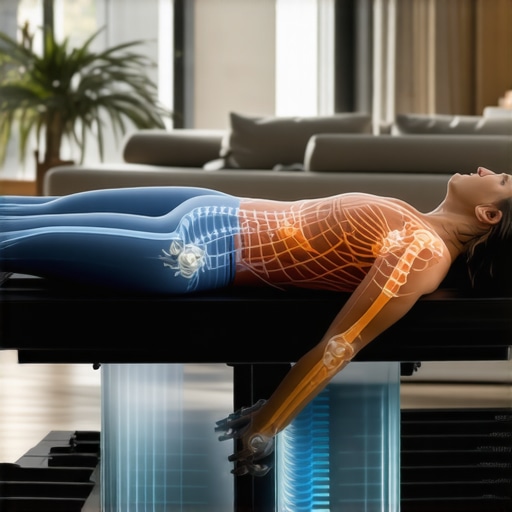
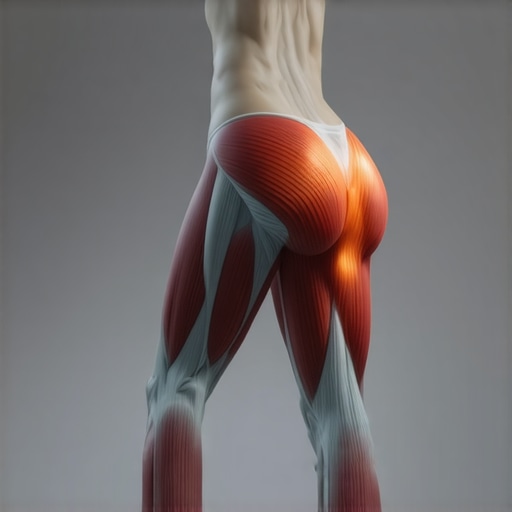
I made a massive mistake early on by assuming back pain stayed in the back. I treated my body like a collection of separate parts rather than a connected web. The truth is, your latissimus dorsi—those big ‘wing’ muscles on your back—are the only muscles that bridge the gap between your upper arms and your pelvis. When they get tight from typing, driving, or stress, they act like a pair of tight suspenders pulling your lower back into a painful arch. According to the National Academy of Sports Medicine, overactive lats can significantly contribute to an anterior pelvic tilt, creating that constant ‘pinch’ you feel when standing. It’s why adjusting your mid-back is often the secret to letting your lower back finally breathe. If you have ever wondered why better posture and mobility seem so out of reach, this is likely the missing piece of your puzzle.
Is a simple lat stretch actually worth the hype?
You might be skeptical. I was too. I thought I needed heavy-duty rehab or fancy equipment to revitalize my mobility. But once you feel the instant ‘drop’ in your sacrum after a proper lat release, you’ll realize how much tension you’ve been needlessly carrying. Have you ever felt like your lower back is ‘stuck’ no matter how much you stretch your legs? Tell me if you’ve faced this, because you aren’t alone. [image_placeholder] Let’s dive into why this connection exists and how you can exploit it for instant relief.Think of your lats as the guy-wires on a radio tower. If the wires on the left side are pulled too tight, the tower leans, putting immense pressure on the base. In this case, the base is your lower back. When you spend all day typing or driving, these muscles shorten and thicken. I learned this the hard way last autumn when I reached up to grab a heavy cast-iron pot from the top shelf. Instead of my arm doing the work, my tight lats acted like a rigid lever, yanking my lumbar spine forward. I felt that familiar, sickening ‘pop,’ followed by a weekend of ice packs. If I had known the lateral move that opens up a tight rib cage, I could have avoided that entire ordeal.
The guy-wire effect on your lumbar spine
When your lats are chronically short, they don’t just stay in your upper back. They originate from the thoracolumbar fascia—a thick diamond-shaped sheet of connective tissue in your lower back. This means every time your shoulder is hunched, it is physically tugging on your waistline. To fix this, we need to go beyond simple static stretching and focus on functional length. Restoring your range isn’t about being a gymnast; it is about making sure your muscles aren’t fighting your skeleton. By lengthening the lats, you effectively ‘untether’ your pelvis, allowing it to sit level rather than being tilted forward into a painful arch.
Release the tension with the doorframe hang
This is the most effective way to target that hidden ‘suspender’ tension. Stand in a doorway and reach across your body to grab the frame with your right hand, about head height. Step your right foot back and slightly behind your left. Now, lean your hips out to the right, away from the doorframe. You should feel a stretch that starts under your armpit and travels all the way down to your hip bone. Hold this for 30 seconds, but here is the secret: don’t just hang there like a wet noodle. Gently pull back against the doorframe as if you are trying to move it. This ‘active’ stretch uses reciprocal inhibition to signal the nervous system to let go of the muscle guarding. 
Breathe into the space between your ribs
Most people make the mistake of holding their breath when they feel a deep stretch. This is the fastest way to stay tight. Instead, as you lean into that doorframe stretch, take a massive inhale and try to push your ribs outward. This is essentially how to breathe into your lower back to reduce muscle spasms from the inside out. Each breath acts like a hydraulic jack, expanding the space between your ribs and your pelvis. When I started doing this, I noticed that the ‘pinch’ in my sacrum disappeared within three sessions. You might also find that the scapular squeeze that relieves mid-back tension is easier to perform once those lateral lines are open. To maximize the relief, pair this with the pelvic tilt trick for instant lumbar relief once you return to a neutral standing position. This combination resets the entire posterior chain, giving your lower back the ‘slack’ it needs to heal.
Let’s get real about why your daily stretching habit might actually be keeping you in a cycle of chronic discomfort. Most people assume that if a muscle feels tight, it needs to be pulled like a rubber band until it gives up. But here is the contrarian truth that I learned through years of trial and error: your brain often makes muscles feel tight to protect a joint it perceives as unstable. This is a phenomenon known as ‘neurological guarding.’ If you keep yanking on a muscle that is trying to stabilize your spine, your nervous system will respond by making it even tighter the moment you stop. I spent years falling into this trap, thinking I just wasn’t ‘flexible’ enough, when in reality, I was ignoring the underlying instability that my body was trying to communicate.
The dangerous myth of ‘no pain, no gain’ in mobility
One of the biggest mistakes—what I call the ‘Oops’ factor—is trying to aggressively foam roll or ‘mash’ the lumbar spine directly. Your lower back is a zone that inherently requires stability, not excessive mobility. When you hammer that area with high-pressure tools, you risk aggravating the nerves and the very connective tissue you are trying to soothe. This is a major reason why how to tell if your back pain is serious often depends on whether your pain intensifies after a ‘deep tissue’ session. I’ve seen people use everything from lacrosse balls to power tools on their lower back, only to end up with a massive flare-up because they treated a stability issue like a flexibility issue. Furthermore, while we often reach for the freezer, why icing isn’t always the best move for a stiff neck or back is because prolonged cold can actually inhibit the blood flow necessary for long-term tissue repair.

Does aggressive foam rolling actually fix a deep knot?
Advanced research, including studies published in the Journal of Bodywork and Movement Therapies, suggests that while myofascial release can provide temporary symptomatic relief, it doesn’t change the structural length of the tissue permanently unless paired with corrective movement and neurological retraining. If you are just rolling and not addressing why the muscle locked up in the first place, you are simply hitting the ‘snooze’ button on your pain. This is why back pain recovery how chiropractic care transforms lives is so effective; it focuses on recalibrating the signals between the brain and the joints rather than just stretching a muscle into submission. For those dealing with more intense issues, it is worth noting the truth about inversion tables for sciatica: they provide temporary decompression, but they don’t fix the muscle imbalances that cause the compression in the first place. Real mobility mastery comes from knowing when to stop stretching and when to start strengthening. Have you ever fallen into the trap of stretching the same spot for months with no results? Let me know in the comments, because once you stop fighting your body’s protective mechanisms, the real healing begins.
The gear I keep in my gym bag for bad spine days
I’ve wasted hundreds of dollars on fancy gadgets that promised to ‘crack’ my back into place, but I’ve narrowed my actual toolkit down to three essentials: a standard lacrosse ball, a high-quality massage gun, and a simple yoga block. The massage gun is a total game-changer if you know how to use a massage gun on your lower back safely without rattling your kidneys. I use it exclusively on the fleshy muscles of the hips and glutes to indirectly take the pressure off my spine. I’ve found that when my glutes are loose, my back stops screaming. If you are struggling with upper-body tension instead, effective neck pain management usually involves targeting the pec minor to stop that forward shoulder roll. Using a lacrosse ball against a wall to pin those chest muscles can do more for your neck than a thousand chin tucks ever could. 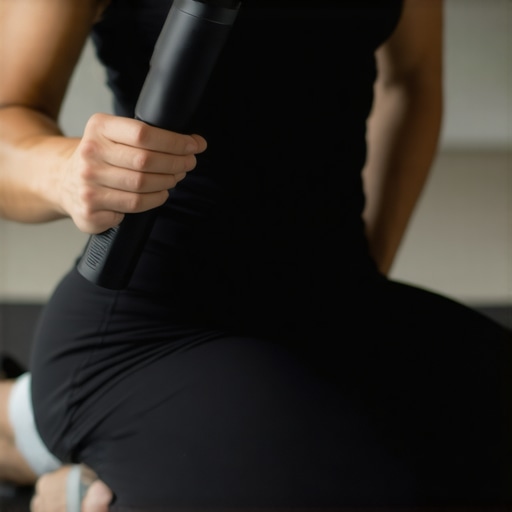
How do I maintain these mobility gains over time?
Maintenance isn’t about doing an hour of yoga every morning; it is about micro-dosing movement throughout your day to prevent your nervous system from locking up. I follow the ’30-minute rule’—every half hour, I perform the Brueggers relief move to reverse hours of hunched sitting. This resets my neurological system and prevents that ‘guarding’ we talked about earlier. For a deeper dive into the science of staying supple, check out mobility mastery expert tips for back pain prevention and recovery. I also swear by Dr. Stuart McGill’s ‘Big Three’ exercises—the modified curl-up, side bridge, and bird-dog. As McGill notes in his seminal work, Back Mechanic, building ‘stiffness’ in the core is actually the prerequisite for mobility in the limbs. Without that central stability, your brain will never let your lats or hamstrings truly relax because it doesn’t trust your spine to stay upright. Chiropractic care isn’t just about the ‘pop’; it is about recalibrating these signals, which is why back pain recovery how chiropractic care transforms lives for those who treat it as a long-term strategy rather than a one-off fix.
Why the future of spine health is wearable
I predict that in the next few years, we are going to see a massive shift toward biofeedback wearables that don’t just track steps, but measure spinal shear and muscle fatigue in real-time. We are already seeing the beginning of this with apps that use the 20-20-20 rule for desk workers and neck health to prompt posture resets via haptic feedback. This movement moves us from a reactive ‘fix me’ model to a proactive, data-driven lifestyle where you enhance mobility naturally by listening to your body’s subtle signals. If you want to get ahead of the curve, stop focusing on how far you can reach and start focusing on how well you can stabilize. My challenge to you today: try the dead bug variation that actually fixes lower back instability during your next workout. It is the single most effective way to teach your brain that your spine is safe, finally allowing those chronically tight muscles to let go for good.
The Hardest Lessons Learned on the Road to Recovery
Looking back at my years of struggle, I realized that I was often my own worst enemy when it came to healing. Here are a few lightbulb moments that completely changed how I treat my spine:
- Intensity is not the same as effectiveness. I used to think if a stretch didn’t hurt, it wasn’t working. In reality, aggressive stretching often triggers the very guarding response we are trying to avoid.
- Stability is the prerequisite for mobility. Your brain won’t let your muscles relax if it doesn’t feel your joints are secure. This is why I always prioritize core bracing before I ever attempt to restore your back mobility.
- Consistency in micro-moments wins. A five-minute reset every afternoon is far more powerful than a two-hour gym session once a week.
- The source of the pain is rarely the cause. Just because your lower back hurts doesn’t mean it’s the problem. Looking at the lats, hips, and even your breathing patterns is essential to boost your back health long-term.
A Look Inside My Personal Mobility Toolkit
I’ve wasted plenty of money on gadgets that promised the world, but I always come back to these four essentials. First, Dr. Stuart McGill’s Back Mechanic is the only book I recommend to everyone; it’s a masterclass in how to relieve neck back discomfort through biomechanics. Second, a high-density foam roller for the mid-back and a lacrosse ball for the hips. Third, a simple yoga block to help maintain proper alignment during floor work. Lastly, I swear by regular check-ins with a professional. Learning relief tips from the pros firsthand ensures you aren’t accidentally reinforcing bad habits. #IMAGE_PLACEHOLDER_E#
The Future of Your Movement Starts Today
Healing isn’t a destination; it’s a daily practice of listening to what your body is trying to say. Whether you are dealing with a fresh injury or a decade of stiffness, remember that your nervous system is capable of change at any age. When you stop fighting your anatomy and start supporting it, true back pain recovery becomes inevitable. Take it one breath and one stretch at a time, and don’t be afraid to ask for help when you hit a plateau. Have you ever noticed that your back pain flares up more during periods of high stress, even if you aren’t sitting more than usual? Let me know in the comments below!