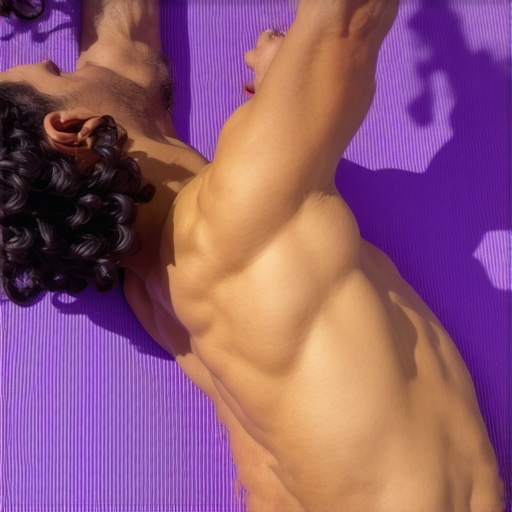
The Side-Lying Stretch That Opens Up a Tight Rib Cage
I spent three years thinking I had a mysterious lung issue because I just couldn’t catch a full, satisfying breath. It felt like my chest was encased in a suit of armor that was two sizes too small. I’d sit at my desk, shoulders hunched, trying to take a deep inhale, only to hit a physical “wall” halfway through. It was frustrating and, honestly, a little scary. I eventually realized my lungs were fine—it was my rib cage that had forgotten how to move. This realization was my lightbulb moment. I spent so much time focusing on my lower back that I completely ignored the twenty-four ribs that need to expand every time we breathe.
Break Free from That Tight Chest Feeling
When your ribs get stuck, your whole body pays the price. I made the classic mistake early on of thinking I just needed to crack my back or stretch my hamstrings to feel better. I even spent weeks trying to breathe properly to reduce tension in my shoulders, but the restriction remained because the structural “gears” of my mid-back were jammed. Your ribs aren’t just static bones; they are meant to move like bucket handles. When they don’t, you start using your neck muscles to pull air in, which leads to those nagging headaches we all hate.
Today, I’m going to show you the exact side-lying stretch that finally melted that tension away for me. This isn’t some complex yoga pose that requires a gymnastics degree. It’s a simple, targeted move that addresses the 10-second breath fix for rib pain by opening up the intercostal muscles. According to the Journal of Physical Therapy Science, thoracic hyperkyphosis—that classic hunched posture—significantly decreases respiratory function, meaning your posture is literally stealing your oxygen. [Image Placeholder] By the time you finish this guide, you’ll know how to reclaim that space in your chest and restore your range naturally.
Is this stretch actually worth the hype?
I get the skepticism. When you’re in pain, the last thing you want is another “miracle fix” that does nothing. I’ve tried them all—the foam rollers, the expensive chairs, the vibrating massagers. Most of them just mask the surface tension. The reason this side-lying approach works is that it uses gravity to help gape the joints between your ribs and your spine. It targets the single best exercise for thoracic mobility from an angle that most daily movements completely ignore. Have you ever felt like your ribs were literally stuck together after a long day at the computer? If so, you’re exactly who I wrote this for.
I used to think my stiffness was just a part of getting older, but that’s a lie we tell ourselves to justify sitting too much. Once I started focusing on the lateral expansion of my rib cage, my energy levels spiked because I was actually getting oxygen into the bottom of my lungs again. Let’s dive into the mechanics of why your ribs lock up in the first place so you can stop the cycle for good.
Get into the right position for the side-lying rib stretch
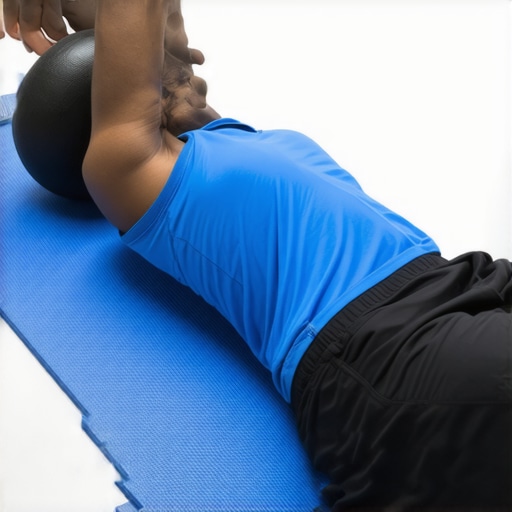
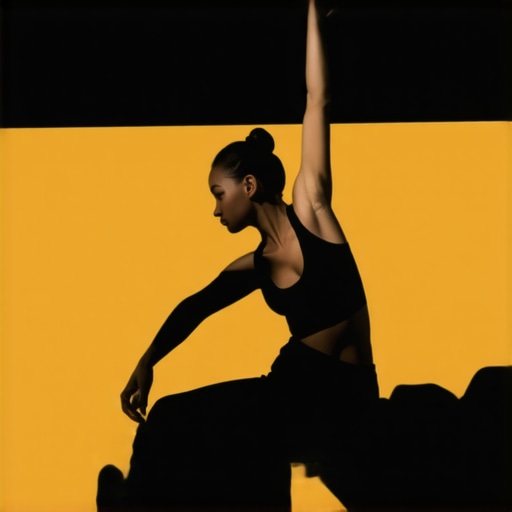
The beauty of this move is that it uses your own body weight as a lever. Lie on your side on a firm surface—a yoga mat or a carpeted floor works best. You want your bottom leg straight and your top leg bent at a 90-degree angle, resting on the floor in front of you. This ‘locks’ your pelvis so that the stretch stays in your mid-back and doesn’t just twist your lumbar spine. Many people skip this and wonder why they aren’t getting results; without locking the hips, you aren’t actually targeting the ribs. To keep your neck from straining, use a firm pillow. If your head is hanging at an awkward angle, you will likely find that you need expert chiropractic solutions just to fix the new crick in your neck. Reach your top arm up toward the ceiling and then slowly let it fall toward the floor behind you, keeping your knee pinned down.
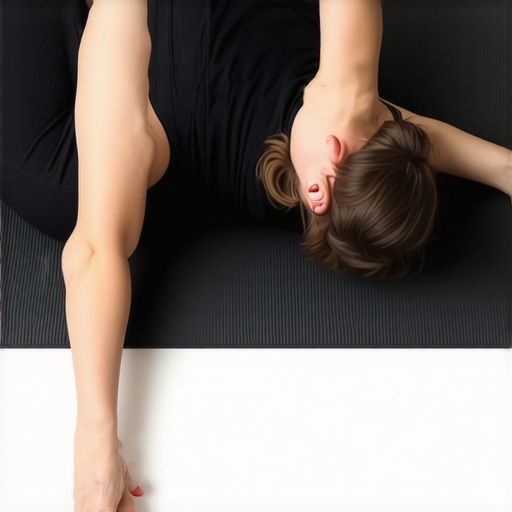
Focus on 360-degree expansion rather than just deep breathing
Once you are in that twisted position, the real work begins with your breath. Most of us are chest breathers, meaning we only move the very top of our lungs. To fix this, I want you to imagine your rib cage is an umbrella opening up in every direction. As you inhale through your nose, try to push your ribs out toward the side and even back toward the floor. This is how you breathe into your lower back to reduce muscle spasms and create space in those tight intercostal muscles. Hold that full inhale for two seconds, feeling the stretch from the inside out, then exhale slowly through your mouth. It should feel like a slow, rhythmic expansion rather than a forced struggle.
The day I realized my back pain was actually a rib problem
I remember a specific Tuesday about four years ago. I had spent six hours hunched over a laptop, and my mid-back felt like it was on fire. I tried a dozen different proven strategies for back pain relief, but nothing touched that specific, sharp ache under my shoulder blade. I finally lay down and did this exact side-lying stretch. On my third breath, I heard a dull thunk—not a painful pop, but a structural shift. Suddenly, the air rushed into my lungs with zero resistance. It was messy; I actually got a bit lightheaded because I had not taken a full breath like that in months. That is when I understood why we adjust your mid-back to help your lower back recover. If the middle of your spine is a frozen block, the bottom has to work twice as hard to keep you upright.
Why your lower back stops hurting when your ribs move
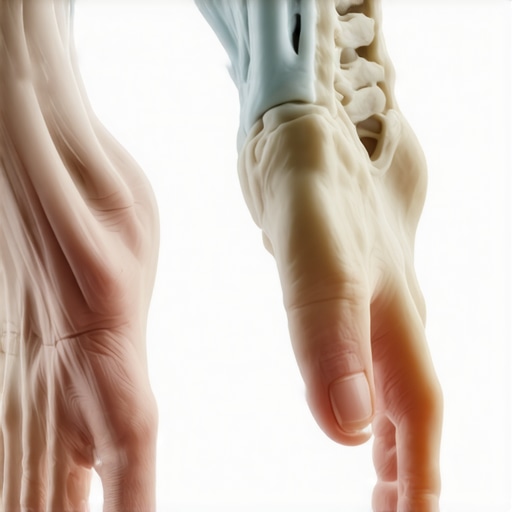
Think of your spine like a multi-level suspension bridge. If the middle cables—your thoracic spine and ribs—lose their tension or get jammed, the pillars at the bottom take all the weight. This is often why standing desks cause hip pain; it is not the standing that is the problem, it is the fact that your upper body is acting like a rigid statue. By using this side-lying technique, you are essentially greasing the gears. You are teaching the twenty-four joints where your ribs meet your spine how to glide again. This movement is the foundation to enhance mobility naturally with chiropractic care principles without needing a specialized table every single day. When the ribs move, the diaphragm can drop fully, which instantly signals your nervous system to exit fight or flight mode and relax those tight neck muscles.
But here is the nuanced truth that most ‘posture gurus’ skip: you can’t just stretch your way out of a structural freeze if your nervous system is still pulling the emergency brake. Many people spend hours on a foam roller, yet their stiffness returns within twenty minutes. This is because they are addressing the symptoms, not the neural tension. If your brain doesn’t feel safe letting your ribs expand, it won’t. This is exactly why stretching your hamstrings won’t fix your lower back pain if the root cause is a lack of thoracic stability. You have to convince your body that it’s okay to move through neurological safety, not just physical force.
Does rib flare mean you are actually breathing correctly?
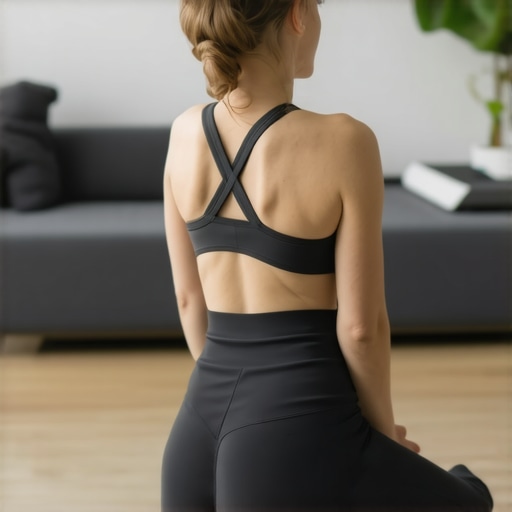
One of the biggest traps I see in advanced mobility work involves “rib flare.” You might think you’re getting a great inhale because your chest is moving, but if the bottom of your rib cage is poking out like a shelf, you aren’t actually mobilizing the joints. You’re just hinging at your mid-back. This is a common mistake that leads to people asking why your ribs flare when you reach overhead even when they think they are fit. Research published in the Journal of Electromyography and Kinesiology suggests that when the thoracic spine lacks true segmental mobility, the diaphragm’s ability to stabilize the core is severely compromised. This forces your neck and lower back to pick up the slack, leading to a cycle of chronic exhaustion and pain.
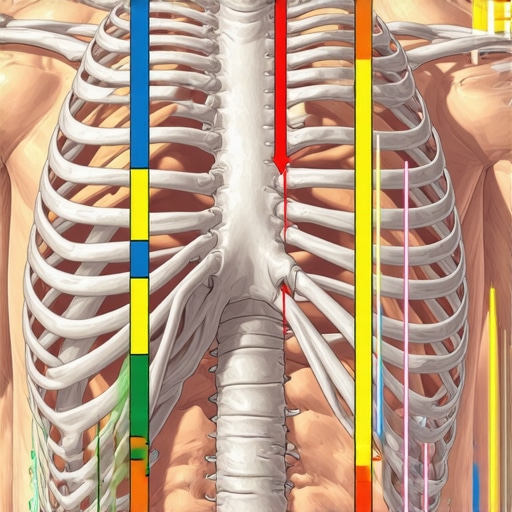
In my early days of rehab, I thought my lower back was “too tight.” In reality, it was hyper-mobile because my ribs were a solid block. My lumbar spine was trying to do the job of my thoracic spine. When you use boost mobility ease pain chiropractic techniques unveiled in a professional setting, we look for these compensations. If you only focus on where it hurts, you miss the silent culprit. Often, the area that is screaming is actually the one doing all the work for the area that is silent and stuck. This is why a “loose” lower back can actually be a red flag for a frozen rib cage.
Stop hunting for the “pop” before you cause a flare-up
The “Oops” factor here is the addiction to the “crack.” Many people try to force their ribs to pop by twisting violently or having a friend “bear hug” them. This is a dangerous trap. Rib joints are delicate, and the costovertebral joints (where the rib meets the spine) require precision. If you force a movement that the muscles aren’t ready for, you can cause a micro-strain that makes breathing even harder the next day. Instead, use rhythmic, controlled motion to relieve neck back discomfort using these expert methods that prioritize control over sheer range of motion.
If you’ve been “self-adjusting” and finding that the relief only lasts for five minutes, you’re likely stuck in this cycle of instability. You need to focus on motor control, not just joint space. We often see this when patients are unlocking neck pain relief expert tips for lasting comfort; the neck only finally calms down when the ribs stop acting like a rigid wall. Have you ever fallen into this trap of chasing the “pop” only to feel even tighter the next day? Let me know in the comments.
If you’re still chasing that ‘pop’ every time you feel a twinge, you’re essentially treating your spine like a glow stick. You might get a temporary flash of relief, but eventually, you’ll run out of light. I’ve found that the real magic happens in the boring stuff—the daily maintenance that ensures you don’t need a massive intervention every month. This is what I call a morning spinal hygiene routine every desk worker needs. It’s about keeping the tissues supple so the joints never have the chance to seize up in the first place.
The Peanut is my secret weapon for mid-back relief
When I can’t get to my chiropractor, I rely on a tool that costs less than a fancy latte: the Peanut. It’s just two lacrosse balls taped together, but it is the most effective way to address the exact points where your ribs meet your vertebrae. Unlike a broad foam roller, which tends to cause the lumbar spine to arch excessively, the peanut hugs the spine, allowing the balls to pressure the muscles on either side without smashing the spinous processes. If you combine this with the scapular squeeze that relieves mid-back tension, you’re creating a pincer movement against chronic stiffness. According to the Clinical Biomechanics research by Dr. Stuart McGill, author of ‘Low Back Disorders,’ the ability to segmentally move the thoracic spine while maintaining lumbar stability is the cornerstone of long-term disc health and injury prevention. By using the peanut to mobilize specific segments between T4 and T8, you are teaching your nervous system that it’s safe to allow extension in those frozen segments, which in turn reduces the demand on your neck. 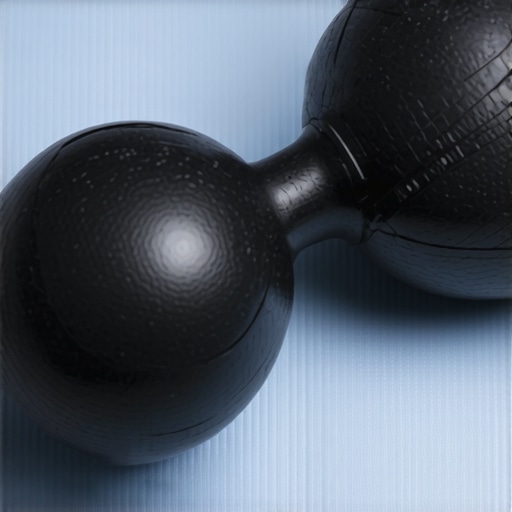
How do I keep my ribs moving for the long haul?
Consistency beats intensity every single time. I used to spend an hour on mobility once a week and wonder why I was still stiff. Now, I spend five minutes every morning and five minutes before bed. This consistent input keeps the ‘neural blueprint’ of my movement patterns updated. It is a key part of how back pain recovery how chiropractic care transforms lives; it shifts you from reactive fixing to proactive living. You have to treat your mobility like brushing your teeth—you don’t wait for a cavity to start using a toothbrush. If you feel that old ‘wall’ returning during your breath, that is your signal to stop what you are doing and spend two minutes in the side-lying position.
The future of mobility is biofeedback and sensors
Looking ahead, I suspect we are moving away from guessing games. I’m already seeing a surge in wearable sensors that track rib expansion in real-time using strain gauges embedded in fabric. By 2025, we’ll likely have shirts that provide subtle haptic vibrations when our breathing becomes too shallow or when our thoracic spine hits a threshold of stiffness for more than twenty minutes. This kind of tech will integrate perfectly with essential chiropractic tips for 2025, giving us the data we need to adjust our habits before the pain even starts. We’re moving toward a world where your phone tells you to take a side-lying stretch because your rib cage hasn’t expanded in three hours. These haptic systems will essentially act as an external nervous system, reminding us to breathe into our back when we get stressed. If you want to start today, stop overcomplicating it. My biggest piece of advice? Pick one move—like the side-lying stretch or the simple yet effective chiropractic hacks we’ve discussed—and do it every single day for two weeks. Don’t look for a miracle; look for the subtle shift in how deep your first breath of the morning feels. Your body responds to rhythm, not force.
Lessons My Rib Cage Taught Me the Hard Way
Symmetry is a bit of a myth in the human body. One side of your ribs will almost always feel tighter than the other—usually the side you lean toward while driving or scrolling on your phone. Instead of forcing them to look identical, focus on the sensation of expansion. Another lightbulb moment for me was realizing that emotions live in the mid-back. When I am stressed, my ribs are the first to lock up, meaning the physical stiffness is often just a symptom of a tight nervous system. I also learned that consistency isn’t about long sessions; two deep, mindful breaths every hour are worth more than a weekly yoga class when you are learning effective neck pain management a step-by-step guide techniques.
The Few Things I Actually Keep in My Gym Bag
I am not a fan of expensive gadgets, but a few tools have made a massive difference in my journey. First is the standard lacrosse ball. Two of these taped together (the Peanut) are perfect for restoring your back mobility with proven chiropractic strategies because they provide density without being too soft. [Image Placeholder] I also swear by a 36-inch firm foam roller, specifically for longitudinal rolling to open the chest after a long day of typing. Lastly, I always recommend the book ‘Breath’ by James Nestor to my clients; it completely changed how I viewed the mechanical act of breathing and its impact on overcoming chronic neck discomfort with insights from top chiropractors. These tools aren’t just accessories; they are the baseline for maintaining the progress we make in the office.
Take That First Full Breath Today
You don’t have to live with that “armored” feeling in your chest forever. Whether you are dealing with chronic rib flare or just looking for mastering back neck pain relief tips from the pros, the most important step is to start listening to what your body is telling you. You deserve to move without restriction and breathe without hitting a wall. Start with one stretch, one mindful inhale, and see how much lighter you feel tomorrow. Reclaiming your rib mobility is a gradual process, but every inch of space you create is a massive victory for your long-term spinal health. Have you noticed your ribs feeling stuck more when you’re stressed, or is it strictly a physical stiffness after a long day at the desk? Let me know below.