How to Safely Transition to a Minimalist Shoe Without Injury
I remember the day I threw my cushioned “cloud” sneakers into the back of the closet. I felt like a total rebel. I’d read all the books about natural movement and decided that, starting tomorrow, I was a minimalist runner. No more foam. No more arch support. Just me and the pavement. Big mistake. Within three days, my calves felt like they were made of literal lead, and my lower back was throbbing in a way it never had before. I had fallen for the “all or nothing” trap, and my body was paying the price. Have you ever tried a pair of barefoot shoes only to end up with a mystery pain in your hip or back a week later? Let me know, because I felt like I was the only one failing at “walking naturally.” Today, we are going to fix that.
My Feet Were Weak and I Didn’t Even Know It
We spend years—decades, really—shoving our feet into what are essentially orthopedic casts. When we suddenly strip that support away, we aren’t just changing shoes; we’re asking dormant muscles to do a job they haven’t done since we were toddlers. If you’ve noticed how your foot arch affects your lower back pain, you’ve already seen the kinetic chain in action. I learned the hard way that you can’t undo twenty years of shoe-cushioning in a single afternoon. I tried to run five miles on day one, thinking I was “naturally” gifted. I wasn’t. I ended up needing professional help to restore my range and movement because I ignored the signs of strain.
Is minimalist footwear actually worth the hassle?
You might be sitting there, icing a sore heel, wondering if this whole “barefoot” trend is just a marketing gimmick for ugly shoes. It’s a fair question. But the science actually backs up the benefits of foot strengthening. A study published in Scientific Reports found that walking in minimalist shoes for six months can increase foot muscle strength by up to 60%. The problem isn’t the shoe; it’s the speed at which we try to wear them. If you rush it, you’ll find out quickly why tight calves cause lower back tension and why your Achilles tendon feels like it’s about to snap. I’m here to make sure that doesn’t happen to you.
Stop Treating Your Feet Like They Are Separate From Your Spine
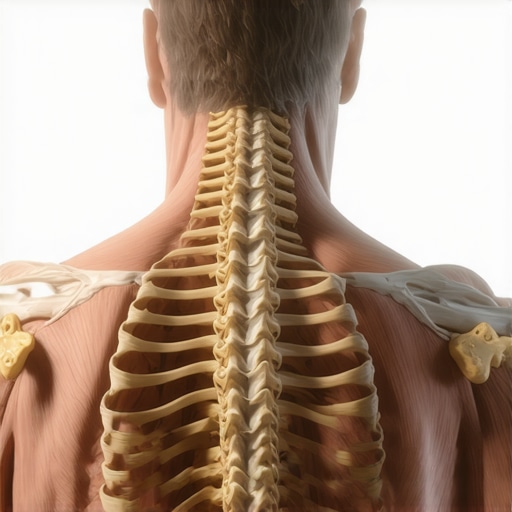
Your feet are your foundation. If they aren’t functioning, everything upstream—your knees, hips, and back—has to compensate. I spent weeks wondering what my walking pattern says about my spinal health before I realized my new minimalist shoes were exposing my total lack of mobility. I had to learn that the “correct” way to transition is a slow, methodical crawl, not a sprint to the finish line. We’re going to walk through the exact steps to wake up those sleepy foot muscles without sending you to the doctor with a stress fracture.
Check Your Shoes Before Your Next Walk
First things first, you need to conduct a forensic investigation of your current footwear. Flip your sneakers over and look at the wear pattern on the sole. Is the outside edge shaved down? Is the heel worn more on one side? This is your body’s way of screaming for help. I used to think my shoes were just “broken in,” but I was actually seeing a visual map of my dysfunction. When you learn how to tell if your sneakers are ruining your spinal alignment, you realize that your high-tech foam is just masking a wobbling foundation. If your shoes are worn unevenly, it means you’re already compensating for a weakness that minimalist shoes will brutally expose.
The Humbling Power of the Towel Scrunch
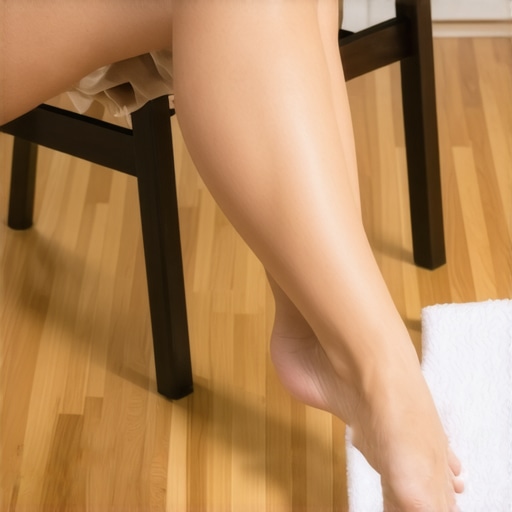
Think of your feet like a person who has spent twenty years in a dark room; you can’t just throw them into the sunlight and expect them to see perfectly. You have to wake up the neural pathways first. Your brain has essentially muted the signal to your foot muscles because the shoes were doing all the heavy lifting. To fix this, I started with something humiliatingly simple: towel scrunches. I sat at my desk and tried to pull a hand towel toward me using only my toes. The first time I tried it, my foot cramped so hard I nearly shouted. It was a clear sign of how much I’d neglected my base. This isn’t just about feet; it’s about total-body stability. If your feet aren’t “firing,” you might find the pelvic tilt secret for effortless posture while walking is impossible to maintain because your foundation is constantly shifting.
Why 10 Minutes is Your New Magic Number
The most critical rule I ignored during my first attempt was the “10-Minute Transition.” You don’t put on minimalist shoes and go for a five-mile hike. You wear them for 10 minutes in the kitchen while making coffee. Then 20. Then you walk to the mailbox. I remember trying to walk my dog, a 70-pound golden retriever, while wearing my new “thin” shoes for the first time. He spotted a squirrel and lunged. Because I hadn’t built up the stabilizer muscles in my arches, my ankles buckled slightly, and my lower back took the entire force of the pull. I was sidelined for two days with a dull ache. When I finally started respecting the 10-minute limit, my persistent lower back throb began to fade. I realized that proven chiropractic strategies to restore back mobility only work if you stop sabotaging the progress every time you take a step in the wrong gear.
Your Ankles Control Your Spine More Than You Think
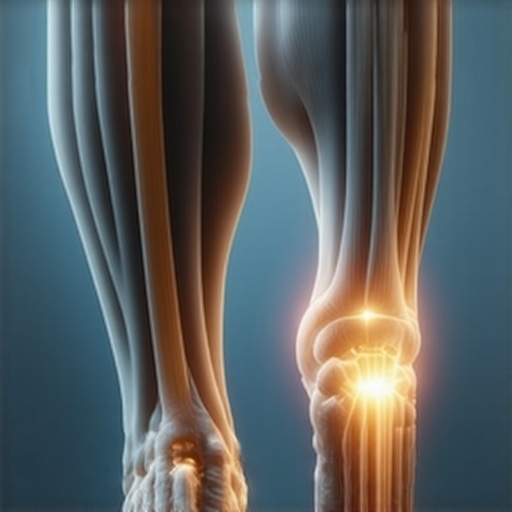
Ankles are the gatekeepers of the kinetic chain. They are the hinges between your foot and your spine. If they are locked up or lack the proper range of motion, your back has to twist or arch to compensate for every step you take. This is the hidden connection between your feet and mid-back pain that most people miss. I spent years treating my upper back when the real problem was an old ankle injury that left me with zero mobility. Before you commit to minimalist footwear, test your range. If you can’t squat without your heels lifting off the floor, your ankle mobility is secretly destroying your squat form and your walking mechanics. Fix the hinge, and the rest of the chain starts to relax.
Stop Blaming Your Abs for Everything
We often hear that back pain is a ‘core’ problem. We’re told to do more planks and sit-ups until our midsection is made of granite. But here is the contrarian truth: your six-pack won’t save your spine if your feet are failing you. In my experience, why your core strength isn’t stopping your back from hurting usually boils down to a disconnect in the kinetic chain. If your feet aren’t providing a stable platform, your brain will never fully ‘trust’ your core to engage. In many ways, why your glute medius is more important than your abs for back health becomes obvious once you start walking in minimalist shoes. This tiny hip stabilizer has to work overtime to keep your pelvis level when your shoe isn’t doing it for you. If it fails, your lower back is the next line of defense, and it is a line that breaks easily.
The Dangerous Myth of the Tight Hamstring
Then there is the ‘tightness’ trap. I see so many people obsessively stretching their hamstrings because their back hurts. The reality? Why stretching your hamstrings won’t fix your lower back pain is because those muscles are often ‘locked long.’ They aren’t short; they are being pulled taut like a bowstring because your pelvis is tilted forward. Stretching them just adds more instability to an already stressed system. Instead, we need to focus on boost mobility ease pain chiropractic techniques unveiled that address the root alignment rather than just pulling on the tightest-feeling string. Have you ever fallen into this trap of stretching a muscle that actually needed stability? Let me know in the comments.
Can a stiff big toe actually cause chronic neck tension?
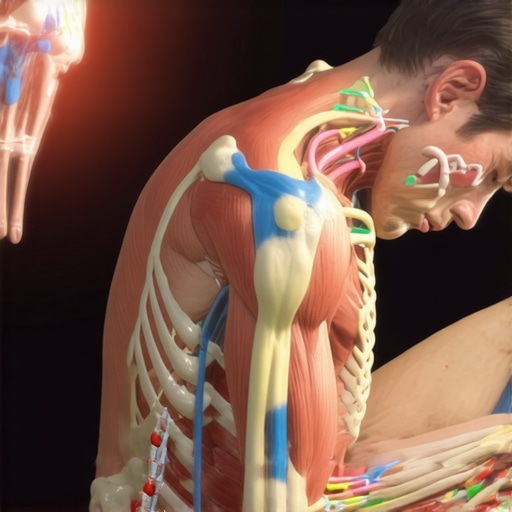
It sounds crazy, right? But the human body doesn’t work in silos. There is the hidden link between neck pain and spinal health that starts the moment your big toe hits the ground. If you lack ‘hallux extension’ (the ability of your big toe to bend upward), your foot will roll inward, your knee will collapse, and your shoulder will dip to compensate. This constant micro-shift travels all the way up to your cervical spine. I have had patients come in for unlock neck pain relief essential chiropractic tips for 2025 only to discover that their ‘tech neck’ was actually being exacerbated by their rigid, non-functional footwear. Even why your thumb pain is actually coming from your neck can often be traced back to these global postural compensations.
Why the Site of Pain is Rarely the Source
Expert manual therapists like the late Dr. Karel Lewit, the father of manual medicine, championed the idea that ‘he who treats the site of pain is often lost.’ This is the cornerstone of how we restore your range and how chiropractic care enhances movement. We don’t just look at where it hurts; we look at where the movement stopped. If you transition to minimalist shoes without addressing these ‘upstream’ blocks, you are just pouring new wine into old, brittle wineskins. You need a strategy that integrates foot strength with spinal alignment to truly find relief and avoid the common pitfalls of modern sedentary life.
The Five Dollar Tool That Beats Every High Tech Gadget
I have spent a small fortune on fancy vibrating rollers and Bluetooth-enabled massage chairs, but the most effective tool in my kit is still a standard lacrosse ball. I keep one under my desk and one in my gym bag. The reason is simple: specificity. When you feel that familiar knot in your glutes or shoulders, a foam roller is too blunt an instrument. I learned how to use a massage ball to release hip flexor tension because my hips were constantly pulling my pelvis out of alignment after long flights. By pinning the ball against a wall and leaning into the trigger points, you create a localized pressure that manual therapy experts call ischemic compression. It’s not comfortable, but it’s the only way to boost your back health with simple yet effective chiropractic hacks that actually stick. If you aren’t doing this daily, you’re essentially letting the rust settle into your joints.
Give Your Toes Some Breathing Room
If you’re making the transition to better footwear, there is one non-negotiable tool: toe spacers. I know, they look like something from a nail salon, but they are foundational for enhancing mobility naturally with chiropractic care. Most of us have ‘squish-shaped’ feet from years of narrow toe boxes. Toe spacers help realign the metatarsals, which directly impacts how your weight is distributed through your ankles and up to your lower back. I wore mine for just 30 minutes every evening while watching TV, and within a month, the chronic ache in my shins vanished. It’s a low-effort way to revitalize your mobility with proven strategies for back pain relief without having to sweat through a workout.
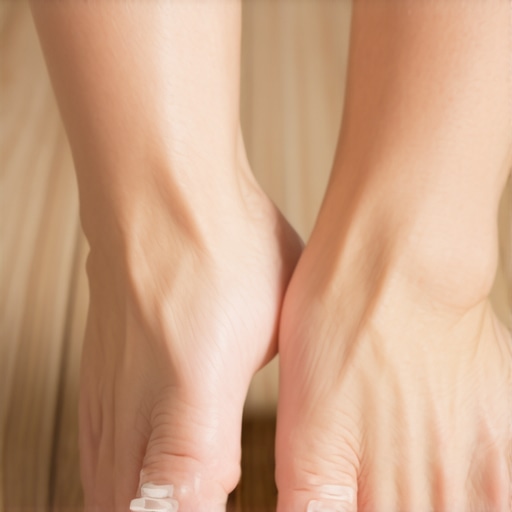
How can I keep my mobility gains without spending hours in the gym?
The secret isn’t more intensity; it’s more frequency. Think of your spine like a toothbrush—you wouldn’t just brush it once a week for two hours; you do it for two minutes twice a day. This is why I swear by the morning spinal hygiene routine every desk worker needs. In his seminal work, Becoming a Supple Leopard, Dr. Kelly Starrett of The Ready State explains that humans are ‘built to move,’ and when we stop, our tissues literally begin to shorten and stiffen. I’ve found that just five minutes of movement before my first cup of coffee does more for my chronic stiffness than any hour-long yoga class on a Saturday. It’s about maintenance, not a total overhaul. When you stop looking for the ‘magic’ stretch and start focusing on proven chiropractic strategies to restore back mobility, the results become permanent.
The Future of Feeling Good
As we look toward 2025 and beyond, the trend is shifting toward ‘bio-feedback’ wearables. We are moving away from guessing and toward knowing exactly when our posture is failing us. I predict that we will soon see smart-insoles that vibrate when your arch collapses or shirts with integrated sensors that alert you when your shoulders hunch. This technology will be a game-changer for unlocking neck pain relief with essential chiropractic tips for 2025 because it provides real-time correction. However, technology is only a tool, not a cure. You still have to do the work of building the underlying strength. My challenge to you today is this: grab a tennis ball or lacrosse ball and spend exactly two minutes on the arch of each foot tonight. Experience the immediate relief and realize that your journey to a pain-free life is actually under your own control.
The Hard Truths About Finding Your Natural Stride
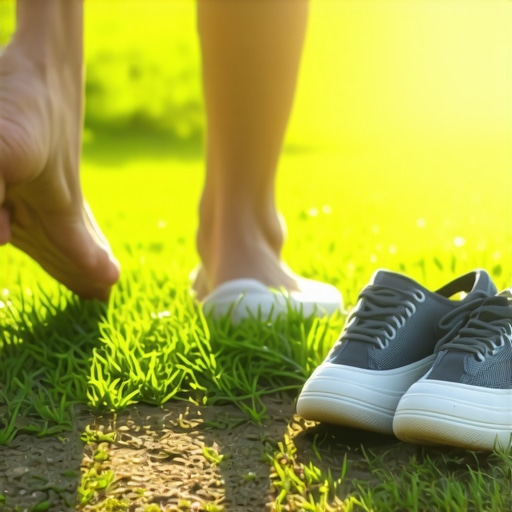
I’ve spent hundreds of hours rethinking how I move, and if there is one thing I’ve learned, it’s that your feet are the ultimate truth-tellers. They don’t lie about your alignment. I used to think I was just ‘getting old’ when my back hurt, but really, I was just building a house on sand. If you want to restore your range and how chiropractic care enhances movement, you have to start at the bottom. Another lightbulb moment was realizing that concrete is the enemy of the transition. Whenever possible, find grass or gravel to wake up those proprioceptors. And finally, don’t let your ego dictate your footwear; some days your body needs a break, and that’s okay. Pushing through pain isn’t ‘natural’—listening to it is.
Tools That Actually Live Up to the Hype
For those ready to take the next step, I recommend the ‘Big Three’ in my arsenal. First, a simple lacrosse ball for that deep tissue work—it’s how you boost mobility and ease pain with chiropractic techniques unveiled at home. Second, high-quality silicone toe spacers are non-negotiable for undoing years of ‘shoe-shaped’ feet. Third, I highly suggest reading Becoming a Supple Leopard by Dr. Kelly Starrett. It’s the manual for human movement and offers a deep understanding of back pain and a guide to better posture and mobility that complements everything we’ve discussed today.
#IMAGE_PLACEHOLDER_E#
Your Spine Deserves a Strong Foundation
Taking charge of your foundation is the most empowering thing you can do for your long-term health. Whether you decide to go fully minimalist or just want to strengthen your arches, the goal is the same: a body that moves without fear. You can revitalize your mobility with proven strategies for back pain relief by simply paying attention to what’s happening between your toes and your tailbone. Your future self—the one who can still hike, run, and play without a week of recovery—is waiting for you to start today. Be patient, stay consistent, and remember that every small step toward natural movement is a giant leap for your spinal health.