Why Your ‘Perfect’ Yoga Flow Might Be Straining Your SI Joint
I remember sitting on my living room floor after a 90-minute vinyasa session, feeling like a total goddess—until I tried to stand up. A sharp, lightning-bolt twinge shot through my lower back, right where the spine meets the pelvis. It made no sense. I was the person who never missed a class. I could touch my toes with ease. Yet, there I was, hobbling to the kitchen like I’d just run a marathon in high heels. It was a wake-up call that my pursuit of the ‘perfect’ pose was actually trashing my sacroiliac joint. If you’ve ever felt that weird, one-sided ache after a deep pigeon pose or a wide-legged forward fold, you aren’t alone. Today, we are going to peel back the curtain on why ‘more stretch’ isn’t always better and how you can protect your spine while still enjoying your practice.
The Myth of the Ultimate Stretch
For the longest time, I fell into the trap of thinking that flexibility was the only goal. I made the classic mistake of pushing into my end-range of motion in every single pose, basically hanging off my ligaments instead of using my muscles. This is a recipe for disaster for the SI joint, which is designed for stability, not massive movement. When we overstretch the ligaments that hold this joint together, we create micro-instability that leads to inflammation and that nagging ‘stuck’ feeling. Often, why your hips feel locked isn’t about tight muscles at all; it’s your nervous system tightening everything up to protect an unstable joint.
Is yoga actually worth the risk for back pain?
It is a fair question to ask, especially when you feel worse after a session. Many of my neighbors and friends have asked me if they should just quit entirely. The truth is, yoga is fantastic, but we often approach it with a ‘no pain, no gain’ mentality that doesn’t work for the human frame. According to the Journal of Orthopaedic & Sports Physical Therapy, the SI joint only moves about 2 to 4 millimeters. When we force it into deep, asymmetrical twists without proper core engagement, we are asking it to do something it wasn’t built for.
Why Stability Trumps Flexibility Every Time
If I could go back and talk to my younger self, I’d tell her to stop trying to look like the girl on the front of the magazine. Instead of deep lunges that sink into the joints, we need to focus on strengthening your glutes to take the pressure off your spine. Stability is what keeps you mobile in the long run, not the ability to do a split. I learned the hard way that why your foam roller might be hurting your lower back is often because you’re rolling over an already irritated SI joint rather than addressing the underlying weakness. Have you ever noticed a sharp pain on just one side of your lower back after a particularly intense yoga class? If so, your body is trying to tell you something important. We need to listen to those whispers before they become screams. It’s about finding that balance between movement and protection, which is exactly what we’ll dive into next.
Stop Pulling the Screws Out of Your Pelvis
Imagine your SI joint is like a heavy-duty door hinge designed to only move a few millimeters. When we force deep, asymmetrical stretches in yoga, we are essentially trying to rip that hinge right off the frame. This is why strengthening your glutes to take the pressure off your spine is infinitely more important than being able to touch your forehead to your shins. I spent years thinking the ‘pop’ I felt during a deep lunge was just my body ‘opening up,’ but it was actually my ligaments crying for help as they were being overstretched. To fix this, we need to stop thinking about how far we can go and start thinking about how much we can control.
How to Build Your Internal Pelvic Corset
True stability doesn’t come from just sucking in your gut; it comes from creating a 360-degree corset of muscle around your pelvis. Start by ‘hugging the midline’ in every pose. Whether you are in a Warrior II or just standing at the kitchen sink, imagine there is a powerful magnet between your inner thighs. Pull them toward each other. This simple activation engages the pelvic floor and the deep stabilizers of the lumbar spine. Often, why your glutes wont fire and how to fix it is the missing piece of the puzzle. If those big powerhouse muscles are dormant, your tiny SI joint ligaments have to do all the heavy lifting, leading to that chronic, localized ache.
The 10% Rule for Safer Stretching
I used to be an ‘all-or-nothing’ practitioner, pushing to 100% of my range every single time. Now, I live by the 10% rule: stop at 90% of your maximum depth. That final 10% is where the injury lives because it’s where we stop using muscle and start hanging on our connective tissue. By staying just shy of your limit, you keep the tension in the muscles where it belongs. If you feel a sharp pinch or a lightning bolt sensation, you’ve already gone too far. You can use the pelvic tilt trick for instant lumbar relief even in the middle of a yoga class to find a more neutral, supported position for your sacrum when things feel unstable.
Why I Stopped Chasing the Perfect Split
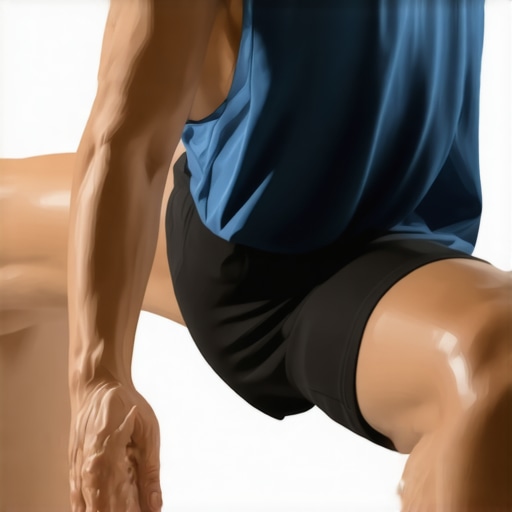
I remember one rainy Tuesday, trying to force a Revolving Triangle because I wanted to look as flexible as the instructor. I ignored the dull, hot ache in my right hip and pushed my chest open. *Pop.* The room didn’t go dark, but my mobility for the next three weeks did. I had to learn the hard way how to tell if your back pain is serious versus just a deep stretch. It turned out I had created micro-tears in the ligaments that support the sacrum. Now, instead of pushing through the pain, I focus on how to breathe into your lower back to reduce muscle spasms whenever I feel that familiar tightness creeping in.
Mastering the Neutral Spine During Twists
Twisting is where most SI joint injuries happen because people twist from their hips rather than their ribcage. To protect yourself, keep your hips square and imagine your pelvis is set in concrete. Twist only from the mid-back (the thoracic spine). If your pelvis starts to rotate with your shoulders, you’re putting a shearing force on the SI joint. When you boost mobility ease pain chiropractic techniques unveiled in your daily routine, you begin to realize that having a professional check your spinal alignment makes these internal adjustments much more intuitive. Functional movement is about precision, not intensity.Let’s dig deeper into a nuance that almost everyone misses: tightness is not always a request for a stretch. In fact, most of the time, it is a protective bracing strategy. I used to think my hamstrings were just genetically short because they always felt like tight piano wires. But no matter how much I stretched them, they never got longer. That is because my brain was using those hamstrings to stabilize a pelvis that my weak deep core could not handle. If I had successfully loosened them, I probably would have ended up with a disc herniation. This is the instability-stiffness cycle, where the body creates tension to compensate for a lack of structural support. If you have ever wondered why your strong core might actually be too rigid, it is often this exact mechanism at play. Your muscles are not just tight; they are working overtime because they do not trust your joints.
Why Your Tightness Might Actually Be a Safety Signal
One of the biggest traps in the mobility world is the search for the pop. We have all been there—twisting and contorting our spines just to hear that audible release, thinking it means we have fixed the problem. But frequently, that stuck feeling is actually neural tension. When a nerve is irritated, the muscles around it will contract to prevent you from stretching that nerve further. Research published in the Journal of Bodywork and Movement Therapies indicates that stretching an already sensitized nerve can lead to increased inflammation and prolonged recovery times. When you try to stretch through this, you are not helping; you are essentially pulling on both ends of a sensitive wire. This is a primary reason why your foam roller might be hurting your lower back—if the issue is neural or joint-based, aggressive rolling just adds more trauma to the fire.
Is Your Tightness Actually Just Neural Tension?
To tell the difference, pay attention to the specific sensation during your practice. True muscle tightness feels like a dull, satisfying ache when lengthened. Neural tension, however, feels like a zing, a sharp line of pull, or even a slight numbness that radiates. If you feel that sharp sensation, you must stop stretching immediately. Instead of force, we need to focus on calming the nervous system and restoring proper joint mechanics. This is where boost mobility ease pain chiropractic techniques unveiled can be a total game-changer. An adjustment does not just move bones; it resets the neurological input to the brain, telling those protective muscles they can finally stand down. It is about restoring the conversation between your brain and your body.
Stop Chasing the Sound of the Pop
Another nuance I have learned from years of practice is the importance of the hidden muscle that stabilizes your lower spine—the multifidus. While the big six-pack muscles get all the glory, these tiny muscles are the ones that actually protect the individual vertebrae during movement. When we focus only on big, global stretches, we often bypass these stabilizers entirely. I have found that why your back feels better when you keep moving is because low-level, frequent movement keeps these stabilizers awake and engaged without overloading them. Have you ever fallen into the trap of thinking a more intense stretch was always the better one? Let me know in the comments. We need to move away from the no pain, no gain philosophy and toward a listen and adapt approach. It is the difference between forcing a door open and simply finding the right key.
The Gear That Actually Saved My Commute
Once I accepted that my SI joint wasn’t a fan of deep stretching, I had to look at my daily environment. Most of us spend hours seated, which is essentially a slow-motion car crash for the lower back. I started using a McKenzie Lumbar Roll religiously. I don’t just use it because it’s a standard recommendation; I use it because it physically forces my pelvis into a slight anterior tilt, preventing the ‘slump’ that pulls on the sacral ligaments. If you aren’t ready to invest in gear yet, you can learn how to use a rolled up towel to fix your cars lumbar support to see if that extra curve provides immediate relief during your drive. It’s a low-tech hack that offers high-tier results.
How do I stay stable without spending hours at the gym?
Consistency always beats intensity when it comes to the spine. To restore your range how chiropractic care enhances movement, you have to integrate small, frequent micro-movements. I tell my friends that learning how to stay mobile when you have a desk job and no time for the gym is the most valuable skill for the modern era. I use a standing desk for 20 minutes of every hour, not to work out, but to change the load on my joints. Dr. Stuart McGill, a leading spine biomechanist and author of Back Mechanic, notes that the SI joint requires ‘stiffness’ for function, not the extreme mobility we often chase in yoga. He advocates for his ‘Big Three’ exercises—the bird-dog, side plank, and modified curl-up—to build the endurance necessary for a pain-free life. I’ve found that these three movements, done for just five minutes every morning, do more for my back than any 90-minute vinyasa ever did.
Prediction: Biofeedback is the Future of Back Health
Looking ahead, I see the industry moving away from ‘dumb’ furniture and toward wearable biofeedback. We are already seeing the emergence of small, adhesive sensors that vibrate when your pelvis tilts into a vulnerable position. Within the next five years, your phone will likely notify you before a spasm even starts, based on how your gait is shifting. This shift toward prevention will make it much easier to boost your back health simple yet effective chiropractic hacks in real-time. Until then, we have to be our own sensors. I want you to try this today: set a timer for every 30 minutes and perform one 10-second ‘pelvic reset’ by squeezing your glutes and finding a neutral spine. It’s the simplest, most advanced tip I can give you for long-term comfort.
Three Truths My SI Joint Taught Me the Hard Way
Reflecting on my journey from the living room floor to a stable, pain-free life, I realized that many of the ‘rules’ I followed were actually working against my anatomy. Here is what I wish I had understood sooner:
- Your nervous system is the ultimate boss. If you feel chronically tight, your brain is likely trying to protect a joint it perceives as unstable. Stretching into that resistance is like arguing with a security guard—you’re not going to win.
- Ligaments are like plastic, while muscles are like rubber. Muscles can stretch and return to shape; ligaments, once overstretched, often stay that way. This is why mobility mastery expert tips for back pain prevention and recovery focus so much on strengthening the ‘slack’ rather than increasing the range.
- The quietest poses are the most therapeutic. I used to think the sweat and the struggle were signs of progress. Now, I know that holding a simple, stable bird-dog with perfect form does more for my sacrum than any extreme twist ever could.
The Minimalist Guide to a Happy Sacrum
I didn’t heal my back with a magic pill; I used a curated set of tools and knowledge. If you want to dive deeper, I highly recommend Dr. Stuart McGill’s Back Mechanic—it is essentially the owner’s manual for the human spine. For daily support, I swear by a lumbar roll or even learning how to use a rolled up towel to fix your cars lumbar support to keep that natural curve intact during long drives. Finally, if you’re stuck in a cycle of stretching and then spasming, seeking professional help for back pain recovery how chiropractic care transforms lives can provide the neurological reset your body needs to stop over-firing its protective muscles.
Start Building Your Resilient Spine Today
You don’t have to give up the movement you love; you just have to change the way you move. By prioritizing stability over deep, uncontrolled ranges of motion, you are investing in a future where you can walk, run, and play without that nagging ache. Using relieve neck back discomfort using these expert methods will help you find that balance between activity and protection. Your body is incredibly resilient, and with the right approach, you’ll be back to feeling like your best self—minus the lightning-bolt twinges. #IMAGE_PLACE_HOLDER_E# Have you ever noticed that your back feels tighter *after* a long stretching session? Let me know your experience in the comments below!