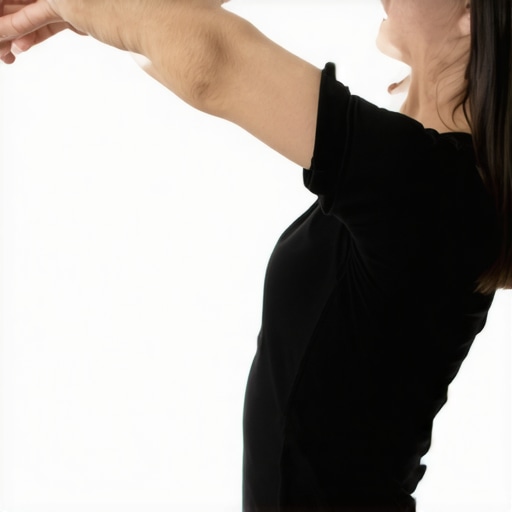
The 10-Second Fix for Jaw Tension Related to Neck Pain
I spent three years convinced that my cervical spine was permanently damaged. I bought every ergonomic gadget under the sun, from kneeling chairs to those weird curved pillows that look like they belong in a space station. Every morning was the same: I’d wake up, feel that familiar “clunk” in my upper neck, and spend the next twenty minutes trying to stretch out a tension that felt like it was made of steel cables. It was exhausting. Then, quite by accident, I found myself clenching my teeth while trying to open a stubborn jar of pickles. The moment I let go, I felt a rush of warmth down my neck. It was my first clue that I’d been ignoring the real culprit right under my nose—or rather, right behind my cheeks.
Stop Chasing the Pain and Start Looking Higher
I made a massive mistake early on by assuming that where I felt the pain was where the problem lived. I’d spend hours on a foam roller, but [why your neck hurts more when you are stressed](https://quackersspinal.com/why-your-neck-hurts-more-when-you-are-stressed) usually has more to do with your bite than your vertebrae. I thought “more stretching” was the answer, but I was actually just irritating the nerves further. Today, I want to show you exactly how to break that cycle. We are going to look at the [connection between your jaw tension and your top neck bone](https://quackersspinal.com/the-connection-between-your-jaw-tension-and-your-top-neck-bone) and use a simple, 10-second release that changes everything. It’s not about force; it’s about neurological permission. Have you ever felt like your neck was stuck in a vice no matter how much you massaged it?
Does a 10-second move actually work or is it just social media fluff?
It sounds like one of those “one weird trick” ads, doesn’t it? I was the biggest skeptic in the room. But when you realize that your jaw muscles (the masseters) are some of the strongest in your body, it makes sense. According to research from the Journal of Oral Rehabilitation, roughly 70% of people with jaw issues also report significant cervical spine pain. They are hard-wired together. If your jaw is stuck in “fight or flight” mode, your neck doesn’t stand a chance. By using [neck pain no more](https://quackersspinal.com/neck-pain-no-more-expert-chiropractic-solutions-that-work) strategies that target the trigeminal nerve, we can force the system to reboot. We aren’t just masking symptoms; we are hitting the reset button on the whole mechanism.
Find the Master Switch in Your Jaw
Think of your jaw as the main circuit breaker for your upper body. When you clench, you aren’t just working your face muscles; you are sending a signal to your brain that says, ‘We are under attack.’ The brain responds by tightening the protective sheath of muscles around your cervical spine. This is why you can’t just stretch your way out of a stiff neck. You have to flip the breaker first. To do this, find the spot where your jaw meets your skull, just in front of your earlobes. If you open and close your mouth, you’ll feel a slight hinge movement. This is the TMJ, and for most of us, it’s as hard as a rock.
The 10-Second Release You Can Do Anywhere
This isn’t a deep tissue massage; it’s a neurological reset. Take your index and middle fingers and place them on that hinge point. Open your mouth just enough so your teeth aren’t touching—about the width of a pencil. Apply very light pressure—no more than the weight of a nickel—and make tiny, slow circles. While you do this, focus on the 10-second breath fix for rib pain, inhaling through your nose and exhaling with a soft ‘whoosh’ through your lips. I remember doing this while stuck in a three-hour traffic jam on I-80. My neck was screaming, and I was white-knuckling the steering wheel. I forced myself to drop my jaw and do these light circles for ten seconds. The ‘clunk’ I usually felt in my neck didn’t vanish instantly, but the throbbing behind my eyes cooled down immediately. It gave my nervous system permission to relax. 
Look Straight Ahead to Save Your Spine
Once you’ve addressed the jaw, you have to stop the behavior that’s triggering the tension in the first place. Most of us treat our necks like a crane, constantly leaning forward to peer into screens. When you tilt your head even thirty degrees forward, the effective weight of your head on your neck jumps from 12 pounds to nearly 40 pounds. It’s no wonder your muscles feel like they are fraying. You need to stop tilting your head the right way to use your phone by bringing the device to your eye level rather than dropping your chin to your chest.
Adjust Your Digital Environment
If you spend eight hours a day at a desk, your environment is your destiny. If your screen is too low, you will slouch. There is no amount of willpower that can overcome a poorly placed monitor. Learn how to adjust your monitor to avoid eye and neck strain so that the top third of the screen is at eye level. This simple shift prevents the ‘vulture’ posture that keeps your masseter muscles engaged and your neck in a constant state of emergency.
The String Analogy for Instant Alignment
Imagine there is a silver string attached to the very crown of your head, pulling you gently toward the ceiling. Not your forehead, but the back of your skull. When you ‘lift’ from that point, your chin naturally tucks in slightly, and your jaw softens. This is the core of effective neck pain management. You aren’t forcing a position; you are lengthening the space between your vertebrae. If you struggle with this, it might be time to look at chiropractic secrets to boost neck comfort and function to ensure your joints are actually moving well enough to allow for that alignment. When the bones are stuck, the muscles will never stay relaxed.Let’s dig deeper into why these problems persist even after you’ve bought the fancy chair and done your daily stretches. Most people assume that ‘stiff’ always equals ‘needs more stretching.’ This is a huge mistake. In my experience, if your neck is hypermobile—meaning the ligaments are a bit loose—your muscles will actually lock down to protect the spinal cord. If you keep stretching those muscles, you’re essentially ripping the Band-Aid off a wound that’s trying to heal. You need to focus on stability, not just flexibility. This is a core part of unlocking neck pain relief with essential chiropractic tips for 2025. Aggressive stretching can be just as counterproductive as why your foam roller might be hurting your lower back if applied to the wrong type of injury.
Stop chasing the symptom and check the foundation
The biggest ‘Oops’ factor I see with advanced cases is focusing solely on the cervical spine while ignoring the feet. It sounds counterintuitive, but your body is a single kinetic chain. This is why we look at your feet to solve your neck issues; if your arches are collapsing or your gait is off, your head has to work ten times harder to stay level. If your base is tilted, no amount of neck massage will fix the tilt at the top. I once spent months trying to fix a ‘crick’ that was actually being caused by a worn-out pair of running shoes. 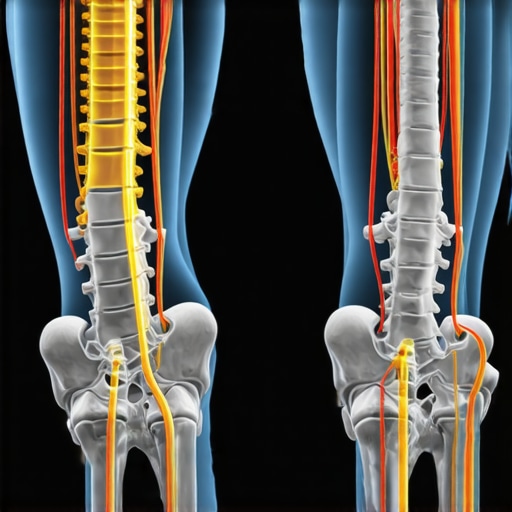
Why does my neck still click even if my posture is perfect?
This is a question I get from the most dedicated patients. They’ve adjusted their monitors and started the exercises, yet the ‘gravel’ sound remains. Often, this is due to ‘crepitus,’ but more specifically, it’s about the timing of your deep neck stabilizers. A study published in the Archives of Physical Medicine and Rehabilitation found that people with chronic neck pain often have a delayed ‘firing’ of their deep cervical flexors. When those muscles are late to the party, the larger, superficial muscles have to jerk the vertebrae into place, causing that sound. You might notice why your neck clicks when you turn your head to the left is more pronounced when you’re tired—that’s your neurological timing failing you, not necessarily a bone problem.
The trap of the self-adjustment
The most dangerous habit you can develop is the ‘self-crack.’ It feels like instant relief because of the endorphin rush, but you’re likely just moving the joints that are already too loose, while the stuck ones stay frozen. This creates a cycle of instability. Instead, you should focus on how to strengthen your deep neck flexors to provide the internal support your spine is craving. True relief comes from mastering back and neck pain relief tips from the pros rather than seeking a quick pop. Have you ever fallen into this trap of constantly stretching or self-cracking without getting lasting results? Let me know in the comments.Once you stop the cycle of constant self-cracking, you have to look at the environment that broke you in the first place. I used to think a $1,000 chair would solve my life, but I learned the hard way that a fancy seat is just a high-end cage if you don’t know how to use it. I started focusing on high-leverage tools that actually change the neurological input to my brain. For me, that meant finally admitting that why your pillow choice matters more as you age isn’t just marketing—it’s about maintaining that cervical curve for eight hours while your brain is offline. I switched to a contoured medical-grade foam that supports the neck without pushing the head forward, and the ‘clunk’ I mentioned earlier began to fade. If you’ve just had work done, knowing the best way to sleep after a chiropractic adjustment is the difference between waking up refreshed or waking up in a flare-up.
How a Better Pillow Changes the Game
It’s not about the fluffiness; it’s about the structural integrity. When your head falls out of alignment at night, your muscles spend hours fighting to keep your airway open and your nerves protected. This is why I now recommend pillows that allow for both side and back sleeping without forcing the neck into a ‘vulture’ tilt. But maintenance doesn’t stop at the bedroom door. I realized my car was a torture chamber on wheels. Learning how to set up your car seat for a four-hour road trip changed my commute from a source of dread to a time for passive recovery. I added a small lumbar roll and tilted the base of my seat to ensure my hips were higher than my knees, which immediately took the pull off my lower neck. 
How do I keep my spine happy on a busy schedule?
You don’t need a two-hour gym session; you need ‘movement snacks.’ The Cornell Ergonomics Web, led by Dr. Alan Hedge, emphasizes that static posture is the enemy, no matter how ‘correct’ it is. He advocates for the 20-20-20 rule, which I’ve modified for my own life: every 20 minutes, I stand up, look 20 feet away, and do three deep breaths into my belly. This is the secret to walking without lower back fatigue even when you’ve been sitting all morning. By implementing revitalize your mobility: proven strategies for back pain relief, you’re training your nervous system to stay fluid rather than freezing into a block of ice.
AI Posture Checks and the Future of Spine Health
We are moving into an era where wearables will do the heavy lifting for us. I’ve been experimenting with biofeedback sensors that vibrate when my shoulders creep toward my ears. It’s annoying at first, but it builds a map in your brain of where ‘home’ should be. This is the next level of unlocking neck pain relief: expert tips for lasting comfort. In the next five years, I predict our phones will use LiDAR to scan our workstations and give us real-time ergonomics scores. Until then, you have to be your own advocate. Don’t wait for the pain to return to check your alignment. Try this today: Move your monitor up exactly two inches higher than you think it needs to be, and see how your jaw feels by 5:00 PM. I bet the tension vanishes.I spent three years convinced that my cervical spine was permanently damaged. I bought every ergonomic gadget under the sun, from kneeling chairs to those weird curved pillows that look like they belong in a space station. Every morning was the same: I’d wake up, feel that familiar “clunk” in my upper neck, and spend the next twenty minutes trying to stretch out a tension that felt like it was made of steel cables. It was exhausting. Then, quite by accident, I found myself clenching my teeth while trying to open a stubborn jar of pickles. The moment I let go, I felt a rush of warmth down my neck. It was my first clue that I’d been ignoring the real culprit right under my nose—or rather, right behind my cheeks.
Stop Chasing the Pain and Start Looking Higher
I made a massive mistake early on by assuming that where I felt the pain was where the problem lived. I’d spend hours on a foam roller, but why your neck hurts more when you are stressed usually has more to do with your bite than your vertebrae. I thought “more stretching” was the answer, but I was actually just irritating the nerves further. Today, I want to show you exactly how to break that cycle. We are going to look at the connection between your jaw tension and your top neck bone and use a simple, 10-second release that changes everything. It’s not about force; it’s about neurological permission. Have you ever felt like your neck was stuck in a vice no matter how much you massaged it?
Does a 10-second move actually work or is it just social media fluff?
It sounds like one of those “one weird trick” ads, doesn’t it? I was the biggest skeptic in the room. But when you realize that your jaw muscles (the masseters) are some of the strongest in your body, it makes sense. According to research from the Journal of Oral Rehabilitation, roughly 70% of people with jaw issues also report significant cervical spine pain. They are hard-wired together. If your jaw is stuck in “fight or flight” mode, your neck doesn’t stand a chance. By using neck pain no more strategies that target the trigeminal nerve, we can force the system to reboot. We aren’t just masking symptoms; we are hitting the reset button on the whole mechanism.
Find the Master Switch in Your Jaw
Think of your jaw as the main circuit breaker for your upper body. When you clench, you aren’t just working your face muscles; you are sending a signal to your brain that says, ‘We are under attack.’ The brain responds by tightening the protective sheath of muscles around your cervical spine. This is why you can’t just stretch your way out of a stiff neck. You have to flip the breaker first. To do this, find the spot where your jaw meets your skull, just in front of your earlobes. If you open and close your mouth, you’ll feel a slight hinge movement. This is the TMJ, and for most of us, it’s as hard as a rock.
The 10-Second Release You Can Do Anywhere
This isn’t a deep tissue massage; it’s a neurological reset. Take your index and middle fingers and place them on that hinge point. Open your mouth just enough so your teeth aren’t touching—about the width of a pencil. Apply very light pressure—no more than the weight of a nickel—and make tiny, slow circles. While you do this, focus on the 10-second breath fix for rib pain, inhaling through your nose and exhaling with a soft ‘whoosh’ through your lips. I remember doing this while stuck in a three-hour traffic jam on I-80. My neck was screaming, and I was white-knuckling the steering wheel. I forced myself to drop my jaw and do these light circles for ten seconds. The ‘clunk’ I usually felt in my neck didn’t vanish instantly, but the throbbing behind my eyes cooled down immediately. It gave my nervous system permission to relax. #IMAGE_PLACE_HOLDER_B#
Look Straight Ahead to Save Your Spine
Once you’ve addressed the jaw, you have to stop the behavior that’s triggering the tension in the first place. Most of us treat our necks like a crane, constantly leaning forward to peer into screens. When you tilt your head even thirty degrees forward, the effective weight of your head on your neck jumps from 12 pounds to nearly 40 pounds. It’s no wonder your muscles feel like they are fraying. You need to stop tilting your head the right way to use your phone by bringing the device to your eye level rather than dropping your chin to your chest.
Adjust Your Digital Environment
If you spend eight hours a day at a desk, your environment is your destiny. If your screen is too low, you will slouch. There is no amount of willpower that can overcome a poorly placed monitor. Learn how to adjust your monitor to avoid eye and neck strain so that the top third of the screen is at eye level. This simple shift prevents the ‘vulture’ posture that keeps your masseter muscles engaged and your neck in a constant state of emergency.
The String Analogy for Instant Alignment
Imagine there is a silver string attached to the very crown of your head, pulling you gently toward the ceiling. Not your forehead, but the back of your skull. When you ‘lift’ from that point, your chin naturally tucks in slightly, and your jaw softens. This is the core of effective neck pain management. You aren’t forcing a position; you are lengthening the space between your vertebrae. If you struggle with this, it might be time to look at chiropractic secrets to boost neck comfort and function to ensure your joints are actually moving well enough to allow for that alignment. When the bones are stuck, the muscles will never stay relaxed.Let’s dig deeper into why these problems persist even after you’ve bought the fancy chair and done your daily stretches. Most people assume that ‘stiff’ always equals ‘needs more stretching.’ This is a huge mistake. In my experience, if your neck is hypermobile—meaning the ligaments are a bit loose—your muscles will actually lock down to protect the spinal cord. If you keep stretching those muscles, you’re essentially ripping the Band-Aid off a wound that’s trying to heal. You need to focus on stability, not just flexibility. This is a core part of unlocking neck pain relief with essential chiropractic tips for 2025. Aggressive stretching can be just as counterproductive as why your foam roller might be hurting your lower back if applied to the wrong type of injury.
Stop chasing the symptom and check the foundation
The biggest ‘Oops’ factor I see with advanced cases is focusing solely on the cervical spine while ignoring the feet. It sounds counterintuitive, but your body is a single kinetic chain. This is why we look at your feet to solve your neck issues; if your arches are collapsing or your gait is off, your head has to work ten times harder to stay level. If your base is tilted, no amount of neck massage will fix the tilt at the top. I once spent months trying to fix a ‘crick’ that was actually being caused by a worn-out pair of running shoes. #IMAGE_PLACE_HOLDER_C#
Why does my neck still click even if my posture is perfect?
This is a question I get from the most dedicated patients. They’ve adjusted their monitors and started the exercises, yet the ‘gravel’ sound remains. Often, this is due to ‘crepitus,’ but more specifically, it’s about the timing of your deep neck stabilizers. A study published in the Archives of Physical Medicine and Rehabilitation found that people with chronic neck pain often have a delayed ‘firing’ of their deep cervical flexors. When those muscles are late to the party, the larger, superficial muscles have to jerk the vertebrae into place, causing that sound. You might notice why your neck clicks when you turn your head to the left is more pronounced when you’re tired—that’s your neurological timing failing you, not necessarily a bone problem.
The trap of the self-adjustment
The most dangerous habit you can develop is the ‘self-crack.’ It feels like instant relief because of the endorphin rush, but you’re likely just moving the joints that are already too loose, while the stuck ones stay frozen. This creates a cycle of instability. Instead, you should focus on how to strengthen your deep neck flexors to provide the internal support your spine is craving. True relief comes from mastering back and neck pain relief tips from the pros rather than seeking a quick pop. Have you ever fallen into this trap of constantly stretching or self-cracking without getting lasting results? Let me know in the comments.Once you stop the cycle of constant self-cracking, you have to look at the environment that broke you in the first place. I used to think a $1,000 chair would solve my life, but I learned the hard way that a fancy seat is just a high-end cage if you don’t know how to use it. I started focusing on high-leverage tools that actually change the neurological input to my brain. For me, that meant finally admitting that why your pillow choice matters more as you age isn’t just marketing—it’s about maintaining that cervical curve for eight hours while your brain is offline. I switched to a contoured medical-grade foam that supports the neck without pushing the head forward, and the ‘clunk’ I mentioned earlier began to fade. If you’ve just had work done, knowing the best way to sleep after a chiropractic adjustment is the difference between waking up refreshed or waking up in a flare-up.
How a Better Pillow Changes the Game
It’s not about the fluffiness; it’s about the structural integrity. When your head falls out of alignment at night, your muscles spend hours fighting to keep your airway open and your nerves protected. This is why I now recommend pillows that allow for both side and back sleeping without forcing the neck into a ‘vulture’ tilt. But maintenance doesn’t stop at the bedroom door. I realized my car was a torture chamber on wheels. Learning how to set up your car seat for a four-hour road trip changed my commute from a source of dread to a time for passive recovery. I added a small lumbar roll and tilted the base of my seat to ensure my hips were higher than my knees, which immediately took the pull off my lower neck. #IMAGE_PLACE_HOLDER_D#
How do I keep my spine happy on a busy schedule?
You don’t need a two-hour gym session; you need ‘movement snacks.’ The Cornell Ergonomics Web, led by Dr. Alan Hedge, emphasizes that static posture is the enemy, no matter how ‘correct’ it is. He advocates for the 20-20-20 rule, which I’ve modified for my own life: every 20 minutes, I stand up, look 20 feet away, and do three deep breaths into my belly. This is the secret to walking without lower back fatigue even when you’ve been sitting all morning. By implementing revitalize your mobility: proven strategies for back pain relief, you’re training your nervous system to stay fluid rather than freezing into a block of ice.
AI Posture Checks and the Future of Spine Health
We are moving into an era where wearables will do the heavy lifting for us. I’ve been experimenting with biofeedback sensors that vibrate when my shoulders creep toward my ears. It’s annoying at first, but it builds a map in your brain of where ‘home’ should be. This is the next level of unlocking neck pain relief: expert tips for lasting comfort. In the next five years, I predict our phones will use LiDAR to scan our workstations and give us real-time ergonomics scores. Until then, you have to be your own advocate. Don’t wait for the pain to return to check your alignment. Try this today: Move your monitor up exactly two inches higher than you think it needs to be, and see how your jaw feels by 5:00 PM. I bet the tension vanishes.
The Hardest Lesson I Learned While Chasing Neck Relief
After years of frustration, I finally realized that my body isn’t a collection of separate parts; it’s a single, interconnected web. One of the biggest eye-openers was learning how to tell if your headache is starting in your neck. I used to pop ibuprofen for ‘tension headaches,’ never realizing my jaw was pulling on my cervical spine, which in turn sent referred pain to my temples. Another ‘lightbulb moment’ was accepting that stability often trumps flexibility. I stopped trying to stretch my way out of pain and started focusing on building the internal support my spine actually needed. Finally, I learned that stress doesn’t just ‘happen’ in your head—it lives in your masseters. If you don’t address the physical manifestation of that stress, your neck will remain on the defensive forever.
#IMAGE_PLACE_HOLDER_E#
My Go-To Tools for a Tension-Free Life
Maintaining a healthy spine doesn’t require a complete lifestyle overhaul, but it does require the right equipment. First and foremost, I became a stickler for my sleep environment. I learned the hard way that why your pillows should be replaced every eighteen months isn’t just a suggestion—it’s a requirement for maintaining the structural integrity of your neck while you sleep. I also swear by the 20-20-20 rule for desk workers and neck health; it’s the simplest, most effective way to prevent the ‘vulture’ posture from setting in during a long workday. Lastly, I keep a simple tennis ball in my desk drawer to release the muscles under my shoulder blades whenever I feel that familiar heaviness creeping in. These aren’t just gadgets; they are my baseline for staying mobile.
Take Back Control of Your Comfort Today
You don’t have to live in a state of constant ‘clunking’ and stiffness. The journey from chronic pain to fluidity starts with a single change in how you view your body’s signals. Whether it’s adjusting your monitor, releasing your jaw, or seeking professional help, every step matters. I’ve seen firsthand how back pain recovery: how chiropractic care transforms lives by resetting the neurological patterns that keep us stuck in pain loops. Don’t wait for a crisis to start listening to your neck. Start today by dropping your jaw, taking a deep breath, and giving yourself permission to relax. Have you ever noticed that your neck pain gets worse when you’re stressed or clenching your teeth? Let me know in the comments below!