The 20-20-20 Rule for Desk Workers and Neck Health
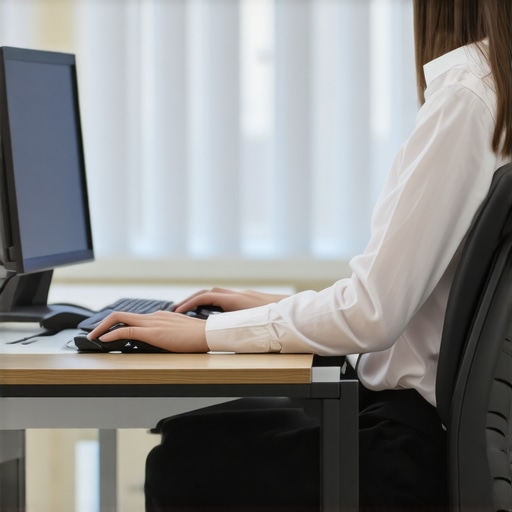
I remember the afternoon my neck finally staged a full-blown revolt. I was deep into a spreadsheet, my nose practically touching the screen, when I tried to look up to check the time. A sharp, hot needle of pain shot from the base of my skull right down to my shoulder blade. I didn’t just feel stiff; I felt brittle, like a piece of old parchment that might crumble if I moved too fast. This wasn’t some dramatic sports injury. It was the slow, agonizing result of six hours of uninterrupted screen time. If you’ve ever felt like your head weighs a hundred pounds by 3 PM, you know exactly the ‘tech neck’ prison I’m talking about. Today, I’m sharing the dead-simple habit that actually works to break that cycle—the 20-20-20 rule—and why your spine is begging you to start it right now. [image placeholder]
The invisible weight of your digital life
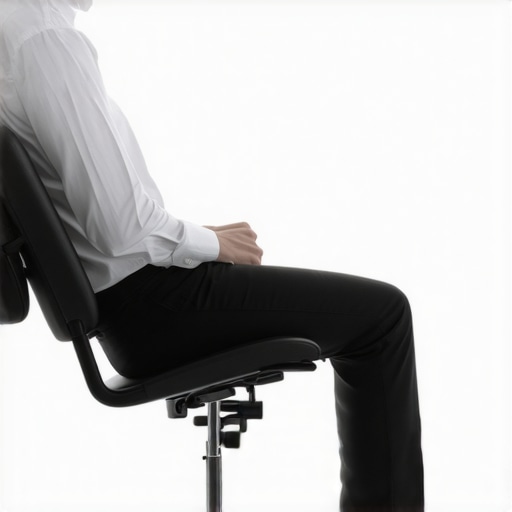
I used to be the guy who thought breaks were for people who didn’t have real deadlines. I’d power through the dull ache, thinking a standing desk or an expensive ergonomic chair would save me. But here is the hard truth: no piece of furniture can fix the fact that we aren’t built to be statues. When we stare at a screen, we blink less and our muscles lock into a forward-leaning ‘C’ shape. I made the mistake of ignoring the signals until my neck started clicking every time I looked left. Research from the Mayo Clinic confirms that digital eye strain and the accompanying muscle fatigue are more than just an annoyance; they are a systemic stressor on your body. Setting a simple timer for a 30-second reset for tech neck fatigue is the only way to tell your nervous system to stand down.
Is a 20-second break actually enough to help?
I’ll be honest: early on, I was skeptical too. I thought, ‘How is looking at a tree for 20 seconds going to fix years of bad posture?’ But the 20-20-20 rule—looking at something 20 feet away for 20 seconds every 20 minutes—isn’t about building muscle; it’s about breaking the postural spell. It forces your eyes to refocus and your neck to reset its center of gravity. When I skipped these micro-breaks, I ended up needing chiropractic secrets to boost neck comfort just to get through a Monday. Have you ever felt that specific, heavy fatigue where your eyes burn and your shoulders feel like they are up by your ears? Let me know in the comments if you’ve ever actually tried to set a timer for your desk breaks, or if you just wait for the pain to start.
Stop treating your monitor like a magnet
The biggest shift for me happened when I realized my monitor was acting like a giant magnet, pulling my chin forward and crushing my cervical discs. I spent so much time worrying about my chair that I forgot how to adjust my monitor to avoid eye and neck strain properly. The 20-20-20 rule serves as a physical ‘reboot’ button. It reminds you to pull your head back over your shoulders, which is a foundational part of protecting your spinal health. It’s the easiest way to stay mobile when you have a desk job without having to leave your office. It’s not about doing more; it’s about doing less, more often.
Stop trusting your internal clock
I used to think I had a superhuman ability to focus, but my spine knew the truth. Your brain is a liar when it is deep in a task; it will convince you that you are perfectly fine until your neck feels like it is being crushed by a hydraulic press. I learned this the hard way during a massive project last year. I spent eight hours straight ‘in the zone,’ only to find that when I finally stood up, my mid-back felt like it had been fused into a single, solid brick. This is why effective neck pain management requires a system that removes the choice from your hands. You need a physical trigger. For me, it was a loud, mechanical egg timer I placed across the room. To turn it off, I literally had to break my posture and walk away from the desk. It was annoying as hell, but it was the only way to stop the ‘C’ shape from becoming permanent. 
Pick a target that isn’t a pixel
The core of the 20-20-20 rule is simple: every 20 minutes, look at something 20 feet away for 20 seconds. But don’t just glance at the wall. Your eyes are connected to the muscles at the base of your skull. When your eyes lock onto a close-range screen, those suboccipital muscles tighten up like a clenched fist. To truly reset, you need to find a ‘long-range’ target—a tree out the window, a clock down the hallway, or even a picture on the far wall. This shift in focal length tells your nervous system to relax. If you find yourself leaning in even when you are on a break, you should perform the 5-second check to see if your monitor is too low, because your environment might be sabotaging your recovery.
Don’t just stare—move your skeleton
Those twenty seconds are the perfect window for a mini-rebellion against gravity. Think of your spine like a metal spring; if you keep it compressed for hours, it loses its ability to bounce back. While your eyes are focused on that distant target, do a simple chin tuck or a shoulder roll. I started incorporating the 10-second stretch for people who type all day right into my 20-second window. It felt awkward at first, standing in my home office and pulling my shoulder blades back while staring at a neighbor’s chimney, but the relief was instant. Most people fail because they try to maintain a ‘perfect’ rigid posture all day, but why your perfect posture is actually making you stiff is because of a lack of movement, not a lack of straightness.
Consistency beats intensity every single time
The biggest mistake I made was trying to make up for hours of sitting with one long gym session at night. It doesn’t work that way. Your tissues thrive on frequent, low-intensity changes. When I finally committed to the 20-20-20 rule, the ‘clicking’ in my neck began to subside because I wasn’t letting the tension build to a breaking point. For those of us living behind a desk, mastering back and neck pain relief isn’t about one big fix; it’s about these tiny, rhythmic interruptions that keep your joints lubricated and your muscles from locking down. If you can’t remember to do it, use an app or a sticky note on your bezel, but whatever you do, stop letting the screen win.If you’ve been following the 20-20-20 rule but still find your neck screaming at you by Friday, we need to talk about the ‘Postural Rigidity Trap.’ Most ergonomic experts tell you to sit with 90-degree angles at your hips and elbows, but why your perfect posture is actually making you stiff comes down to a lack of micro-variability. In my experience, a ‘perfect’ posture held for three hours is far more damaging than a ‘bad’ posture that changes every ten minutes. Muscles were designed to pump blood through movement, not to act as structural steel beams. When you try to force that military-straight spine, you’re actually creating a state of chronic muscle ischemia—essentially starving your tissues of oxygen. A study published in the Journal of Applied Ergonomics highlights that ‘postural variability’ is more effective at reducing discomfort than any single ergonomic setup. 
The dangerous myth of just stretching it out
When the pain hits, our first instinct is to pull our head to the side or crack our own neck. This is the biggest ‘oops’ factor I see in my clinic. Often, the area that hurts is already over-stretched and unstable because it’s compensating for a frozen mid-back or even poor pelvic alignment. This is the hidden link between neck pain and spinal health that many people miss. If you keep stretching an already loose joint, you’re just inviting a more severe spasm later. Instead, boost mobility and ease pain with chiropractic techniques that address the joint restriction, not just the muscle symptom. Have you ever fallen into this trap of stretching a sore spot only to have it feel tighter an hour later? Let me know in the comments.
Why does my neck hurt when the problem is in my shoes?
It sounds like a reach, but your body is a kinetic chain. This is a nuance that separates beginners from those truly overcoming chronic neck discomfort. I’ve seen patients whose chronic migraines were actually caused by a collapsed arch in their left foot, which forced their opposite shoulder to drop and their neck to tilt to compensate. It’s exactly why we look at your feet to solve your neck issues. If your foundation is slanted, the ‘attic’ (your head) will never be level. Another advanced mistake is ignoring the jaw; the connection between your jaw tension and your top neck bone is so tight that you often cannot fix one without the other. To get lasting results, you have to stop looking at your neck as an isolated island and start seeing it as the final link in a chain that starts at your toes.I spent years thinking a $1,000 chair was the ultimate answer to my desk-bound agony, but the real breakthrough came from a $20 piece of dense foam and a commitment to movement variability. The foam roller in my corner isn’t just a dust collector; it’s my primary tool for thoracic extension, which is the literal antidote to the ‘C-shape’ posture we discussed. However, most people use it as a torture device rather than a mobility tool. You have to stop rolling your lower back, as that area is designed for stability, not extreme range. Instead, I focus on knowing the proper way to use a foam roller on your upper back to unlock the joints that get frozen from hours of typing. I’ve seen so many patients in my clinic accidentally aggravate their lumbar spine because they don’t realize why your foam roller might be hurting your lower back when used without targeted control. 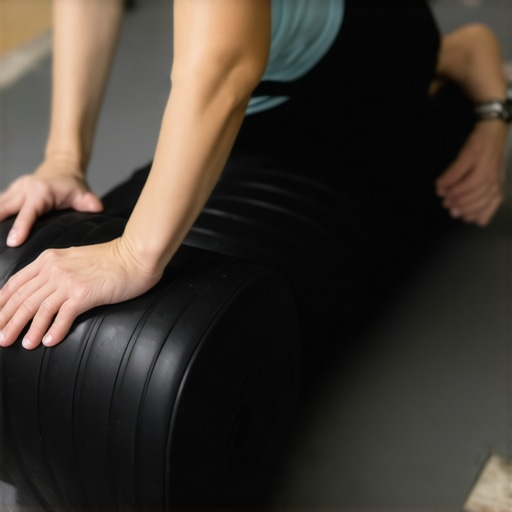
Ditch the fancy gadgets for a simple wedge
If you’re looking for a tool that actually changes your life, look at your feet. I personally use a cork squat wedge and minimal footwear because your foundation dictates your neck’s tension. I eventually realized why walking in flat shoes might be worsening your alignment, especially on hard office floors. A study in the Journal of Physical Therapy Science found that even slight changes in foot positioning can significantly alter the activity of the upper trapezius muscles. This is why I recommend a simple ‘toe-pro’ or a balance beam for my clients. It’s not about the neck; it’s about the nervous system receiving a stable signal from the ground up. If your feet are weak, your neck will always be tight as it tries to ‘anchor’ your balance from the top down.
How do I maintain my mobility without a daily hour-long routine?
Consistency is the only currency that matters in spinal health. I don’t spend an hour stretching every day; I spend three minutes, five times a day. This is how you restore your range and see how chiropractic care enhances movement over the long haul. You have to weave these resets into your existing life—like doing a doorway stretch every time you go to the kitchen. My prediction for the next decade is a massive shift toward wearable biofeedback. We are already seeing prototypes of smart shirts that gently vibrate when your suboccipital muscles hit a certain tension threshold. Until that tech is perfected, you are your own best sensor. To truly unlock neck pain relief with essential chiropractic tips for 2025, you have to stop waiting for the pain to tell you when to move. Try this today: set a timer for the next 45 minutes, and when it goes off, perform a single 10-second thoracic bridge against your chair. That one action is more powerful than a week of ‘perfect’ posture.
The Hard Truths About Living at a Desk
Over the years, I’ve realized that the ‘perfect’ chair is largely a marketing myth. The most expensive ergonomic setup won’t save you if you stay frozen in place for four hours. I learned the hard way that movement is the only true medicine for a desk-bound spine. One of my biggest lightbulb moments was discovering that my persistent headaches weren’t just from my monitor; they were connected to how I used my feet. This realization is why we look at your feet to solve your neck issues in a clinical setting. Another lesson: pain is usually the last symptom to show up and the first to leave. Just because the ache is gone doesn’t mean the underlying tension is resolved. You have to keep moving even when you feel ‘fine’ to ensure you are truly overcoming chronic neck discomfort rather than just masking it.
Tools That Keep Me from Cracking
I don’t believe in over-complicating things with expensive gadgets. My personal toolkit is actually quite low-tech. First, I swear by a simple mechanical egg timer; it’s the only way to ensure I actually follow the 20-20-20 rule without getting distracted by phone notifications. Second, I always keep a tennis ball nearby for quick ‘spot treatments’ between meetings. Learning how to use a tennis ball to fix that spot under your shoulder blade can be a total game-changer for mid-day relief. Lastly, I transitioned to minimalist footwear in the office. It sounds counterintuitive, but understanding why walking in flat shoes might be worsening your alignment helped me realize that my neck tension was actually a ground-up stability issue.
Take Back Your Spine One Minute at a Time
You don’t need to quit your job or spend hours in a gym to feel human again. Your body is incredibly resilient; it just needs a few rhythmic interruptions to remind it that it’s not a statue. By committing to these small resets, you are actively choosing a future where your desk doesn’t dictate your health. As you look toward the coming year, remember that you can unlock neck pain relief with essential chiropractic tips for 2025 by focusing on consistency over intensity. Start today by looking at that tree outside your window for just twenty seconds. Your spine—and your sanity—will thank you for it. Have you ever tried the 20-20-20 rule for a full day, and did you notice a difference in your energy levels? Let me know in the comments!