The connection between your jaw tension and your top neck bone
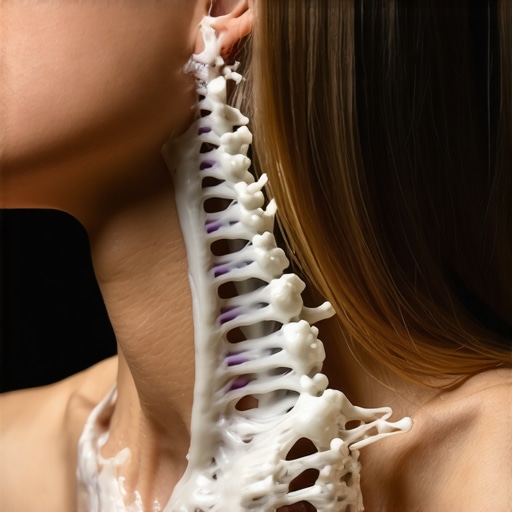
I woke up last Tuesday feeling like I’d spent the night chewing on granite. My jaw was locked, my temples were throbbing, and my neck felt like a rusted hinge. For a long time, I did what most of us do: I massaged my masseters until my fingers hurt and popped ibuprofen like they were mints. But then it hit me. Every time my jaw felt this tight, that spot right under my ear—the very top of my neck—was tender to the touch. It wasn’t two separate problems. It was one system failing together.
Stop Rubbing Your Jaw and Check Your Atlas
Most people treat jaw pain as an isolated incident. They get a mouthguard, they stop chewing gum, and they hope for the best. I made that same mistake for years. I spent a small fortune on dental appliances while completely ignoring the fact that why your jaw clicking is actually a neck problem is a fundamental biological truth. Your jaw sits on a platform, and that platform is your cervical spine. If your top neck bone, the Atlas, is even slightly out of alignment, your jaw muscles have to compensate. They tighten up just to keep your head level. Today, I want to show you how to break this cycle. We aren’t just looking at the surface; we’re looking at the mechanical link that dictates how you breathe, chew, and move. If you’ve ever felt like your headache is starting in your neck, you’re already halfway to the truth.
Is it possible my jaw is actually fine?
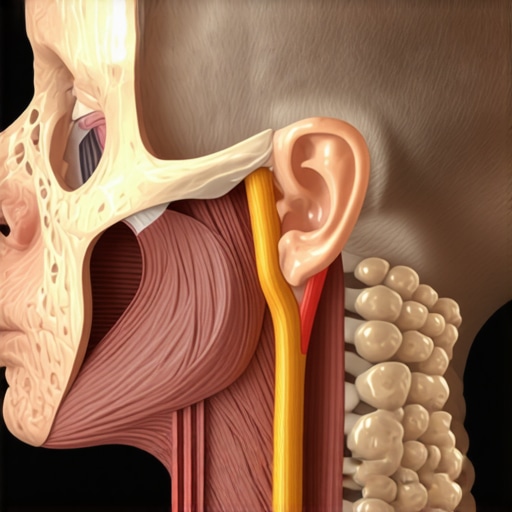
It’s a fair question. It feels like the jaw is the villain because that’s where the pain screams the loudest. But here is a surprising fact: researchers have found that the nerves for your jaw and the nerves for your upper neck actually meet in the same place in your brainstem, called the trigeminocervical nucleus. This means your brain can literally get confused about where the pain is coming from. According to a study in the Journal of Oral Rehabilitation, people with jaw disorders are significantly more likely to have restricted movement in their upper neck bones. I wasted so much time focusing on the scream and ignoring the whisper of my spine. When I finally started focusing on the connection between your jaw tension and neck mobility, everything changed. The headaches faded, and the granite-chewing feeling finally stopped. Have you ever noticed that your jaw gets tighter right when your neck starts to feel stiff?
Reset Your Jaw by Stabilizing the Top of Your Spine
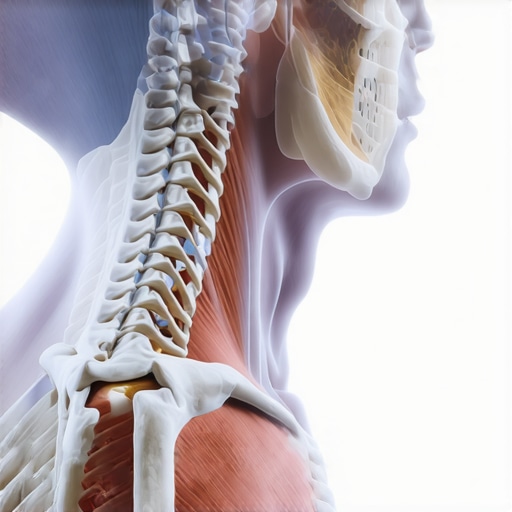
To fix a clicking or tight jaw, you have to stop thinking about your mouth and start thinking about your ‘foundation.’ Think of your jaw like a heavy gate hanging on a fence. If the fence post—your upper neck—is leaning even a fraction of an inch, that gate will never swing smoothly. It will grind, stick, and eventually break. Most people spend hundreds of dollars on mouthguards that only treat the ‘grinding’ without ever straightening the ‘post.’ When I first tried to solve my own TMJ issues, I spent weeks doing aggressive jaw stretches. I remember one specific Tuesday afternoon where I forced my mouth open so wide I heard a crack that echoed in my skull. I couldn’t chew solid food for two days. That mess taught me a hard lesson: the jaw is a victim, not the culprit. The real work happens at the Atlas, the C1 vertebra that carries the entire weight of your head. 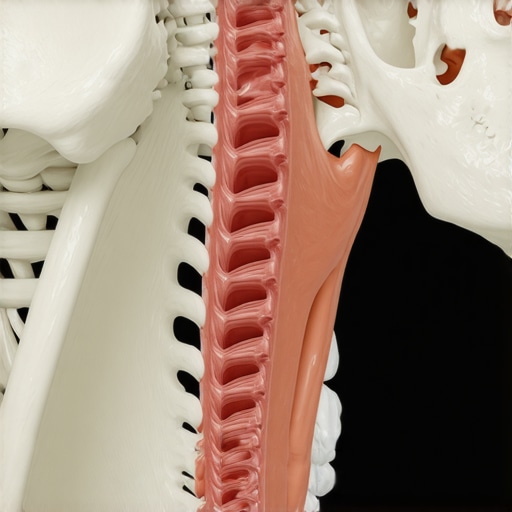
Think of Your Atlas as the Foundation of Your Face
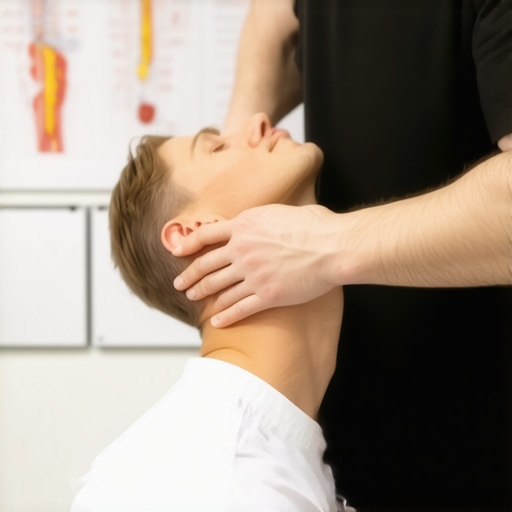
Your Atlas is the master pivot point. If it’s tilted, your brain will subconsciously shift your jaw to keep your eyes level with the horizon. This constant micro-adjustment is what creates that ‘granite-chewing’ tension. To begin the healing process, you need to understand the hidden link between neck pain and spinal health. When the Atlas is out of place, it irritates the nerves that control the muscles of mastication. Instead of rubbing the muscle, you need to reduce the nerve irritation. I found that by incorporating mobility mastery expert tips for back pain prevention and recovery, I could finally get the top of my spine to relax, which allowed my jaw to ‘drop’ into its natural position for the first time in years.
The Mirror Test That Reveals Your Real Alignment
You can see this mechanical failure in real-time. Stand in front of a mirror and look at your earlobes. Is one higher than the other? Now, look at your jawline. Does it seem to shift to one side when you open your mouth? This isn’t a dental fluke; it’s a sign that your cervical spine is forcing a compensation. This is why the 10-second posture check you can do anywhere is so vital. If your head is jutting forward, you are putting a 30-pound strain on the muscles that should be helping you chew. I used to catch myself jutting my chin toward my laptop screen, unaware that why your screen height is the real cause of your headaches was also the reason my teeth were constantly clenched.
Why Your Screen Height is Secretly Clenching Your Teeth
We live in a ‘forward-head’ world. When you stare down at a phone or a low monitor, you change the length-tension relationship of your neck muscles. This pulls back on the mandible, forcing your jaw to work twice as hard just to close properly. To break this, you must implement the 30-second reset for tech neck fatigue throughout your day. By bringing the head back over the shoulders, you take the ‘leverage’ off the jaw joints. It’s like taking a heavy backpack off; suddenly, everything feels lighter and moves more freely.
Stop Yanking on Your Tight Muscles
We’ve been conditioned to believe that if a muscle feels tight, we should pull on it until it gives up. I see this every week: someone comes in with a ‘tight’ neck or lower back and spends twenty minutes a day on a yoga mat trying to force their body into submission. But here is the contrarian truth: your brain makes those muscles tight for a reason. Often, that ‘tightness’ is actually a protective neurological brake. If your Atlas is unstable or your pelvis is tilted, your nervous system will lock down the surrounding muscles to prevent you from injuring your spinal cord. This is exactly why stretching a tight muscle isn’t always the answer. When you aggressively stretch a muscle that is trying to stabilize a weak joint, you aren’t fixing the problem; you’re actually stripping away your body’s last line of defense. 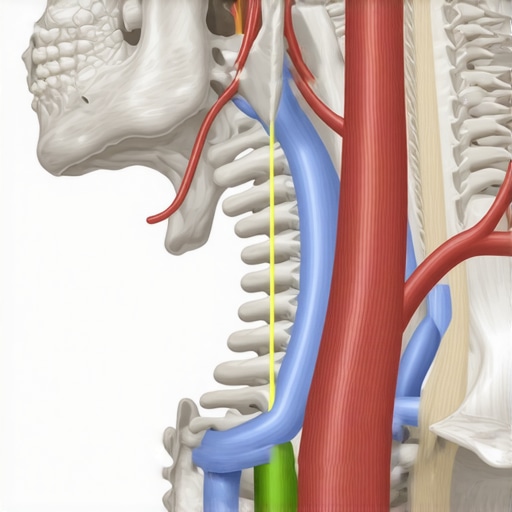
Why Does Stretching Feel Good if It’s Not the Answer?
It’s the most common question I get from patients who are skeptical of this approach. The answer lies in the ‘stretch reflex’ and a temporary dopamine hit. When you stretch, you stimulate sensory receptors that momentarily override the pain signals, giving you a 15-minute window of relief. However, because the underlying spinal misalignment hasn’t been addressed, the brain will inevitably reactivate the ‘brake,’ and the tightness will return—often worse than before. A study published in the Journal of Bodywork and Movement Therapies highlights that muscle hypertonicity is frequently a secondary compensation for joint instability rather than a primary muscular issue. You have to learn the difference between muscle soreness and spinal pain to stop chasing the wrong symptoms.
The High Cost of Trying to Be Perfectly Upright
Another sophisticated trap is the ‘Military Posture’ myth. We are told to pull our shoulders back and puff our chests out to achieve ‘perfect’ alignment. In reality, this forced rigidity can be just as damaging as slouching. When you force a posture that your spine isn’t ready for, you create massive amounts of internal tension. This is why your perfect posture is actually making you stiff. True mobility isn’t about holding a static position; it’s about the ability of your joints to move through their full range without interference. To achieve this, you must enhance mobility naturally with chiropractic care, which focuses on the structural foundation rather than just the outward appearance. When the Atlas and the rest of the spine are properly aligned, ‘good posture’ happens effortlessly because the muscles are no longer fighting a losing battle against gravity. We need to stop looking at the jaw or the shoulders as isolated parts and start respecting the hidden link between neck pain and spinal health. Have you ever fallen into the trap of stretching a muscle for weeks only to have it feel tighter than ever? Let me know in the comments.
The Three-Dollar Tool That Saved My Morning Neck Stiffness
I spent years buying $100 pillows that promised the world but delivered nothing but a sore throat. Then I discovered the ‘cervical roll.’ It’s essentially a firm foam cylinder you slide into your pillowcase. I actually prefer the DIY version: a rolled-up beach towel secured with rubber bands. It provides specific support to the curve of your neck without pushing your head forward into that dreaded tech-neck position. If you’ve struggled with uncomfortable car seats during your morning commute, you can even learn how to use a rolled-up towel to fix your cars lumbar support to keep that alignment consistent while you drive. This small adjustment ensures your Atlas isn’t being shoved out of place before you even get to the office.
How I Automated My Posture Without Thinking
I’m a nerd for efficiency, so I use an app called ‘Stretchly.’ It’s an open-source tool that forces a ‘micro-break’ every 10 minutes. During those 20 seconds, I don’t just stare at the wall; I do the 5-minute desk reset for busy professionals in bite-sized chunks. Dr. Stuart McGill, a world-renowned spine biomechanics expert, argues in his book Back Mechanic that spinal hygiene is about managing the ‘cumulative load’ we put on our discs. By breaking up the sitting time, I’m lowering that load before it reaches a breaking point. I also upgraded my monitor to a gas-spring arm that allows me to shift the height in seconds. This fluidity is a core part of the 4-point check for a healthier home office setup. I predict that in the next five years, we won’t even need these apps; your desk chair will likely have haptic sensors that gently vibrate when your spine drifts out of neutral.
Can I actually keep my spine young as I get older?
Maintaining your results isn’t about being perfect; it’s about being consistent. You need to view your spinal health like dental hygiene. You wouldn’t expect your teeth to stay clean if you only brushed once a month, right? To stay fluid, I swear by the 3-minute morning routine to lubricate your joints. It’s the first thing I do before my coffee. If you’ve had an accident or a sports mishap, you can use chiropractic secrets to regain full mobility after injury to get back on track. The key is to stop treating ‘maintenance’ as a chore and start seeing it as the fuel for your lifestyle. I want you to try one specific thing tomorrow: set a timer for 30 minutes, and every time it goes off, just perform a gentle chin tuck for five seconds. You’ll be shocked at how much lighter your jaw feels by 5 PM. We’re not just chasing a pain-free day; we’re looking for a pain-free decade by learning the best exercises to keep your spine young.
The Breakthrough Moments That Finally Stopped the Grinding
After years of trial and error, I realized that the jaw is effectively a slave to the position of the head. If your foundation is crooked, the gate will always swing poorly. One of the biggest lightbulb moments for me was realizing that symptoms like vertigo or lightheadedness were often linked to that same upper neck tension. If you are struggling with spatial awareness alongside your jaw clicking, it is worth learning how to tell if your dizziness is coming from your neck. I also learned to stop ignoring the sounds my body was making. That audible ‘pop’ is a signal; specifically, why your neck clicks when you turn your head to the left can give you a direct clue about which side of your Atlas needs the most attention. Finally, I discovered that the most powerful thing you can do is often nothing at all—simply letting the jaw ‘hang’ loose while focusing on your breath does more for your nervous system than any aggressive massage ever could.
Tools for Your Daily Structural Resilience
I don’t believe in buying every gadget on the market, but three specific tools changed my life. First is the works of Dr. Stuart McGill; his biomechanical approach to the spine is the gold standard for anyone serious about recovery. Second is the simple beach towel roll I mentioned earlier. As we get older, our spinal discs lose hydration and height, which is why your pillow choice matters more as you age. Using a custom roll allows you to adapt to your body’s changing needs without spending a fortune. Lastly, I highly recommend using a lumbar support even when you think you only have a ‘neck’ problem. Keeping your lower back supported automatically helps your head stay over your shoulders, so make sure you understand the correct way to use a lumbar roll in your office chair to keep your whole system in check.
Reclaim the Comfort Your Body Was Designed For
It is easy to feel like you are just ‘someone with a bad jaw’ or ‘someone with a stiff neck.’ But your body is incredibly resilient when you stop fighting its protective mechanisms and start supporting its structural design. By focusing on the Atlas and the overall alignment of your cervical spine, you aren’t just masking the noise; you are fixing the machine. As we look toward new developments in 2025, you can unlock neck pain relief essential chiropractic tips for 2025 to stay ahead of the curve. You don’t have to live with the ‘granite-chewing’ feeling forever. Start with the foundation, and the rest will follow. Have you ever noticed your jaw clicking specifically when you’ve been staring at a screen for too long? Let me know in the comments below.