How Your Vision Impacts Your Neck Position While Gaming
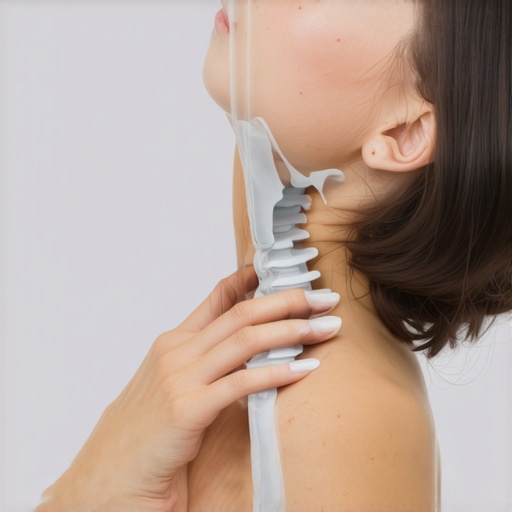
I’ll never forget the morning I woke up and realized I couldn’t actually look over my left shoulder to pull out of my driveway. It wasn’t an injury from the gym or a sudden accident; it was the cumulative result of a grueling, six-hour session of Elden Ring the night before. I had spent the entire night squinting at the fine details of boss patterns, subconsciously jutting my chin forward until my neck was practically touching the monitor. I felt like a human question mark, and the hidden link between neck pain and spinal health had never been more painfully obvious.
Your Eyes Lead and Your Neck Follows
The mistake I made early on—and it’s a big one—was assuming my $500 ergonomic chair would solve everything. I sat there with perfect lumbar support, yet my head was still three inches in front of my shoulders because I was “hunting” for pixels. Your body is a master of compensation; if your eyes are straining to see a tiny HUD or a low-contrast enemy, your neck muscles will tighten and pull your head forward to “help.” This is how you end up needing expert chiropractic solutions that work rather than just a better seat. We are going to solve this today by aligning your visual field with your natural spinal curves so you can play longer without the dreaded “crunch.”
Is specialized gaming gear actually worth the hype?
You might be skeptical, thinking you just need to “sit up straighter.” Trust me, I tried that for months, and it’s impossible to maintain when the game gets intense. It’s not about buying every “gamer” branded gadget; it’s about tactical adjustments. For example, learning how to adjust your monitor to avoid eye and neck strain is far more effective than just trying to use willpower alone. Have you ever felt that burning sensation between your shoulder blades after a long session? That’s your vision forcing your neck into a fight it can’t win. According to research in the Journal of Physical Therapy Science, visual fatigue is a primary driver of forward head tilt, as our brains prioritize visual clarity over postural integrity. If you’ve been struggling with this, you aren’t alone. Have you ever found yourself leaning closer to the screen during a boss fight without even realizing it? Before we dive into the hardware fixes, we need to understand the mechanics of this “visual-neck” loop. If we don’t, you’ll just keep searching for lasting comfort in all the wrong places.
Stop Looking Down at Your Digital World
To break the visual-neck loop, you have to treat your monitor height like a medical prescription. Most people have their screens far too low, which forces the cervical spine into a constant state of flexion. This isn’t just about ‘posture’; it’s about physics. I remember when I first tried the ‘Encyclopedia Stack’ method. I took three massive, dusty hardcover books and shoved them under my monitor stand until the top third of the screen was perfectly level with my eyes. It looked like a DIY disaster, but the relief was instant. For the first time in years, the ‘heavy’ feeling in my skull vanished because I wasn’t fighting gravity. Following an effective neck pain management a step-by-step guide starts with this zero-cost hardware tweak. If you find yourself leaning in, don’t move your neck—increase the UI scale or font size in your game settings instead. 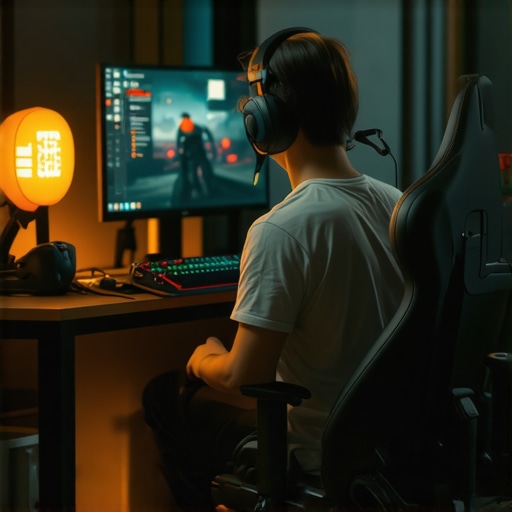
The Invisible Weight of Your Own Head
Think of your head as a 12-pound bowling ball. When it sits directly over your shoulders, your spine handles the load effortlessly. But for every inch you tilt your head forward to see a health bar or a chat box, you effectively double the weight your muscles have to support. By the time you’re hunched over, your neck is trying to hold up nearly 60 pounds of pressure. This is precisely why your neck muscles tighten during stress or intense focus. To combat this, implement a hard reset every 20 minutes. I use a simple haptic timer on my phone to remind me of the 20-20-20 rule for desk workers and neck health, which forces my eyes to refocus on the distance and lets my cervical stabilizers relax.
Why Your Shoulder Blades Burn Mid-Game
That searing heat between your shoulder blades isn’t a badge of honor; it’s your rhomboids and trapezius muscles screaming for oxygen. When you slouch, these muscles stay in a ‘long and weak’ position, losing blood flow. You can fix this mid-match by performing the scapular squeeze that relieves mid-back tension. Imagine you are trying to hold a pencil between your shoulder blades. Pull them back and down, hold for five seconds, and release. This simple reset moves the stress from your joints back onto your muscles, preventing that chronic ache. It’s a common reason why your shoulder blades feel like they’re burning after typing or gaming for long stretches.
Waking Up the Support System in Your Neck
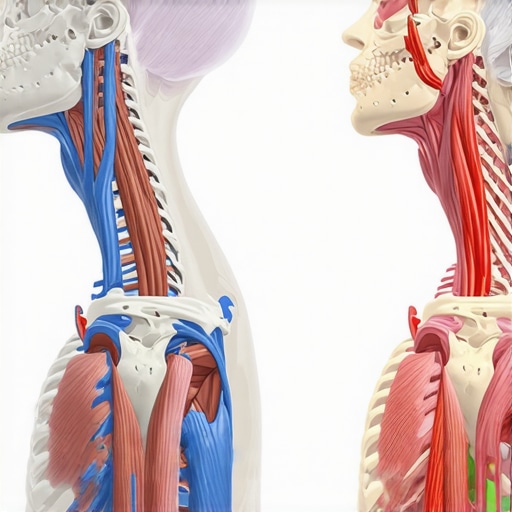
You have deep muscles in the front of your neck that are supposed to act like a ‘corset’ for your spine, but in most gamers, they are completely shut off. To wake them up, you need to learn how to strengthen your deep neck flexors. Sit tall, and without tilting your head up or down, gently tuck your chin back as if you’re making a ‘double chin.’ You’ll feel a subtle activation deep behind your throat. I do these during every loading screen. It keeps the spine stable so the superficial muscles don’t have to do all the heavy lifting, effectively ending the cycle of stiffness before it even begins.
The biggest mistake I see gamers make—and I made it myself for years—is believing that ‘good posture’ is a static position you can simply buy your way into. You can have the most expensive Herman Miller on the market, but if you’re trying to hold a rigid, military-straight spine for eight hours, you’re actually doing more harm than good. Willpower is a finite resource, and eventually, your nervous system will default to whatever path of least resistance helps you hit that headshot. This is where chiropractic secrets to boost neck comfort and function become more about movement than just alignment.
Stop Stretching the Muscles That Already Hurt
Here is a contrarian truth that most ‘ergonomic gurus’ get wrong: when your neck feels tight and your shoulders are burning, the last thing you should do is a long, aggressive stretch. When you are hunched over a keyboard, the muscles in the back of your neck and upper back are already being stretched to their absolute limit—they are ‘long and weak.’ Pulling on them even more just triggers a protective stretch reflex that makes them tighten up even harder. It’s a vicious cycle. Instead of stretching the back, you need to open up the front. Focus on the chest and the jaw to break the tension. If you ignore this, you’ll constantly wonder why your shoulder feels heavy after typing or gaming despite your best efforts at stretching.
Why does a standing desk often make neck pain worse?
I see this ‘oops’ factor all the time. People switch to a standing desk thinking it’s the holy grail of health, but they don’t realize that standing actually increases the demand on your core and spinal stabilizers. If those muscles aren’t ready, your body will compensate by locking your neck and jaw to create ‘fake’ stability. A study published in the Journal of Orthopaedic & Sports Physical Therapy (JOSPT) highlights that without proper deep neck flexor activation, the superficial muscles (the ones that cause those nasty knots) take over the job of holding your head up. This shift in load is a major reason why standing desks cause hip pain and how to fix it, as the strain cascades down your entire kinetic chain. If you’re standing but still leaning your chin toward the monitor, you’re just fatiguing yourself faster.
The Ice Myth and Your Recovery Speed
Another common trap is the immediate reach for the ice pack. While ice is great for a brand-new injury with visible swelling, using it for chronic, ‘gamer-neck’ stiffness can actually backfire. Chronic tightness is usually an issue of poor blood flow (ischemia), not inflammation. Cold constricts the vessels further, potentially slowing down the delivery of the nutrients your muscles need to repair. This is why icing isnt always the best move for a stiff neck that has been bothering you for weeks. Switching to moist heat can often provide more insights from top chiropractors on how to actually flush out the metabolic waste sitting in those tight tissues. We need to move away from ‘numbing’ the pain and start ‘feeding’ the muscle with movement and circulation. Have you ever fallen into the trap of stretching your neck only to have it feel tighter ten minutes later? Let me know in the comments, because once you stop that cycle, everything changes. By utilizing chiropractic techniques unveiled by experts, you can finally move from managing symptoms to actually regaining your full range of motion.
I spent years thinking a gaming chair was the final boss of ergonomics. It wasn’t. The real game-changer for me was ditching the static setup entirely for a heavy-duty gas-spring monitor arm. Why? Because your body wasn’t meant to be frozen in place. I adjust my screen height at least three times a day—higher when I’m leaning back to watch a cinematic, and perfectly eye-level when I’m focused on a competitive match. This constant micro-adjustment is a core part of how to revitalize your mobility proven strategies for back pain relief without ever leaving your desk. If you’re still waking up with a kink in your neck, you should also look at your sleep environment; I learned the hard way by ignoring these 5 signs your pillow is trapping your neck in a bad angle for far too long.
The Massage Gun Protocol I Actually Use
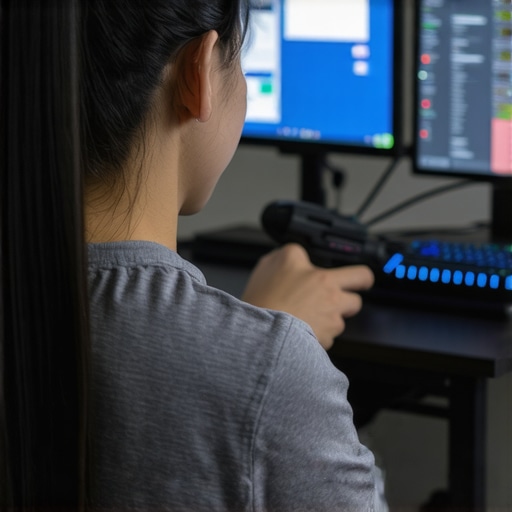
Everyone has a massage gun now, but most people use them like a blunt instrument. I don’t just smash the muscles that hurt. I use a targeted approach to hit the ‘upstream’ and ‘downstream’ connectors. I spend 30 seconds on my pectorals to pull my shoulders back and then 30 seconds on the base of my skull. It’s essential to learn how to use a massage gun on your lower back safely and on your neck, because hitting a bony prominence or a major nerve can actually trigger more guarding. In his definitive work Back Mechanic, Dr. Stuart McGill emphasizes that the ‘best posture is your next posture.’ This means movement is the only real cure. I keep a lacrosse ball on my desk specifically for those deep knots, using how to use a tennis ball to fix that spot under your shoulder blade as my blueprint for relief during long queue times.
How do I maintain my spinal mobility over the long haul?
Consistency beats intensity every single time. You don’t need a two-hour gym session; you need two-minute ‘mobility snacks’ every hour. I’ve integrated the brueggers relief move to reverse hours of hunched sitting into my daily routine, performing it every time a new map loads. This isn’t just about feeling better today; it’s about ensuring you aren’t dealing with permanent disc degeneration ten years from now. I’ve seen what happens when people ignore the signs, and it usually leads to searching for back pain recovery how chiropractic care transforms lives once the damage is already done. For 2025 and beyond, I predict we will see AI-driven webcam software that tracks our ‘chin-to-monitor’ distance in real-time, giving us haptic feedback before we even realize we are slouching. Until then, you are your own coach. Try this right now: perform a single, 10-second chin tuck and feel your cervical spine decompress. If that feels like a massive relief, your body is literally begging you for more of it.
Lessons My Spine Taught Me During the Elden Ring Grind
The most profound shift in my perspective happened when I realized that my high level of focus was actually masking physical signals from my nervous system. I spent years ignoring the ‘check engine’ light of my body, thinking I could just out-will the stiffness. I learned that pain is a late-stage messenger; by the time you feel it, the dysfunction has been brewing for hours. Another major realization was that neck and back pain solutions aren’t about a single magic pill but about micro-habits that keep the joints moving. I also stopped viewing my body as a separate entity from my rig. Your spine is the most expensive piece of hardware you own—treat it with more respect than your GPU.
The Survival Kit for Lifelong Players
If you want to keep playing well into your 50s and 60s, you need a toolkit that addresses both mechanical and neurological health. I personally swear by these three resources:
- The Gas-Spring Monitor Arm: Ditch the static stands. Being able to move your screen every few hours keeps your neck from getting stuck in one ‘set’ position.
- The McGill Method: Dr. Stuart McGill’s research on spinal stability changed my approach to core strength and how it protects the cervical spine.
- Professional Checkups: Utilizing mastering back and neck pain relief resources or seeing a professional for essential chiropractic tips for 2025 can identify alignment issues before they become permanent.
#IMAGE_PLACEHOLDER_E#
Building a Future Without the Chronic Crunch
You don’t have to sacrifice your passion for the sake of your health. The goal isn’t to stop gaming; it’s to change the way you interact with your environment so that your body remains an asset rather than a liability. By integrating these small mobility snacks and hardware tweaks, you can enhance mobility naturally and keep your reaction times sharp. Don’t wait for a crisis to start caring for your cervical spine. Which part of your setup feels like the biggest bottleneck for your comfort right now—your monitor height or your seating position? Let me know below.