How to Use a Tennis Ball to Melt Away Mid-Back Knots
I was hunched over my laptop, grinding through a deadline, when that familiar, searing heat bloomed right between my shoulder blades. It felt like a hot coal was tucked under my scapula, and no matter how I twisted, I couldn’t escape it. I tried the usual—desperate shoulder rolls, an awkward stretch against the doorframe, and even an expensive foam roller that was just too bulky to hit the spot. Then, I remembered an old tip from a mobility expert: the humble tennis ball. I grabbed one from the garage, leaned against the hallway wall, and within three minutes, the ‘unsolvable’ knot finally surrendered. Today, I want to show you exactly how to find that same relief without spending a dime on fancy gadgets.
Stop Ignoring That Burning Knot in Your Shoulder Blades
If you’ve ever wondered why your shoulder blades feel like they’re burning after typing for just an hour, you aren’t alone. It’s usually a combination of ‘tech neck’ and a complete lack of movement in the thoracic spine. Most of us try to stretch our way out of it, but stretching a muscle that is already overextended and weak is like pulling on a knotted rope—it often just makes the knot tighter. We need to address the trigger point directly with targeted pressure.
Does a cheap yellow ball really work better than a pro massage?
I get the skepticism. How can a dog toy compete with a pair of trained hands? While a professional massage is great, you can’t take your therapist home and shove them between your back and your office chair at 2:00 PM on a Tuesday. The tennis ball works because it provides what is known as ischemic compression. Essentially, it squishes the knot, briefly limiting blood flow so that when you release the pressure, fresh, oxygenated blood rushes back in to heal the tissue. According to research in the Journal of Bodywork and Movement Therapies, this type of self-myofascial release is highly effective for reducing localized pain and restoring muscle function. However, I made a huge mistake when I first started: I thought more pain meant more gain. I used to roll the ball directly over my spinal column. Don’t do that. It is painful, unproductive, and can actually irritate the bone. You want to stay on the ‘meat’ of the muscle. Have you ever felt that localized, throbbing ache that makes you want to jump out of your skin? If so, you are ready for this. Before we dive into the floor techniques, it’s worth trying the scapular squeeze that relieves mid-back tension to see if you can wake those muscles up first. If that doesn’t cut it, we move to the ball. We’re going to combine this with moves like the Bruegger’s relief move to ensure that once we melt the knot, it actually stays away. It’s all about understanding back pain as a signal, not just an annoyance. Let’s get into the step-by-step process of how to pin that ball exactly where it needs to be.
Pin the Ball Against the Wall First
Start by standing about a foot away from a flat wall. Drop the tennis ball behind your shoulder and lean back until it’s trapped between the wall and that burning spot near your scapula. I remember the first time I tried this—I was at a rest stop in Nebraska, leaning against a scratchy brick pillar. I looked like a bear scratching its back, but the relief was instant. Instead of rolling like a madman, stay still. Think of the ball as a key and the knot as a lock. You aren’t trying to grind the muscle into dust; you’re trying to convince it to let go. Once you find the ‘sweet spot’—that place that makes you wince just a little—hold it there for thirty seconds. You can even try the single best exercise for thoracic mobility right after to keep the area open.
Take It to the Floor for Deeper Pressure
If the wall feels too gentle, it’s time to use gravity. Lie on your back on a firm surface—think a yoga mat or hardwood, not your bed—and tuck the ball under the same spot. This is much more intense; it’s the difference between a light tap on the shoulder and a deep-tissue therapist’s elbow. I’ve found that learning how to use a massage ball to release hip flexor tension can sometimes complement this if your whole kinetic chain feels tight, but for the shoulder blade, focus on the rhomboids. While lying on the ball, slowly move your arm across your chest and then back down to your side. This ‘pin and stretch’ movement forces the muscle fibers to slide under the pressure, unkinking them like a garden hose.
Stop Holding Your Breath or the Knot Won’t Budge
The biggest mistake people make is tensing up. If you hold your breath, your nervous system interprets the pressure as a threat and tightens the muscle even more to protect itself. You have to ‘breathe into’ the ball. Long, slow exhales tell your brain that you are safe. This is one of those expert methods to relieve neck and back discomfort that sounds too simple to work, but it’s the secret sauce. If you’re struggling with the intensity, you might need to enhance mobility naturally by starting with a softer ball, like a racquetball, before graduating to the tennis ball.
Combine the Release with Movement Patterns
A release is only temporary if you go right back to the posture that caused the problem. After you’ve ‘melted’ the knot, you need to retrain the area. This is where the cat-cow variation for targeted mid-back relief comes in. It moves the scapula through its full range of motion while the blood is still flowing to the tissue. When I finally got that knot to release during my road trip, I followed it up with a few minutes of active movement, and the pain didn’t return for the rest of the drive. It’s about back pain recovery that actually sticks because you’re addressing the mechanical habit, not just the symptom.Now that you know how to pin the ball, let’s dig deeper into the nuance that separates a temporary fix from a real solution. Most people fall into the common trap of thinking their back is ‘tight’ because the muscles are short. It is actually the opposite. In my experience, your rhomboids and trapezius are often ‘locked long’—overstretched and weak from hours of leaning forward. When you keep stretching a muscle that is already under tension, you are just making it more prone to injury. Instead, you should be opening up the front of your body to stop the pulling. I’ve found that the 30-second pec stretch to fix slumping shoulders does more for my back pain than any back stretch ever did. By loosening the chest, you stop the front of your body from yanking your shoulder blades out of position.
Don’t Turn a Release Into a Bruise
Here is the ‘Oops’ factor most people ignore: more pressure is not always better. I call this ‘tenderizing the steak.’ If you stay on a trigger point for more than two minutes, you risk damaging the tissue or causing a hematoma. The goal is to signal the nervous system to relax, not to physically crush the knot into submission. A study published in the International Journal of Sports Physical Therapy notes that excessive pressure in self-myofascial release can lead to increased muscle guarding—which is the exact opposite of what we want. Keep your sessions to short, effective bursts. If the pain doesn’t budge after a few tries, it might be time to restore your range how chiropractic care enhances movement through professional adjustments that align the ribs and vertebrae.
Why does my neck feel stiffer after I use the ball?
This is a common complaint for advanced users. When you release a massive knot in the mid-back, your body has to find stability somewhere else. Often, the small muscles in the neck try to take over that stabilization job. If you do not address the underlying alignment, you are just moving the tension up the chain. This is why I always recommend looking at chiropractic secrets to boost neck comfort and function to ensure your cervical spine isn’t compensating for your newly loosened shoulders.
Move Beyond the Ball to Fix the Root Cause
The biggest myth in the mobility world is that ‘tightness’ is purely a muscle problem. Usually, it is a brain problem. Your brain tightens muscles because it feels a lack of stability. You can roll on a tennis ball for the rest of your life, but if you don’t build stability, the knots will return by dinner time. You might be surprised to learn why your core strength isn’t stopping your back from hurting—it is often because your deep stabilizers aren’t firing in sync with your daily movements. Integrating mobility mastery expert tips for back pain prevention and recovery means moving from passive release to active strengthening. Have you ever fallen into the trap of over-stretching only to feel tighter the next day? Let me know in the comments.
Upgrade Your Toolkit Once the Tennis Ball Gets Squishy
I eventually found that my old tennis balls were losing their fight. They became too soft to really penetrate the dense fascia of my upper back after a few weeks of use. That is when I graduated to the lacrosse ball. If the tennis ball is a gentle suggestion, the lacrosse ball is a firm command. It is made of solid, high-density rubber, so it does not compress under your body weight, which allows for much deeper penetration into those stubborn knots. I often pair it with a yoga block to change the leverage. By placing the ball on a block while lying on the floor, you can reach angles on the serratus anterior and the muscles wrapping around your ribs that a flat floor won’t allow. This level of mobility mastery is exactly what keeps that burning sensation from returning during a high-stress week of deadlines. Using these tools is a skill, and like any skill, it improves with focused practice rather than brute force.
Why I Swear by Spinal Hygiene Every Single Morning
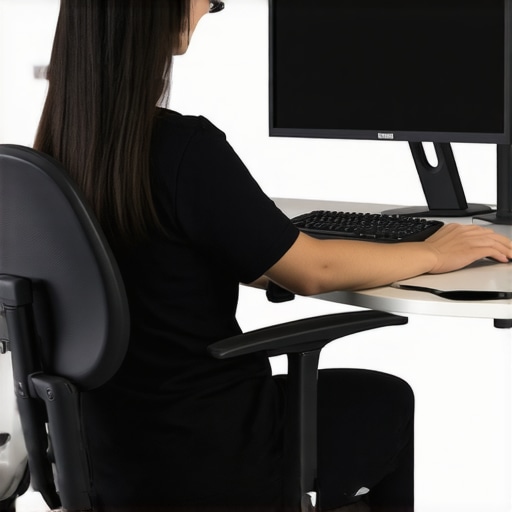
We brush our teeth every day to prevent cavities, but we rarely do anything to prevent what I call posture cavities. Dr. Stuart McGill, a world-renowned expert in spine biomechanics and author of Back Mechanic, emphasizes that the way we move during mundane tasks—like tying our shoes or picking up a laptop—dictates our long-term pain levels more than any one-hour gym session ever could. I started incorporating the morning spinal hygiene routine every desk worker needs, and it changed the game for me. It is not about a grueling workout; it is about moving with intent. This includes auditing your workspace and learning how to sit at your desk with zero back fatigue so you aren’t constantly undoing the progress you made with the ball. Consistency in these micro-movements is the only way to break the cycle of chronic tension.
How can I actually maintain these results for the long haul?
Maintenance is not about doing more work; it is about doing the right work consistently until it becomes a subconscious habit. I predict that in the next few years, we will see a massive surge in biofeedback wearables that vibrate when our shoulders slump, but you do not need to wait for expensive technology to catch up. You can build that internal sensor right now by checking in with your body every hour. I have found that even simple yet effective chiropractic hacks can bridge the gap between your self-care routine and professional adjustments. If you notice the burning returning every Monday afternoon, it is a clear signal that your weekend habits—like how you hunch over a phone or how you sleep—are the real culprits. You have to become a detective for your own biomechanics. If you want to see a massive difference by this time next week, I challenge you to try the 10-minute walk routine to decompress your spine every day at lunch. It is the single most effective way to reset your nervous system and gravity-proof your back without needing a single piece of equipment.
The Hardest Lesson I Learned About Chronic Shoulder Knots
After years of chasing pain around my own back, I realized that the knot is rarely the actual problem—it is just the loudest messenger. I spent far too long ‘tenderizing’ my rhomboids without realizing that expert methods to relieve neck and back discomfort focus more on the nervous system than the muscle tissue itself. One major lightbulb moment was discovering that if my breathing was shallow, my brain would never allow the muscle to fully release, regardless of how much pressure I applied. I also learned that the burning sensation often stops when you stop stretching the back and start opening the chest. By shifting focus, I found that mobility mastery expert tips are more about creating balance than just ‘fixing’ a tight spot. Consistency beats intensity every single time; five minutes of gentle release every day is worth more than a painful hour-long session once a month.
My Personal Arsenal for a Pain-Free Spine
If you are serious about taking this beyond the ‘dog toy’ phase, there are a few resources I swear by. First, the book Back Mechanic by Dr. Stuart McGill is my bible for understanding spine hygiene; it strips away the fluff and focuses on what actually works for the human frame. Second, I always keep a high-density lacrosse ball in my desk drawer for when I need to restore your range after a long afternoon of emails. Finally, I recommend a firm yoga block to help you find better angles when working on your side or ribs. These tools, combined with simple yet effective chiropractic hacks, create a self-care system that actually keeps you out of the ’emergency’ pain zone.
Your Roadmap to a Tension-Free Life
You do not have to accept that burning heat between your shoulders as a permanent part of your workday. It takes courage to stop ‘grinding’ through the pain and start listening to what your body is asking for. When you commit to a real back pain recovery plan, you are doing more than just soothing a muscle; you are reclaiming your ability to focus and enjoy your life without a constant, nagging distraction. Start with the wall, move to the floor, and never forget to breathe. Have you ever found a knot that just wouldn’t budge no matter what you tried? Let me know where it was below.