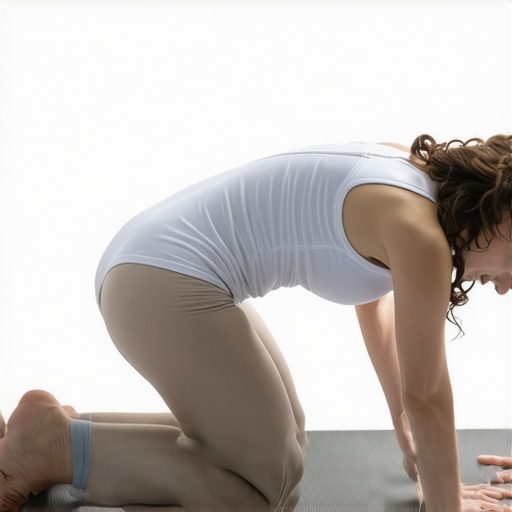
The Cat-Cow Variation for Targeted Mid-Back Relief
I was sitting at a rest stop on I-80, staring at a bag of stale pretzels, and I couldn’t even turn my head to check the side mirror without a sharp, electric zip right between my shoulder blades. I had been doing yoga for years. I knew the ‘Cat-Cow’ by heart. But that standard move felt like it was only stretching my lower back while my thoracic spine—the mid-back—stayed locked up like a rusty gate. It was a wake-up call. I realized my routine had a massive hole in it, and I was likely making things worse by over-stretching the wrong areas.
Stop Stretching Your Lower Back and Start Targeting the Tightness
For a long time, I made the classic mistake of thinking more movement was always better. I would arch my back so hard that I could feel my ribs flaring, but the actual tension under my shoulder blades never budged. The truth is, your lower back is often already too mobile, while your mid-back is where the real ‘stuck’ feeling lives. This is especially true if your perfect office chair is still making you slouch despite all the ergonomic adjustments you have made. We often think a fancy chair solves the problem, but if your thoracic spine is immobile, no amount of lumbar support will fix that dull ache between your wings. Have you ever felt like you are stretching everything except the spot that actually hurts? It is incredibly frustrating to put in the work and get zero relief. According to research published in the Journal of Physical Therapy Science, thoracic spine mobility is a primary driver of neck and shoulder health; when that mid-back section stops moving, the joints above and below have to pick up the slack, leading to chronic strain. This is exactly why we adjust your mid-back to help your lower back recover—the two are inextricably linked.
Is a simple variation really enough to fix months of stiffness?
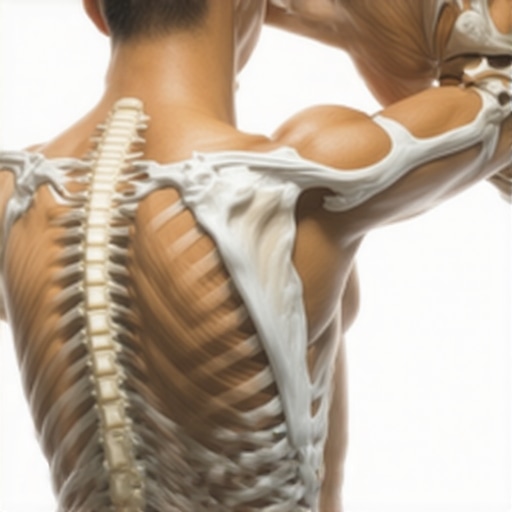
It is easy to be skeptical when you have tried every foam roller and massage gun on the market. I used to think I needed a heavy-duty intervention, but the secret lies in isolation. By slightly changing your hand placement and your focus, you can force the ‘hinge’ of the stretch to happen right where you need it most. If you have been struggling with that nagging pinch, you might have even tried using a tennis ball to fix that spot under your shoulder blade, which is great for temporary relief, but we need to restore the actual movement of the vertebrae. Today, I am going to show you how to tweak the traditional Cat-Cow so it stops bypassing your mid-back and starts melting away that tension. We are going to stop the generic ‘wiggle’ and start using precision to regain your range of motion.The secret to unlocking that stubborn mid-back tension is a concept called ‘segmental isolation.’ In a standard Cat-Cow, your lumbar spine—the lower back—acts like a sponge, soaking up all the movement because it is naturally more flexible and designed for that kind of load. To stop this, we have to lock the pelvis in place and force the movement higher up the chain.
Lock Your Lower Back to Force the Pivot Upward
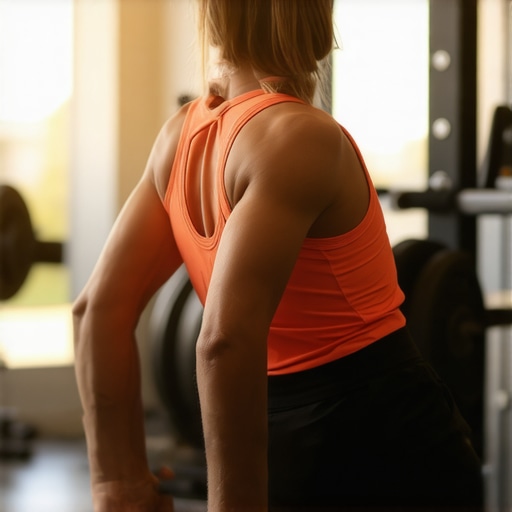
The easiest way to do this is to sit your hips back toward your heels, almost like you are in a modified Child’s Pose, but keeping your hands planted firmly on the floor in front of you. This physical ‘lock’ prevents your lower back from arching or rounding significantly. I remember the first time I actually got this right; I was in the corner of my local gym, feeling like a total amateur because my ‘range of motion’ looked like it had shrunk to about two inches compared to the people doing full-body waves next to me. I felt like I wasn’t doing anything until that third repetition when a deep, internal release happened right between my scapula. It wasn’t a big, dramatic stretch, but it was the first time in months I felt the vertebrae actually move independently. If you find your lower back still trying to take over even in this position, it might be a sign of lower back instability that needs addressing separately. 
Master the Micro-Movement for Maximum Relief
Once you are locked in, your goal isn’t to create a giant ‘U’ shape with your spine. Instead, imagine a string pulling the point between your shoulder blades up toward the ceiling as you exhale. This is the single best exercise for thoracic mobility when done with this level of precision. As you inhale, don’t just drop your belly toward the floor; instead, think about pulling your chest forward through your upper arms. You want to feel the stretch in your sternum and the muscles wrapping around your ribs. If you notice your shoulders hiking up toward your ears, pause. You’re using your traps to cheat. Keep your neck long and your gaze slightly forward, not tucked under. This prevents the common issue where your neck crunches when you turn your head later in the day.
Direct Your Breath to Expand the Rib Cage Internally
The breath is your internal lever. Most people hold their breath when they feel a ‘pinch,’ but that just signals your nervous system to tighten up further. When you are in the ‘Cat’ phase—the rounded back—push the floor away and try to breathe properly to reduce tension in your shoulders by directing the air specifically into your back ribs. Imagine your rib cage is an umbrella opening up in all directions. This internal pressure helps mobilize the costovertebral joints where your ribs meet your spine. This is often the missing piece for those who wonder why your ribs flare when you reach overhead. By combining this specific breathing with the pelvic lock, you are essentially performing a self-adjustment that resets the tension levels in your nervous system. To further support this work, many find that proven chiropractic strategies help clear out the deeper ‘stuck’ joints that a stretch alone cannot reach. If you feel a dull ache that won’t quit, adding the scapular squeeze that relieves mid-back tension to the end of your session can help ‘set’ the new range of motion you just created, ensuring you don’t just slump back into your old patterns the moment you stand up.
Stop Chasing the Stretch and Start Building Control
I used to think that if a muscle felt tight, the only solution was to pull on it until it gave up. It seems logical, right? But here is the contrarian truth that most people miss: your body often creates ‘tightness’ as a protective mechanism. If your nervous system senses that a joint is unstable or weak, it will literally clamp down the surrounding muscles to act as a secondary splint. When you mindlessly stretch these areas, you are essentially trying to rip off a biological band-aid. This is a massive ‘oops’ factor in many recovery routines. You might feel a temporary ‘stretch high’ for twenty minutes, but then the brain realizes the joint is still unprotected and sends the muscles into an even tighter spasm. This is precisely why your perfect yoga flow might be straining your SI joint instead of helping it. You are adding mobility to a structure that is desperately crying out for stability.
Does your body feel tight because it’s actually too loose?
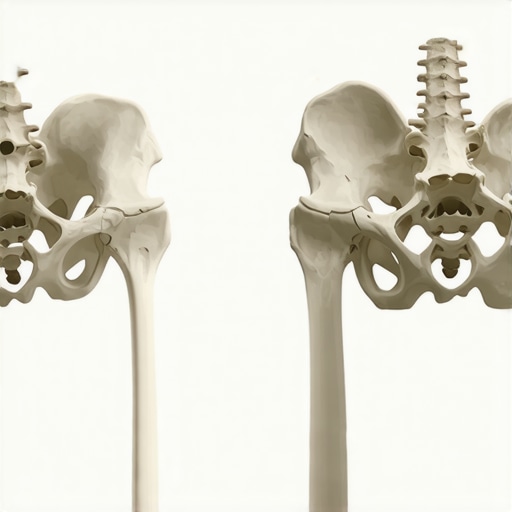
This is the question that separates the beginners from the pros. In the world of clinical biomechanics, we call this ‘functional instability.’ A study published in the British Journal of Sports Medicine highlights that for chronic spinal issues, motor control exercises—which focus on coordination and strength—frequently outperform passive stretching in long-term pain reduction. When you focus on how chiropractic care enhances movement, we aren’t just ‘cracking’ things to make them loose; we are resetting the neurological communication so your muscles know when to fire and when to relax. If you keep stretching a ‘tight’ neck without addressing the underlying weakness in your deep flexors, you are just spinning your wheels. 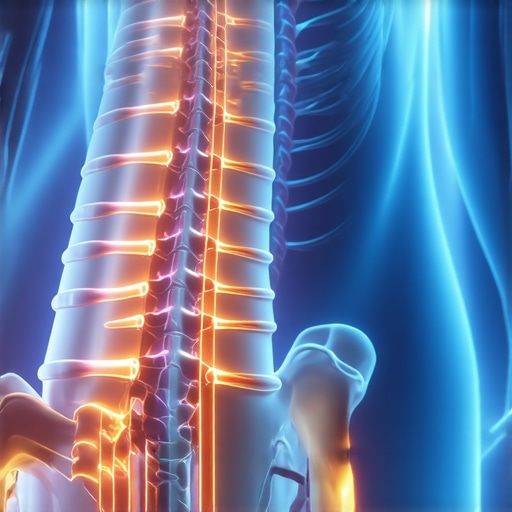
The Trap of Over-Mobilizing the Wrong Segments
One of the biggest mistakes I see is people over-working their neck and lower back while ignoring the stiff middle. Because the neck is so easy to move, we tend to crank on it to find relief, but this can lead to hyper-mobility in the upper cervical spine. If you have been overcoming chronic neck discomfort, you need to realize that the neck is often the victim of what is happening lower down. If your mid-back is a brick wall, your neck has to do double the work every time you look at your phone or your side mirror. Before you reach for another stretch, ask yourself if you’ve actually addressed the foundation. This is where proven chiropractic strategies become essential because they target the specific segments that are truly stuck, rather than just stretching the ones that are already moving too much. Have you ever fallen into this trap of stretching the same spot for months with no lasting change? Let me know in the comments. We need to stop guessing and start measuring how to tell if your back pain is serious or just a result of this stability-mobility imbalance. By shifting your focus from ‘loose’ to ‘stable,’ you give your nervous system the green light to finally let go of that chronic tension.The most common question I get is whether or not those vibrating massage guns or expensive foam rollers are actually worth the hype. Personally, I have found that the most expensive tool isn’t always the best. I have spent way too much money on gadgets that just vibrate my skin without actually reaching the deep costovertebral joints. If you want to relieve neck and back discomfort using these expert methods, you need something that can actually pin down a single segment. That is why I swear by the ‘peanut’—two lacrosse balls taped together. It is small enough to fit on either side of your spinous processes without putting direct pressure on the bone itself.
Ditch the Foam Roller for a Precision Peanut
Standard foam rollers are too broad; they are like trying to play a single piano key with your whole palm. The peanut allows you to create a fulcrum at the exact level of your thoracic stiffness. I keep one in my gym bag and one in my car because staying mobile when you have a desk job requires these micro-interventions throughout the day. It is not about a sixty-minute session; it is about those two-minute ‘greasing the groove’ moments. To really boost mobility and ease pain with these chiropractic techniques, you have to be consistent with these localized releases. 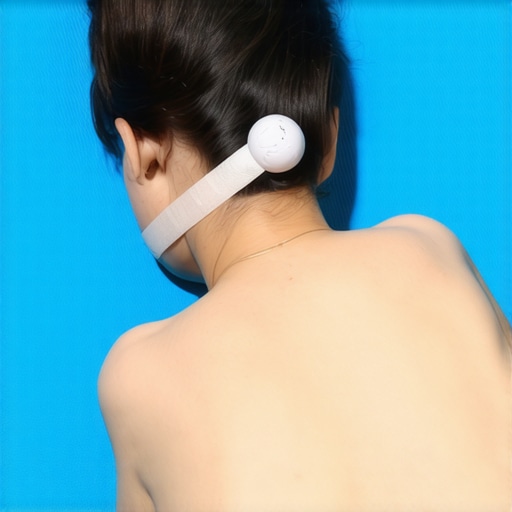
How do I maintain my mobility results over time?
The reality of spinal health is that it is not a ‘one and done’ deal. You do not just ‘fix’ your back and move on; you manage it like you manage your dental hygiene. I have seen people make incredible progress only to lose it because they went back to their old habits of slumping over a laptop for ten hours a day. The key is to integrate these movements into your environment. If you want to regain full mobility after an injury, you need a system, not just a workout. This involves regular check-ins with a professional who can spot the subtle shifts before they become full-blown spasms. According to the Annals of Internal Medicine (Qaseem et al., 2017), the American College of Physicians explicitly recommends spinal manipulation as a top-tier, non-pharmacological treatment for acute and chronic low back pain. This clinical weight proves that combining your at-home tool work with mastering back and neck pain relief tips from the pros is the fastest way to stay out of the ‘pain zone.’
Wearable Tech is the Future of Spinal Health
I believe we are moving toward a world where your clothes will tell you when your mid-back is locking up. We are already seeing the early stages of wearable haptic sensors that vibrate when your posture deviates from a neutral range. In the next few years, I expect these to become as common as heart-rate monitors, helping us unlock neck pain relief with these 2025 chiropractic tips by providing real-time biofeedback. Until then, you are your own best sensor. My challenge for you today: Grab two tennis balls or lacrosse balls, tape them together, and spend just three minutes tonight lying on them between your shoulder blades. Take five deep breaths into each ‘stuck’ spot. Don’t wait until the sharp zip returns to start taking care of your foundation.
The Hardest Lesson I Learned About Mid-Back Stiffness
I spent years thinking I was just naturally stiff because of my genetics or my desk job. But the biggest lightbulb moment was realizing that my body was protecting me from instability. If you want mobility mastery for back pain prevention, you have to earn it by showing your nervous system that it is safe to move. Another hard truth: stretching is not a substitute for strength. Once you open a new range of motion with that modified Cat-Cow, you have to use it immediately, or your brain will lock that ‘rusty gate’ right back up by the time you finish your morning coffee. I also realized that my ‘tight’ neck was almost always a cry for help from my immobile mid-back; stop treating the symptom and start fixing the source.
My Go-To Toolkit for a Fluid Spine
For equipment, you can skip the expensive vibrating gadgets for now. A pair of lacrosse balls taped together (the ‘peanut’) remains the gold standard for targeted thoracic work because of its precision. I also highly recommend the book Becoming a Supple Leopard by Dr. Kelly Starrett; it is the ultimate manual for troubleshooting your own movement patterns. Finally, don’t overlook professional guidance; reading about how chiropractic care transforms lives helped me realize that some structural ‘jams’ need a manual reset before any stretch can be truly effective. If you are struggling to find relief, check out these insights from wellness experts to help round out your recovery strategy.
#IMAGE_PLACEHOLDER_E#
Your Path to a Pain-Free Tomorrow Starts Today
You do not have to live with that sharp, electric zip between your shoulder blades or the dull ache that follows you from the office to the gym. Small, consistent efforts create a massive ripple effect throughout your entire skeletal system. Prioritizing your mobility is the single best favor you can do for your future self. If you are tired of the DIY approach and want a personalized plan to get back to 100%, feel free to reach out to us directly. Have you tried the ‘peanut’ method before, or are you still relying on a standard foam roller for your mid-back? Let me know in the comments below!