How to Carry Your Backpack Without Slumping
I remember standing in the rain outside a train station, my shoulders screaming and my lower back feeling like it was being compressed by a heavy-duty hydraulic press. I had a laptop, a notebook, and a water bottle in my bag, yet I was hunched over like I was carrying the weight of the entire world. I caught my reflection in a puddle and saw a person who had completely lost their upright dignity. That was the day I realized my heavy bag wasn’t the problem—it was how I was wearing it. I was making the classic mistake of letting the pack sag toward my hips, a blunder that frequently leads to the kind of back pain issues many of us face daily. If you’ve ever felt that telltale burn between your shoulder blades or noticed your chin jutting forward like a turtle when you’re walking, you’re not alone. We’re going to fix that today. I’m going to share the exact tweaks I used to transform my daily commute from a painful chore into a pain-free walk. You don’t need a thousand-dollar ergonomic rig; you just need to know how to work with your body’s natural mechanics. Before I learned better, I actually thought the cool look was to have the straps as loose as possible. I was basically begging for a rounded upper back. It took a few weeks of radiating neck pain to realize that my style choice was a skeletal disaster.
Your Backpack is Stealthily Redesigning Your Skeleton
It is easy to dismiss a little slouching as just the way I am, but your spine sees things very differently. When your pack isn’t fitted correctly, it acts like a lever, pulling your center of mass backward and downward. To keep from falling on your butt, you naturally lean your torso forward and crane your neck. This creates a C-shape in your spine that effectively shuts down your core muscles and puts immense pressure on your spinal discs. I spent years wondering why I needed constant upper back relief, never connecting the dots to the bag I strapped on every morning. The truth is that carrying a load inefficiently forces your muscles into a state of isometric fatigue—they are working hard just to keep you from toppling over, leaving no energy for actual movement. This is why you feel exhausted after a simple walk to the office or campus. Have you ever reached the end of a commute and felt like you needed to literally peel your shoulders off your chest? I’ve been there, and I want to hear your heavy bag horror stories in the comments.
Is a Tiny Strap Adjustment Really Worth the Hype?
It sounds almost too simple to be true. Can tightening a piece of nylon really save your spine from years of damage? The short answer is a resounding yes. According to the American Chiropractic Association, a backpack should never weigh more than 10% to 15% of your total body weight, but even a feather-light bag can cause damage if the center of gravity is off. When that bag pulls you backward, your neck and core have to work double-time to keep you from falling over. This constant tug-of-war is why you might feel like your posture is failing you even when you try to stand tall. My early mistake was thinking that tension was the enemy, so I kept everything loose. In reality, a snug fit is what allows the pack to move with you rather than against you. It is a frustrating cycle, but one we can definitely break by looking at how to choose and wear a pack the right way. We are not just talking about comfort here; we are talking about preventing the kind of long-term wear and tear that makes getting older feel much heavier than it needs to be.
Tug the Shoulder Straps Until the Bag Hugs Your Ribs
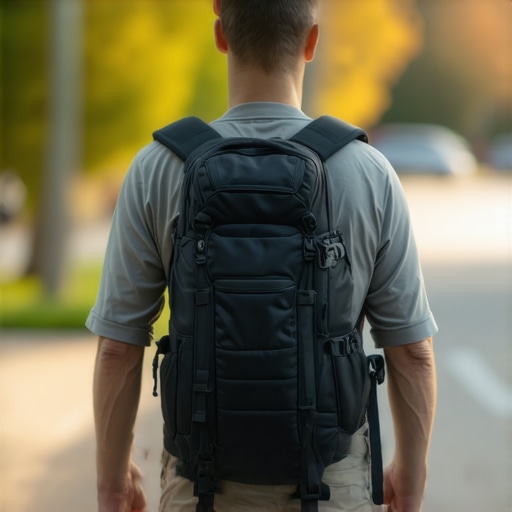
To enhance mobility naturally with chiropractic care, you have to stop the mechanical interference at the source. Think of your backpack like a passenger in a fast-moving car. If that passenger isn’t buckled in, they slide around every time you turn, forcing the car to compensate for the shifting weight. When your shoulder straps are loose, the bag sways and bounces, which creates a shearing force on your vertebrae. I want you to pull those adjustment tabs until the back panel of the bag is in full contact with your upper and mid-back. There should be no daylight between you and the pack. This simple tightening is one of those chiropractic secrets to boost neck comfort and function because it stops the bag from pulling your shoulders into a permanent shrug. I remember a trip to Chicago where my traps felt like they were literally on fire. I finally stopped at a bench, cinched the straps so tight I thought I’d pop a seam, and the relief was almost instantaneous. My body stopped fighting the bag and started moving with it.
Place Your Laptop and Heavy Books Nearest to Your Spine
Physics is a cruel mistress if you ignore her. If you put your heaviest items—like a heavy laptop or a thick textbook—in the outermost pocket, you are effectively increasing the leverage that weight has on your spine. It acts like a long pry bar, pulling you backward. To find the secret to walking without lower back fatigue, you must pack vertically and deep. Place the heaviest, flattest items right against the back panel. This keeps the center of gravity as close to your own midline as possible. Use the smaller, lighter items to fill the outer pockets.
Click the Sternum Strap to Save Your Neck
Many people treat the little strap across the chest as an optional accessory for hikers, but it is actually a vital tool for daily commuters. When you click that sternum strap into place, it pulls the shoulder straps inward, preventing them from sliding off and forcing your neck muscles to compensate. This is a key part of neck pain no more expert chiropractic solutions that work. It stabilizes the load and narrows the profile of the weight on your back. If you’ve ever felt that sharp pinch between your shoulder blades, try the 10-second reset for when your shoulder blades start burning by simply engaging that chest clip. It spreads the tension across your sturdy ribcage rather than leaving it all on the delicate nerves of your neck.
Keep the Bag High to Protect Your Lumbar
A sagging bag is a back-breaker. If the bottom of your pack is hitting your butt or dangling near your thighs, you are putting massive pressure on your L4 and L5 discs. You want the bottom of the bag to sit right at the curve of your lower back, not below it. By implementing these boost your back health simple yet effective chiropractic hacks, you ensure that the weight is carried by your hips and mid-back, which are designed for heavy lifting, rather than your vulnerable lower spine. Adjusting the height takes five seconds but can save you five hours of stiffness later that evening.
We often talk about ergonomics as if there is a single, static ‘perfect’ position we need to achieve to be pain-free. But here is the contrarian truth that most people miss: the best posture is your next posture. I’ve seen countless people obsess over sitting as straight as a board, only to find that your perfect posture is actually making you stiff. When you lock yourself into a rigid upright position, you are essentially asking your muscles to perform a marathon of isometric contraction. This leads to fatigue, reduced blood flow, and eventually, that familiar dull ache. Real mobility mastery isn’t about being a statue; it is about having the freedom to move through various positions without restriction.
Stop Trying to Sit Like a Statue
The ‘Oops’ factor many high-performers run into is the ‘bracing trap.’ They’ve been told to keep their core tight at all times, but research published in the British Journal of Sports Medicine indicates that there is no ‘gold standard’ for posture that universally prevents pain. In fact, a constantly engaged core can create excessive intra-abdominal pressure and limit your ability to breathe into your lower back. This rigidity is a common reason why your strong core might actually be too rigid, ironically making you more prone to injury because your spine can’t absorb shock or adapt to movement. Have you ever fallen into this trap of trying to be perfectly still only to end up more sore? Let me know in the comments.
Can your ‘strong’ core actually be the source of your back pain?
When we look at overcoming chronic neck discomfort, we have to look beyond the spot that hurts. A common mistake is focusing solely on stretching the neck or shoulders. However, if your pelvis is tilted or your ankles lack mobility, your upper body has to compensate for that lack of foundation. This is why many people find that stretching your hamstrings won’t fix your back pain if the issue is actually coming from a lack of stability elsewhere. To truly restore your range, you need a holistic approach that considers how every joint from your feet to your jaw interacts. For instance, why we look at your feet to solve your neck issues might seem counterintuitive at first, but it is the key to lasting relief rather than a temporary fix. Professional neck pain management involves identifying these mechanical ‘leaks’ in your kinetic chain. By addressing the root cause, you can stop the cycle of stiffness and start moving with the fluidity your body was designed for.
If you are serious about protecting your back during a commute, look for bags with a suspended mesh back panel. I personally use an Osprey specifically for their ‘Anti-Gravity’ suspension system because it creates a physical gap between your lumbar spine and the bag’s contents. It is one of those boost your back health simple yet effective chiropractic hacks that people overlook because they focus on the aesthetics of the fabric rather than the frame. Leather bags might look professional, but they don’t breathe, and a sweaty, sticky back leads to subconscious shrugging to create airflow. This creates a cycle of tension that ends in a headache before your first meeting even starts.
Ditch the Foam Roller for a Lacrosse Ball
Another tool in my kit is the humble lacrosse ball. Forget the bulky foam rollers that many people use incorrectly; they often put too much direct pressure on the spinous processes of your vertebrae. If you have suspected why your foam roller might be hurting your lower back, you are probably ready for a more surgical tool. I pin a lacrosse ball between my shoulder blade and a wall to perform pinpoint ‘trigger point’ release. I do this for two minutes every night while I am brushing my teeth. It is the 10-second stretch for people who type all day taken to a professional, consistent level. This habit prevents the small knots of today from becoming the debilitating spasms of tomorrow.
How do I maintain my spinal resilience over time?
Maintenance isn’t a weekend project; it is a lifestyle of micro-adjustments. I have found that back pain recovery how chiropractic care transforms lives only works long-term if you do the ‘homework’ between visits. This means strengthening your glutes to take the pressure off your spine and ensuring your footwear isn’t working against your skeleton. I used to think my flat-soled sneakers were fine for city walking, but walking in flat shoes might be worsening your alignment by collapsing your arches and tilting your pelvis. Switching to shoes with a wider toe box and slight arch support allowed my foundation to stabilize, which instantly calmed my chronic lower back tightness.
The Future of Spinal Health is Proactive and Wearable
Looking forward to 2025 and beyond, I predict a massive shift toward ‘smart’ ergonomics. We are moving toward sensors embedded in shirt fabric that provide haptic feedback when your shoulders reach a certain threshold of internal rotation. This will move us away from the ‘guessing’ phase of posture and into real-time biofeedback. In the meantime, lean into foundational movements. Dr. Stuart McGill, a world-renowned expert in spine mechanics and author of Low Back Disorders, emphasizes that spinal hygiene is about avoiding ‘micro-movements’ of the spine under heavy loads. He suggests his ‘Big 3’—the bird-dog, side plank, and modified curl-up—as the gold standard for creating a functional ‘stiffness’ that actually protects you. This isn’t the ‘statue’ stiffness we talked about earlier; it’s a dynamic stability that allows you to restore your range without risking a disc flare-up. I challenge you to try the lacrosse ball trick tonight while you brush your teeth; it’s the easiest way to start reclaiming your upper back comfort.
The Hardest Lesson I Learned About Spine Longevity
For years, I treated my body like a rental car—something I could drive hard without maintenance as long as it got me where I needed to go. But the truth is, your spine is the only chassis you get. My ‘lightbulb moment’ came when I realized that mechanical efficiency is not optional; it is the difference between thriving and just surviving. I used to think I was just ‘getting older’ when my neck felt like a rusted hinge, but the hidden link between neck pain and spinal health showed me that my daily habits were the true culprits. One major shift was recognizing that fatigue is often a postural choice rather than a lack of fitness. If you are constantly bracing against a swaying load, you are burning through your energy reserves before you even arrive at work. Real back pain recovery begins the moment you stop fighting your equipment and start using it to support your natural frame. Seeing how back pain recovery how chiropractic care transforms lives often starts with these tiny, granular adjustments was a total game-changer for me.
The Tools That Rescued My Commute
You don’t need to spend a fortune, but you do need a strategy. These are the non-negotiables I personally use and recommend to every patient who walks into my clinic. First, an ergonomic backpack with a frame—I swear by Osprey or Deuter for their ability to lift the weight off the shoulders and onto the hips. Second, a lacrosse ball for daily self-care; it is the most effective way to revitalize your mobility with proven strategies without needing a bulky massage chair. I also highly recommend the book Becoming a Supple Leopard by Dr. Kelly Starrett for anyone wanting to master their own body mechanics. Finally, never underestimate the power of a 5-minute desk reset for busy professionals. These tools don’t just fix a problem; they build resilience, ensuring that your foundation remains solid no matter how much you have to carry.
You Deserve to Move Without Limits
Your journey toward a pain-free life isn’t about achieving a state of perfection; it’s about making small, consistent wins for your nervous system. Every time you cinch those straps or click that sternum strap, you are sending a signal to your body that it is safe to move. We often wait until we are in crisis before we take action, but the real magic happens in the prevention. You have the power to restore your back mobility with proven chiropractic strategies by simply paying attention to how you interact with the world around you. Don’t let a heavy bag dictate the quality of your afternoon. If you’re feeling stuck or the pain isn’t budging despite these tweaks, don’t hesitate to reach out to a professional through our contact us page. Your future self will thank you for the extra five seconds you took today to protect your spine. Have you ever noticed your shoulder blades burning after a long walk with your bag, and which of these adjustments made the biggest difference for you? Let me know below.