Why Your Shoveling Technique is Killing Your Back
It was three in the morning when the plow finally finished its run, leaving a six-foot wall of heavy, wet slush at the end of my driveway. I went out there, caffeinated and determined. I didn’t think twice. I just dug in, twisted my torso, and flung that icy mess onto the lawn as fast as I could. By noon, I was lying on the kitchen floor, staring at the ceiling and wondering if I’d ever walk normally again. My mistake? I was ‘muscling’ the snow instead of moving with my body. I thought being strong was enough, but my lower back had other plans. We’ve all been there—that sharp, electric twinge that tells you tomorrow is going to be a long day of ice packs and regret.
That Morning I Couldn’t Tie My Own Shoes
If you’ve ever experienced a sudden back spasm while clearing the walk, you know the panic that sets in. I spent years thinking my back was just ‘weak’ or that getting older meant I had to accept the pain. I was wrong. The real culprit wasn’t my age; it was a series of biomechanical errors I was repeating every single winter. Today, I want to show you how to stop the cycle of injury and actually enjoy the crisp air without the looming threat of a recovery period you didn’t plan for. Learning the right way to move is a massive part of back pain recovery that most people ignore until it’s too late.
Is back pain just an unavoidable winter tax?
You might think that if you live in a snowy climate, a sore back is just the price of admission. It’s not. According to a study published in the American Journal of Emergency Medicine, over 11,000 people are treated in ERs annually for snow shoveling-related injuries, many of which are musculoskeletal strains that could have been prevented with better form. I used to be one of those statistics, mostly because I ignored the basic hip hinge trick that keeps your spine neutral. Have you ever felt that ‘pop’ or ‘pull’ in your lumbar spine and kept going anyway? Tell me if you’ve been there, because I’ve definitely been guilty of that stubbornness.
Stop Shoveling Like You’re Racing the Clock
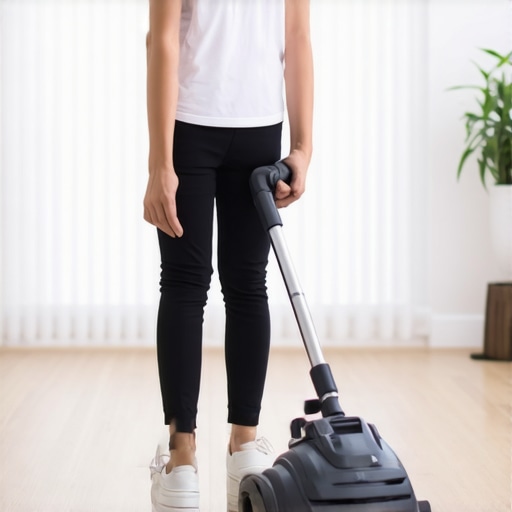
The biggest mistake I made early on was treating shoveling like a sprint. I would lunge forward, round my shoulders, and use my spine as a crane. This creates a massive amount of shear force on your discs. It’s the same reason your lower back hurts after washing dishes if you’re leaning too far forward without support. When you combine that forward lean with the heavy weight of wet snow and a sudden twist, you’re essentially asking for a herniation. Your spine is a stabilizer, not a prime mover. We need to shift that workload to the largest muscles in your body: your glutes and hamstrings. In the next section, I’ll walk you through the exact foot placement and grip that saved my spine.
Ditch the Slippers and Plant Your Base
You wouldn’t build a house on a swamp, so don’t try to move a hundred pounds of snow while wearing worn-out sneakers or thin-soled boots. Your feet are the literal foundation of your spinal alignment. When you lack traction or arch support, your small stabilizer muscles overcompensate, leading to fatigue before you’ve even cleared the first five feet. I’ve seen people out in their driveways in flip-flops or flat-bottomed Uggs, and it makes my own vertebrae ache just watching. This is exactly why your slippers might be causing your lower back stiffness even when you aren’t doing manual labor. For shoveling, you need a boot with a heavy tread that allows you to drive your power from the ground up. Think of your spine like the mast of a ship; if the deck is slippery and unstable, the mast is going to take all the stress of the wind. Plant your feet wider than shoulder-width and keep a slight bend in your knees at all times.
Master the Hinge to Save Your Discs
The most critical movement you can learn is the hip hinge. Most people bend at the waist, which rounds the spine and puts the intervertebral discs under massive pressure. Instead, you need to push your butt back as if you’re trying to close a car door with your glutes while keeping your chest up. This engages the posterior chain. Many think flexibility is the answer, but why stretching your hamstrings wont fix your back pain is because the issue is usually a lack of stability, not a lack of length. By using the hip hinge trick, you transfer the weight of the snow into your hips and legs, which are designed for heavy lifting. I remember last February, trying to clear a path for the dog during a blizzard. I got lazy, started rounding my back to reach under a snowbank, and felt that ‘hot needle’ sensation. I had to immediately drop the shovel and reset. It was a humbling reminder that the physics of the spine don’t care how much of a hurry you’re in.
Push the Snow Don’t Throw It
Whenever possible, treat your shovel like a plow, not a catapult. Pushing the snow to the edge of the driveway requires significantly less spinal rotation than lifting and flinging. If you must lift, keep the shovel blade close to your body. The further the weight is from your center of gravity, the heavier it ‘feels’ to your lower back. This is why strengthening your glutes to take the pressure off your spine is the best off-season training you can do. When you do have to move the snow to a pile, pivot your entire body with your feet instead of twisting at the torso.
React Fast if Your Back Starts Screaming
If you feel a sharp pull, stop. Do not ‘push through’ the last ten feet of the sidewalk. I’ve made that mistake and paid for it with a week on the sofa. If you’re alone and feel a lock-up, you need to know how to handle a sudden back spasm when you are alone to prevent further inflammation. Get inside, find a neutral position, and understand the correct way to use a heating pad for muscle spasms—usually in short bursts rather than hours of continuous heat which can sometimes increase swelling.Most people think that once they’ve survived the driveway, the danger is over as long as they ‘sit up straight’ at their desk for the rest of the day. But here is where I see the most common mistake: over-correcting. We’ve been told for decades that military-straight posture is the gold standard, yet why sit up straight is actually bad advice for some is because it forces the muscles into a constant, isometric contraction that limits blood flow and creates a new kind of fatigue.
Why Your Rigid Core is Actually Backfiring
One of the biggest myths in the wellness world is that a ‘strong core’ means your abs should be tight all the time. I used to be a ‘bracer’—I’d keep my stomach tight while doing everything from lifting groceries to driving. This is a massive trap. When your midsection is too rigid, you lose the ability to breathe into your diaphragm, which actually destabilizes your spine from the inside out. This is exactly why your strong core might actually be too rigid and potentially causing the very pain you’re trying to prevent. Your spine needs to move like a whip, not a brick. A study published in the Journal of Manipulative and Physiological Therapeutics highlights that restricted thoracic mobility—that’s your mid-back—is often the primary driver of compensatory strain in both the neck and the lumbar region. If your mid-back doesn’t move, your lower back has to do double the work.
Can your mid-back be the silent thief of your mobility?
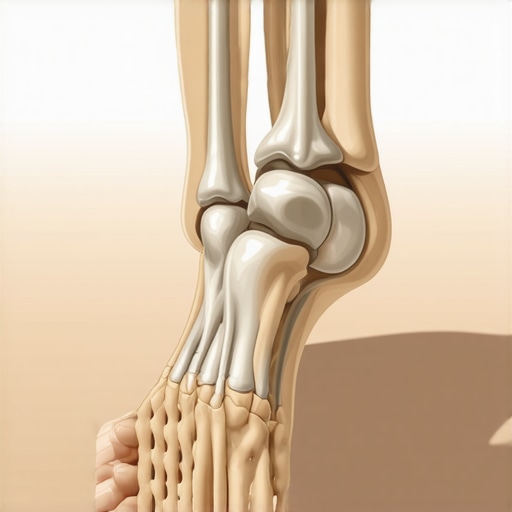
Often, when patients come to me with a ‘bad lower back,’ the real culprit is a frozen rib cage. This is why we adjust your mid-back to help your lower back recover. If you can’t rotate through your torso properly, every time you turn your head or reach for something, you’re putting a shearing force on your lower discs. It’s all connected. To truly enhance mobility naturally with chiropractic care, we have to look at the joints that aren’t hurting just as much as the ones that are.
Stop Chasing the Perfect Posture Myth
Another nuance most people miss is that ‘good posture’ is actually dynamic. It’s not a position you hold; it’s a range you move through. If you stay in any one spot too long—even if it’s technically ‘perfect’—your tissues will start to complain. I see this often in people who spend thousands on ergonomic chairs but still suffer. It turns out why your perfect office chair is still making you slouch is often because the chair is doing the work for you, allowing the hidden muscle that stabilizes your lower spine to go dormant. You need to wake those stabilizers up. Real back pain recovery involves retraining these neurological patterns, not just ‘fixing’ a bone out of place. Have you ever fallen into the trap of trying to sit too straight only to end up with more neck tension? Let me know in the comments.It usually starts with a dull ache right between the shoulder blades—the kind that makes you want to lean against a doorframe and just rub. For years, I threw money at high-end vibrating foam rollers and expensive gadgets, but the tool I return to every single night costs about fifty cents. I’m talking about a standard tennis ball. The reason a ball works better than a roller for the upper back is specificity. A roller is too broad; it hits the tops of your ribs and misses the deep-seated knots tucked under your scapula. If you know how to use a tennis ball to fix that spot under your shoulder blade, you can effectively release trigger points in the rhomboids and traps that are often the secret drivers of tension headaches. I place the ball against the wall, lean into it, and find those ‘hot spots’ that feel like a bruised apple. Ten seconds of pressure there does more for my mobility than a twenty-minute passive stretch. #IMAGE_PLACE_HOLDER_D#
Stop Letting Your Commute Ruin Your Progress
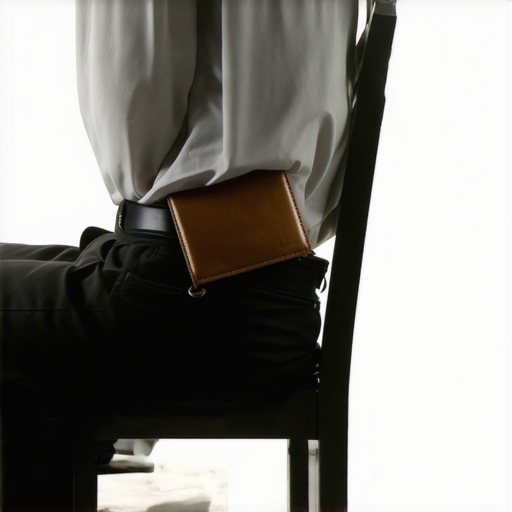
We often focus on the big ‘events’—the gym session or the snow shoveling—but we ignore the hours spent in the driver’s seat. Most car seats are designed for safety in a crash, not for the long-term health of your lumbar curve. They often have a bucket-style design that encourages your pelvis to tuck under, flattening your lower back. This is why I always carry a small hand towel in my glove box. Learning how to use a rolled-up towel to fix your cars lumbar support can be the difference between arriving at work stiff and arriving ready to move. By placing it just above your belt line, you maintain that natural lordotic curve that keeps your discs from migrating backward. It’s a simple mechanical fix for a mechanical problem.
How do I keep my spine from locking up again?
Maintenance isn’t about doing an hour of yoga once a week; it’s about what Dr. Stuart McGill, author of Back Mechanic and professor emeritus at the University of Waterloo, calls ‘spinal hygiene.’ This means choosing movements that spare the spine throughout the day—like using a golfer’s lift to pick up a single sock rather than bending at the waist. I swear by the 5-minute reset for a stiff lumbar spine every evening after work. It’s a non-negotiable part of my routine, much like brushing my teeth. If you struggle with persistent tightness, following an effective neck pain management a step-by-step guide ensures you aren’t just treating symptoms but building a foundation for mobility mastery expert tips for back pain prevention and recovery. It’s also worth considering how to enhance mobility naturally with chiropractic care to address the structural imbalances that simple home tools can’t reach. I predict that in the next few years, ‘posture’ will be replaced by ‘spinal load management’ as we begin using wearable sensors embedded in our clothing to track exactly how much pressure we’re putting on our lower backs in real-time. We will likely see apps that alert us when our ‘cumulative shear’ reaches a danger zone. Until then, we have to be our own sensors. I want you to try this: Tonight, before you sit on the couch to watch TV, perform one 30-second hip hinge to ‘reset’ your pelvis. It sounds simple, but that one conscious movement can break the cycle of cumulative strain that leads to a blowout the next time you pick up a shovel.
The One Thing I Wish I Knew Before My First Winter Blowout
Reflecting on years of unnecessary aches, the biggest lightbulb moment wasn’t a specific exercise, but the realization that cumulative strain is a silent predator. You don’t just ‘throw your back out’ one morning; you spend months priming it for failure through poor daily habits. I used to think that resting for a week after a tweak was the cure, but complete inactivity actually weakens the very stabilizers you need for long-term health. Another hard lesson? Pain is a lagging indicator. By the time you feel that twinge, your mechanics have likely been off for weeks. This is why I now focus on proactive alignment rather than just reactive damage control. I also learned that ‘powering through’ is a recipe for chronic issues—if your body sends a signal, listen before it starts screaming. Understanding how to fix your gait for better spinal alignment was a turning point for my own recovery journey.
My Go-To Toolbox for Spinal Resilience
If you’re looking to dive deeper and take control of your movement, I highly recommend checking out the work of Dr. Stuart McGill, particularly Back Mechanic. It is the gold standard for learning how to spare your spine during daily tasks. In my own routine, I never travel without a simple tennis ball to release stubborn trigger points, and for those long drives, I swear by using a rolled-up towel to fix your cars lumbar support. It is a total game-changer for preventing commute-related stiffness. I also suggest exploring proven chiropractic strategies to restore back mobility. These aren’t just quick fixes; they are essential tools for anyone serious about physical longevity and performance.
Turn This Winter Into Your Most Mobile Season Yet
The transition from chronic pain to power doesn’t happen overnight, but it starts the moment you decide to move with intention. Whether you are clearing the driveway or simply sitting at your desk, every small adjustment adds up to a massive shift in your quality of life. Don’t be afraid to start slow; you deserve to move without the constant fear of what tomorrow’s stiffness might bring. By mastering your mechanics and utilizing chiropractic secrets to regain full mobility after injury, you are not just avoiding pain—you are reclaiming your freedom. If you ever feel stuck or need a personalized roadmap for your health, please feel free to reach out to us. We are here to help you get back to doing what you love with confidence.
Have you ever noticed that your back feels tighter after a long drive than it does after a heavy workout? Let me know your experiences in the comments below!