The Best Way to Sleep After a Chiropractic Adjustment
I still remember the first time I felt that glorious ‘pop’ and the immediate rush of relief—it’s actually one of the reasons why you feel taller after a chiropractic adjustment. I walked out of that clinic on cloud nine, convinced my years of nagging neck tension were finally solved. Then, I went home and slept like a twisted pretzel. I woke up stiff, sore, and frankly, pretty annoyed at my chiropractor. It took me three more visits to realize the problem wasn’t the adjustment itself; it was my nocturnal habits. I was literally ‘undoing’ the professional work every single night. If you’ve ever felt like your progress vanishes the moment you hit the sheets, you aren’t alone. Today, I want to share the hard-won secrets I learned about keeping that alignment locked in while you dream.
Stop Ruining Your Progress Before the Sun Comes Up
After an adjustment, your joints and ligaments are in a state of flux. They’ve been moved into a better position, but your muscles still have a stubborn ‘memory’ of the old, crooked way of doing things. I made the classic mistake early on of thinking a plush, marshmallow-like mattress would be gentle on my recovering spine. I was dead wrong. I quickly learned why your SI joint hates your soft mattress as I spent the next morning hobbling around my kitchen. Your body needs firm, consistent support to allow those newly aligned vertebrae to settle. According to Harvard Health Publishing, sleeping on your stomach is the most taxing position for your spine because it forces your neck into a sustained, sharp rotation, which can immediately irritate a fresh adjustment.
Does shifting your sleep style really make a difference?
I get it. You’ve slept on your stomach or curled in a ball since the nineties, and changing your default setting feels like trying to write with your non-dominant hand. You might wonder if it’s actually worth the frustration. But here is the reality: your sleep posture accounts for nearly a third of your life. If you are misaligned during those eight hours, you are fighting a losing battle against gravity. Have you ever woken up with a ‘kink’ that lasted all day? That’s your body’s way of saying your pillow or position is sabotaging your recovery.
The Neutral Spine is Your New Best Friend
The goal is simple: keep your ears, shoulders, and hips in a relatively straight line. If you are a side sleeper like me, you have to be strategic. I learned the hard way that just lying on my side wasn’t enough; I needed to follow the side sleeper’s guide to pillow placement to keep my pelvis from rotating and pulling on my lower back. This usually involves a pillow between the knees to maintain hip alignment. Even the way you rise in the morning matters more than you think. You can’t just bolt upright when the alarm goes off! Mastering the best way to get out of bed for disc health—using a log-roll technique—is the final piece of the puzzle to ensure you don’t tweak a muscle the second your day begins. Have you noticed your pain returns specifically after a long night’s rest?
Reset Your Nightly Routine to Protect Your Adjustment
Imagine your spine is like a freshly paved road. It’s smooth and perfectly leveled right after the chiropractor works on it. But if you park a heavy truck (your head) at a weird angle for eight hours, that wet pavement is going to set with a massive dent. You have to treat the first 48 hours post-adjustment like a ‘setting period.’ One of the most effective chiropractic secrets to boost neck comfort and function is choosing a pillow that matches the distance between your ear and your shoulder tip. If it’s too thick, your neck kinks upward; too thin, and it collapses toward the mattress. I remember one night, about two years ago, I decided to stack two old, flat pillows because I thought the extra cushion would help my breathing. I woke up with a migraine so sharp I couldn’t drive. That’s when I learned how to tell if your headache is starting in your neck versus just being a random tension event. The wrong height literally pulls your top vertebrae out of the pocket your chiropractor just placed them in.
Get Your Hips in Line with a Knee Pillow
For the side sleepers out there, your top leg is your spine’s biggest enemy. Without support, that top knee falls forward, dragging your pelvis with it and twisting your lower back. Think of it like wringing out a wet towel; your upper body stays flat, but your lower half rotates. To stop this, you need a firm pillow between your knees. It keeps your hips stacked like a set of blocks. This is a foundational part of effective neck pain management a step-by-step guide because when the lower back is twisted, the neck often compensates to keep your eyes level with the horizon, creating a chain reaction of tension. I eventually invested in a contoured leg pillow, and the difference in my morning ‘stiffness score’ was night and day. It’s a simple way to relieve neck back discomfort using these expert methods without needing a single piece of fancy equipment. 
The Log Roll Technique is Non-Negotiable
How you exit the bed is just as vital as how you lie in it. Most people do a ‘crunch’ move to sit up, which puts massive pressure on the discs in your lower back. Instead, you need to use the log roll. This means keeping your torso and hips moving as one solid unit. You roll onto your side, swing your legs off the edge, and use your arms to push your torso upright. It feels a bit robotic at first, but it prevents that sudden ‘catch’ in the mid-back. I once forgot this after a particularly deep adjustment and tried to sit up fast to catch my phone; the resulting spasm felt like a lightning bolt. Since then, I’ve used this move to restore your back mobility proven chiropractic strategies in my daily life. It’s about protecting the investment you made at the clinic. If you are struggling with a lingering issue, you might want to look at the hidden link between neck pain and spinal health to see how these small movements add up over time.It is easy to fall into the trap of thinking that more is always better. More stretching, more core strengthening, and more ‘cracking’ your own neck seem like logical solutions to chronic discomfort. But the biggest mistake I see—and one I have made myself—is the obsession with a ‘rock hard’ core. We have been told for decades that a strong core is the ultimate shield for your spine. However, why your strong core might actually be too rigid is a nuance that many high-level athletes and chronic pain sufferers miss. If you are constantly bracing your midsection like you are about to take a punch, you are actually increasing intra-abdominal pressure and the compressive load on your spinal discs. Dr. Stuart McGill, a world-renowned expert in spine biomechanics at the University of Waterloo, emphasizes that true spinal health requires a balance of stability and ‘stiffness’ only when needed, not constant tension. Have you ever felt like you are holding your breath just to sit up straight? Let me know in the comments if you have been told to suck your belly button in all day.
Is your foam roller actually making your back pain worse?
This is the ultimate ‘oops’ factor for the modern fitness enthusiast. I see people at the gym every day taking a dense foam roller and going to town on their lower back. Here is the reality: why your foam roller might be hurting your lower back comes down to basic anatomy. Unlike your upper back, which has the structural support of the rib cage, your lumbar spine is relatively exposed. Rolling directly on it can trigger protective muscle spasms rather than relieving them. Instead of smashing the painful area, you should focus on revitalize your mobility proven strategies for back pain relief by targeting the surrounding tissues like the hips and the thoracic spine. 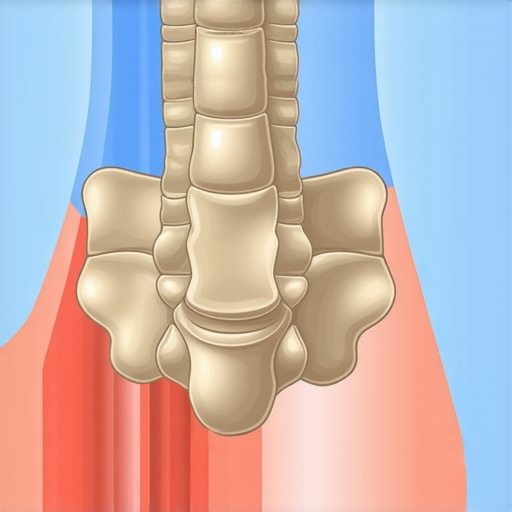
The Myth of the ‘Tight’ Hamstring
Another common mistake is the endless pursuit of hamstring flexibility. Many people with chronic low back issues spend hours stretching their legs, yet the tension never leaves. This is often because the hamstrings are not actually short; they are ‘locked long’ because the pelvis is tilted too far forward. This is precisely why stretching your hamstrings won’t fix your back pain in many cases. You are essentially pulling on a nerve that is already under physical tension. To find lasting relief, you need to look at the hidden muscle that stabilizes your lower spine—the multifidus. When this deep muscle is not firing correctly, the larger muscles like your hamstrings and erectors have to do double duty, leading to that perpetual feeling of tightness. If you want to boost mobility ease pain chiropractic techniques unveiled in a clinical setting, we focus on resetting the neurological tone of these muscles rather than just stretching them into oblivion.
Don’t Chase the Sound
Finally, let’s talk about the ‘self-adjustment’ trap. We have all done it—that quick, forceful twist of the neck to get a satisfying pop. While it feels good for about ten minutes due to the release of endorphins, you are usually just moving the joints that are already hypermobile. The joints that are actually stuck—the ones your chiropractor carefully targets—stay stuck. This is a core part of understanding back pain a guide to better posture and mobility. If you find yourself needing to crack your neck every hour, it is a sign that your internal stability is compromised. Instead of chasing the sound, focus on how to strengthen your deep neck flexors to provide the structural support your spine actually craves. Have you ever fallen into this self-cracking trap? Let me know in the comments below.I have spent thousands of dollars on ergonomic gadgets, from vibrating chairs to expensive braces, but I have found that the best results come from high-fidelity, low-tech interventions. To keep your spine happy, you need a daily maintenance kit that actually addresses the mechanics of your environment. For instance, I never leave for a road trip without knowing how to use a rolled-up towel to fix your cars lumbar support. Most car seats are designed for safety first, which often means they cave your chest in and flatten your lower back. A simple beach towel rolled to the thickness of your forearm and placed at the small of your back can save you from a week of post-trip stiffness. Then there is the death by a thousand clicks that happens at your desk. I strictly follow the 5-minute doorway stretch for rounded shoulders every single time I get up for a glass of water. This isn’t just about stretching; it is about resetting the shortened state of your pec minor. If you skip this, your chiropractor is essentially fighting your desk for forty hours a week.
How do I keep my spine healthy between appointments?
Maintenance is about micro-dosing movement rather than waiting for a massive weekend workout. In his book Becoming a Supple Leopard, Dr. Kelly Starrett talks about the one-joint rule—the idea that you should never let your spine lose its neutral position while moving your primary engines, which are your hips and shoulders. I apply this by using a specific trick: I have learned how to use a tennis ball to fix that spot under your shoulder blade because it allows for a level of precision that a foam roller lacks. By pinning the ball against a wall and leaning into the rhomboids, you can release the tension that leads to tech neck before it becomes a full-blown headache.  I am also obsessed with the eyeline rule. If you haven’t taken the time to learn how to adjust your monitor to avoid eye and neck strain, you are literally inviting a cervical disc issue. Your head weighs about ten to twelve pounds; for every inch it tilts forward, the effective weight on your neck doubles. By the time you are looking at a laptop on your lap, your neck is supporting sixty pounds. I predict that in the next five years, we will see a massive shift toward biofeedback wearables—think tiny sensors on your collarbone that sync with your phone to alert you the moment your posture deviates. We are moving away from passive fixes and toward active, real-time awareness. If you want to achieve mobility mastery expert tips for back pain prevention and recovery, start small. Don’t try to overhaul your entire life tomorrow. Pick one thing—maybe it is the monitor height or the towel in the car—and commit to it for seven days. You will find that neck pain no more expert chiropractic solutions that work is a reality only when you take ownership of the hours you spend away from the table. Go grab a tennis ball and try that shoulder blade release right now; your upper back will thank you in ten minutes.
Three Hard Truths About Spinal Health That Changed Everything
Over the years, I have realized that the most common mistakes are often the most well-intentioned. First, stop trying to ‘protect’ your back by holding your breath and tensing your stomach all day; why your strong core might actually be too rigid is a lesson in finding fluid stability rather than frozen tension. Second, chasing the ‘crack’ is a fool’s errand. Mobility isn’t measured by the volume of a pop; it is measured by how easily you can move through your day without restriction. Finally, your body is a reflection of your repetitive habits, not just your one-hour workout. If you spend forty hours a week slouched, a single adjustment cannot magically erase that without your active participation in the recovery process.
The Low-Tech Toolkit That Actually Saves My Back
You do not need a thousand-dollar ergonomic chair to find lasting relief. I personally swear by three simple items that stay in my bag at all times. A standard tennis ball is my secret weapon for travel; learning how to use a tennis ball to fix that spot under your shoulder blade allows me to work out muscle knots in hotel rooms or even at the office. For those long commutes, I have stopped relying on built-in car seats and instead use how to use a rolled-up towel to fix your cars lumbar support to maintain my natural lumbar curve. Finally, I highly recommend checking out Becoming a Supple Leopard by Dr. Kelly Starrett—it is an incredible manual for anyone who wants to understand how to move properly and prevent injury before it starts.
A Healthier Version of You Is Just a Few Habits Away
True healing isn’t a single event; it is a series of small, intentional choices you make every single day. When you combine professional care with these daily adjustments, you move from a state of constant ‘fixing’ to a state of true thriving. Achieving neck pain no more expert chiropractic solutions that work is not about luck—it is about consistency and awareness. You have the tools now to take control of your alignment and your path to mobility mastery expert tips for back pain prevention and recovery will become your new baseline. Don’t let the fear of ‘doing it wrong’ stop you from starting; your spine is remarkably resilient when you treat it with a little respect. What is the one small change you are going to make to your sleep or desk setup tonight to protect your progress? Let me know in the comments below!