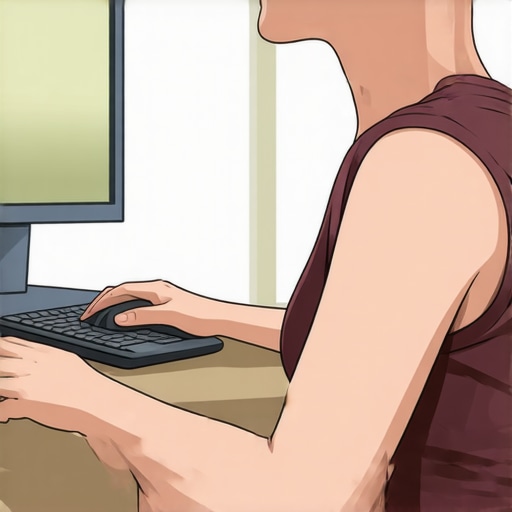
The Truth About Lumbar Support Belts for Lifting
I remember the exact moment my ego met its match in the form of a heavy laundry basket. There was a sickening, muffled pop in my lower back, and suddenly, I was seeing stars in the middle of my hallway. For weeks after that, I lived in fear of any object heavier than a gallon of milk. My first instinct was to run to the pharmacy and buy the thickest, sturdiest lumbar belt I could find. I figured if I just strapped my spine into a corset of nylon and Velcro, I’d be bulletproof. I was wrong, and honestly, I was probably making things worse. In this post, I want to peel back the layers of marketing and tell you what I learned the hard way about using these belts for mobility and safety. We are going to dive into whether you actually need one or if you are just masking a deeper issue with your form.
Why Most People Get Lumbar Belts Completely Wrong
I used to think a belt was a replacement for learning how to pick up your laundry basket safely. I would cinch that thing so tight I could barely breathe, thinking I was protecting my discs. The reality is that what your chiropractor wishes you knew about heavy lifting is that a belt is a tool for creating pressure, not a structural replacement for your muscles. My biggest mistake was wearing it for everything—even when I was just standing for 10 minutes while doing the dishes. I was essentially telling my core muscles to take a permanent vacation, which only led to more instability later on. Surprising as it may be, the National Institute for Occupational Safety and Health (NIOSH) has stated that there is no conclusive evidence that back belts prevent injuries among workers who haven’t been previously injured. It’s a sobering thought when you realize how much we rely on them.
Are these belts just a fancy placebo?
It is the question everyone asks once they realize they’re still sore despite the gear. If the belt makes you feel invincible, you might attempt a lift that your actual physical structure isn’t ready for. We’re going to break down the truth about weightlifting belts and spinal stability so you can stop guessing and start moving with real confidence. Have you ever felt that strange ‘false sense of security’ the moment you strapped one on, only to regret it the next morning? I’d love to hear about your experience with them. Understanding back pain and its relationship to mobility is the first step toward actually fixing the problem rather than just covering it up with a strap.
Turn Your Core into a Sealed Cylinder
To use a belt effectively, you have to think of your torso as a pressurized soda can. If the can is full and sealed, you can stand on it without it buckling. If it’s empty or the lid is off, it collapses under the slightest weight. Most people strap on a lumbar belt but leave the ‘lid’ open by breathing into their chest. I learned this lesson the hard way when I tried to move a massive oak dresser during a solo apartment swap. I had my belt cinched so tight it left marks, but I wasn’t creating any internal pressure. Halfway through the lift, I felt my spine shift like a folding chair. I realized then that the belt wasn’t failing me; I was failing to use it as a tool for resistance. Now, I always focus on how to breathe into your lower back to reduce muscle spasms before I even touch the buckle. This creates a 360-degree wall of pressure that supports the spine from the inside out. 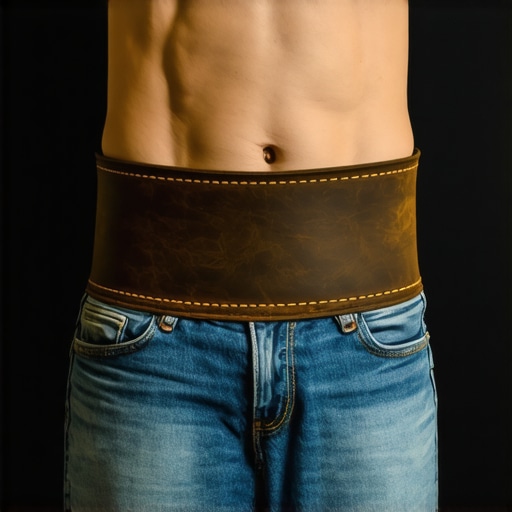
Breathe Into Your Belly Instead of Your Chest
The first step in making a belt work is changing your air intake. When you inhale, your belly should expand outward, pushing against the belt in all directions—front, sides, and back. This is called intra-abdominal pressure. If your shoulders rise when you take a breath before a lift, you are doing it wrong. You are essentially leaving your lower back unsupported. I spent months practicing the dead bug variation that actually fixes lower back instability to teach my brain how to keep my ribs down and my core pressurized while my limbs moved.
Create a Wall of Pressure for Your Spine
Think of the belt as a feedback loop. It is a physical wall for your muscles to push against. Without the belt, it is harder for your nervous system to ‘feel’ if your core is fully engaged. When you push your abs against the leather or nylon, it signals your brain to stabilize the area. However, what your chiropractor wishes you knew about heavy lifting is that this stability must come from your muscles first. The belt just amplifies it.
The Right Way to Sequence a Heavy Lift
You should never rely on the belt to fix bad form. Before you reach for the weight, check your stance. If your hips are locked or your feet are uneven, the belt is just a band-aid on a broken system. We often see that why your glute medius is more important than your abs for back health comes down to how your pelvis handles the load. If your glutes aren’t firing, your lower back takes the hit, belt or no belt.
Stop Using the Belt as a Crutch for Light Work
If you wear a belt to do the dishes or carry a light grocery bag, you are doing more harm than good. You are essentially telling your stabilizing muscles that they don’t need to work. This leads to atrophy and a higher risk of injury when you aren’t wearing the gear. Reserve the belt for your heaviest lifts—the ones that truly challenge your structural integrity. Focus on restoring your back mobility through movement rather than through external restriction for daily tasks.
Everyone tells you to just ‘get a stronger core’ to fix your back, but I’ve found that why your core strength isn’t stopping your back from hurting is often a matter of coordination, not raw power. We often assume that the belt is there to hold us together like a cast on a broken arm, but that is a dangerous myth. In reality, the belt is an external feedback loop for your nervous system. If you aren’t already practicing mobility mastery, the belt can actually make you stiffer in all the wrong ways.
Why your six-pack might be failing your spine
I’ve seen athletes with world-class abdominal definition throw their backs out picking up a pair of shoes. This happens because they have ‘show muscles’ but lack the reflexive stability required to protect the vertebrae under load. According to Dr. Stuart McGill, a leading expert in spine biomechanics, a belt works by helping the body achieve ‘super-stiffness.’ However, this only works if you are already restoring your back mobility through proper movement patterns. If you strap on a belt without knowing how to hinge your hips, you’re just transferring that stress to your hip joints or your upper back. This is why why your ankle mobility is secretly destroying your squat form—everything is connected, and a belt cannot compensate for a lack of range of motion elsewhere.
Does a belt actually delay your natural recovery?
The ‘oops’ factor most people fall into is the False Security Trap. When you feel that snug pressure of the belt, your brain naturally thinks, ‘Okay, we’re safe, let’s lift 20% more.’ But your ligaments and discs haven’t received the memo. You might be masking the very pain signals that are trying to tell you your form is breaking down. This is the hidden nuance: a belt should be used to enhance a stable spine, not to create one where it doesn’t exist. If you find yourself unable to lift even moderate weights without it, you are likely heading toward a chronic issue. I recommend focusing on understanding back pain as a signal to fix your mechanics rather than a signal to buy more equipment. Have you ever fallen into this trap of relying on a belt to ‘get through the day’ only to feel worse later? Let me know in the comments. We need to move away from the idea that gear replaces what your chiropractor wishes you knew about heavy lifting, which is that your natural bracing must always come first.
If you’re serious about moving beyond the belt, you need to think about scaling your internal support. For me, that meant looking at my body as a project that requires daily maintenance, not a machine that I only fix when it breaks. One tool I swear by is the humble lacrosse ball. It’s cheap, virtually indestructible, and more effective than a expensive massage chair if you know where to put it. I use it specifically to target the Glute Medius. When that muscle gets tight, it pulls on your pelvis and forces your lower back to overwork. By pinning the ball against a wall and leaning into those tight spots, I’m essentially giving myself a targeted adjustment between visits. This is a core part of mobility mastery.
How do I maintain spinal resilience over the long haul?
Maintenance isn’t about doing a 60-minute yoga flow every day—it’s about the micro-habits. Dr. Eric Goodman, the creator of Foundation Training, argues that we need to ‘decompress’ our spines by strengthening the entire posterior chain to work as a single unit. I started incorporating his ‘Founder’ pose into my work breaks, and the difference in how my back feels after four hours at a desk is night and day. It shifts the load from the discs to the muscles that are designed to handle it. If you’re struggling, looking into back pain recovery methods that emphasize this kind of structural integration is a game-changer.

The future of spinal health involves tech you can wear
Looking ahead, I predict we’re going to see a massive shift toward wearable biofeedback. We’ve had belts for decades, but soon we’ll have shirts with haptic sensors that vibrate the second your rib cage flares or your pelvis tilts too far forward. This real-time data will take the guesswork out of understanding back pain. Instead of wondering if your form is off, your phone will tell you. But until that’s mainstream, you have to be your own sensor. You need to focus on restoring your back mobility through intentional movement patterns rather than external constraints.
Stop ignoring the small stuff that scales into big problems
I used to think I only needed to care about my spine when I was lifting heavy objects. Now I know that why your glute medius is more important than your abs isn’t just a catchy headline; it’s a biological fact for anyone who wants to stay active into their 80s. My advanced tip for you today: don’t wait for the ‘pop’ I experienced. Start a morning spinal hygiene routine tomorrow. Just five minutes of movement can prime your nervous system and prevent the stiffness that leads to injury. Commit to doing one ‘Founder’ pose every time you get up for coffee. It sounds small, but that’s how you scale health—one rep at a time.
Lessons Learned When My Belt Stopped Working
Looking back at my ‘stars-in-the-hallway’ moment, I realize that my obsession with external support was actually masking a lack of internal awareness. One of the biggest shifts in my mindset occurred when I stopped viewing the belt as a shield and started seeing it as a coach. It taught me that my breath was my real stability. I also learned that stiffness is not the same as strength; you can be as rigid as a board but if you can’t move your hips independently of your spine, you’re still a sitting duck for injury. Finally, I discovered that mobility mastery involves knowing exactly when to let the muscles do the work without any help at all.
The Only Tools I Trust for Real Spinal Resilience
While a belt has its place for personal records in the gym, these are the resources I actually use to keep my back feeling young. First, a simple lacrosse ball for targeted release of the glute medius—this is one of those simple yet effective chiropractic hacks you can do while watching TV. Second, I highly recommend the work of Dr. Stuart McGill; his ‘Big 3’ exercises are the gold standard for creating a core that actually protects your discs. Lastly, if you haven’t tried the ‘Founder’ pose from Foundation Training, you are missing out on a massive decompression tool that feels better than any massage. These methods are the foundation of true back pain recovery.
#IMAGE_PLACE_HOLDER_E#
Build Your Internal Armor from the Inside Out
You don’t have to be afraid of heavy lifting or even the simple act of picking up a laundry basket. The key is to stop outsourcing your stability to a piece of nylon and start building it within your own body. Use the lumbar belt as the high-performance tool it was meant to be, but spend most of your time focusing on how your body moves through space naturally. Whether you are following a 3-step morning routine for hip mobility or just practicing better breathing, every small effort counts toward a life without chronic stiffness. You have the power to rebuild your spine’s resilience, one breath at a time.
Have you ever felt like you were becoming ‘addicted’ to wearing a back belt for everyday tasks? Let me know your experience in the comments below!