The Truth About Gravity Boots and Back Health
I’ll never forget the sound my spine made—or rather, the sound it didn’t make—the first time I strapped into a pair of gravity boots. I was dangling like a piece of cured ham in my garage, blood rushing to my face, waiting for a miracle. After years of sitting in a cramped office chair, my lower back felt like it had been compressed by a hydraulic press. I had tried the 20-20-20 rule for desk workers, and while it helped my eyes, my L5-S1 disc was still screaming for mercy. I needed something radical. Something that literally turned my world upside down.
The Moment I Realized Gravity Was My Enemy
We spend sixteen hours a day being squashed. Every step you take, every hour you sit, gravity is relentlessly pushing your vertebrae together. I used to think simple chiropractic hacks were enough, but I was making a massive mistake: I was only treating the symptoms, not the mechanical compression. According to a study in the Archives of Physical Medicine and Rehabilitation, inversion therapy can reduce the need for surgery in up to 70% of patients with certain types of disc issues. That’s a staggering number that convinced me to stop being afraid and start hanging.
Is hanging like a bat actually worth the hype?
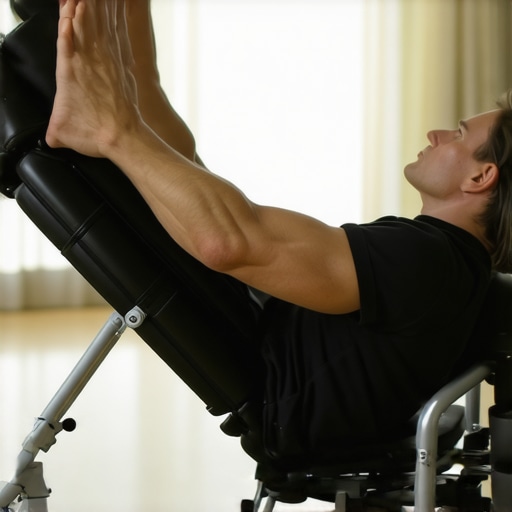
You might be thinking this looks like a gimmick from an 80s action movie. I thought so too. In fact, my first attempt was a disaster because I tried to do full situps immediately, which is a great way to strain your hip flexors if you aren’t ready. I learned the hard way that the real magic isn’t in the exercise, but in the passive decompression. If you’ve ever felt like you just need someone to grab your ankles and pull, this is the solution we’re exploring today. We’re going to look at the truth about inversion tools and how to use them without ending up with a headache or a blown-out ankle. Have you ever been so desperate for relief that you considered hanging from the ceiling like a bat? Let me know, because I’ve been there.
Why Your Spine Craves Space
Before you run out and buy a pair, you need to know how to tell if your back pain is serious enough for this kind of therapy. It isn’t for everyone, especially if you have blood pressure issues. But for the rest of us? It’s like hitting a reset button on your skeletal system. I stopped relying solely on weightlifting belts for stability and started focusing on creating space between my discs.
Master the Art of Vertical Decompression
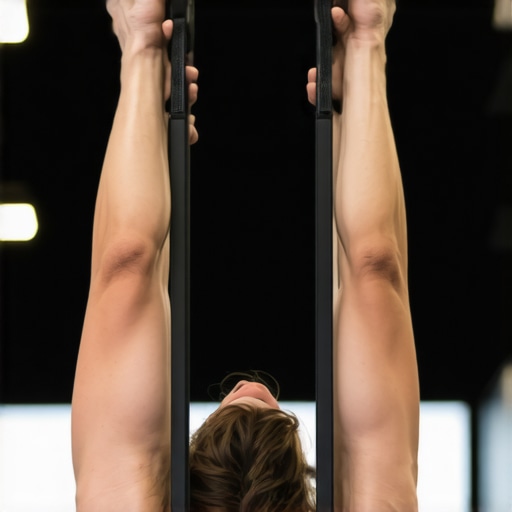
When you first get your gravity boots or an inversion table, the temptation is to go full “Batman” immediately. Resist that urge. Your body is a hydraulic system, and changing the pressure too quickly is a recipe for a massive headache. Start by securing your ankles—this is the absolute foundation of the entire movement. If your ankles are loose, your calf muscles will fire to keep you from falling, which creates tension in your legs that travels up to your lower back, defeating the purpose of the stretch. This is why we adjust your ankles to help your chronic hip pain; alignment starts from the ground up, even when the ground is technically above your head.
Find Your Zero-Gravity Sweet Spot
You do not need to be completely vertical to see massive results. In fact, most of the physiological magic happens at a 60-degree angle. I learned this the hard way during my second week of training. I went straight to 90 degrees for ten minutes and felt like my eyeballs were going to pop out. It was a messy experience, and I spent the next hour lying on the garage floor waiting for the world to stop spinning. Now, I advocate for the “staircase approach.” Start at 20 degrees for two minutes, then move to 40, and only hit the deep angles once your heart rate has stabilized. This slow transition allows your vascular system to adapt to the fluid shift without the “head-rush” panic. 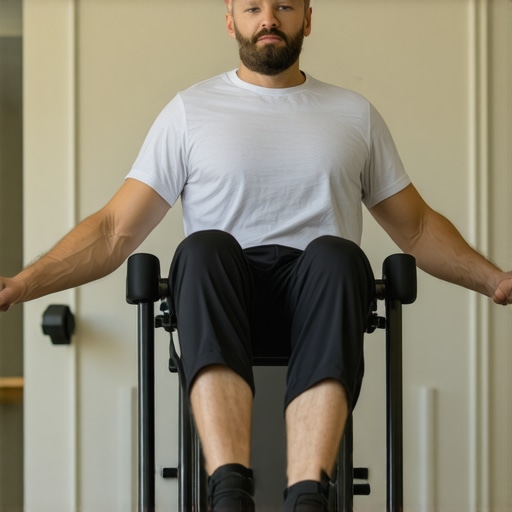
The Three-Minute Rule for Safe Inversion
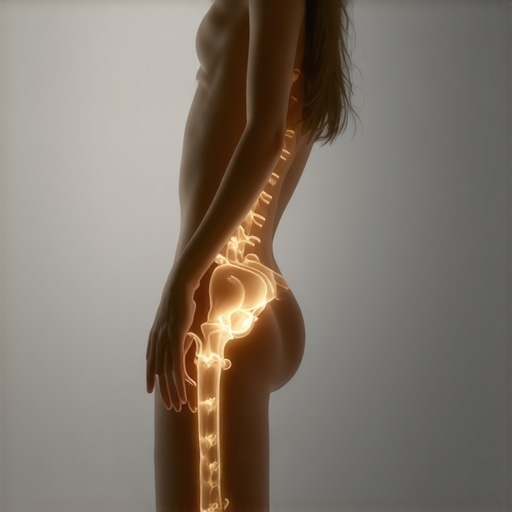
Time is far more important than depth. I have found that a 5-minute reset for a stiff lumbar spine is often more effective than twenty minutes of static hanging. While you are inverted, focus on your breath. Think of your spine like a rusty accordion. As you inhale, you are not just filling your lungs; you are sending internal pressure into the disc space. As you exhale, let gravity pull your shoulders toward the floor. This creates a rhythmic pumping action that helps rehydrate the discs. If you have ever wondered why you feel taller after a chiropractic adjustment, it is because those discs have finally been allowed to expand after hours of compression.
Don’t Fight the Hang
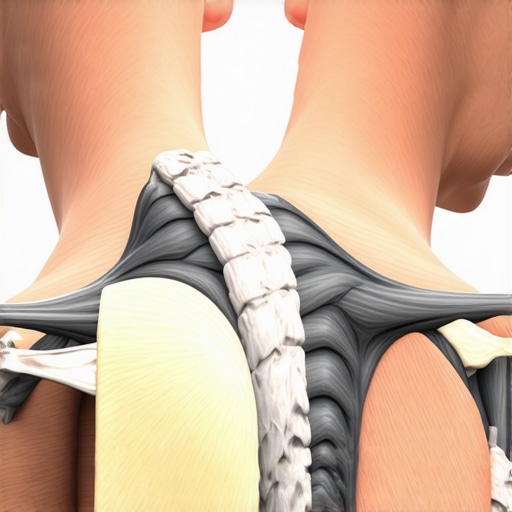
The biggest mistake I see beginners make is “guarding.” Their muscles are so afraid of falling that they stay rigid. To fix this, I use a “pendulum” technique. Gently rock your arms back and forth while hanging. This small movement tricks the nervous system into letting go of the deep paraspinal muscles. If you feel a sudden twinge, do not panic. Knowing how to handle a sudden back spasm when you are alone is crucial here—always keep your hands on the safety rails or the pull-up bar so you can pull yourself up instantly. Consistency beats intensity every single time. Using these proven chiropractic strategies will turn a scary piece of equipment into your best tool for long-term mobility.While hanging upside down is a total game-changer for decompression, I often see dedicated movers make a critical mistake once they get back on their feet. They try to maintain a military-grade, static posture that actually does more harm than good. Here is the hard truth: your perfect posture is actually making you stiff. We were told to ‘sit up straight’ since kindergarten, but for many people dealing with chronic tension, sit up straight is actually bad advice because it forces the spinal extensors into a state of chronic, oxygen-deprived fatigue. Real spinal health isn’t about being a rigid statue; it’s about being like a willow tree—naturally stable but capable of fluid movement.
Stop Obsessing Over a Rigid Core
We’ve been sold a bit of a myth that if we just do enough planks and achieve a rock-hard midsection, our back pain will vanish. However, in my clinical experience, your strong core might actually be too rigid. When your abdominal wall is perpetually ‘on’ or ‘braced,’ it increases intra-abdominal pressure to a point where it can actually compress the discs rather than protecting them. A study published in the Journal of Biomechanics highlights that excessive trunk stiffness can lead to increased spinal loading during even simple, everyday tasks. This is the ‘Oops’ factor most fitness enthusiasts miss: they lose the ability to relax. To counteract this, you need to learn how to breathe into your lower back to create dynamic, hydraulic support rather than a stiff muscular corset. 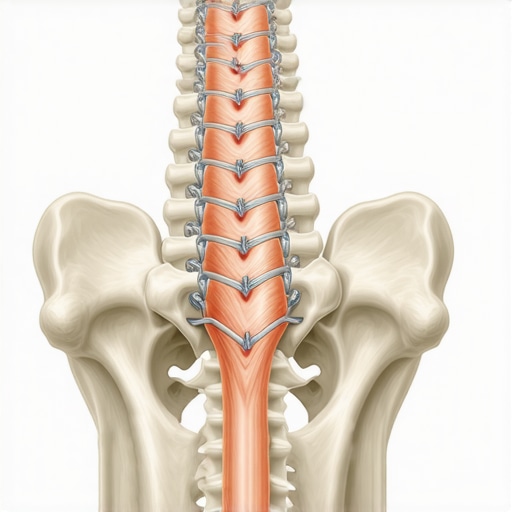
Why does your neck click even when you are treating your lower back?
This is the ultimate nuance that separates beginners from experts. The spine is a closed-loop kinetic system, not a collection of isolated parts. Often, the reason your neck clicks when you turn your head has nothing to do with your neck muscles and everything to do with a tilted foundation. This is why we look at your pelvis when your neck hurts. If the base of the tower is slightly rotated, every vertebrae up to the skull has to compensate. If you are only stretching your neck or hanging by your ankles without addressing pelvic torsion, you are merely chasing ghosts.
The Hamstring Stretch Trap
One of the most persistent myths in the mobility world is the endless pursuit of flexible hamstrings. People assume tight legs are the primary cause of lumbar strain, but often, stretching your hamstrings won’t fix your back pain. In many cases, those hamstrings are tight because they are desperately trying to stabilize a pelvis that is out of alignment. If you stretch away that protective tension without addressing the underlying instability, you’re removing the only thing holding your lower back together. Have you ever fallen into this trap of stretching a ‘tight’ muscle only to feel worse the next morning? Let me know in the comments. Instead of mindless stretching, focus on strengthening your glutes to take the pressure off your spine. This fundamental shift from ‘loosening’ to ‘stabilizing’ is where long-term back pain recovery actually begins.I’ve spent a small fortune on gadgets that promised to fix me overnight, from vibrating chairs to magnetic bracelets. Most of it is junk. If you want to know what actually works, look at my travel kit. I never leave home without a tennis ball because I know how to use a tennis ball to fix that spot under your shoulder blade when I’m stuck in a hotel room. I also carry a simple lumbar roll, though I’ve often shown people how to use a rolled-up towel to fix your car’s lumbar support in a pinch. These aren’t just ‘hacks’; they are essential survival tools for a modern environment designed to make us soft and stiff.
The Gadgets That Earned a Permanent Spot in My Kit
When I’m working from a remote location, I prioritize a setup that mimics my clinical biomechanical needs. Maintaining this isn’t about one hour at the gym; it’s about the other 23 hours. You need to learn how to stay mobile when you have a desk job and no time for the gym. Dr. Stuart McGill, a leading expert in spine biomechanics at the University of Waterloo, emphasizes that ‘spinal hygiene’ is more about avoiding bad movements than performing good ones. This means your recovery is built in the moments you decide to revitalize your mobility through micro-adjustments rather than waiting for a crisis.
How do I maintain these spinal gains for the long haul?
The secret is what I call the ‘Stacking’ method. I stack my spinal care onto existing habits. While my morning coffee brews, I perform a 5-minute reset for a stiff lumbar spine. While I’m on a conference call, I’m actively checking my pelvic tilt and ribcage position. This consistency is exactly how back pain recovery how chiropractic care transforms lives—it shifts the focus from a periodic clinical visit to a daily philosophy of movement. If you aren’t integrating how chiropractic care enhances movement into your literal walk, you’re essentially trying to bail out a leaking boat with a teaspoon. 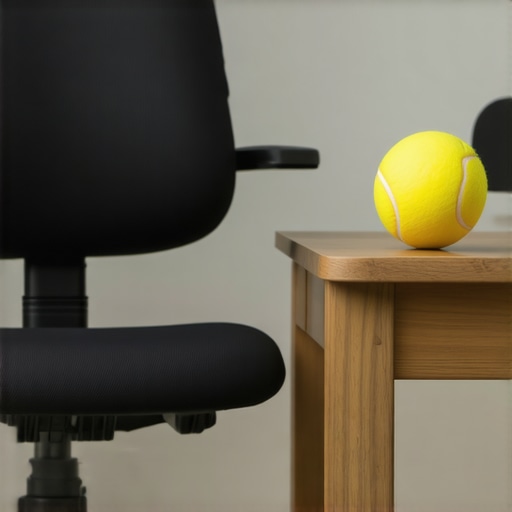
Why Your Spine’s Future Is Smart and Responsive
I predict we are moving rapidly toward an era of ‘Live Biofeedback.’ Imagine a shirt or a wearable sensor that gently vibrates when it detects your mid-back starting to round or your head tilting too far forward. We are already seeing the early stages of this with technical documentation from companies like Upright and various smart-fabric startups. This tech will finally bridge the gap between ‘knowing’ you have bad posture and ‘changing’ it in the moment. Until then, you are your own best sensor. My challenge for you today is the ‘One-Inch Shift’: move your computer monitor up exactly one inch from where it is right now. This tiny change forces your cervical spine into a more neutral position and can instantly reduce the load on your upper traps. Do it now—your future self will thank you for the relief.
What Years of Hanging Upside Down Taught Me About My Back
Looking back at my journey from chronic stiffness to fluid movement, I realized I wasted months trying to ‘force’ my spine into health. Here are the lightbulb moments that changed everything for me. First, relaxation is a skill; you cannot decompress a muscle that is actively fighting gravity, so you must learn to melt into the boots. Second, the pelvis is the pivot point for everything. If your hips are locked, your lower back will never truly release, which is why we look at your pelvis when your neck hurts. Finally, small wins build skyscrapers. A two-minute hang every day is infinitely more effective than a twenty-minute marathon once a week.
The Three Tools I Actually Pack for Every Trip
I’ve tried the $5,000 chairs and the vibrating gadgets, but I always come back to the basics because they work anywhere. I never travel without a simple tennis ball because I know how to use a tennis ball to fix that spot under your shoulder blade during a layover. I also highly recommend the book Back Mechanic by Dr. Stuart McGill for anyone wanting to understand the science of their own movement. For home use, a Teeter inversion table is my gold standard for safety. When you enhance mobility naturally with chiropractic care, these tools act as your daily maintenance crew to keep the progress going.
Your Spine Deserves a Second Chance
It’s easy to feel like your back is a broken machine that’s only getting worse with age. But I’ve seen seventy-year-olds regain the ability to garden and young office workers escape the fog of chronic headaches. Real back pain recovery is possible when you stop fighting your body and start working with its mechanical needs. You don’t need to be an expert to start; you just need to be consistent. Whether it’s the radical shift of inversion or simply learning how chiropractic care enhances movement, the first step is always the most important. Have you ever tried inversion therapy, or does the idea of hanging upside down still feel a bit too radical for you? Let me know in the comments below!