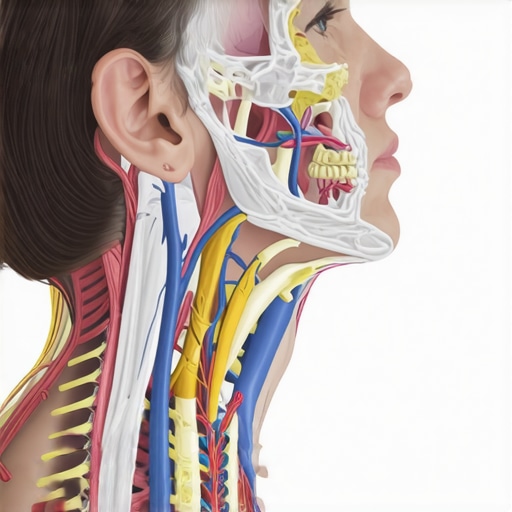
The Scapular Squeeze That Relieves Mid-Back Tension
I was hunched over my laptop, chasing a deadline, when that familiar, searing knot flared up right between my shoulder blades. It felt like a dull knife was being pressed into my spine. I tried the usual—rolling my shoulders, leaning back until my chair groaned, and even wondering why my mid-back felt like it desperately needed to pop. Nothing gave me more than five seconds of relief. I spent years thinking I needed to stretch my back more, but I was actually making the problem worse by overstraining muscles that were already overstretched and tired. It wasn’t until I discovered the scapular squeeze that I realized I didn’t need more flexibility; I needed to wake up the muscles that had gone to sleep. I remember one Tuesday, after six hours of staring at a spreadsheet, I realized I couldn’t even take a full breath without a sharp pinch in my ribs. That was my enough is enough moment. I had been letting my phone round my upper back for months, and my body was finally billing me for the debt. [IMAGE_PLACEHOLDER]
Stop Chasing the Ghost of That Mid-Back Ache
Most of us treat mid-back tension like a fire that needs to be doused with constant stretching. I used to be the king of the 5-minute doorway stretch, thinking if I just opened my chest enough, the back pain would vanish. It didn’t. In fact, a common mistake I made early on was ignoring the fact that my rhomboids and mid-trapezius were screaming for engagement, not just more lengthening. When you sit all day, those muscles become long and weak, a state that according to the Journal of Physical Therapy Science, can significantly impair your postural control and even your respiratory function. The scapular squeeze is a targeted way to tell your nervous system, ‘Hey, we’re still using these muscles!’ It is about resetting the relationship between your shoulder blades and your ribcage. Sometimes the cause is even simpler than posture; for instance, I’ve seen how an ill-fitting sports bra can contribute to that exact same stuck feeling. By mastering this one movement, you aren’t just masking the pain—you’re addressing the mechanical failure at the source. Have you ever felt that spot under your shoulder blade that just won’t go away no matter how many times you rub it?
Is a simple squeeze really enough to fix this?
It sounds too easy, right? I was skeptical too. I thought I needed a high-tech massage gun or a tennis ball to dig into that spot for an hour. But the truth is, your body responds far better to consistent, gentle activation than it does to aggressive smashing of the tissue. This move works because it retrains your brain to hold your shoulders in a neutral position without effort. We are going to walk through exactly how to perform this without shrugging your shoulders into your ears, which is the #1 mistake people make. Ready to finally feel some space in your upper back?
The Three-Step Move to Wake Up Your Mid-Back
To get this right, you need to stop thinking about pulling your arms back and start thinking about moving the actual bones of your upper back. Imagine your shoulder blades are two sliding glass doors. Your goal isn’t to slam them shut with a bang; it’s to glide them smoothly toward your spine. Start by sitting tall—if you are at your desk, ensure you aren’t fighting your furniture. I have found that learning the simple way to sit on a stool without pain makes the foundation of this exercise much easier to maintain. First, drop your shoulders away from your ears. Second, imagine there is a pencil sitting vertically right between your shoulder blades. Third, try to pinch that pencil by pulling the bottom corners of your shoulder blades together and slightly down toward your back pockets. Hold this for five seconds, then release slowly. This is a core part of how to restore your back mobility with proven chiropractic strategies, as it breaks the cycle of the ‘slump’ that we fall into during eight-hour workdays. 
Don’t Let Your Shoulders Take a Trip to Your Ears
The biggest mistake I ever made with this move happened about three years ago during a high-stress week. I was stuck in bumper-to-bumper traffic, and my mid-back was screaming. I decided to do a massive scapular squeeze right there at the wheel. But instead of engaging my mid-back, I hiked my shoulders up so high they were practically touching my earlobes. I squeezed with everything I had, and instead of relief, I felt a sharp, electric zing go right up the side of my neck. I had accidentally triggered a massive muscle spasm because I was overcompensating with my upper traps. It was a classic case of shoulder pain that was actually coming from my neck. When you perform the squeeze, your collarbones should stay wide and flat. If you feel your neck muscles straining or your chin jutting forward, you are trying too hard. Think of this as a ‘quiet’ movement. It is a subtle reset, much like the 30-second reset for tech neck fatigue that helps recalibrate your nervous system without adding new tension.
Why Your Ribcage Needs This Movement to Breathe Properly
Most people don’t realize that your shoulder blades and your ribs are neighbors that need to get along for you to feel good. When your shoulder blades are stuck in a forward, rounded position, they actually compress the back of your ribcage. This makes it incredibly difficult to take a deep, satisfying breath. I used to feel a ‘catch’ in my chest every time I tried to inhale deeply after a long day of typing. It wasn’t a lung problem; it was a mobility problem. By performing these squeezes, you are actually opening up the space where your ribs attach to your spine. This is why we look at your ribcage movement for better mobility during a checkup. When the shoulder blades move correctly, the ribs can expand like an accordion. If you are struggling with a sense of tightness, check the connection between shallow breathing and back pain to see how your posture is literally limiting your oxygen intake. This move acts as a physical ‘unzipping’ of the tension that builds up around your heart and lungs throughout the day.Most people are obsessed with finding the one perfect position, but why sitting up straight is actually bad advice for some is a conversation we need to have more often. When I first started focusing on my spinal health, I tried to be a statue. I thought if I could just hold myself perfectly upright, the pain would disappear. The reality? Static is the enemy of the spine. If you aren’t varying your position, you are creating postural fatigue. This is why your perfect posture is actually making you stiff. Your body wasn’t designed to be a pillar; it was designed to be a spring. 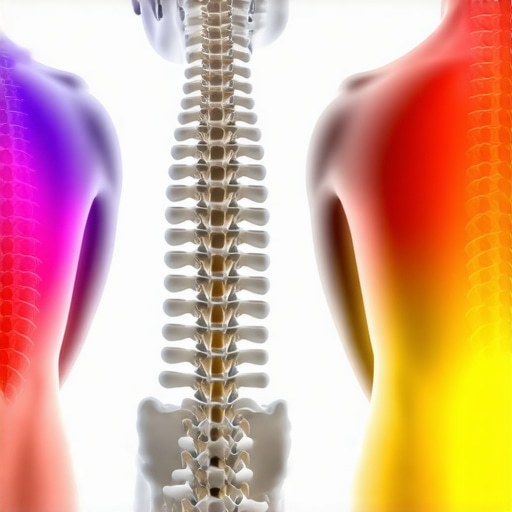
Why does my back still ache even if I have a strong core?
This is the ultimate hidden nuance. We are told to engage the core for everything, from picking up groceries to sitting at a desk. However, research published in the journal Spine highlights that excessive bracing of the abdominal muscles can actually increase the compressive load on your intervertebral discs. It’s like trying to protect a fragile glass by squeezing it as hard as you can. I used to keep my abs braced 24/7, and all I got for my trouble was a shallow breathing pattern and a spine that felt like it was made of lead. This is why your strong core might actually be too rigid and preventing the very mobility you’re trying to save. Real stability comes from a core that is adaptable—turning on when you lift something heavy and relaxing when you’re just typing.
The Trap of Chasing Symptoms Instead of Systems
One of the biggest oops factors I’ve seen in my own recovery journey is focusing solely on the spot that hurts. If your mid-back is screaming, the culprit might actually be six inches higher or two feet lower. It sounds wild, but why we look at your feet to solve your neck issues is because your body is a closed kinetic chain. A stiff ankle or a collapsed arch changes the way your pelvis rotates, which forces your mid-back to overcompensate. If you only rub the sore spot, you’re just yelling at the smoke while the fire is burning in the basement. This holistic view is essential for understanding back pain and achieving long-term relief. Have you ever fallen into this trap of over-bracing your core or focusing only on the pain point without looking at the bigger picture? Let me know in the comments below!The hardest part of any recovery journey isn’t the first exercise—it is the six months of maintenance that follow. Once that sharp rib pinch fades and you can finally breathe again, it is tempting to stop the scapular squeezes and go back to your old ways. I fell into this trap myself. I’d feel great for two weeks, stop my routine, and then wonder why I was back to wondering why my mid-back feels like it desperately needed to pop by the third Monday. Maintenance isn’t about doing an hour of gym work; it’s about the small, mechanical resets you perform while you work. I keep a laptop stand in my bag at all times because why your laptop stand is still causing neck strain is usually a result of not using it with an external keyboard. If you are using a stand but still typing on the laptop keys, you are just trading neck pain for shoulder tension. 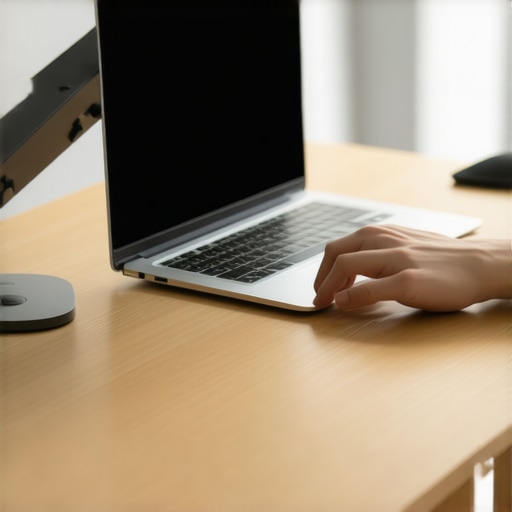
How can I keep my back healthy without spending hours on exercises?
The secret is integration, not addition. You don’t need more time; you need better triggers. According to the Cornell University Ergonomics Lab, your workstation should be designed to support a ‘neutral’ posture where joints are naturally aligned. This means your monitor top should be at eye level, and your feet must be flat to avoid pelvic tilting. I’ve found that even my commute can be a training session if I know how to reset your posture while driving. I use the rearview mirror as my ‘posture coach’—I set it while sitting tall at the start of my drive, and if I can no longer see clearly out of it ten minutes later, I know I’ve started to slump. Looking ahead, I predict a surge in ‘haptic feedback’ clothing that gently reminds us to engage our core and mid-back throughout the day via subtle vibrations. It’s the natural evolution of the fitness tracker. But for now, you have to be the pilot of your own body. Don’t forget that why your pillows should be replaced every eighteen months is a huge factor in whether your back recovers overnight or stays inflamed. If you really want to lock in these gains, stop what you are doing right now and perform the 5-second check to see if your monitor is too low. If it’s low, use a few thick books or a dedicated stand to lift it immediately. That one three-inch adjustment will save you more neck strain than a thousand stretches ever could. Try it once today and notice how much lighter your head feels.
What I Learned After 1,000 Failed Stretches
It took me years of trial and error to realize that pain is a messenger, not a malfunction. First, I learned that ‘no pain, no gain’ is a lie when it comes to the mid-back; if you force a movement, your brain will often lock the area down tighter to protect you. Second, I discovered that my eyes were actually the boss of my neck—if I didn’t address the 20-20-20 rule for desk workers and neck health, my shoulder blades never stood a chance of staying back. Finally, I realized that chiropractic care isn’t just about the satisfying ‘pop’; it is about recalibrating your nervous system so your body feels safe enough to let go of tension. These lightbulb moments shifted my focus from attacking my muscles to supporting my biology. [IMAGE_PLACEHOLDER]
The Minimalist Tools I Actually Use Every Day
I don’t believe in buying every gadget on the market, as most just gather dust. I stick to a few essentials that prioritize function over fluff. I use a sturdy laptop stand paired with an external keyboard to keep my wrists and neck in a neutral position. While I occasionally use a foam roller for my upper back, I am always mindful that why your foam roller might be hurting your lower back is a real risk if you use it on the lumbar spine. For a deeper dive into the mechanics of movement, I highly suggest checking out revitalize your mobility proven strategies for back pain relief to build a foundation that lasts. These aren’t just ‘fixes’—they are the environment your spine needs to thrive.
Your Spine Deserves a Fresh Start
Healing isn’t always a straight line, but it is entirely possible once you stop fighting against your own anatomy. You don’t have to live with that constant, nagging ‘stuck’ feeling between your shoulder blades every afternoon. By integrating these small, five-second resets and understanding back pain as a systemic issue rather than a localized annoyance, you are taking back control of your physical freedom. Your journey toward back pain recovery how chiropractic care transforms lives starts with that very first conscious squeeze today. Which of these postural triggers do you find hardest to remember during a busy workday? Let me know in the comments below!