Why Your Pelvic Floor Matters for Spinal Stability
I was bent over the dishwasher—a classic danger zone—when I felt that familiar, sharp warning shot in my lower back. I froze. My breath caught. The plate was still in my hand. It was a wake-up call I didn’t want. I’ve spent years [mastering back and neck pain relief tips from the pros](https://quackersspinal.com/mastering-back-neck-pain-relief-tips-from-the-pros-300), yet there I was, frozen by a salad plate. I realized that while I was obsessed with my ‘abs,’ I was completely neglecting the actual foundation of my trunk. If you have ever felt like your spine is a stack of loose bricks despite hitting the gym, you are likely missing the same thing I was. We talk about ‘core’ like it is just the six-pack on the front, but without the floor, the whole house collapses. Today, I am going to show you why your pelvic floor is the actual anchor for your spine and how you can stop the cycle of ‘twinges’ for good.
The Hidden Anchor for Your Aching Spine
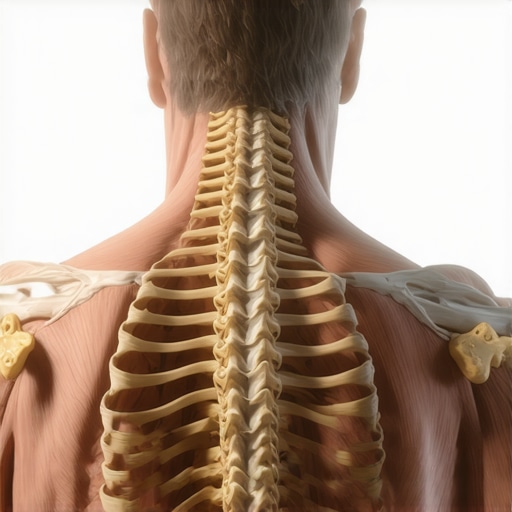
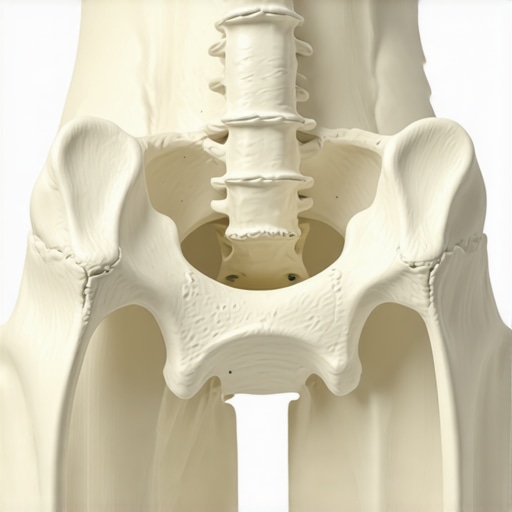
Most of us treat our midsection like a corset we need to tighten. I used to do it too. I’d walk around with my belly button sucked in, thinking I was being ‘athletic.’ In reality, I was just creating a massive amount of pressure with nowhere for it to go. Think of your torso like a canister of soda. The diaphragm is the top, the abs and back muscles are the sides, and the pelvic floor is the bottom. If the bottom is weak or uncoordinated, the pressure blows out the back. If you have been [restoring your back mobility with proven chiropractic strategies](https://quackersspinal.com/restore-your-back-mobility-proven-chiropractic-strategies) but the relief never sticks, we need to look at your foundation. [image-placeholder] It is not just about strength; it is about timing. Your pelvic floor should kick in just before you lift that grocery bag or pick up a child.
Is this pelvic floor stuff actually worth the hype?
You might be thinking this sounds a bit ‘extra’ or that it is only for people who have just given birth. That is a myth that kept me in pain for years. Everyone has a pelvic floor, and everyone needs it to stabilize their lumbar spine. Research published in the *Journal of Physical Therapy Science* indicates a significant correlation between pelvic floor muscle function and chronic lower back pain across all demographics. When these muscles don’t fire correctly, [the hidden muscle that stabilizes your lower spine](https://quackersspinal.com/the-hidden-muscle-that-stabilizes-your-lower-spine)—the multifidus—often shuts down too. It is a chain reaction of instability that no amount of sit-ups can fix.
Why Your ‘Strong Core’ Might Be Your Biggest Weakness
My biggest mistake early on was equateing ‘tightness’ with ‘stability.’ I made myself so rigid that my spine couldn’t move naturally. It turns out that [why your strong core might actually be too rigid](https://quackersspinal.com/why-your-strong-core-might-actually-be-too-rigid) is a real problem for mobility. You need a pelvic floor that can relax just as well as it can contract. When I finally learned [how to breathe into your lower back to reduce muscle spasms](https://quackersspinal.com/how-to-breathe-into-your-lower-back-to-reduce-muscle-spasms), I felt my pelvic floor finally drop and engage correctly for the first time. It was a literal weight off my shoulders. Have you ever felt like your back is ‘out’ even when you are technically in good shape? Drop a comment and let me know, because you are definitely not alone in that frustration. We are going to dig into the ‘how-to’ next, so get ready to change how you move.
Ditch the Sucking-In Habit and Breathe Deep
The first thing I had to unlearn was the ‘flat belly’ obsession. When you suck your stomach in to look thinner or ‘athletic,’ you are essentially squeezing a balloon in the middle; that internal pressure has to go somewhere, and it usually shoots straight into your lumbar discs. To fix this, you need to master 360-degree expansion. Place your hands on the sides of your lower ribs. As you inhale, don’t let your chest rise to your chin. Instead, feel your ribs push out into your palms and your back expand into your chair. This is the foundation of how to breathe into your lower back to reduce muscle spasms. Think of your diaphragm like a piston. As it moves down, it should push against your organs, which then push out against your abs and down against your pelvic floor. If you are constantly pulling your belly in, that piston has nowhere to go. I realized that the connection between shallow breathing and back pain wasn’t just a theory—it was the reason my back felt like a brittle stick every single afternoon. By filling that space with air, you create an internal cushion that supports your vertebrae from the inside out.
Visualize Your Pelvic Floor as an Elevator
Strength without coordination is just unnecessary tension. I used to think a strong pelvic floor meant doing as many maximum-effort contractions as possible while driving. I was wrong. That just made me tighter, and why your strong core might actually be too rigid is a major reason for restricted mobility. Instead, imagine your pelvic floor is an elevator. As you inhale (the 360-breath), the elevator goes down to the basement. You want it to relax and stretch. As you prepare to move—say, to reach for a heavy pot in a low cabinet—the elevator gently rises to the first or second floor. You don’t need a ‘third floor’ maximum squeeze for daily life; you need a light, springy engagement that happens just a millisecond before you move. This subtle lift is what wakes up the hidden muscle that stabilizes your lower spine, known as the multifidus. This timing is critical. If the elevator stays in the basement when you lift, your joints take the hit. If you have been restoring your back mobility with proven chiropractic strategies, you will find that those adjustments ‘hold’ much longer when this elevator is working in sync with your movement.
Stop Your Laundry Basket from Ruining Your Week
Applying this to real life is where you actually stop the pain cycle. I remember trying to lift my overflowing laundry basket last Tuesday. It was packed with heavy, damp towels—easily twenty pounds of spine-crushing dead weight. Normally, I would have just rounded my back and yanked it up, ending the day with a dull ache. Instead, I stopped and set my stance. I took my 360-breath, feeling my lower back expand. As I started to exhale, I felt my pelvic elevator lift slightly to that ‘second floor,’ and then I hinged at my hips. I felt zero strain. Knowing how to pick up your laundry basket safely isn’t about rigid ‘gym form’; it’s about this internal pressure management. It is exactly why the specific reason your lower back hurts after washing dishes is often a lack of this engagement while standing still. When you keep that internal canister pressurized, you can even use the 5-minute reset for a stiff lumbar spine more effectively because you aren’t constantly re-stressing the tissue with basic daily chores.
Stop Chasing More Flexibility
The most dangerous lie we are told about back health is that ‘tighter is always bad.’ In reality, your body often creates tightness as a protective mechanism. If you have a spinal segment that is moving too much, your brain will lock down the surrounding muscles to prevent injury. If you just hammer those muscles with stretching, you are essentially tearing down the safety fence. This is a common nuance discussed in mobility mastery expert tips for back pain prevention and recovery. True mobility is not about how far you can bend; it is about how much control you have throughout that range. When you focus solely on flexibility without the pelvic floor stability we discussed earlier, you are building a house on a swamp. You might be able to touch your toes, but you are likely sacrificing the long-term health of your lumbar discs to do it.
Are you actually stretching a muscle or irritating a nerve?
This is the advanced question every chronic pain sufferer needs to ask. Many people spend years thinking they have ‘tight hamstrings’ when they actually have neural tension. When you reach forward and feel a sharp, burning, or tingling pull behind your knee or into your calf, that is often your sciatic nerve being stretched, not the muscle fiber. Research published in the Journal of Strength and Conditioning Research indicates that aggressive static stretching can actually reduce the force-generating capacity of muscles and, in the case of neural tension, can increase inflammation around the nerve root. Understanding why stretching your hamstrings won’t fix your back pain is a total game-changer for those of us who have felt ‘tight’ for a decade despite daily yoga. If you keep pulling on an irritated nerve, the muscles will only get tighter to protect it from you.
The Dangerous Trap of Over-Stretching Tight Muscles
The ‘oops’ factor I see most often is stretching into a ‘cold’ spine or pushing through a pinch. If you feel a sharp pinch in your back during a stretch, that is a ‘stop’ signal, not a ‘push harder’ signal. This is why why your perfect posture is actually making you stiff; you are trying to force a static position on a body designed for dynamic movement. Instead of long, passive holds, I recommend active movements that boost mobility ease pain chiropractic techniques unveiled through controlled motion. If you aren’t sure if your discomfort is a simple muscle knot or something deeper, it is vital to learn how to tell if your back pain is serious before you start a new stretching regime. I used to fall into the trap of thinking I could ‘stretch out’ a disc bulge, but I was only making the inflammation worse. Have you ever fallen into this trap of stretching a ‘tight’ spot only for it to feel worse an hour later? Let me know in the comments, because once I stopped stretching my ‘tight’ back and started stabilizing it, the pain finally vanished. By using specific movements to restore your range how chiropractic care enhances movement, you focus on the joints rather than just pulling on the meat, which is where the real relief lives.
Maintaining that relief requires more than just knowing what to do; it requires the right environment. I’ve realized that I can’t out-exercise a bad workstation. This is where specific gear comes into play. I’m not talking about expensive vibrating chairs, but simple, targeted items that maintain your spinal curves while you aren’t thinking about them. For instance, knowing the correct way to use a lumbar roll in your office chair is the difference between constant irritation and a peaceful workday. If that roll is too high or too low, it actually forces your pelvis into a tilt that shuts off your core and creates that ‘brittle’ feeling.
Stop Fighting Your Furniture
Your couch is likely your spine’s worst enemy. I spent months wondering why my back flared up every Sunday night until I realized I was ‘cashing out’ my spinal integrity with slumped-over Netflix marathons. Now, I use a firm cushion to keep my hips above my knees. It’s one of those simple yet effective chiropractic hacks that saves you from a Monday morning crisis. We often think of injury as a single event, but it is usually the ‘thousandth papercut’ from a poorly supported seat.
How do I maintain these results over the long term?
Maintenance isn’t about doing a 90-minute yoga flow every morning. It’s about ‘spinal hygiene.’ Dr. Stuart McGill, a world-renowned expert on spine biomechanics and author of Back Mechanic, suggests that back health is determined by the cumulative load we place on our discs throughout the day. He emphasizes that how we brush our teeth or tie our shoes matters more than our PR in the gym. To keep things working, I perform the 5-minute reset for a stiff lumbar spine every afternoon at 3 PM, no matter how busy I am. This ‘micro-break’ clears the metabolic waste from the muscles and resets the neural tension.
Why a Cheap Tennis Ball is My Favorite Therapy Tool
When I feel a knot forming near my shoulder, I don’t wait for my next appointment. I grab a tennis ball. Learning how to use a tennis ball to fix that spot under your shoulder blade allows you to perform your own soft tissue work safely. You aren’t just ‘smashing’ the muscle; you are providing a sensory input that tells the brain it is safe to let go of that protective tension. It’s effective because it’s precise. I see the future of back health moving toward this kind of ‘micro-rehab’—where we use real-time biofeedback and simple tools to stay ahead of the pain rather than reacting to it once the spasm hits. We are moving away from the era of ‘no pain, no gain’ and into an era of ‘smart movement.’ If you want to dive deeper into these high-level habits, I highly suggest checking out mobility mastery expert tips for back pain prevention and recovery. Start today: find one spot in your house where your posture usually fails—be it the kitchen sink or the car—and fix it with a towel or a firmer chair. Your future self will thank you for the extra five seconds of effort.
Hard Truths About Stability I Had to Face
I used to think my back pain was a structural failure of my spine, but it was actually a failure of communication between my brain and my pelvic floor. Here are the lightbulb moments that changed everything for me:
- Tightness is often a lie: My body was creating stiffness because it didn’t trust my foundation. Learning why your strong core might actually be too rigid was the first step to letting go of that protective tension and finding real freedom.
- The piston effect: Your diaphragm and pelvic floor move together like a synchronized pump. If you hold your breath while lifting, you break that system. Real back pain recovery how chiropractic care transforms lives starts with this coordinated breathing.
- Small moves lead to big impact: You don’t need a heavy gym session to fix this. Often, the secret to walking without lower back fatigue is just a subtle 5% engagement of those deep floor muscles before you take a step.
The Small Gear That Fixed My Daily Grind
Maintenance isn’t about expensive machines; it is about the right tools used at the right time. These are the three essentials in my personal toolkit:
- A Firm Lumbar Roll: I use this in my office chair every single day. It keeps the natural curve of my lower back while I focus on work. Check out the correct way to use a lumbar roll in your office chair to ensure you aren’t accidentally pushing your spine out of alignment.
- The Tennis Ball Trick: This is the cheapest physical therapist you will ever own. Knowing how to use a tennis ball to fix that spot under your shoulder blade is a lifesaver for those mid-workday knots that usually lead to a headache.
- Dynamic Mobility Drills: Instead of static stretching, I use specific movements to boost mobility ease pain chiropractic techniques unveiled to wake up my joints before a workout.
#IMAGE_PLACEHOLDER_E#
Your Spine Deserves a Better Foundation
Healing isn’t a straight line, and it certainly isn’t about being perfect. It is about being aware. When you stop fighting your body and start supporting its natural pressure systems, the constant fear of a sudden twinge begins to fade. Whether you are regaining full mobility after an injury or just trying to get through a day at the office without a flare-up, your pelvic floor is the silent partner you have been missing. Start small, breathe deep, and give your back the anchor it needs to thrive for years to come. Have you ever noticed your back pain flares up during simple tasks like washing the dishes or reaching for the remote? Let me know in the comments below!