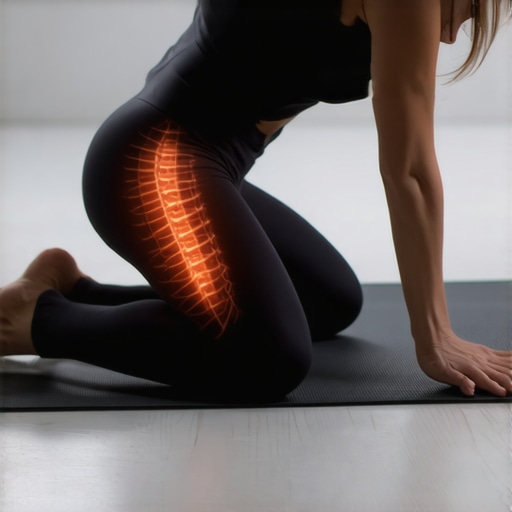
The Pelvic Tilt Trick for Instant Lumbar Relief
I’ll never forget that Tuesday morning. I was leaning over the bathroom sink, just trying to rinse my mouth out after brushing, when a sharp, white-hot bolt shot through my lower back. I froze. There I was, halfway bent, gripped by a muscle spasm so intense I thought I’d be stuck looking at the drain forever. Like many of you, I had spent years trying to fix my posture by pulling my shoulders back and puffing out my chest, but I was actually making things worse. It turns out, my biggest mistake was thinking my spine needed to be a rigid rod. Today, I’m going to show you how a tiny, almost invisible adjustment—the pelvic tilt—can give you the kind of relief that high-end office chairs and expensive massage guns simply can’t touch.
Stop Trying to Sit Up Straight Like a Soldier
For the longest time, I fell for the old myth that perfect posture meant keeping a massive arch in my lower back. I’d walk around like I had a board strapped to my spine. But that constant tension is exactly why sit up straight is actually bad advice for some of us. When you over-arch, you’re basically grinding your lumbar vertebrae together. The trick isn’t about more effort; it’s about finding that sweet spot where your pelvis balances like a bowl of water that isn’t spilling over the front. If you’ve ever struggled with getting out of bed without that morning back twinge, you know exactly the kind of stiffness I’m talking about. It feels permanent, doesn’t it? But it isn’t. It is just your body stuck in a pattern it doesn’t know how to break.
Will this really work for my “bad” back?
I get it. You’ve tried the foam rollers, the ice packs, and the miracle stretches you found on late-night TV. You’re skeptical. I was too. I used to think my back was just broken from years of sports and sitting at a desk. But once I realized that understanding back pain is more about subtle mechanics than brute strength, everything changed. A study published in the Journal of Physical Therapy Science found that posterior pelvic tilting significantly reduces lumbar lordosis and alleviates pressure on the facet joints, proving it’s not just a neighborly tip—it’s science. Have you ever felt like your lower back was just one wrong move away from going out? If so, tell me about it in the comments. We’re going to walk through the 5-minute reset for a stiff lumbar spine that finally gave me my life back.
Think of Your Pelvis as a Bowl of Water
Imagine your pelvis is a shallow bowl filled to the brim with water. When most of us stand or sit, we let that bowl tip forward, spilling water over our toes. This puts an incredible amount of stress on the lumbar spine. To fix this, you don’t need a gym membership; you need to learn how to level the bowl. I remember trying this for the first time while waiting in a long checkout line at the grocery store. I was so intent on ‘fixing’ my posture that I overcorrected and squeezed my glutes so hard the lady behind me asked if I was alright. It was embarrassing, but it taught me that why your strong core might actually be too rigid is a real problem. You aren’t looking for a massive, muscular contraction; you are looking for a subtle, two-millimeter shift that levels the plane of your hips.
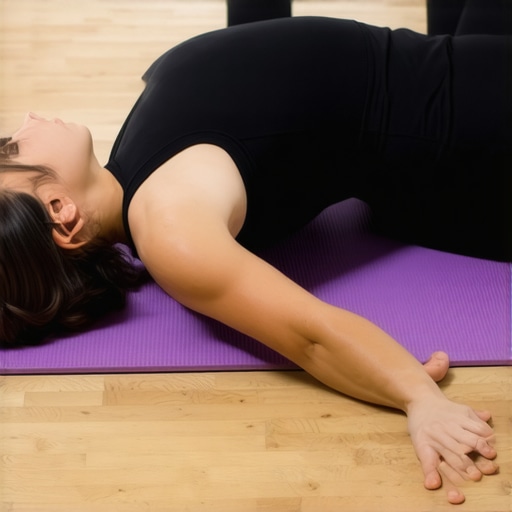
Find Your Neutral Ground on the Floor First
The easiest way to feel this is to lie flat on your back with your knees bent and feet flat on the floor. Slide your hand under the small of your back—you’ll likely feel a gap. Now, try to flatten that gap against the floor by gently pulling your belly button toward your spine and tilting your tailbone upward. This isn’t about crushing your lower back into the ground; it’s about a gentle engagement. When you do this correctly, you’ll start how to breathe into your lower back to reduce muscle spasms because the diaphragm finally has room to move. If you feel a sharp pinch, you’re pushing too hard. It should feel like a release of tension, not a new source of it.
Use Your Feet to Stabilize Your Hips
Most people forget that the feet are the foundation for everything happening in the spine. If your arches are collapsing, your knees turn in, and your pelvis spills forward. When you are standing, try to grip the floor slightly with your toes. This simple action helps with strengthening your glutes to take the pressure off your spine without you having to think about it. I once spent an entire four-hour road trip practicing this ‘grounded’ feeling, and for the first time in years, I didn’t need to roll out of the car like a folded piece of cardboard. It turns out that why your pelvic floor matters for spinal stability is directly linked to how you distribute weight through your heels and the balls of your feet.
The Three Second Standing Reset
Once you’ve felt the tilt on the floor, you have to take it to the real world. While standing, place your hands on your hip bones. If they are pointing toward the floor, you’re in that ‘spilling water’ position. Soften your knees—never lock them—and imagine pulling your pubic bone toward your chin just a fraction of an inch. You should feel an immediate lengthening in your lower back. This is the exact opposite of that ‘soldier’ posture that causes so much grief. This tiny move is a core part of revitalize your mobility proven strategies for back pain relief because it stops the mechanical grinding that happens when we slouch or over-arch. It’s a quiet, internal adjustment that nobody will notice you’re doing, but your lumbar discs will certainly feel the difference.
Your Hamstrings Aren’t the Problem
We’ve all been told the same thing: if your lower back hurts, you need to stretch your hamstrings. It’s the most common advice in the fitness world, and yet, it is often the exact reason people stay stuck in a cycle of chronic discomfort. In my experience, chasing hamstring flexibility is a classic mistake because those muscles are usually tight for a reason. If your pelvis is stuck in an anterior tilt—spilling that ‘bowl of water’ forward—your hamstrings are already pulled taut like a bowstring. When you try to stretch them further, you aren’t releasing tension; you’re actually destabilizing your pelvis even more. This is why stretching your hamstrings won’t fix your back pain if the underlying pelvic mechanics are ignored. A study in the Journal of Orthopaedic & Sports Physical Therapy suggests that hamstring ‘tightness’ is frequently a neurological protective mechanism rather than a structural length issue, meaning your brain is tightening those muscles to save your spine from an unstable pelvic position.
The Rigid Core Trap
Another nuance that most beginners miss is the ‘bracing’ trap. You might think that a rock-solid midsection is the key to safety, but why your strong core might actually be too rigid is a nuance that separates those who recover from those who just manage pain. If you are constantly ‘sucking it in’ or clenching your abs, you create an internal pressure cooker that prevents your spine from moving naturally. This rigidity often leads to compensatory patterns where your body looks for movement in all the wrong places, like your neck or your SI joints. Have you ever fallen into this trap of trying to hold yourself together so tightly that you forgot how to move? Let me know in the comments if you’ve felt that ‘statue-like’ stiffness before.
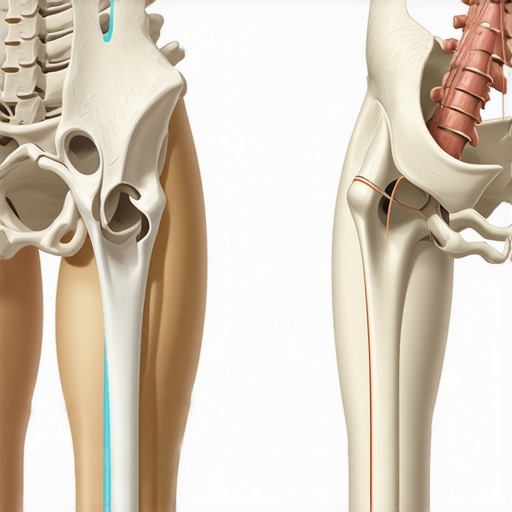
Why does it still hurt when my posture looks perfect?
This is the question that drives most people crazy. You’re sitting at the $1,000 ergonomic chair, your monitor is at eye level, and your shoulders are back, yet your lower back is screaming. The hidden culprit is often dynamic stability versus static posing. Good posture isn’t a position you hold; it’s a way you move. For many, the issue isn’t their back at all, but rather why we look at your feet to solve your neck issues and spinal health. If your feet aren’t properly distributing weight, your pelvis has to overcompensate, creating a ‘micro-wobble’ every time you shift. This is where mobility mastery expert tips for back pain prevention and recovery become essential. It’s not about how you look in a mirror; it’s about how your joints interact under the surface. If you aren’t sure where the breakdown is happening, you need to learn how to tell if your back pain is serious or if it’s just a functional glitch that a few tactical adjustments can resolve.
The Hidden Connection to Your Breath
One of the most advanced ‘secrets’ in spinal health is the relationship between the pelvic tilt and the diaphragm. When you find that neutral pelvic position, you suddenly unlock the ability to breathe into your lower back. Most people are ‘chest breathers,’ which keeps the upper back stressed and the lower back unsupported. By leveling the pelvis, you create a stable floor for your breath to push against, providing internal support for your lumbar discs from the inside out. This is a core component of understanding back pain at a level that goes beyond simple stretching. It’s about creating a pressurized system that protects you whether you are sitting at a desk or picking up a heavy grocery bag.
Once you’ve mastered the pelvic tilt, the real challenge begins: keeping that mobility alive when life gets in the way. I used to think I needed a $2,000 ergonomic setup to stay pain-free, but I eventually realized that the best tools are often the simplest ones you already own. For example, whenever I’m heading out on a road trip, I don’t rely on the car’s built-in lumbar adjustment. Instead, I’ve learned how to use a rolled-up towel to fix your cars lumbar support because it allows for a more customized, firm pressure exactly where my spine needs it. It’s these small, consistent environmental tweaks that prevent you from sliding back into old, painful patterns.
Stop Buying Overpriced Gadgets and Focus on Foundation
I’ve spent a small fortune on massage chairs and vibrating platforms, but nothing has been more effective for my daily maintenance than a simple tennis ball. I use it to target the fascia right around the pelvis and lower ribs, which helps in revitalize your mobility proven strategies for back pain relief without needing a clinical visit every time I feel a niggle. Another essential tool is a low-cost balance pad. I stand on it while brushing my teeth because the secret to better balance starts with your big toe and your ability to stabilize your spine under slightly unstable conditions. If you can’t keep your pelvis level on a squishy pad, you won’t be able to keep it level when you’re tired at the end of a long workday.

How do I maintain these results when I’m too busy for the gym?
This is the number one question I get from people who finally find relief: ‘How do I make it last?’ The answer isn’t a grueling hour-long workout; it’s about micro-dosing movement throughout your day. I follow a strict personal rule where I never sit for more than thirty minutes without a 10-second pelvic reset. This is a core part of how to stay mobile when you have a desk job and no time for the gym. According to Dr. Stuart McGill, a world-renowned expert in spine biomechanics and author of Back Mechanic, building ‘spine hygiene’ through brief, frequent corrections is far more effective for long-term health than one intense session of stretching. I also swear by a specific the 3 step morning routine for hip mobility that takes less time than my coffee takes to brew. Consistency beats intensity every single time when it comes to your nervous system.
The Future of Spinal Care is Neuro-Centric
I predict that over the next decade, we are going to stop talking so much about ‘tight muscles’ and start talking more about ‘neural threat levels.’ We are already seeing a shift where mobility mastery expert tips for back pain prevention and recovery focus on calming the brain’s alarm system rather than just pulling on tendons. If your brain thinks your spine is vulnerable, it will lock down your muscles regardless of how much you stretch. This is also why icing isnt always the best move for a stiff neck or back; sometimes the cold actually increases the perceived threat, causing more guarding. Moving forward, the most successful maintenance programs will prioritize neurological safety and breath-work to keep the body in a state of ‘flow’ rather than ‘fight or flight.’ I challenge you to try this today: spend just two minutes standing on one leg while practicing your pelvic tilt. You’ll be surprised at how quickly your brain rewires your sense of stability.
The Moment I Realized More Effort Was My Enemy
When I first started this journey, I thought I could ‘muscle’ my way into a healthy spine. I was wrong. The biggest breakthrough came when I stopped treating my back like a problem to be solved and started treating it like a system to be balanced. I learned that understanding back pain is less about how much weight you can lift and more about how you hold yourself when you’re doing nothing at all. Another lightbulb moment was realizing that ‘tightness’ is often just my nervous system being overprotective. Once I stopped fighting my body, the tension finally started to melt away.
My Daily Toolkit for Spinal Freedom
You don’t need a basement full of equipment to maintain these results. I keep it incredibly simple. First, I always have a tennis ball nearby to release the fascia in my hips; it’s a non-negotiable part of my routine. Second, I’ve mastered how to use a rolled-up towel to fix your cars lumbar support, which has saved me during countless long drives. Finally, I recommend keeping a small balance pad in your bathroom to use while brushing your teeth. These tools provide the revitalize your mobility proven strategies for back pain relief that actually stick long-term.
#IMAGE_PLACEHOLDER_E#
Take the First Small Step Toward Lasting Comfort
Healing isn’t a straight line, and there will be days when you forget to check your pelvic tilt. That’s okay. The goal isn’t perfection; it’s awareness. By making these tiny adjustments, you are teaching your brain that it’s safe to let go of that protective guarding. You can enhance mobility naturally with chiropractic care and these self-corrections to finally break the cycle of stiffness. Your future self—the one who can bend over the sink without a second thought—will thank you for starting today. Have you noticed your ‘bowl of water’ spilling forward more often when you’re tired or when you’re stressed? Let me know in the comments below!