The Truth About Inversion Tables for Disc Herniation
I was lying on my cold kitchen tile, staring at the underside of my oven, wondering if I’d ever stand up straight again. My L5-S1 disc wasn’t just bulging; it felt like it had declared total war on my nervous system, sending zaps down my leg every time I dared to breathe. I would have traded my car for ten minutes of relief. That’s when the late-night commercials for inversion tables started looking less like gimmicks and more like a lifeline. I wanted to believe that flipping myself over like a pancake would solve everything.
My First Topsy-Turvy Attempt at Spinal Relief
I bought into the dream hard. I figured if gravity was the enemy pushing my discs out of place, I’d just flip the script. But man, I made a huge mistake early on. I thought more is better and went full vertical on day one. I didn’t realize that why your back feels better when you keep moving is often about gentle, rhythmic decompression, not trying to pull your spine apart like a piece of salt-water taffy. My muscles went into a protective spasm that left me sidelined for a week, proving that even a good tool can be dangerous in the wrong hands. [image] It was a humbling lesson in understanding back pain a guide to better posture and mobility. I’ll be honest: there were days when I looked at my inversion table with more suspicion than hope. It looked like something out of a medieval dungeon, and my wife was convinced I was going to get stuck upside down while she was out of the house. But when you are dealing with a herniated disc, the constant, grinding pressure on your nerves makes you willing to try just about anything. I learned that the goal isn’t just to stretch; it’s to create space. If you don’t grasp the hidden link between neck pain and spinal health, you might be surprised how tension at the top of your neck affects your lower back’s ability to actually heal.
Is this gravity-defying trick actually worth the hype?
It sounds like magic, but the reality is a lot more grounded than those commercials suggest. According to the Journal of Physical Therapy Science, mechanical traction can indeed create negative pressure inside the disc, which can help retract herniated material back where it belongs. That’s the science behind the relief, but it isn’t a one-size-fits-all miracle. You have to know how to tell if your back pain is serious before you start messing with your alignment. Today, I’m going to cut through the marketing fluff and tell you exactly how I integrated inversion into my recovery without ending up in more pain. Have you ever been so desperate for relief that you considered hanging from a doorway? I’ve been there, and I want to hear your story in the comments. Before you strap in, remember that recovery is a marathon; it starts with small habits, like learning the best way to get out of bed for disc health.
The systematic way to flip without the flare-up
Getting back on that table after my first spasm was terrifying. I felt like a skydiver whose parachute had failed once already. To make it work, I had to stop treating it like an ‘all-or-nothing’ gravity experiment and start treating it like a clinical tool. The magic isn’t in the upside-down part; it’s in the gradual transition that allows your ligaments to relax. If you’ve ever tried to stretch a cold rubber band, you know it snaps. Your spine is the same. You need to prime the pump with boost your back health simple yet effective chiropractic hacks before you even think about full inversion.
Start with a shallow angle and stay there
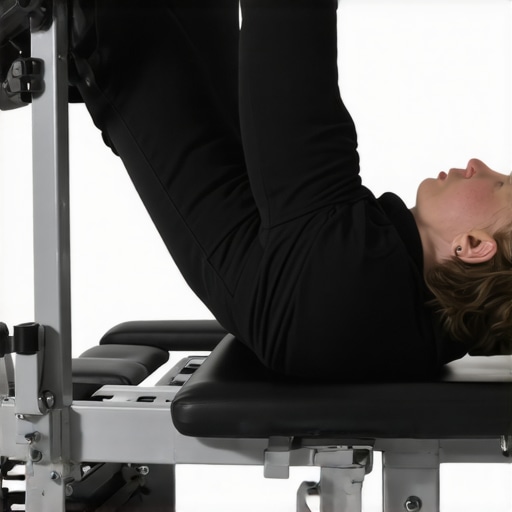
The biggest mistake I made—and the one I see most people repeat—is going too steep too fast. Your body has a ‘guarding’ reflex. When it senses you’re falling or at an unnatural angle, those deep spinal muscles clench to protect the cord. This defeats the whole purpose of decompression. I started at a measly 15 degrees. It felt like nothing, but it was enough to let the fluid move. I remember one Tuesday afternoon, about two weeks in, I stayed at 30 degrees for exactly four minutes. For the first time in months, that ‘hot’ sensation in my calf just… dimmed. It didn’t disappear, but the volume was turned down. You have to learn how to use heat and ice for maximum relief afterward to settle any minor irritation from the stretch.#IMAGE_PLACE_HOLDER_B#
Don’t just hang there like a bat
Movement is life for a disc. While I was tilted, I’d perform tiny, rhythmic pelvic tilts. Think of it as a gentle ‘pumping’ action for your vertebrae. This helps the disc imbibe nutrients and flush out waste. If you just hang static, your muscles might lock up. I found that the 5-minute reset for a stiff lumbar spine works perfectly as a warm-up. One morning, I got cocky and tried to do ‘inversion crunches’ because I saw some fitness influencer do them. Big mistake. My L5-S1 screamed, reminding me that this is a recovery phase, not a gym session. Stick to gentle oscillating movements.
The three-minute rule for returning to earth
This is the most important part that everyone skips. When you bring the table back to level, do NOT get up immediately. I once made the mistake of hearing the delivery guy knock and hopping off the table at full speed. It felt like someone had driven a stake through my pelvis. Your discs are temporarily ‘plumped up’ with fluid and your ligaments are loose. If you jump right into gravity, you risk a massive relapse. I now stay horizontal for at least three minutes, letting my body recalibrate. This is a great time to focus on how to breathe into your lower back to reduce muscle spasms. It’s about teaching your nervous system that it’s safe to be upright again.Most people think the goal of an inversion table is to get as loose as a cooked noodle. That is the common wisdom: if it is tight, stretch it. But in my experience, and what many top-tier practitioners will tell you, is that hypermobility is often the enemy of a healing disc. If you have a segment that is already unstable, like a herniated L5, pulling it apart relentlessly can actually irritate the surrounding nerves more. You do not just need space; you need stability. This is why focusing on why your glute medius is more important than your abs for back health is a game changer. It provides the ‘girdle’ your spine needs to actually hold onto the progress you make on the table.
Watch out for the rebound effect trap
There is a massive trap called the rebound effect. When you apply too much traction—like going full vertical for ten minutes—your body’s proprioceptors think you are being ripped apart. They send an emergency signal to the brain, which then orders the muscles to clamp down harder than before as a survival mechanism. A study published in the Archives of Physical Medicine and Rehabilitation notes that excessive traction can sometimes lead to increased muscle activity rather than relaxation if the force is not dosed correctly. I fell into this trap when I thought the truth about gravity boots and back health meant I should be a human pendulum. I was not healing; I was just triggering a cycle of micro-trauma.#IMAGE_PLACE_HOLDER_C#
Does neck tension ruin your lower back progress?
This is the nuance most people miss. If you are focusing entirely on your lumbar spine but ignoring the fact that your upper cervical region is locked, you are only solving half the puzzle. The spinal cord is encased in a continuous sheath called the dural sleeve. Tension at the top—often from looking down at your phone—creates a literal pull all the way down to the tailbone. You have to address the hidden link between neck pain and spinal health to get lasting relief from your inversion sessions. If the top of the ‘string’ is pulled tight, the bottom will never truly relax. Have you ever fallen into this trap? Maybe you have been stretching your lower back for months with zero change in your symptoms? Let me know in the comments. Before you give up, try incorporating boost your back health simple yet effective chiropractic hacks to address the entire kinetic chain. Recovery is rarely about one single joint; it is about how the whole system breathes together.Integrating the neck and back isn’t just a theory; it’s a daily practice that requires the right environment. I quickly realized that my three-minute inversion session couldn’t undo eight hours of sitting in a cheap chair. I had to audit my toolkit. I swapped my old, plush office chair for a task chair with a dedicated sacral support, because I learned that why your perfect office chair is still making you slouch usually comes down to a lack of support at the very base of the spine. I also started using the Teeter FitSpine X3 specifically because its bed is designed to flex; unlike the old-school padded tables, this one actually allows for those rhythmic micro-movements that let you restore your back mobility proven chiropractic strategies without feeling stuck.
How do I maintain my spinal health over time?
Consistency beats intensity every single time. My ‘long-game’ strategy involves a morning ritual that isn’t about crushing a workout, but about lubricating the joints. I use a specific lumbar roll in my car for every drive longer than ten minutes—it sounds overkill until you realize how much vibration the spine absorbs on the road. According to Dr. Stuart McGill, a world-renowned expert in spine biomechanics, the ‘cumulative load’ on the discs is what leads to failure, not just a single heavy lift. This is why I religiously follow the 3-step morning routine for hip mobility to ensure my pelvis moves freely so my L5-S1 doesn’t have to. If I feel a ‘pinch’ coming on, I don’t reach for the table immediately; I check why your foam roller might be hurting your lower back first, ensuring I’m not just smashing sensitive nerves.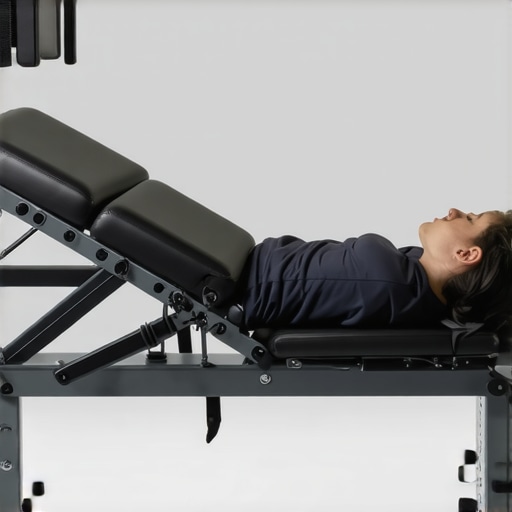 The future of back health is moving toward biofeedback. I’m already seeing wearable sensors that vibrate when your pelvic tilt deviates from neutral, and I predict that within five years, we will have AI-integrated apps that sync with our inversion tables to measure exactly how much decompression we need based on our daily activity levels. For now, the most advanced tool you have is your own awareness. Try this today: the next time you use a massage gun, learn how to use a massage gun on your lower back safely by avoiding the bone and focusing on the quadratus lumborum. It is these tiny, technical adjustments that prevent you from ending up back on the kitchen floor.
Truths Discovered While Hanging Upside Down
Looking back, the most profound thing I realized wasn’t about gravity—it was about respect for the body’s pace. I spent years trying to ‘fix’ myself overnight, only to realize that back pain recovery is a slow conversation between your brain and your nerves. I finally understood why your back feels better when you keep moving: it’s because the disc is a living pump that needs motion to stay alive. I also noticed that the ‘temporary’ height gain from inversion is more than a party trick. It reflects the decompression needed to restore your back mobility proven chiropractic strategies by letting the vertebrae breathe. Most importantly, don’t ignore the top of the chain; I found that the hidden link between neck pain and spinal health often dictated how long my lower back relief would actually last.
My Essential Toolkit for a Bulletproof Spine
You don’t need a garage full of gear to get better, but you do need tools that respect your anatomy. [image] First, I swear by the Teeter inversion series because it allows for micro-movements rather than static hanging. Second, don’t overlook your car setup; I learned how to use a rolled-up towel to fix your cars lumbar support, which saved me from daily flare-ups. Finally, focus on your stabilizers. I shifted my gym focus entirely because why your glute medius is more important than your abs for back health became my new mantra for long-term stability.
You Are More Resilient Than Your MRI Results
It is easy to look at a scan of a herniated disc and feel like your body is broken. I felt that way for a long time. But remember, an MRI is just a snapshot, not a life sentence. With the right habits, like the the 5-minute reset for a stiff lumbar spine, and a gradual approach to decompression, you can rewrite your story. Recovery isn’t a straight line, but it is possible. Keep showing up for your spine, and it will eventually show up for you. What’s the one tool or stretch that finally gave you a ‘lightbulb moment’ for your back pain? Drop it in the comments below!