How to Sit on a Plane Without Wrecking Your Posture
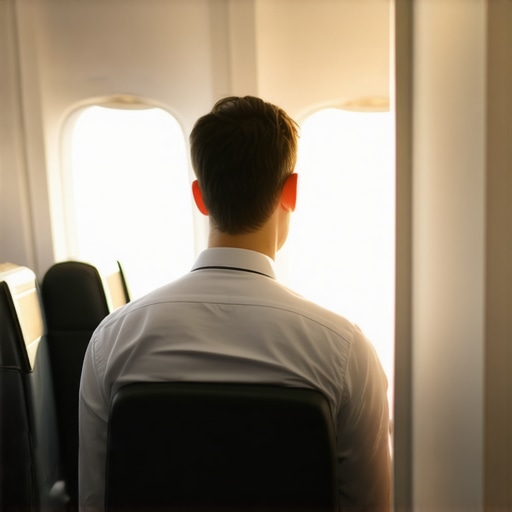
I still remember landing in London after an eight-hour red-eye and feeling like my spine had been fused into a question mark. I stepped off that plane, tried to hoist my carry-on, and a lightning bolt of pain shot from my hip to my shoulder. It wasn’t just travel fatigue; I had spent the entire flight fighting a losing battle with a seat designed for a plastic mannequin, not a human being. We’ve all been there—wedged into 17 inches of space, trying to find a configuration that doesn’t leave us limping to baggage claim. [image]
The 30,000-Foot Struggle for Your Spine
I’ll be honest: I used to make every mistake in the book. I’d jam my chin into my chest to watch movies on my tray table or cross my legs until my feet went numb. I thought a fancy neck pillow would save me, but I didn’t realize that most pillows actually trap your neck in a way that creates more tension than it relieves. Today, I’m going to share the exact routine I use to keep my back happy during long-haul flights, from the way you stack your feet to the tiny movements that prevent your joints from locking up.
Is all this effort actually worth the hassle?
You might be thinking, “It’s just a few hours; I’ll recover when I land.” But the reality is that poor airplane posture can trigger a flare-up that lasts for weeks. Research published in the Journal of Physical Therapy Science has shown that slumped sitting increases intradiscal pressure significantly compared to standing or neutral sitting. That’s a massive burden for your lower back to carry while you’re trying to enjoy a vacation or prepare for a business meeting. Have you ever walked off a flight and felt like your body aged a decade in a few hours? Tell me I’m not the only one who has had to do a full yoga routine in the terminal just to stand up straight.
Stop treating the headrest like a torture device
One of the biggest lightbulb moments for me was realizing that the airplane seat is actively trying to push your head forward. That C-shaped curve in the seat back is the enemy of long-term spinal health. Early on, I just accepted it. I’d hunch forward and wonder why I had a pounding headache by the time we reached cruising altitude. Now, I use a simple trick involving a rolled-up jacket or a scarf to create a neutral zone for my neck. Just like you might reset your posture while driving, you need a strategy to fight the bucket-seat slump. Learning to use the pelvic tilt trick while belted in can be a total game-changer for your lumbar spine.The gap between the seat back and your lower spine is a black hole for your posture. If you leave it empty, your pelvis will inevitably roll backward, putting immense pressure on your lumbar discs. I once flew to Tokyo and realized halfway through that my lower back was screaming because I’d left my travel pillow in the overhead bin. I grabbed my half-full water bottle, wrapped it in a spare hoodie, and wedged it right at the base of my spine. It wasn’t perfect, but it worked remarkably well. It functioned exactly like when you use a rolled-up towel to fix your cars lumbar support. That little bit of physical feedback kept my spine in its natural curve and stopped the bucket seat from swallowing my posture whole.
Stop crossing your legs to save your hips
Crossing your legs feels like a natural way to save space, but you’re actually creating a massive torque in your pelvis. This twist travels up your spine and can even cause issues in your neck. Think of your body like a suspension bridge; if one anchor point is twisted, the whole structure loses its integrity. There’s a hidden connection between your feet and mid-back pain that most people ignore. Keeping your feet flat on the floor—or even on your personal bag—levels your pelvis and reduces the strain on your SI joint. Using your personal item as a footrest is the secret weapon for shorter travelers. If your feet are dangling or barely touching the floor, your hip flexors stay ‘on’ for the whole flight, pulling on your lower back. By propping your feet up just three or four inches on your backpack, you slacken those muscles and allow your spine to settle. 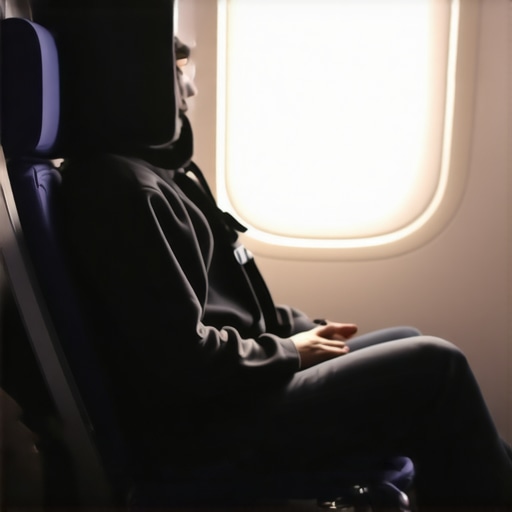
Micro-movements for the middle seat
Static loads are the enemy of joint health. When you stay in one position, your synovial fluid—the stuff that keeps your joints greased—stops circulating properly. This is why your back feels better when you keep moving, even if it’s just tiny shifts in your seat. Every twenty minutes, perform a few glute squeezes or light pelvic tilts. I like to do a scapular squeeze that relieves mid-back tension while I’m waiting for the drink cart. It’s a subtle movement where you pull your shoulder blades together and down, which instantly counters that ‘hunch’ we all get while looking at the seatback screen.
Breathe through the ribs to drop your shoulders
When we’re cramped and stressed, our breathing gets shallow and moves into the neck and shoulders. This accessory muscle breathing is a fast track to a tension headache by the time you land. You need to learn how to breathe properly to reduce tension in your shoulders. Instead of letting your chest rise, focus on expanding your lower ribs sideways against the armrests. This diaphragmatic approach actually creates internal pressure that supports your spine from the inside out, acting like a natural internal brace. If you are working on a laptop, the tray table is your neck’s worst nightmare because it forces a massive downward gaze. Instead of hunching, try propping your device up on your carry-on bag or a pillow. It looks a bit silly, but your cervical spine will thank you when you don’t have a stiff neck the next morning.Let’s dig deeper into why these flight-induced aches feel so stubborn. Most people think that if something feels tight, they should stretch it until it gives up. But here is the professional reality: your body isn’t a rubber band; it’s a highly sophisticated alarm system. Sometimes, that “tightness” you feel in your hamstrings or neck is actually a protective tension. Your brain is intentionally tightening those muscles to protect a joint that it perceives as unstable. If you keep yanking on that muscle, you’re essentially trying to cut the wires to your own security system. This is where restore your back mobility proven chiropractic strategies come into play—we look for the source of the alarm rather than just trying to silence the siren.
Stop stretching your “tight” muscles
I used to see people in the terminal lunging and reaching for their toes, thinking they were doing their bodies a favor. In reality, they might have been aggravating a sensitized nerve. The most common mistake is confusing muscle tension with neural tension. If you feel a “zing” or a “lightning bolt” sensation, stop stretching immediately. Nerves do not like to be stretched; they like to be “glided.” According to research in the Journal of Manual & Manipulative Therapy, neural mobilization is far more effective for radiating pain than static stretching. If you keep pulling on a compromised nerve, you’re just increasing the inflammation and delaying your recovery.
The trap of the self-adjustment
You’ve probably heard someone say they just need to “crack their own neck” to get relief. That’s a massive trap. When you self-adjust, you are almost always moving the segments that are already too mobile (hypermobile), which provides a temporary endorphin rush but leaves the stuck joint even more jammed. It’s like trying to loosen a rusty bolt by wiggling the handle of the wrench instead of the bolt itself. You are much better off using chiropractic secrets to boost neck comfort and function that focus on specific, targeted movement rather than blunt force.
Why does your back still hurt even though your core is “strong”?
Many people spend hours doing planks and crunches, thinking a “six-pack” is a bulletproof vest for their spine. But why your glute medius is more important than your abs for back health often gets ignored. 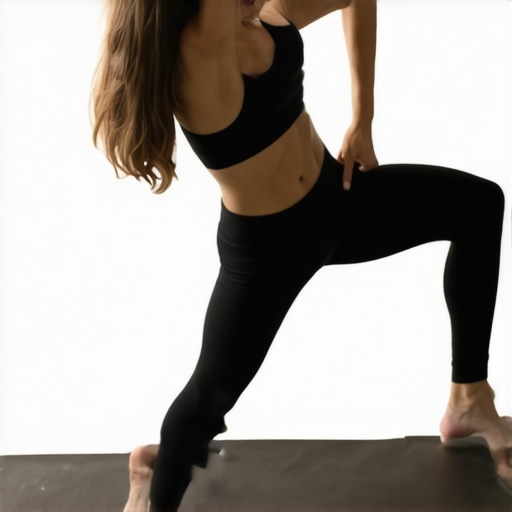 True spinal stability isn’t about bracing your abs as hard as you can; it’s about the coordination between your deep stabilizers and your hips. If your glutes aren’t firing, your lower back has to pick up the slack, regardless of how many sit-ups you can do. Transitioning from a state of “protection” to a state of “performance” requires mobility mastery expert tips for back pain prevention and recovery. Have you ever fallen into this trap of stretching a muscle that just won’t loosen up? Let me know in the comments.
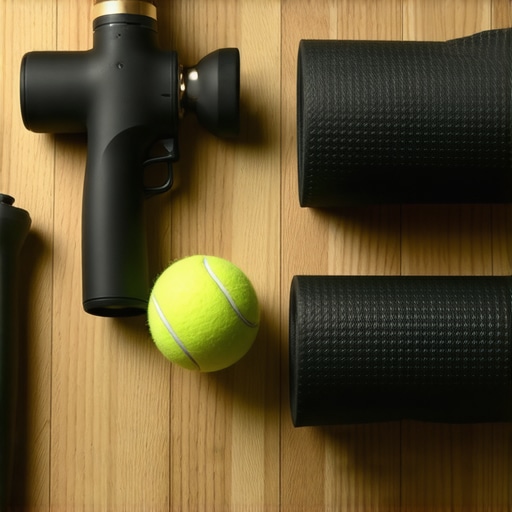
I’ve spent years experimenting with every gadget, foam roller, and vibrating ball on the market to see what actually moves the needle for long-term health. When you’re trying to revitalize your mobility, you quickly learn that most ‘recovery’ tools are just distractions. I keep my kit lean. My absolute non-negotiable is a high-quality massage gun, but here’s the kicker: I never use it on the bone. I see people hammering their vertebrae, which is a fast track to inflammation. Instead, I focus on the ‘meat’—the glutes and the lats. Knowing how to use a massage gun on your lower back safely means targeting the soft tissue that actually pulls on your spine, not the spine itself.
The travel-ready tools that actually work
If I’m traveling light, I ditch the electronics and grab a tennis ball. It’s the cheapest, most effective piece of rehab equipment I own. You can learn how to use a tennis ball to fix that spot under your shoulder blade by simply leaning against a wall and breathing into the pressure. This targets the rhomboids and traps that get absolutely fried during a flight. While gadgets are great, the real progress happens when you combine them with movement. For example, using a dead bug variation that actually fixes lower back instability is far more valuable than twenty minutes of passive vibration because it teaches your nervous system how to control your new range of motion.
How do I maintain my spinal progress over time?
Maintenance isn’t about doing a two-hour workout once a week; it’s about the micro-choices you make every hour. I’ve found that the best way to scale your results is to automate your environment. My desk is set up so I can’t stay in one position too long, and my car has lumbar support built in from a rolled towel. This is part of mobility mastery. I also lean heavily on specific stability work. Dr. Stuart McGill, Professor Emeritus at the University of Waterloo and a world-renowned expert in spine biomechanics, explains in his research that ‘spine hygiene’—the way we move throughout the day—is often more important than the exercises we do in the gym. This is why back pain recovery is often a lifestyle shift rather than a quick fix.
The future of spinal health is in the data
I’m predicting a massive shift in how we handle back care over the next five years. We are moving away from reactive treatments and toward real-time monitoring. I’ve already started experimenting with wearable sensors that track spinal shear and posture habits throughout the day. Instead of waiting for a ‘lightning bolt’ of pain to tell you that you’ve been sitting wrong for four hours, these tools will give you a haptic nudge before the damage is done. This kind of ‘pre-hab’ is going to change everything for desk workers and frequent travelers alike. If you want to get ahead of the curve, I challenge you to try one ‘active’ recovery move today—like a focused glute bridge or a pelvic tilt—instead of just reaching for the ice pack. It’s about building a body that can handle the world, not just a body that can survive a flight.
The Hardest Lesson I Learned About Protecting My Spine at Altitude
After years of traveling, I realized that the biggest mistake isn’t sitting wrong for ten minutes; it’s the cumulative effect of ignoring small signals. I used to think I could ‘power through’ the stiffness, but back pain recovery taught me that the body doesn’t forget. Now, I listen for the ‘whisper’ before it becomes a ‘scream.’ Another revelation was that movement is medicine only when it’s controlled. Randomly twisting your spine in a cramped aisle is often worse than just staying still. You need to focus on specific, intentional shifts that revitalize your mobility without triggering a spasm.
The Exact Tools I Carry to Fight the Airplane Slump
I’ve tested every inflatable gimmick, but nothing beats these three simple essentials. First, a simple tennis ball is my secret for release. You can learn how to use a tennis ball to fix that spot under your shoulder blade during your layover—it’s a lifesaver for trapped nerves. Second, I always pack a resistance band. It weighs nothing and allows me to wake up my glutes the second I reach my hotel room. Finally, the ‘hoodie-lumbar-roll’ is my go-to for every seat. By automating my environment this way, I’m practicing mobility mastery without needing a full gym.
Your Resilience is Built One Flight at a Time
Traveling shouldn’t feel like a physical tax you have to pay just to see the world. By implementing these small changes—the pelvic tilts, the rib breathing, and the strategic support—you are actively rewriting your body’s response to stress. Once you land, don’t just collapse onto a soft hotel bed; try a dead bug variation that actually fixes lower back instability to reset your core before you start your vacation. You deserve to explore your destination with a body that feels vibrant and capable. What is your absolute favorite way to stay comfortable on a long-haul flight? I’d love to hear your travel hacks in the comments below!