Why Your Shoulder Blades Feel Like They’re Burning After Typing
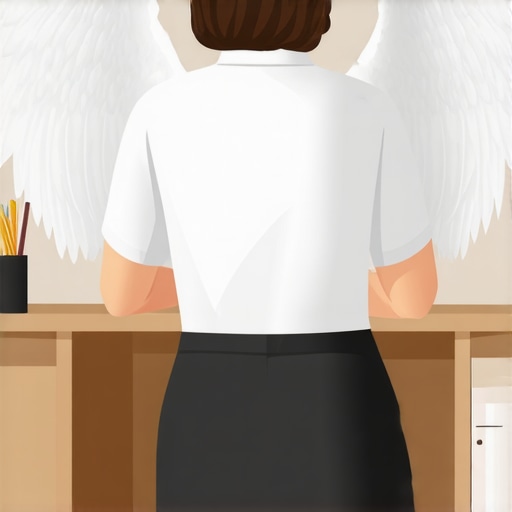
I remember the night clearly. Three a.m., a deadline looming, and it felt like a lit match was pressed against the inside of my right scapula. I tried the usual: the frantic shoulder rolls, the awkward leaning against a doorframe, and the desperate gulp of lukewarm coffee. Nothing worked. The fire just spread. If you’ve ever found yourself rubbing your upper back against the corner of a wall like a bear on a scratching post, you know exactly what I am talking about. We are not just dealing with soreness here; we are dealing with a postural crisis. Today, I want to pull back the curtain on why this happens and give you the roadmap to cooling that fire for good.
That Searing Heat is Your Body Screaming for Help
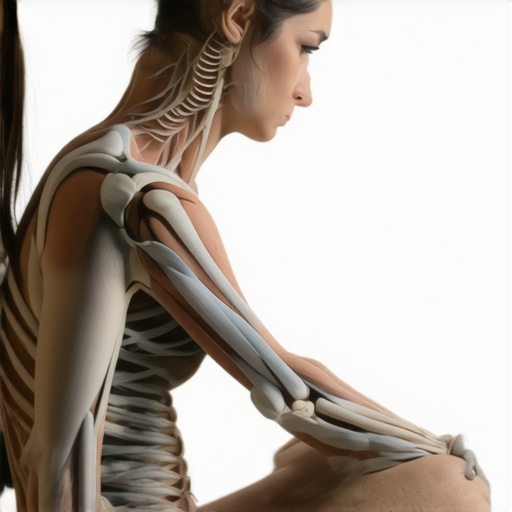
When you spend hours at a keyboard, your brain eventually stops feeling your posture until it reaches a breaking point. That burning sensation is not a mystery; it is often your rhomboids and trapezius muscles reaching their limit. It explains why your shoulder feels heavy after typing for even twenty minutes. The muscles are being pulled taut like a bowstring, and they are losing the blood flow they need to clear out waste products like lactic acid. According to the Mayo Clinic, static muscle loading—holding one position for too long—leads to muscle fatigue and significant discomfort. I am here to tell you that you do not have to just live with it. We are going to fix the mechanics, not just the symptoms.
I Bought the Fancy Gear and Stayed in Pain
Early on, I made the mistake of thinking I could buy my way out of this problem. I dropped nearly a thousand dollars on an ergonomic throne, convinced it would be my salvation. It was not. I soon realized that even the perfect office chair is still making you slouch if you do not understand how your spine actually moves. I was still leaning forward, chin tucked to chest, wondering why the fire would not go out. Have you ever spent a fortune on a gadget or a chair only to find yourself in the same amount of pain a week later? It is a frustrating cycle. Real relief comes from changing how you interact with your desk, perhaps starting with a simple scapular squeeze that relieves mid-back tension rather than relying on a mesh backrest.
Is this actually damage or just a temporary pinch?
It is easy to spiral into thinking you have a slipped disc or permanent nerve damage when the burning gets intense. While you should always listen to your body, most of the time, this fire is a functional issue—a cry for movement and realignment. You might even find that you can use a tennis ball to fix that spot under your shoulder blade by releasing the trigger points that have locked up. We are not just aiming for a five-minute reprieve; we are looking for a long-term strategy so you can finish your workday without feeling like you have been branded.
Feed Your Muscles with Better Airflow
Most of us are chest breathers. When stress hits, we take shallow, rapid sips of air that force the tiny muscles in our neck and tops of our shoulders to do the heavy lifting. Think of your ribcage like a bellows; it should expand wide and deep. When it doesn’t, those upper back muscles stay in a constant state of high alert. Learning how to breathe properly to reduce tension in your shoulders is the first step in de-escalating the crisis. If you don’t fix the oxygen delivery, no amount of stretching will keep the fire away for long. It is like trying to put out a campfire while someone else is pouring gasoline on the embers. 
The Simple Move that Flips the Posture Switch
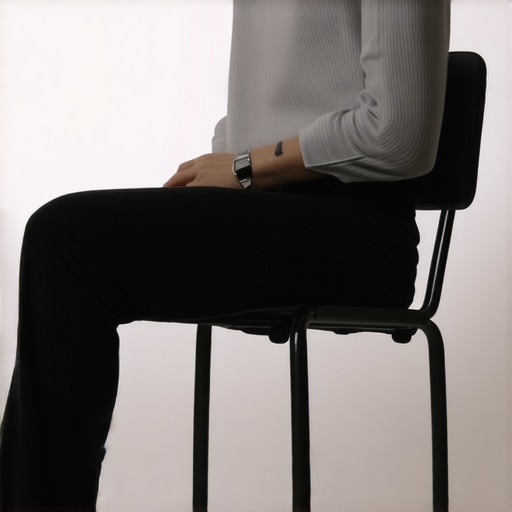
I used to think I needed a complex thirty-minute routine to see results. I was wrong. I remember being stuck on a grueling three-hour conference call, my back screaming, and I finally decided to try the Bruegger’s relief position I’d heard about. I sat at the edge of my chair, spread my knees, turned my palms outward, and pulled my chin back. I felt a series of tiny pops like bubble wrap releasing under my shoulder blades. The relief wasn’t just physical; it felt like my brain finally hit the ‘reset’ button on my nervous system. Using the Bruegger’s relief move to reverse hours of hunched sitting takes less than thirty seconds, but it sends a clear signal to your rhomboids that they can finally relax. Consistency beats intensity every single time. If you do this every twenty minutes, you prevent the ‘slump’ from becoming your permanent shape.
Fix the Geometry of Your Desk Space
Even if you have the best intent, your environment often dictates your posture. If your screen is too low, your head naturally follows, dragging your entire spine into a C-curve. This is where neck pain no more expert chiropractic solutions that work often begins—not on the table, but at the workstation. Perform the 5-second check to see if your monitor is too low by looking straight ahead; your eyes should land on the top third of the screen. If they don’t, grab a stack of books or a dedicated riser. You should also know how to adjust your monitor to avoid eye and neck strain to ensure your neck isn’t craning forward like a turtle. When you align the digital world with your physical needs, the burning sensation starts to fade because the mechanical stress is finally gone.
Stop Stretching the Muscles That Are Already Screaming for Mercy
Let’s dig deeper into why that fire in your shoulder blade keeps coming back. Everyone tells you to stretch more, but in my experience, that is often the worst advice for a burning upper back. When you are hunched over a desk, your rhomboids and trapezius muscles are already being pulled into an over-extended, weakened state. If a muscle is already over-lengthened, stretching it further is like pulling on a rope that is already at its fraying point. Instead of more stretching, you need to focus on stability. Real relief comes when you revitalize your mobility with proven strategies for back pain relief that emphasize muscle activation rather than elongation. I see so many patients fall into the trap of over-stretching the very area that needs to be tightened and strengthened to hold them upright.
Your Feet Might Be the Secret to Your Neck Pain
This is the ‘Oops’ factor most people miss: they focus only on the spot that hurts, ignoring the foundation of the entire structure. A misalignment in your arch or a hidden hip instability can force your upper back to overcompensate just to keep your eyes level. This kinetic chain is exactly why we look at your feet to solve your neck issues during a truly comprehensive exam. If your foundation is tilted, your spine will always find a way to twist and burn above it. 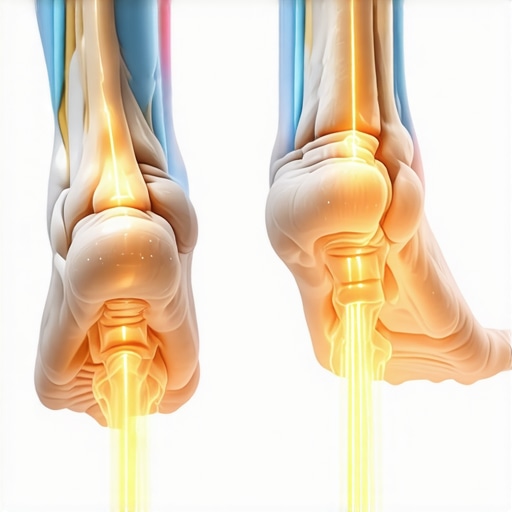
Why Does the Tension Return the Minute You Leave the Office?
A common question I hear is why professional care feels amazing for an hour, only for the stiffness to creep back in by dinner. It is often because of a lack of neurological integration. A study published in the Journal of Manipulative and Physiological Therapeutics highlights that spinal manipulation is most effective when it addresses the proprioceptive feedback loop—the brain’s internal map of where your body is in space. You aren’t just moving bones; you are retraining your nervous system. Chiropractic secrets to regain full mobility after injury involve this deeper neurological reset. If you don’t reinforce the adjustment with specific movements, your brain will revert to its old, painful map. Have you ever fallen into this trap of thinking a single session would fix a decade of postural habits? Let me know in the comments. To truly stay pain-free, you must combine expert care with a better understanding of back pain and how to improve your daily mobility. We are looking for a total system reboot, not just a temporary patch.I remember the night clearly. Three a.m., a deadline looming, and it felt like a lit match was pressed against the inside of my right scapula. I tried the usual: the frantic shoulder rolls, the awkward leaning against a doorframe, and the desperate gulp of lukewarm coffee. Nothing worked. The fire just spread. If you’ve ever found yourself rubbing your upper back against the corner of a wall like a bear on a scratching post, you know exactly what I am talking about. We are not just dealing with soreness here; we are dealing with a postural crisis. Today, I want to pull back the curtain on why this happens and give you the roadmap to cooling that fire for good.
That Searing Heat is Your Body Screaming for Help
When you spend hours at a keyboard, your brain eventually stops feeling your posture until it reaches a breaking point. That burning sensation is not a mystery; it is often your rhomboids and trapezius muscles reaching their limit. It explains why your shoulder feels heavy after typing for even twenty minutes. The muscles are being pulled taut like a bowstring, and they are losing the blood flow they need to clear out waste products like lactic acid. According to the Mayo Clinic, static muscle loading—holding one position for too long—leads to muscle fatigue and significant discomfort. I am here to tell you that you do not have to just live with it. We are going to fix the mechanics, not just the symptoms.
I Bought the Fancy Gear and Stayed in Pain
Early on, I made the mistake of thinking I could buy my way out of this problem. I dropped nearly a thousand dollars on an ergonomic throne, convinced it would be my salvation. It was not. I soon realized that even the perfect office chair is still making you slouch if you do not understand how your spine actually moves. I was still leaning forward, chin tucked to chest, wondering why the fire would not go out. Have you ever spent a fortune on a gadget or a chair only to find yourself in the same amount of pain a week later? It is a frustrating cycle. Real relief comes from changing how you interact with your desk, perhaps starting with a simple scapular squeeze that relieves mid-back tension rather than relying on a mesh backrest.
Is this actually damage or just a temporary pinch?
It is easy to spiral into thinking you have a slipped disc or permanent nerve damage when the burning gets intense. While you should always listen to your body, most of the time, this fire is a functional issue—a cry for movement and realignment. You might even find that you can use a tennis ball to fix that spot under your shoulder blade by releasing the trigger points that have locked up. We are not just aiming for a five-minute reprieve; we are looking for a long-term strategy so you can finish your workday without feeling like you have been branded.
Feed Your Muscles with Better Airflow
Most of us are chest breathers. When stress hits, we take shallow, rapid sips of air that force the tiny muscles in our neck and tops of our shoulders to do the heavy lifting. Think of your ribcage like a bellows; it should expand wide and deep. When it doesn’t, those upper back muscles stay in a constant state of high alert. Learning how to breathe properly to reduce tension in your shoulders is the first step in de-escalating the crisis. If you don’t fix the oxygen delivery, no amount of stretching will keep the fire away for long. It is like trying to put out a campfire while someone else is pouring gasoline on the embers.
The Simple Move that Flips the Posture Switch
I used to think I needed a complex thirty-minute routine to see results. I was wrong. I remember being stuck on a grueling three-hour conference call, my back screaming, and I finally decided to try the Bruegger’s relief position I’d heard about. I sat at the edge of my chair, spread my knees, turned my palms outward, and pulled my chin back. I felt a series of tiny pops like bubble wrap releasing under my shoulder blades. The relief wasn’t just physical; it felt like my brain finally hit the ‘reset’ button on my nervous system. Using the Bruegger’s relief move to reverse hours of hunched sitting takes less than thirty seconds, but it sends a clear signal to your rhomboids that they can finally relax. Consistency beats intensity every single time. If you do this every twenty minutes, you prevent the ‘slump’ from becoming your permanent shape.
Fix the Geometry of Your Desk Space
Even if you have the best intent, your environment often dictates your posture. If your screen is too low, your head naturally follows, dragging your entire spine into a C-curve. This is where neck pain no more expert chiropractic solutions that work often begins—not on the table, but at the workstation. Perform the 5-second check to see if your monitor is too low by looking straight ahead; your eyes should land on the top third of the screen. If they don’t, grab a stack of books or a dedicated riser. You should also know how to adjust your monitor to avoid eye and neck strain to ensure your neck isn’t craning forward like a turtle. When you align the digital world with your physical needs, the burning sensation starts to fade because the mechanical stress is finally gone.
Stop Stretching the Muscles That Are Already Screaming for Mercy
Let’s dig deeper into why that fire in your shoulder blade keeps coming back. Everyone tells you to stretch more, but in my experience, that is often the worst advice for a burning upper back. When you are hunched over a desk, your rhomboids and trapezius muscles are already being pulled into an over-extended, weakened state. If a muscle is already over-lengthened, stretching it further is like pulling on a rope that is already at its fraying point. Instead of more stretching, you need to focus on stability. Real relief comes when you revitalize your mobility with proven strategies for back pain relief that emphasize muscle activation rather than elongation. I see so many patients fall into the trap of over-stretching the very area that needs to be tightened and strengthened to hold them upright.
Your Feet Might Be the Secret to Your Neck Pain
This is the ‘Oops’ factor most people miss: they focus only on the spot that hurts, ignoring the foundation of the entire structure. A misalignment in your arch or a hidden hip instability can force your upper back to overcompensate just to keep your eyes level. This kinetic chain is exactly why we look at your feet to solve your neck issues during a truly comprehensive exam. If your foundation is tilted, your spine will always find a way to twist and burn above it.
Why Does the Tension Return the Minute You Leave the Office?
A common question I hear is why professional care feels amazing for an hour, only for the stiffness to creep back in by dinner. It is often because of a lack of neurological integration. A study published in the Journal of Manipulative and Physiological Therapeutics highlights that spinal manipulation is most effective when it addresses the proprioceptive feedback loop—the brain’s internal map of where your body is in space. You aren’t just moving bones; you are retraining your nervous system. Chiropractic secrets to regain full mobility after injury involve this deeper neurological reset. If you don’t reinforce the adjustment with specific movements, your brain will revert to its old, painful map. Have you ever fallen into this trap of thinking a single session would fix a decade of postural habits? Let me know in the comments. To truly stay pain-free, you must combine expert care with a better understanding of back pain and how to improve your daily mobility. We are looking for a total system reboot, not just a temporary patch.
Stop Using Your Massage Gun Like a Jackhammer
I’ve seen it a thousand times: someone buys a high-end massage gun and goes to town on their neck like they’re trying to break up concrete. You’re not a construction site. When you use these tools incorrectly, you actually trigger a protective guarding response from your nervous system. I personally only use mine on the ‘meaty’ parts of the shoulder—never the bone—and I keep the pressure light enough that I could still hold a conversation. Learning how to use a massage gun on your lower back safely or your upper traps is about desensitizing the nerves, not pulverizing the tissue. A study in the Journal of Bodywork and Movement Therapies suggests that percussive therapy works best when it facilitates mechanotransduction—the process where cells convert mechanical stimulus into chemical activity to promote healing. If you’re bruising, you’re losing. 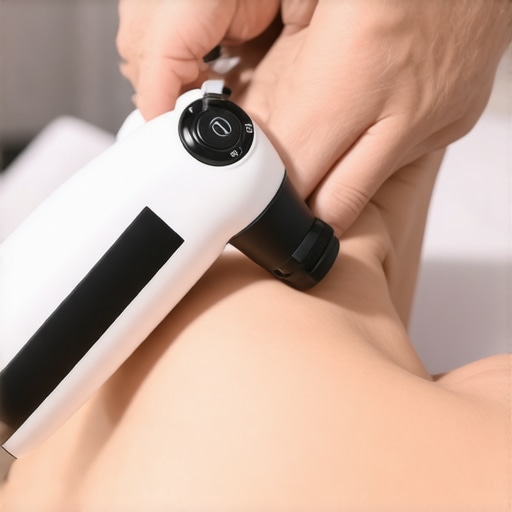
The Future of Posture is Coming to Your Wrist
In the next five years, I predict we will see a massive shift toward wearable biofeedback. We already have watches that track steps, but soon, we’ll have integrated haptic sensors in our shirts that vibrate the second our scapulae drift too far apart. We are moving away from passive ‘support’ (like braces) and toward active ‘reminders.’ This is a huge win for long-term health because it forces the brain to do the work. Until then, you have to be your own sensor. I’ve found that implementing the 20-20-20 rule for desk workers and neck health is the closest manual version of this future tech. It’s about building a ‘postural alarm’ in your brain that goes off before the pain does.
How do I keep my spine happy without a gym membership?
Most of my clients are high-performers with zero spare time. The secret isn’t a 60-minute workout; it’s ‘movement snacks’ peppered throughout the day. Dr. Stuart McGill, a leading expert in spine biomechanics, often talks about ‘spinal hygiene’—the small ways we move every day that either protect or degrade our discs. You can learn how to stay mobile when you have a desk job and no time for the gym by choosing three high-impact moves. For me, that’s a specific the cat-cow variation for targeted mid-back relief and the dead bug variation that actually fixes lower back instability. These don’t require a change of clothes, just a willing floor. When you restore your range and see how chiropractic care enhances movement, you’re clearing the path, but these daily snacks keep the road from being overgrown by the weeds of sedentary life. My challenge to you: pick just one of these—the Dead Bug or the Cat-Cow—and do it for two minutes before your next Zoom call. You’ll feel the difference in your breath immediately.
The Perspective Shift That Finally Stopped My Relapses
After years of struggling with that nagging heat under my shoulder blades, I realized that the greatest mistake I was making was viewing my body as a machine that was ‘broken.’ It wasn’t broken; it was just communicating in a language I didn’t yet understand. Here are the core truths that changed everything for me:
- Pain is a dashboard light: Just like a low-oil light in your car, the burning sensation isn’t the problem itself—it is the signal that your mechanics are off. If you only treat the pain with Ibuprofen, you are effectively putting a piece of tape over the dashboard light while the engine smokes.
- Movement is non-negotiable: I used to think I could ‘save up’ my health for a 5:00 PM gym session. But the body doesn’t work that way. Ten hours of static sitting cannot be undone by sixty minutes of lifting. You need mobility mastery and expert tips for back pain prevention integrated into every single hour of your day.
- Your eyes lead your spine: Wherever your focus goes, your neck follows. If you spend your day peering into a small laptop screen, your spine will inevitably collapse into a C-curve. Realizing that my visual environment dictated my physical health was a massive ‘lightbulb’ moment.
By following an effective neck pain management step-by-step guide, I finally stopped reacting to the fire and started preventing the spark. It is about building a lifestyle that supports your structure rather than constantly fighting against it.
My Blueprint for a Spine-Friendly Workspace
I am often asked what specific tools I actually use to keep the ‘fire’ at bay. I don’t believe in over-complicating things, but these three items are essential for any high-performer who spends their life at a desk. First, I never work without a dedicated monitor riser; keeping the top of your screen at eye level is the single most effective way to protect your upper traps. Second, I recommend the book The Back Mechanic by Dr. Stuart McGill. It is the gold standard for understanding back pain and improving posture through evidence-based biomechanics. Finally, keep a simple lacrosse ball in your desk drawer. It is much more precise than a foam roller for hitting those specific trigger points between the scapulae when they start to tighten up. If you’re wondering how to tell if your back pain is serious, remember that consistent neurological symptoms like numbness or weakness always warrant a professional look, but for most, these tools are enough to maintain the peace.
Reclaiming Your Focus from the Fire
You didn’t develop this burning sensation overnight, and you won’t solve it in a single afternoon. However, the path to neck pain no more and expert chiropractic solutions is paved with small, consistent victories. Every time you choose to take a ‘movement snack,’ every time you adjust your monitor, and every time you breathe deep into your ribcage, you are teaching your body that it is safe to relax. You are not a victim of your desk job; you are the architect of your own physical resilience. Don’t wait for the next three-alarm fire in your shoulder blades to take action. Start with one Bruegger’s relief move today and watch how your body responds to the care it has been begging for. Which part of your workday usually triggers that first spark of burning for you? Drop a comment below and let’s troubleshoot it.