Why We Adjust the Jaw to Fix Chronic Headaches
I remember sitting in my darkened living room with a cold washcloth over my eyes, wondering why I couldn’t just have a normal Tuesday without a migraine. My head felt like it was caught in a literal vise. I had tried every special pillow, every expensive ergonomic chair, and even those weird herbal teas that taste like lawn clippings. Nothing worked because I was looking at the entirely wrong map. For years, I focused solely on my neck, thinking it was the only culprit behind the throbbing. It turns out, my jaw was the silent saboteur. I am going to show you why adjusting that often-ignored hinge on your face is frequently the missing piece to the headache puzzle and how you can finally break the cycle of constant pain. [image_placeholder]
Your Jaw Is the Secret Lever to Ending Headaches
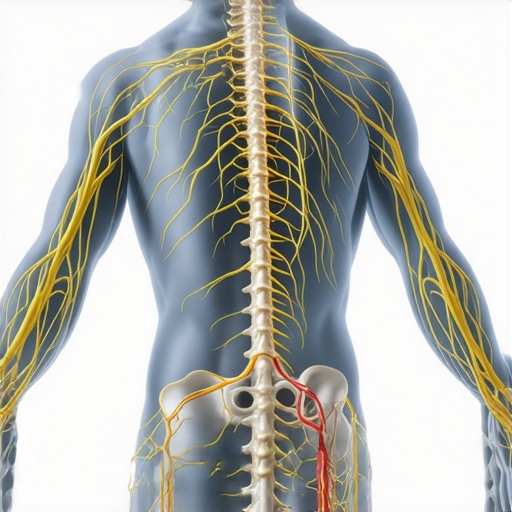
I used to make the massive mistake of thinking my jaw was just for chewing and talking. I completely ignored the fact that I clenched my teeth every time I got a stressful email. That tension does not just stay in your mouth. It travels. When your jaw is out of alignment, it forces your neck muscles to work overtime to keep your head level. I spent so much time wondering how to tell if your headache is actually coming from your neck that I completely missed the tension radiating from my chin. It is a nasty chain reaction. The muscles controlling your jaw are intimately connected to the nerves at the base of your skull. If that joint is not moving correctly, your brain receives a constant stream of "danger" signals.
Is it really possible that a jaw adjustment fixes a headache?
I get it. It sounds a bit "out there" at first. When a professional first suggested they wanted to look at my bite to fix my headaches, I almost walked out of the room. I thought they were just grasping at straws. But the science is quite clear. According to the Mayo Clinic, TMJ disorders frequently cause headaches that feel exactly like tension headaches or even severe migraines. If you have been focusing only on why your neck muscles tighten during stress, you might only be solving half the equation. The "lightbulb moment" for me was realizing that my jaw was stuck in a slightly forward position, pulling on the delicate structures of my upper spine every single second of the day. We often overlook the 10-second fix for jaw tension related to neck pain because we want a more complex answer, but sometimes the most effective solution is the most direct one. Have you ever noticed a weird clicking or popping in your jaw right before the throbbing in your temples starts? If so, you are not crazy—you are just dealing with a structural misalignment that needs more than just another aspirin. If you are tired of losing your afternoons to a dark room, it might be time to reach out and see if your jaw is the one actually calling the shots. Let us look at how these two parts of your body work together to keep you pain-free.The first thing you have to realize is that your jaw is like a suspension bridge for your head. If the cables are too tight on one side, the whole structure starts to warp. Most of us walk around with our teeth touching, which keeps the masseter muscles in a state of constant low-level contraction. I call this the ‘Bulldog Trap.’ To escape it, you need to master the simple habit of keeping your lips together but your teeth apart. When your teeth touch, your brain thinks you are chewing, which activates the entire network of muscles leading up into your temples. Try resting the tip of your tongue gently against the roof of your mouth, just behind your front teeth. This naturally drops the jaw and creates space. I once spent an entire week setting a timer on my phone every 20 minutes just to check if I was clenching. It was messy and annoying, but by Wednesday, I noticed that the dull ache at the base of my skull had not shown up for its usual afternoon visit.
Keep Your Teeth Apart to Give Your Nerves a Break
This small shift in awareness is your first line of defense. When your jaw is relaxed, the trigeminal nerve—the big nerve responsible for most headache pain—finally gets a chance to quiet down. If you are constantly biting down, you are essentially screaming at your nervous system all day long. This is why people who focus on the chin tuck drill to combat tech neck instantly often find that their jaw tension eases up too; you cannot fix one without the other.
Release the Hinge with a Targeted Massage
When you feel that tightness creeping up, do not just rub your temples; that is treating the smoke, not the fire. You need to get into the masseter—the thick muscle right in front of your ear. Open your mouth slightly and use two fingers to press firmly into that fleshy area. If it is tender, you have found the spot. Move your fingers in small, slow circles while breathing deeply. This is one part of the 10-second fix for jaw tension related to neck pain that can save your day. I remember a specific Tuesday afternoon when I was trying to finish a report and felt that familiar ‘vice’ tightening around my brows. Instead of reaching for the ibuprofen, I did a body scan, realized my jaw was locked, and spent two minutes on this massage. The pressure did not vanish instantly, but it stopped the migraine from blooming into a full-blown crisis. 
Why Spinal Alignment Resets Your Natural Bite
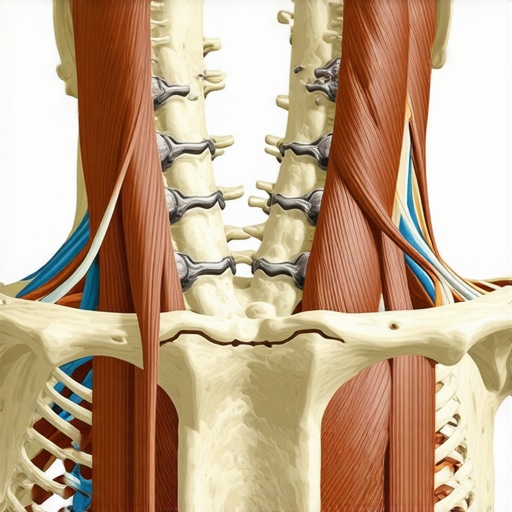
The mechanics are straightforward once you see the map. Your jaw joint (the TMJ) is one of the most used joints in the body, but it relies entirely on the stability of the neck. If your neck is leaning forward, the muscles under your chin have to pull harder just to keep your mouth closed. This constant tension creates trigger points that refer pain directly into your forehead. I have found that when people focus on effective neck pain management, their jaw symptoms often vanish as a side effect. It is like fixing the alignment on your car so the tires stop wearing unevenly. By addressing the upper spine, we take the mechanical pull off the jaw. This is why restoring your range through chiropractic care becomes the permanent solution rather than just a temporary patch. You are not just a collection of parts; you are a single, interconnected machine where the neck and jaw must move in harmony to keep you pain-free. If you have been struggling with unlocking neck pain relief for months, the missing link might be this structural tug-of-war between your chin and your spine. It takes a blueprint reset to ensure you are not just managing the pain, but deleting the cause.I used to think the answer to every ache was simply more flexibility. If my neck hurt, I’d pull my head to the side. If my back felt tight, I’d touch my toes for minutes on end. But here is the nuance that most people miss: you cannot stretch away a structural instability. In fact, if your body is creating tension as a protective mechanism, forcing that muscle to lengthen is like trying to cut the brakes on a car that is trying to stop. I see so many people trying to force mobility into a system that actually needs stability first. This is why why stretching your hamstrings won’t fix your lower back pain if the root cause is actually coming from your nerves or your disc health.
Is your stretching actually sabotaging your spinal stability?
It is a question that catches most people off guard. According to research published in the Journal of Manipulative and Physiological Therapeutics, spinal health is less about how far you can bend and more about how well your joints are stacked and supported during movement. When we look at the hidden link between neck pain and spinal health, we often find that the ‘tightness’ you feel is your brain’s way of guarding an out-of-place vertebrae. If you keep stretching that guarding muscle without addressing the alignment, the muscle just gets more irritated and the joint stays vulnerable. 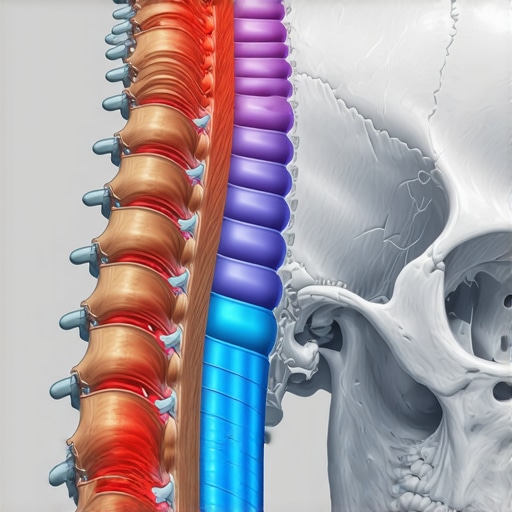
Stop Chasing the Symptom and Start Stabilizing
One of the biggest ‘oops’ factors I see is the obsession with core strength. We are told a ‘strong core’ fixes everything, but why your core strength isn’t stopping your back from hurting usually comes down to how you use those muscles, not just how strong they are. If you are over-bracing or holding your breath, you are just creating more internal pressure that migrates up to your neck. Instead of mindless reps, focus on boost mobility ease pain chiropractic techniques unveiled that prioritize the relationship between your pelvis and your skull. When those two poles are aligned, your muscles can finally let go of that ‘grip’ they have had on your life. I spent years in that trap—thinking I needed to be more flexible, when really I just needed to be more aligned. Have you ever fallen into this trap of stretching a spot that never seems to get better? Let me know in the comments. If you are ready to stop the guesswork, overcoming chronic neck discomfort starts with understanding the ‘why’ behind the tension, not just the ‘where.’
Maintaining the alignment we’ve worked so hard to achieve isn’t just about what happens during your appointment; it’s about the 167 hours a week you aren’t in the clinic. I personally swear by a specific piece of equipment: the dual-density peanut massage ball. Unlike a standard foam roller, which I find far too blunt and aggressive for the delicate curvature of the thoracic spine, the peanut allows for localized pressure on the paraspinal muscles while leaving the vertebrae untouched. This is the cornerstone of how I restore your back mobility with proven chiropractic strategies from my own living room. If you spend eight hours a day in a chair, you need something that fights back against that constant forward pull.
Stop Trusting Generic Office Chairs to Save Your Spine
I also keep a close eye on the specific chair height that stops mid-back burning because even a two-inch discrepancy can throw off your entire pelvic tilt. I see the future of this field moving toward wearable biofeedback sensors—small devices that will vibrate the second your head passes a certain forward-lean threshold. Until those are commonplace, you are your own best sensor. By incorporating the morning spinal hygiene routine every desk worker needs, you are essentially brushing your ‘spinal teeth’ every day to prevent the decay of your posture.
How do I maintain my progress without daily appointments?
This is the question that separates people who get temporary relief from those who achieve a total lifestyle overhaul. Success comes down to endurance, not just strength. Dr. Stuart McGill, a world-renowned expert in spine biomechanics and author of The Gift of Injury, emphasizes the ‘Big 3’ exercises—the modified curl-up, side bridge, and bird-dog—to build the kind of core stamina that protects the discs. I’ve integrated these into my own life because mobility mastery expert tips for back pain prevention and recovery only work if the foundation is stable. 
The Tools That Make My Home Recovery Possible
I also recommend keeping a simple lumbar roll in your car. We often overlook how to reset your posture while driving, but that commute is often where we undo an entire hour of stretching. When you use specific tools that support the natural curve of your low back, you stop the ‘creep’—the slow stretching of ligaments that leads to instability. This proactive approach is why back pain recovery how chiropractic care transforms lives so effectively; it teaches you to be the guardian of your own spine. I want you to try one thing tonight: find a tender spot in your mid-back with a tennis ball or peanut tool and breathe into it for 60 seconds. You’ll be amazed at how much your jaw and neck loosen up as a result. If you’re ready to stop the cycle for good, it’s time to reach out and build your custom plan.
The Pivot That Finally Stopped the Throbbing
Looking back, the biggest obstacle to my recovery was my own ego. I thought I could out-stretch a mechanical misalignment. One of the most profound realizations I had was that my body wasn’t ‘failing’ me by creating pain; it was actually protecting me. The tension in my jaw was a splint, trying to stabilize an unstable neck. I also learned that ‘trying hard’ often meant ‘clenching hard.’ I had to re-learn how to concentrate without biting my own head off, literally. Finally, I stopped viewing my appointments as a ‘fix’ and started seeing them as a ‘reset’ that allowed my daily habits to actually take root.
The Resources That Rebuilt My Alignment
If you are looking for a deeper dive into the mechanics of why your body acts the way it does, I cannot recommend Dr. Stuart McGill’s work enough. His approach to spinal stability changed my entire outlook on exercise. For physical tools, I always keep a dual-density peanut ball and a lumbar roll in my bag; they are non-negotiable for anyone who travels or works at a desk. I also highly encourage you to look into the morning spinal hygiene routine every desk worker needs to ensure you’re starting your day with a neutral spine. These aren’t just gadgets; they are the scaffolding that holds your progress together between clinic visits. #IMAGE_PLACEHOLDER_E#
Your Path Back to a Clear Head
Healing is rarely a straight line, and it’s okay to feel frustrated when a headache sneaks back in. The difference now is that you have a map. You know that your jaw, your neck, and your spine are all part of the same story. By focusing on alignment rather than just chasing the newest stretch, you are setting yourself up for long-term success. This is how back pain recovery how chiropractic care transforms lives—it gives you back the control you thought you’d lost. You don’t have to live in a darkened room anymore. Have you ever noticed your jaw clenching while you are deep in thought or focused on a project? Let me know in the comments below.