The Secret to Emptying the Dishwasher Without Twisting Your Spine
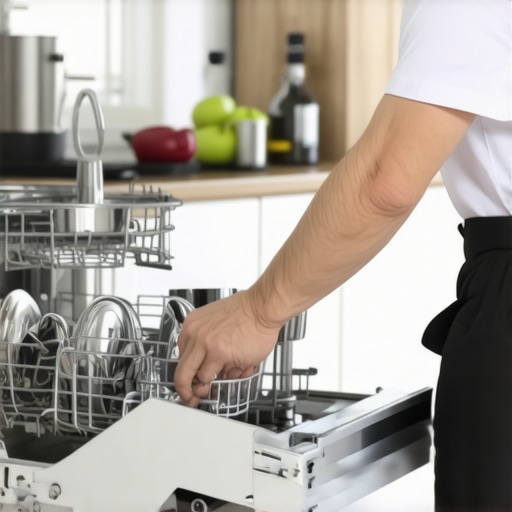
It was a Tuesday morning, and the coffee hadn’t even finished brewing yet. I reached down for a heavy ceramic bowl at the back of the bottom rack, gave it a little “twist and lift” maneuver, and—*pop*. I froze. My back didn’t just hurt; it felt like a door hinge that had suddenly rusted shut. For three days, I couldn’t even put on my own socks without a groan. It’s funny how the most mundane chores, the ones we do on autopilot, are often the ones that end up sending us to the floor in a heap. Emptying the dishwasher shouldn’t feel like an Olympic weightlifting event gone wrong, yet here we are. I’ve spent years learning the hard way that our bodies don’t break during the big moments; they wear down during the small ones. Today, I want to share the “secret” movement pattern that finally saved my spine. We’re going to look at why your current technique is a recipe for a disc herniation and how a simple change in your stance can make this daily chore feel effortless.
Stop Bending Like a Question Mark
Most of us treat our spines like a flexible straw. We round our backs, reach deep into the machine, and then rotate while carrying weight—all at the same time. According to the Mayo Clinic, improper lifting and twisting are leading causes of acute back strain, and the repetitive nature of kitchen work makes us particularly vulnerable. Early in my journey to better health, I made the classic mistake of thinking I just needed a stronger core to fix the pain. I spent weeks doing sit-ups, not realizing that I should actually stop doing sit-ups if I wanted to protect my discs. The real issue wasn’t strength; it was my mechanics during the “boring” stuff. When you round your spine to reach the bottom rack, you are putting immense pressure on the anterior portion of your vertebrae, essentially squeezing your discs like a grape. If you add a twist to that, you’re asking for trouble. It’s a similar logic to carrying a laundry basket; if you don’t use your legs, your back pays the price.
Is This Just One More Chore To Think Too Hard About?
You might be thinking, “It’s just a dishwasher, do I really need a ‘strategy’ for it?” I get it. Life is busy enough without over-analyzing how you grab a spatula. But think about it this way: you likely empty that machine 365 times a year. If you’re understanding back pain at its root, you know that micro-trauma adds up. It’s the “death by a thousand cuts” for your lumbar spine. By learning to boost your back health through small habit changes, you aren’t just saving yourself from a sore morning; you’re preserving your mobility for the long haul. The goal isn’t to turn your kitchen into a gym, but to move in a way that respects your anatomy. Have you ever felt that dull ache or a sharp “tweak” while reaching for the bottom rack? Tell me I’m not the only one who has had to lean against the counter for a minute just to recover from the silverware tray! It is a frustrating reality for many of us, much like trying to pick up your kids without a plan. But there is a better way to pivot that doesn’t involve a chiropractor visit the next morning.
Master the Hip Hinge to Save Your Lumbar Discs
The secret to a pain-free kitchen isn’t found in a fancy gadget; it’s in your hips. Think of your hips as the heavy-duty hinges on a gate. They are designed to carry weight and facilitate wide ranges of motion. Your lower back, on the other hand, is more like a delicate bridge. When you bend at the waist like a question mark, you’re trying to turn that bridge into a hinge, which is exactly why things start to break. To restore your back mobility, you have to retrain your brain to initiate every reach from the glutes rather than the lumbar spine.
The Kickstand Stance for Deep Rack Reaches
Instead of standing with your feet squared to the dishwasher, try the ‘Kickstand.’ Place one foot slightly in front of the other. As you reach for that heavy ceramic pot in the back of the bottom rack, shift your weight onto your front leg and let your back heel lift slightly. This naturally encourages your hips to sink back rather than your spine to curve forward. I remember a particularly messy Sunday dinner where I had three loads of dishes to clear. Usually, by the second load, my lumbar spine would start screaming. By using the Kickstand, I stayed ‘loaded’ in my legs. It felt like I was doing a series of mini-squats rather than manual labor. If you find your legs getting a little tired, it’s actually a great sign—it means your large muscles are doing the heavy lifting instead of your sensitive spinal ligaments. This is a crucial part of how you boost your back health because it removes the shear force that causes disc issues.
Ditch the Spine Twist for a Solid Pivot
One of the most dangerous moves you can make in the kitchen is the ‘reach and rotate.’ This happens when you grab a stack of plates and immediately twist your torso to put them in the upper cabinet. This torsional stress is a primary reason why your lower back aches after standing or doing light chores. To fix this, you must move your feet. Imagine there is a steel rod running from the top of your head down to your tailbone. To move a dish from the rack to the counter, your whole body should move as one unit. Pivot on the balls of your feet. It sounds tedious for the first few minutes, but once it becomes muscle memory, you’ll realize how much unnecessary tension you’ve been carrying.
Engage Your Internal Weight Belt with a Pelvic Tilt
Before you even reach for the silverware, engage your internal support system. This isn’t about sucking in your stomach to look thinner; it’s about creating intra-abdominal pressure. Use the pelvic tilt trick for instant lumbar relief by slightly tucking your tailbone under. This tiny adjustment pre-tensions the muscles around your spine. If you’ve ever wondered why your glutes won’t fire and how to fix it, start with this tilt. It ensures your glutes are ‘switched on’ and ready to take the load the moment you hinge forward. During that same Sunday dinner, I noticed that whenever I forgot to set my pelvis, my breath would get shallow and my shoulders would hunch. Breathing into your belly while maintaining this subtle tilt keeps the pressure internal and supportive, much like an inflated tire supports the weight of a car.It is a common scene in any gym: someone with a nagging ache in their lumbar spine bending over to touch their toes, desperate for a release. I used to be that guy. I thought if I could just get my fingers to the floor, my back would magically reset. But here is the hard truth that most basic fitness advice misses: static stretching can be a disaster for an unstable spine. In fact, if your pain is coming from a disc issue or neural tension, cranking on your hamstrings is like pulling on both ends of a frayed rope. This is exactly why stretching your hamstrings wont fix your lower back pain if the root cause is structural instability. When we force a stretch on a muscle that is ‘guarding’ a sensitive nerve, the brain actually tightens the muscle further to prevent injury. It’s a physiological stalemate that usually ends with more inflammation.
Is Your Tightness Actually a Nerve in Distress?
Most advanced students of mobility eventually realize that ‘tightness’ is often a neurological signal rather than a physical length issue. A study published in the Journal of Manipulative and Physiological Therapeutics highlights that neural mobilization—often called ‘nerve flossing’—is significantly more effective at reducing pain and improving range of motion than traditional static stretching. If you have been religiously stretching your legs but still find that why your core strength isnt stopping your back from hurting is your main concern, you are likely dealing with neural tension. In these cases, the traditional ‘reach for your toes’ move pulls the sciatic nerve taut against the very disc or joint that is irritating it. 
The Trap of Chasing Flexibility Over Stability
The biggest mistake I see is the ‘flexibility at all costs’ mindset. People assume that more range of motion always equals less pain. However, if you have a history of lumbar issues, your body needs stiffness in specific areas to protect the spinal cord. By over-stretching the ligaments of the lower back, you are essentially loosening the lug nuts on a car wheel. Instead of a long, aggressive hold, you should be looking into a nerve flossing technique for stubborn leg pain. This involves a gentle, rhythmic movement that glides the nerve through its pathway without putting it under tension. It is a subtle shift from ‘stretching’ to ‘mobilizing,’ and it’s a cornerstone of how back pain recovery how chiropractic care transforms lives by resetting the communication between your brain and your muscles. If you want to achieve mobility mastery expert tips for back pain prevention and recovery, you must stop treating your body like a rubber band and start treating it like a complex electrical system. Have you ever fallen into this trap of stretching harder and feeling worse the next day? Let me know in the comments.Once you stop the immediate fire of acute pain, the real work begins. I don’t leave my spinal health to chance anymore, and neither should you. I rely on a specific toolkit that goes beyond the basic foam roller. For instance, I’ve found that high-percussive tools are life-changers if you know how to use a massage gun on your lower back safely. Most people jam the device directly into their lumbar spine, which can actually cause more inflammation. I personally use it on the glutes and the upper hamstrings to ‘un-tether’ the tension pulling on my pelvis. It’s all about working the tissues that influence the spine rather than the spine itself. If I’m traveling and can’t bring the heavy gear, I always pack a simple lacrosse ball. Learning how to use a massage ball to release hip flexor tension has saved me from countless flare-ups after long flights.
How do I maintain my spinal health long-term?
Consistency beats intensity every single time. Dr. Stuart McGill, a world-renowned expert in spine biomechanics, emphasizes the importance of ‘spinal hygiene’—the idea that how you move throughout the day matters more than a 30-minute gym session. I’ve integrated the morning spinal hygiene routine every desk worker needs into my daily life. It starts before I even brush my teeth. I also perform the Brueggers relief move to reverse hours of hunched sitting every sixty minutes when I’m working at my computer. This isn’t just about ‘stretching’; it’s about resetting the neurological feedback loop that tells your shoulders to slump. These small, frequent resets are the foundation for revitalize your mobility proven strategies for back pain relief that actually stick. Looking ahead, I suspect we will see a massive shift toward biofeedback wearables—clothing with integrated sensors that vibrate the moment your lumbar spine rounds too far or your pelvic tilt goes out of alignment. Until then, we have to be our own sensors. I challenge you to try this right now: the next time you reach for your phone, perform one 10-second scapular squeeze and feel the immediate shift in your neck tension. You’ll be surprised at how fast your body responds when you finally stop fighting your own anatomy and start supporting it. If you’re looking for back pain recovery how chiropractic care transforms lives, it begins with these daily micro-habits.
The Hard Lessons That Finally Ended My Back Spasms
After years of trial and error, the biggest realization I had was that consistency is the only shortcut. We often wait for a crisis to care for our spines, but the real magic happens in the mundane moments. I stopped looking for a ‘quick fix’ and started focusing on revitalize your mobility proven strategies for back pain relief that I could do every single day. I also learned that the truth about lumbar support belts for lifting is that they can’t replace a functional core. If you find yourself constantly reaching for ibuprofen, it might be time to ask how to tell if your back pain is serious versus just a result of poor movement patterns. Your body is incredibly resilient, but it needs the right signals to stay that way.
My Go-To Resources for Daily Alignment
Building a ‘spinal toolkit’ changed everything for me. I don’t just hope my back feels good; I use specific tools to ensure it does. My daily must-haves include a high-quality firm ball—learning how to use a massage ball to release hip flexor tension was a total game-changer for my lower back health. I also recommend checking out mobility mastery expert tips for back pain prevention and recovery to understand the ‘why’ behind the ‘how.’ If you spend a lot of time at a desk, the morning spinal hygiene routine every desk worker needs is an absolute non-negotiable for long-term comfort. #IMAGE_PLACEHOLDER_E#
A Future Where Your Back Doesn’t Dictate Your Day
Imagine waking up and not having to ‘test the waters’ before you roll out of bed. That freedom is possible when you treat your spinal health as an ongoing conversation rather than a chore. Whether you’re mastering the dishwasher hinge or exploring back pain recovery how chiropractic care transforms lives, every small adjustment counts. You deserve to move through your kitchen, your office, and your life without fear of a ‘tweak.’ Start small, stay consistent, and listen to what your body is trying to tell you. Have you ever noticed your back pain flares up after a specific household chore? Let me know in the comments below!