The Proper Way to Carry a Laundry Basket for Spinal Safety
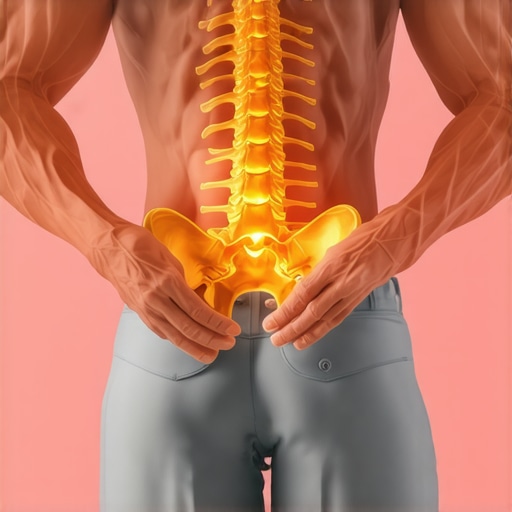
I remember the day my laundry room became my personal danger zone. It was a Tuesday, and I had three loads of heavy towels to move from the dryer to the bedroom. I did what I always did: I hiked that plastic basket up onto my right hip, leaned my whole torso to the side like a wilted plant, and started the trek. Halfway down the hall, my back screamed. A sharp, lightning-bolt pain shot through my lower lumbar region, and I had to drop the basket right there. I realized then that I had been treating my spine like it was invincible, when in reality, I was just one heavy load away from a serious injury. That moment of failure led me to obsess over the ergonomics of daily chores, and today, I’m going to show you exactly how to avoid the same mistake. We are going to dive into the mechanics that keep your discs safe and your movement fluid.
Stop Carrying Your Laundry Like a Toddler
Most of us treat laundry like a mindless chore, but your spine views it as a weightlifting session with terrible equipment. When you carry a heavy load on one side, you are creating an asymmetrical sheer force that can lead to chronic issues. I used to think I was being efficient by hipping the basket, but I was actually creating a path toward needing to restore my back mobility through professional help. Research published by the National Institute for Occupational Safety and Health (NIOSH) suggests that lifting even moderate loads at an awkward angle increases the risk of musculoskeletal disorders by nearly double. This is why you need to learn how to pick up your laundry basket safely by keeping it centered and close to your core. Have you ever felt that sudden, sharp twinge while trying to navigate a narrow hallway with a full load of whites?
Is a few minutes of incorrect lifting really that dangerous?
You might think you can get away with it because it only takes thirty seconds to reach the bedroom. I thought the same thing until I spent a weekend on the floor with a heating pad. The problem isn’t just the one lift; it is the cumulative stress of doing it wrong thousands of times. If you don’t adjust your form, you might find yourself looking for proven chiropractic strategies to fix the damage. Early on, my biggest mistake was thinking that core strength would save me from bad form. It didn’t. You can have the strongest abs in the world, but if you are shearing your spine to the side, something is going to give. Let’s look at how to reposition your body to make this chore effortless and safe.
Hug the Basket to Save Your Discs
The first rule of laundry safety is to treat the basket like a long-lost friend. You need to keep it close. When you hold a heavy object even a few inches away from your body, you effectively multiply the weight that your lower back has to support. I remember trying to wrestle a soaked, king-sized duvet out of the washer last February. I was tired and reached across the machine to yank it toward me. My lumbar spine felt like a compressed spring about to snap because I was lifting with my arms instead of my center. Now, I always make sure to follow the golden rule of lifting: keep the center of gravity of the load as close to your own belly button as possible. This minimizes the leverage the weight has against your vertebrae and keeps your discs from being squeezed like a grape between two bricks.
Get Low and Drive Through Your Heels
Bending at the waist is a recipe for a herniated disc. Instead, you need to use the largest muscles in your body—your glutes and quads. Think of your legs as the hydraulic lift for your spine. When you go down to grab the basket, hinge at the hips and keep your chest up. If you find your heels lifting off the floor, you might need to address underlying ankle mobility issues that are sabotaging your form. Driving through your heels engages the posterior chain, which provides the necessary power to stand up without putting the burden on your sensitive lower back joints. 
Brace Your Core Like a Shield
Before you even touch the handles, you need to create internal stability. Most people think core strength is about six-pack abs, but for spinal health, it’s about intra-abdominal pressure. I used to make the mistake of sucking my stomach in, thinking I was protecting myself. I was wrong. You need to breathe into your belly and expand your sides, creating a ‘shield’ of pressure that supports the spine from the inside out. Learning how to breathe properly ensures that your ribs don’t flare and your lower back doesn’t arch excessively during the move. If you feel like your back is doing all the work, it’s a sign that your core isn’t engaging correctly to stabilize the load.
Pivoting Is Your New Best Friend
The most dangerous thing you can do while carrying a full load of laundry is to plant your feet and twist your torso to put the basket on the bed. This ‘twist and shout’ maneuver is exactly how I ended up stuck on the floor that Tuesday. Your spine is built for flexion and extension, but it is quite vulnerable to high-torque rotation while under load. Always move your feet first. If you need to turn, take small steps to rotate your entire body as one unit. This keeps the load centered and prevents shear force on your ligaments. Maintaining this level of consistent spinal hygiene transforms a chore into a functional movement session. You’ll notice that your back feels better throughout the day simply because you stopped micro-injuring it with every load of whites.
The Stretching Myth That Keeps You Stiff
One of the biggest lies we have been told in the fitness world is that if a muscle feels tight, you must stretch it. I see this all the time: someone with a nagging lower back ache spends twenty minutes a day touching their toes, only to find the pain worse an hour later. In my experience, ‘tightness’ is often a neurological defense mechanism rather than a physical shortening of the muscle. Your brain is intentionally tightening those muscles to act as a protective splint for an unstable joint. When you aggressively stretch, you are essentially ripping off that internal bandage. This is exactly why stretching your hamstrings won’t fix your lower back pain if the root cause is actually pelvic instability. Instead of more flexibility, what you likely need is more control and a way to revitalize your mobility through proper alignment. Research published in the Journal of Orthopaedic & Sports Physical Therapy indicates that patients who focus solely on flexibility without addressing neuromuscular control often see significantly slower recovery rates.
Stop Cracking Your Own Neck
Then there is the ‘self-adjustment’ trap. We have all been there—your neck feels stiff, you give it a quick twist, and *pop*—you feel a second of relief. But here is the nuance: you aren’t actually fixing anything. When you crack your own neck, you are likely cavitating the joints that are already hypermobile (moving too much) while the stuck, restricted joints remain frozen. This creates a dangerous cycle where the loose joints get looser, and the stiff joints get stiffer. This is why you should never crack your own neck in the morning or any other time of day. You are essentially feeding an addiction to a temporary endorphin rush while ignoring the underlying structural issue that requires professional proven chiropractic strategies to resolve correctly. 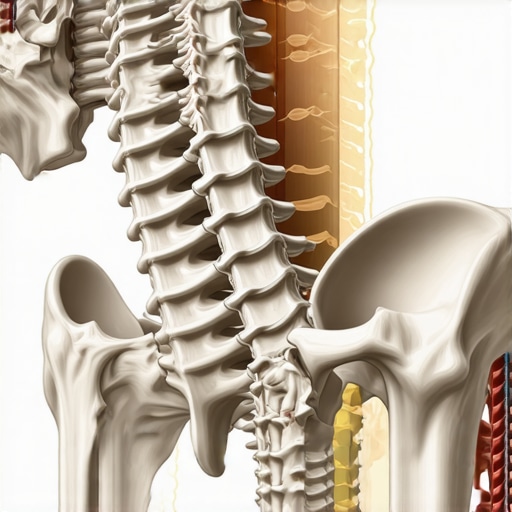
Why does my back still hurt even though I have six-pack abs?
It is a frustrating realization, but core strength does not automatically equal spinal stability. You can have absolute washboard abs and still suffer from debilitating disc issues because you aren’t engaging your deep stabilizers. The ‘global’ muscles (your six-pack) are for moving, but the ‘local’ muscles (like the multifidus) are for protecting. If your nervous system doesn’t know how to fire these muscles in anticipation of a movement, you are vulnerable. This is why your core strength isn’t stopping your back from hurting. You need to focus on specific motor control exercises, like the dead bug variation that actually fixes lower back instability, rather than just doing more crunches. Chasing external strength while ignoring internal coordination is an ‘oops’ factor that leads many athletes straight into my office. Have you ever fallen into this trap of over-stretching or self-cracking? Let me know in the comments.
After years of trial and error, I stopped buying every “as seen on TV” back brace and started focusing on tools that provide targeted feedback. One of my non-negotiables is a high-density massage ball. While foam rollers are great for large surface areas, they are too blunt for the deep tissues that pull on the spine. I use the ball specifically to target the psoas and the deep gluteals. Knowing how to use a massage ball to release hip flexor tension was the turning point for me. When those deep muscles relax, the tension in my lower back vanishes almost instantly because the front-to-back tug-of-war on my pelvis finally ends. I spent years thinking my back was the problem, when in reality, my hips were the ones holding the spine hostage.
#IMAGE_PLACE_HOLDER_D#
Another tool that lives in my travel bag is a simple lumbar roll. If you find your tailbone hurts after sitting for 10 minutes, it is usually because your chair is forcing you into a posterior pelvic tilt, which rounds the lower back and strains the ligaments. By using a firm roll, you maintain the natural curve of your low back. This is part of a larger strategy of mobility mastery that isn’t about being a contortionist, but about enhancing mobility naturally with chiropractic care and consistent daily habits. I even bring my own roll to movie theaters now—I used to be embarrassed, but now I’m the only one walking out of the theater without a limp.
How Do I Keep My Back Feeling This Good Every Day?
Maintenance isn’t a weekend project; it is a daily tax you pay for living in a gravity-rich environment. I follow the morning spinal hygiene routine every desk worker needs religiously. It takes five minutes, but it sets the “tone” for my nervous system, telling my brain that the joints are safe to move. I also prioritize restoring my range through regular check-ins with a pro. Think of it like a car alignment. You can drive a car with a slight pull to the left, but eventually, you are going to shred your tires. Your spine is the same. If you don’t boost your back health proactively, you will be reacting to a crisis later. I have learned that the best tool for maintenance is actually a timer on my phone that reminds me to move every thirty minutes, preventing the ‘static load’ that causes most disc issues.
Wearables and the Future of Your Lumbar Health
I expect that in the next few years, we will see a massive shift toward wearable biofeedback. Instead of just tracking steps, your watch will likely buzz when it detects your ribs are flaring or when you have lost the neutral arch in your neck while texting. According to a 2023 study in the Journal of Electromyography and Kinesiology, real-time electromyographic (EMG) biofeedback significantly improves the recruitment of the multifidus muscle—the tiny muscle responsible for spinal stability—in chronic back pain sufferers. This move toward “smart” posture is going to make unlocking neck pain relief much more data-driven and personal. We are moving away from the ‘one size fits all’ approach. If you want to take things to the next level today, start tracking your “sitting time” with the same intensity you track your sleep. Try the 20-20-20 rule for desk workers and see how it changes your daily energy levels. If you are ready to get serious about your alignment and stop guessing, contact us to get a baseline assessment of your actual mobility and structural health.
The Reality Check My Back Needed
Looking back at that day in the laundry room, I realize that the sharp pain wasn’t just a random accident; it was a wake-up call from my nervous system. Here are the hard-won truths I wish I had understood years ago:
- Stability is not the same as strength: You can lift heavy objects, but if your deep stabilizers aren’t firing in coordination, your spine is still at risk. It is why I always tell people to relieve neck and back discomfort by focusing on core coordination before raw power.
- Pain is often a protective ‘software’ issue: Sometimes your brain locks up muscles not because they are physically short, but because it feels a joint is unstable. Realizing this changed how I used chiropractic techniques to ‘reboot’ my movement patterns rather than just stretching blindly.
- Small habits are the ultimate game-changer: The way you pick up a stray sock or sit at your laptop for five minutes matters more than a single hour-long workout once a week.
My Tested Gear for a Resilient Spine
I have wasted hundreds of dollars on gimmicks, but these are the specific tools that actually deliver results and help me boost my back health daily. #IMAGE_PLACEHOLDER_E#
- High-Density Massage Ball: This is my go-to for breaking up the deep tension in my hips that pulls on my lumbar spine. It’s far more effective than a foam roller for reaching the deep gluteals.
- Firm Lumbar Roll: I never sit for more than twenty minutes without one. It is the simplest way to prevent the slumping that leads to long-term ligament strain.
- Professional Alignment Schedule: Just like getting your car’s tires rotated, seeing a professional helps restore your range before a minor misalignment turns into a major injury.
Reclaim Your Life from Daily Discomfort
Your spine is remarkably resilient, but it needs you to be an active partner in its care. By changing how you move during those mundane chores—like carrying the laundry—you are building a foundation for a life without limits. Don’t wait for a ‘Tuesday morning disaster’ to start taking your mobility seriously. Whether you start with a 3-step morning routine or a formal assessment, the important thing is to move with intention. You deserve to feel strong and fluid in your own body every single day. Knowing if your back pain is serious early on can save you months of frustration, so listen to what your body is trying to tell you today.
Which daily chore always seems to trigger a twinge or ache in your lower back? Let me know in the comments below!