The 10-Minute Walk Routine to Decompress Your Spine
I remember one Tuesday morning clearly; I reached for my coffee mug and felt a familiar, sickening twinge in my lower back. It wasn’t a massive explosion of pain, just a quiet reminder that my spine felt like a compressed accordion. For years, I assumed that the only way to fix this was through expensive gadgets or intense gym sessions. I even fell into the dangerous habit of trying to self-adjust at my desk, which is exactly why you should never crack your own neck in the morning or yank on your spine without professional help. I was making things worse while trying to feel better. But then, a chiropractor friend mentioned something so simple I almost laughed: I just needed to walk. Not for miles, not for hours, but a specific, intentional ten-minute stroll. It sounded too easy to be true, but that tiny shift changed everything about my mobility.
Your Spine Needs Space to Breathe
The truth is, our modern lives are essentially a giant vice grip for our vertebrae. We sit, we slouch, and gravity does the rest. I used to think my core strength was the issue, but as I learned, core strength isn’t always enough to stop the hurt if your discs are constantly under pressure. Walking, when done with the right intent, acts as a natural pump for your spinal discs. According to research cited by Harvard Health Publishing, regular walking helps strengthen the muscles that support the spine and improves circulation to the spinal structures. This isn’t just about getting steps in; it’s about decompression. When you move, you’re literally creating space.
Can ten minutes really make a difference?
I get it. If you’re currently dealing with a thumping ache, the idea of walking might sound like a chore—or worse, a risk. I used to worry that my back pain was too serious for such a basic fix. But here’s the thing: you aren’t training for a marathon. You’re performing maintenance. Have you ever felt that sudden lock-up after sitting for just a few minutes, making you wonder if your back is just permanently broken? Let me know if you have faced this specific problem before, because that stiffness is exactly what we are going to tackle.
The Mistake of the Overzealous Stride
When I first started, I made the classic rookie mistake: I walked too fast and too stiffly. I looked like a soldier on parade rather than someone trying to heal. I didn’t realize that what your walking pattern says about your spinal health is vital. If you’re clenching your glutes and holding your breath, you aren’t decompressing; you’re just moving the tension around. This 10-minute routine is about rhythm and relaxation, not speed. Now, let’s get into the mechanics of how this works and how you can do it without leaving your neighborhood.To turn a simple walk into a decompression session, you need to stop fighting gravity and start using it. Think of your spine as a series of joints that need a gentle, rhythmic ‘wag’ to stay hydrated. When I was at my worst, I would try to walk while keeping my torso perfectly still, thinking I was protecting myself. I was wrong; I was actually creating more shear force. Real relief comes when you allow a tiny bit of rotation through your middle. This is how you restore your range effectively and safely.
Stop Walking Like a Soldier
The biggest hurdle is the ‘stiff-back’ habit. We brace because we are afraid of pain, but bracing is what keeps the discs compressed. Start by loosening your jaw. It sounds crazy, but tension in the head often travels down. If your jaw is tight, your neck is tight, and your gait will be rigid. I once spent a whole week walking with my teeth clenched after a stressful project, and by Friday, my lower back felt like it was on fire. I didn’t need a new chair; I needed to let my arms swing and my neck relax. If you’re struggling with upper tension as well, learning how to breathe properly to reduce tension will prevent your secondary postural muscles from taking over.
Get Your Pelvis in the Game
Most people walk from the knees down, but for spinal decompression, the movement must start higher. You want to feel a gentle ‘tuck and roll’ in your hips. This isn’t about an exaggerated sway; it’s about the pelvic tilt secret for effortless posture while walking. When your pelvis moves correctly, it creates a pump-like action in the lumbar spine. If you find this difficult, it might be because your hips feel locked from too much sitting. Focus on landing softly on your heel and rolling through to your big toe. 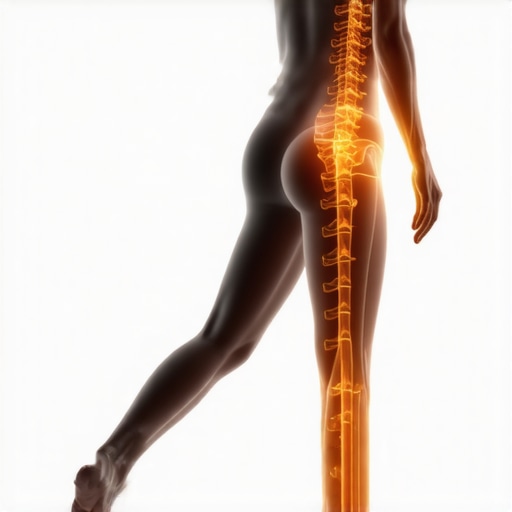
The Rib Cage Rotation Secret
Your spine is designed to rotate, yet we spend all day facing a screen in a fixed, forward position. As you walk, let your shoulders move naturally opposite to your hips. If your left leg goes forward, your right shoulder should naturally come forward too. This ‘counter-rotation’ is the key to wringing out tension. If you feel stuck or ‘blocky,’ it’s a sign you need to restore your back mobility through intentional movement. I remember a session where I finally felt that ‘pop’ of relief not from a manual adjustment, but just from letting my rib cage move freely while strolling through a park after a long day at the desk.
Breathe Into Your Lower Back
Most of us are chest breathers, which keeps our shoulders hiked up. To decompress, you need to send that air down. Every time you take a step, try to expand your lower ribs laterally. If you feel a ‘burning’ sensation in your mid-back while walking, you’re likely holding your breath or wearing shoes that throw off your center of gravity. It might be time to check how to tell if your sneakers are ruining your spinal alignment. Relax into the stride. Let the air move the ribs, which in turn moves the spine, creating a chain reaction of healing that only requires ten minutes of your day.
However, even with the best walking routine, I see people stumble into a very common, very frustrating trap: they try to ‘fix’ the remaining tension by aggressively stretching. We’ve been conditioned to believe that if something feels tight, we must pull on it until it gives up. But here is the nuance that many beginners miss—your brain often makes muscles feel tight as a protective mechanism. If you ignore that signal and force a stretch, you’re not helping; you’re effectively trying to win a tug-of-war against your own nervous system. This is specifically why stretching your hamstrings wont fix your lower back pain if the root cause is neural tension or spinal instability. In fact, for many, those long, static holds are the very thing keeping them in a cycle of inflammation.
Stop Pulling on Your Hamstrings to Save Your Back
In my years of studying movement, I’ve found that the ‘tight hamstring’ sensation is often a secondary symptom of a pelvis that is out of alignment. If your pelvis is tilted incorrectly, it puts those muscles on a constant stretch. Cranking on them further just irritates the sciatic nerve. Instead of reaching for your toes, you should focus on how to restore your back mobility through gentle, functional movements that don’t trigger the body’s alarm bells. I used to be the guy who spent twenty minutes every morning doing deep stretches, only to wonder why I was still reaching for the medicine cabinet by noon. I eventually realized that why taking ibuprofen for every back ache is not a solution; it was just masking the fact that my stretching was actually causing micro-trauma.
The Nerve Tension Trap Most People Ignore
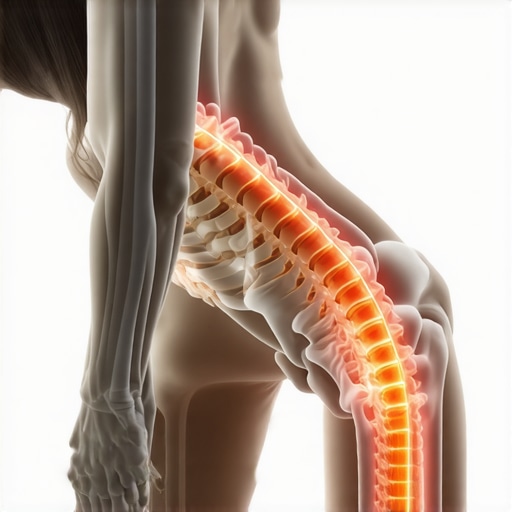
There is a massive difference between a tight muscle and a ‘tethered’ nerve. If you feel a sharp, zingy sensation when you stretch, that isn’t ‘good’ pain. That’s your nerves screaming for space. This is where most people go wrong—they treat their nerves like rubber bands. When a nerve is irritated, it needs ‘flossing,’ not stretching. Learning the nerve gliding exercise to calm down sciatica is a game-changer for those who feel like they’ve tried everything. It’s about movement without tension. Have you ever fallen into this trap of over-stretching when you were already in pain? Let me know in the comments.
Why does my back still throb after I finish my ‘perfect’ yoga session?
This is a question I get from the most active people I know. They are fit, flexible, and dedicated, yet they are still in pain. The hidden truth is that why your yoga flow might be stressing your sacroiliac joint often comes down to hypermobility in the wrong places. If your spine is too ‘bendy’ in the lower lumbar region but stiff in the upper back, your lower vertebrae take the brunt of every pose. It’s not about how deep you can get into a pose; it’s about having the stability to support your weight once you get there. This is a sophisticated nuance that requires moving away from ‘more is better’ toward ‘precision is everything.’ According to a study published in the Journal of Orthopaedic & Sports Physical Therapy, aggressive static stretching may actually trigger protective muscle guarding rather than releasing tension, highlighting the need for neurological calming before physical lengthening.
Once you’ve moved past the acute stage of firefighting your pain, the focus has to shift toward sustainability. I’ve learned the hard way that a single 10-minute walk won’t save you if the other 23 hours of the day are spent in a literal slouch-fest. This is where the morning spinal hygiene routine every desk worker needs becomes your secret weapon. It’s not a workout; it’s a way to ‘brush’ your joints before the day’s stress accumulates. I personally use a simple lacrosse ball for trigger point release—specifically on my glutes—because it targets depth that a foam roller just can’t reach. If you’ve never tried it, learning how to use a massage ball to release hip flexor tension is a great place to start, as those tight hips are often the silent culprits pulling your pelvis out of whack.
Upgrade Your Foundation with Smarter Gear
The tools you choose can either support your progress or actively undermine it. For years, I wore heavily cushioned sneakers, thinking they were ‘saving’ my joints. In reality, they were masking my poor gait and weakening my feet. Now, I look for shoes with a wide toe box and a zero-drop sole to ensure my weight is distributed naturally. If you’re curious about making the switch, understanding how to tell if your sneakers are ruining your spinal alignment is a vital first step. I also recommend a high-quality massage gun, but only if you know the limits; you have to learn how to use a massage gun on your lower back safely to avoid bruising the very nerves you’re trying to soothe. 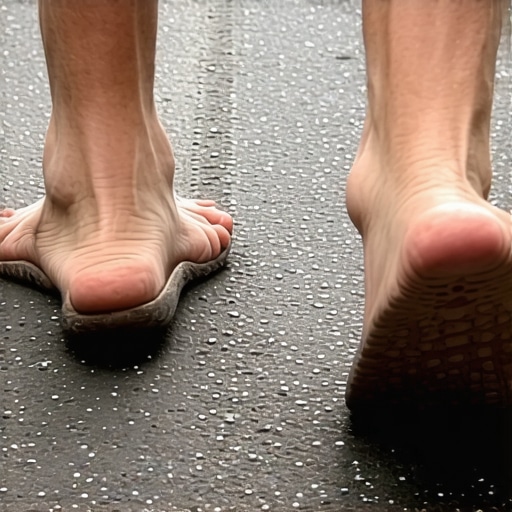
How do I keep my spine feeling this good forever?
Consistency is the boring, unsexy answer that actually works. You have to stop viewing mobility as a destination and start seeing it as a relationship. Dr. Stuart McGill, a world-renowned spine biomechanics expert and author of Back Mechanic, points out that the goal isn’t just ‘flexibility,’ but rather ‘stiffness’ in the right places—specifically the core—to protect the discs. This is why back pain recovery how chiropractic care transforms lives; it’s about recalibrating that balance between stability and movement. I predict that the next decade of spinal health will be defined by smart-fabrics—clothing with embedded sensors that gently buzz your shoulder when you start to slump, providing the kind of real-time bio-feedback that even the best chiropractor can’t give you 24/7.
Watch Your Feet to Save Your Back
The hidden link between your foundation and your neck is stronger than you think. If your arches collapse, your knees rotate in, your hips tilt, and eventually, your upper back has to compensate. This chain reaction is how your foot arch affects your lower back pain in a way that most people ignore until it’s too late. To scale your results, start paying attention to your stand-still posture just as much as your walking gait. If you’re ready to take the next step, I encourage you to try one advanced tip: for the next three days, focus entirely on your ‘toe-off’ phase while walking. Ensure you are pushing through your big toe rather than letting your foot roll lazily. This small tweak engages the posterior chain and provides the most effective neck and back discomfort relief by naturally aligning the pelvis.
Hard Truths About Mobility That I Learned the Long Way
One of the biggest shifts in my mindset was realizing that resting my back into submission simply wasn’t working. If you want to enhance mobility naturally with chiropractic care and movement, you have to accept that your body is a dynamic system, not a static one. Here are the lightbulb moments that finally clicked for me:
- Pain is often a signal of weakness elsewhere, not just a sign of local damage. When my lower back flared up, the culprit was usually my locked-up rib cage.
- Consistency beats intensity every single time. That daily ten-minute walk did more for my disc health than any expensive massage ever could.
- You cannot out-stretch a lifestyle that lacks variety. If you only move in one plane at a desk, your spine will eventually protest regardless of how many hamstrings stretches you do.
How I Keep My Back From Revolting on Long Days
Building a pain-free life requires a small toolkit of reliable resources that support your structural health between walks. I personally swear by these methods to stay supple:
- Lacrosse Ball Trigger Point Therapy: This is my secret weapon for loosening up glutes and hip flexors after a long flight or a day at the computer. It provides the deep pressure that a standard foam roller often misses.
- Minimalist Footwear Transition: Moving toward shoes that allow for natural toe splay helped me fix the foundation of my gait. It is a slow process, but it is worth the effort to ensure your feet aren’t sabotaging your spine.
- Professional Alignment Check-ins: There is no substitute for an expert who can spot the subtle shifts in your pelvis before they become full-blown spasms. I have seen firsthand how revitalizing your mobility through proven strategies is much faster with professional guidance.
#IMAGE_PLACEHOLDER_E#
Take Back Your Movement Today
You don’t need a miracle to stop the thumping ache in your lower back; you just need a better relationship with gravity. Start with your ten minutes tomorrow morning. Focus on your breath, let your arms swing naturally, and trust that your body is built to move. By choosing intentional movement over sedentary protection, you are giving your spinal discs the room they need to stay hydrated and healthy. Reclaiming your comfort isn’t about one big fix, but about the small, rhythmic choices you make every day. Which part of your walking gait feels the stiffest right now—your hips or your shoulders? Let me know in the comments below!