Why Your Pelvic Floor Might Be the Secret to Solving Back Pain
I was leaning over the sink, just brushing my teeth, when it happened—a sharp, lightning-bolt of a spasm that pinned me to the cold marble counter. I couldn’t even stand back up to spit. At thirty-four, I felt like my body was eighty. I’d spent thousands on ‘miracle’ mattresses and even tried inversion tables for disc health, but the relief was always fleeting. It wasn’t until I stopped looking at my spine as a separate pillar and started looking at the ‘basement’ of my core—the pelvic floor—that things finally clicked. Today, we’re going to stop chasing the symptoms and start fixing the actual foundation so you can reclaim your movement once and for all. Have you ever had your back ‘go out’ while doing something completely mundane?
Stop Obsessing Over Your Lumbar Spine Alone
For the longest time, I made a massive mistake that I see people making every single day: I assumed my lower back was ‘weak,’ so I tried to ‘armour’ it. I did hundreds of crunches, thinking that a rock-hard abdomen was the ultimate shield. I was dead wrong. By over-tightening my superficial abs, I was actually creating a pressure cooker effect that shoved my internal tension downward, overwhelming my pelvic floor and leaving my spine completely unstable. According to research in the Journal of Women’s Health Physical Therapy, nearly 95% of people with chronic low back pain also have some form of pelvic floor dysfunction, regardless of their gender. It’s the literal floor of your core; if it’s too tight or too weak, your back muscles have to work overtime. You might even find that tailbone pain after sitting is the first red flag you’ve been ignoring.
Is this pelvic floor stuff actually worth the hype for back pain?
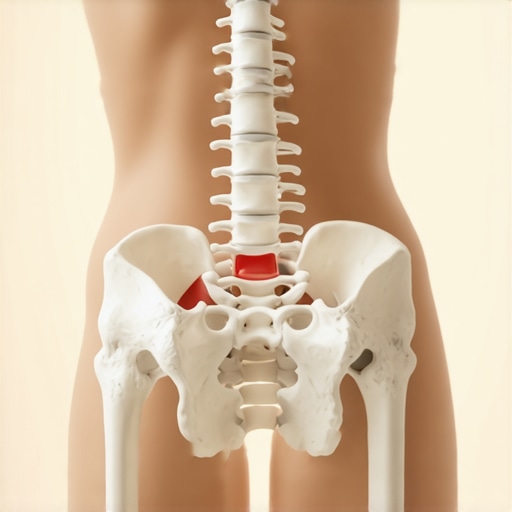
You might be skeptical. I certainly was. I thought this was just for post-partum recovery or people with ‘leakage’ issues. But your pelvic floor acts like a muscular hammock that supports your organs and stabilizes your SI joint. If that hammock is frayed or locked tight, your back muscles have to pull double duty just to keep you upright. This is why your pelvic floor matters for spinal stability more than any fancy ergonomic chair. When that system fails, even picking up a laundry basket becomes a dangerous game. We need to move beyond the ‘just stretch it’ mentality and understand how to engage the deep stabilizers that actually hold us together. In the next few sections, I’m going to show you how I stopped the cycle of spasms by doing the exact opposite of what I thought I should be doing.
Reset Your Internal Pressure Canister
To fix a crumbling house, you don’t start by painting the attic; you go into the crawlspace and check the concrete. Your core is no different. If you want to stop the cycle of pain, you have to treat your torso like a pressure canister. When you breathe, that canister should expand in 360 degrees. Most of us are ‘chest breathers,’ which keeps our sympathetic nervous system on high alert and our lower back muscles locked in a protective ‘guarding’ state. This is why many people find that relieving neck and back discomfort using these expert methods starts not with a stretch, but with a breath. When the diaphragm and pelvic floor don’t move in sync, the pressure has nowhere to go but out against your sensitive spinal nerves.
Breathe Into the Space Where It Hurts
The first step I had to master was learning how to breathe into your lower back to reduce muscle spasms. Imagine your lower torso is a balloon. When you inhale, you aren’t just pushing your belly out—you are trying to push your breath into your back pockets. I remember standing at the kitchen sink three months into my journey, realizing the specific reason your lower back hurts after washing dishes is often because you’ve stopped breathing into your ‘basement.’ By sending air deep into the pelvic floor, you create internal support that pushes back against the spine from the inside out. I felt that familiar tightness creeping up—the warning shot before a spasm—and instead of panicking, I dropped my tailbone and sent a deep breath right into my sacrum. The tension didn’t just fade; it felt like a structural column was finally put back in place. 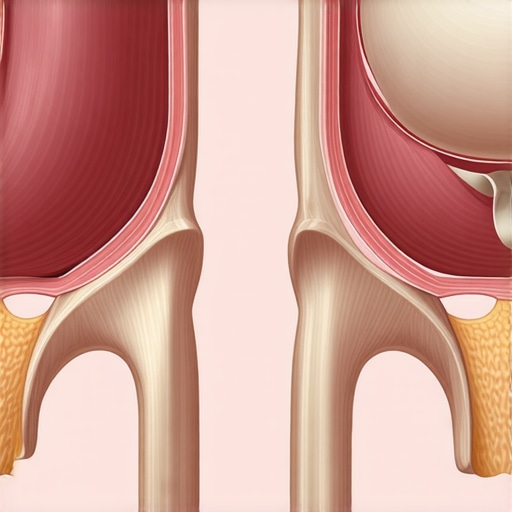
The Subtle Shift That Saves Your SI Joint
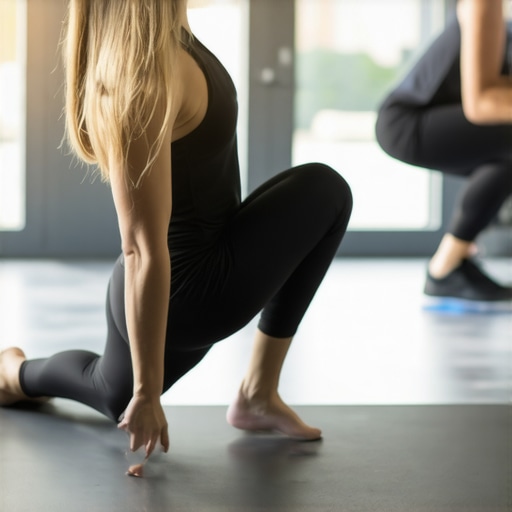
Once you’ve mastered the breath, you need to find ‘neutral.’ Most people either arch their back like a startled cat or slump like they’re melting into a couch. Neither is stable. Using the pelvic tilt trick for instant lumbar relief allows you to find that sweet spot where your vertebrae aren’t grinding against each other. It’s a tiny, one-inch movement of the hips, but it acts like a reset button for your nervous system. When I first tried this, I realized I had been walking around with my pelvis tilted so far forward that my lower back was doing all the work of my hips. This simple recalibration is the secret to mobility mastery and back pain prevention because it stops the ‘hinge’ effect that wears out your L5-S1 disc.
Teaching Your Limbs to Move Independently
Traditional ‘core’ exercises like crunches often do more harm than good by putting excessive shear force on your discs. Instead, I switched to the dead bug variation that actually fixes lower back instability. This move forces your limbs to move while your spine stays completely still—the literal definition of stability. In the beginning, I could barely move my leg three inches without my back arching off the floor. It was a wake-up call. It showed me that my ‘global movers’ (my big abs) were strong, but my ‘local stabilizers’ were totally asleep. As these muscles started communicating, my recovery accelerated. You can’t have a stable spine if your legs are pulling it out of alignment every time you take a step. This is also closely tied to why your glutes won’t fire; if the back is rigid, the hips can’t work. By isolating these movements, you stop the ‘tug-of-war’ happening in your midsection.If you’ve been aggressively stretching your hamstrings and lower back for months with zero progress, you’re likely falling into the tension vs. shortness trap. In the clinical world, we differentiate between a muscle that is physically short and one that is neurally tight. Most chronic back pain sufferers aren’t actually tight; their muscles are in a state of protective guarding. When you pull on a muscle that is already overextended—like your hamstrings when your pelvis is tilted—you aren’t helping. You’re actually triggering a stretch reflex that makes the muscle tighten further. This is exactly why your foam roller might be hurting your lower back instead of helping it. Most people roll their lumbar spine directly, which pushes the vertebrae into extension and irritates the very facet joints that are already inflamed. Have you ever fallen into this trap? Let me know in the comments.
Stop Stretching Your ‘Tight’ Lower Back
The most common mistake I see in my clinic is the obsession with loosening up. We’ve been conditioned to believe that if something feels stiff, we must pull on it. However, if your spine is unstable, your brain will lock down the surrounding muscles to prevent a catastrophic injury. Stretching those muscles is like cutting the safety cables on a bridge. Instead of relief, you get more instability. This is a nuance often missed in basic guides, but effective neck pain management and back recovery require identifying whether you need more mobility or more stability. According to a study in the Journal of Biomechanics, spinal stability depends on a stiffening mechanism that shouldn’t always be stretched away.
Your Foam Roller Might Be Wrecking Your Progress
While we’re on the subject of self-treatment, we need to talk about the foam roller. It’s a great tool for your quads and lats, but using it on your lumbar spine is a massive oops. Your lower back is naturally in a state of lordosis (a forward curve). When you lay your full weight on a roller in that area, you’re forcing the joints into an even deeper, more compressed curve. If you have any underlying disc issues, this is a recipe for a flare-up. Even if you have the best setup, why your perfect office chair is still making you slouch often comes down to this kind of localized irritation that makes your body want to curl into a protective ball. 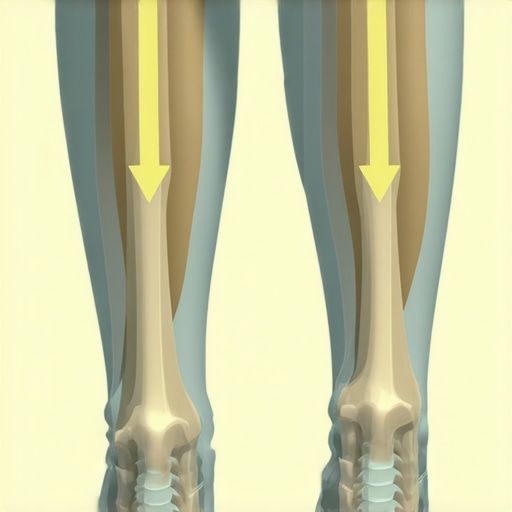
Why does your neck scream when the real issue is in your feet?
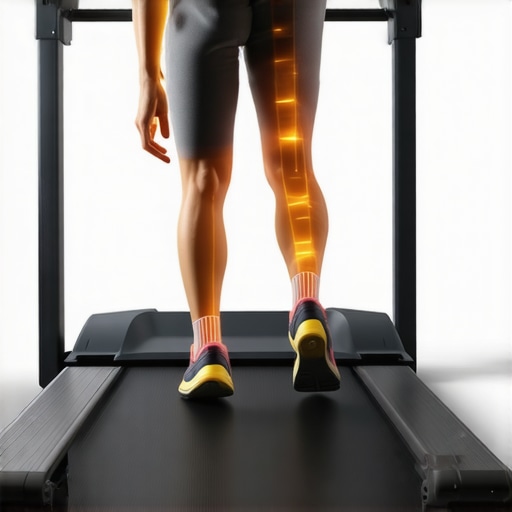
This is the ultimate hidden nuance of spinal health: the kinetic chain. Your body is a single, continuous system from your toes to your skull. If your arches are collapsing or you have a stiff big toe, your gait changes. That change travels up to your knees, rotates your hips, and eventually forces your neck to compensate just to keep your eyes level with the horizon. This is the hidden link between neck pain and spinal health that most people ignore. It’s also why we look at your feet to solve your neck issues. Real expertise means looking at the person, not just the painful spot. You can’t fix a crooked roof without looking at the foundation.Maintaining your progress isn’t about doing a grueling sixty-minute routine every morning; it’s about ‘spine hygiene.’ I learned this from Dr. Stuart McGill, a world-renowned biomechanics expert who literally wrote the book on Back Mechanic. He argues that we often undo all our rehab work by how we brush our teeth, put on our socks, or sit at dinner. If you want to revitalize your mobility, you need to audit your environment and the tools you use daily.
Build a Personal Recovery Toolkit That Actually Works
I stopped buying every ‘as seen on TV’ gadget and narrowed it down to three things: a high-quality massage gun, a lacrosse ball, and a lumbar roll for the car. Most people mess up the execution, though. For instance, knowing how to use a massage gun on your lower back safely means never actually touching the vertebrae or the kidneys. I use it on my hip flexors and glutes to release the tension that is pulling on my pelvis. When I feel a knot between my ribs, I skip the fancy rollers and use a tennis ball to fix that spot under your shoulder blade. The targeted pressure provides a neurological release that broad rollers just can’t match. It’s about precision over power.
How do I maintain my spinal health over time?
The secret is micro-dosing movement. You can’t sit for eight hours and expect a gym session to fix you. I live by the 20-20-20 rule for desk workers, but I’ve modified it for my spine. Every twenty minutes, I stand up and perform the Bruegger’s relief move. This reverses the ‘internal rotation’ we get from typing. It’s about how to stay mobile when you have a desk job without needing a dedicated gym. I also make sure my environment supports me; I learned how to adjust your monitor to avoid eye and neck strain early on, and it was a game-changer for my daily headaches. 
Why Your Massage Gun is Probably Just a Paperweight
If you are only using tools when you are in pain, you’ve already lost. I use my massage gun as a ‘pre-hab’ tool before my morning walk or a round of golf. By waking up the glutes, I ensure they are doing the work of propelling me forward, rather than my lower back muscles taking over. This is critical for restoring your range. I’ve found that using the gun on the bottoms of my feet—the plantar fascia—actually loosens my hamstrings and lower back more effectively than stretching ever did. It sounds crazy, but the fascia is all connected in one continuous line.
The Next Frontier of Human Movement
Looking ahead, I predict a massive shift toward wearable biofeedback. We are moving away from ‘dumb’ foam rollers and toward smart apparel that tracks your spinal alignment in real-time. Imagine a shirt that gently vibrates when your shoulders round or your pelvic floor disengages. Until then, you have to be your own biofeedback loop. If you want to regain full mobility after injury, start today by picking one ‘trigger’—like a red light or a phone notification—and use it as a cue to check your pelvic tilt. Try this right now: stand up, tuck your tailbone slightly, and take three deep breaths into your back pockets. That’s the foundation of a pain-free life.
Why the Spot That Hurts Is Rarely the Problem
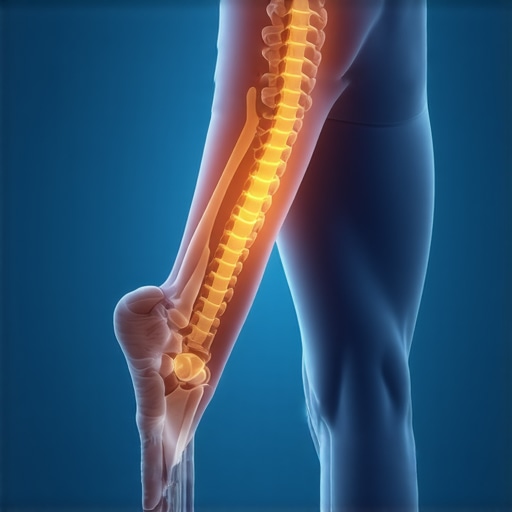
For years, I made the mistake of thinking my lower back was the villain. Every time it flared up, I attacked it with heat, ice, and stretches, only to have the pain return like clockwork. The biggest ‘lightbulb moment’ of my recovery was realizing that the pain is just the messenger. If your spine is constantly screaming, it’s usually because the structures below it—the hips and pelvic floor—have gone silent. I had to learn that understanding back pain means looking at how your body distributes load. If you don’t address the ‘canister’ pressure we discussed earlier, you’re essentially trying to build a house on a swamp. Another hard lesson? Stretching isn’t always the answer. In fact, if you have a hypermobile SI joint, more stretching is the last thing you need. Sometimes, the most ‘advanced’ thing you can do is boost mobility and ease pain by simply doing less and stabilizing more.
The Three Tools I Keep in My Daily Spinal Survival Kit
I’ve wasted plenty of money on gadgets that promised to fix my posture in five minutes. Most of them are gathering dust. However, there are a few essentials that I swear by for long-term health. First, I never go on a road trip without knowing how to use a rolled-up towel to fix your car’s lumbar support; it’s a simple mechanical fix that prevents the ‘slump’ that leads to spasms. Second, I prioritize functional movement patterns like the dead bug over traditional crunches to keep my core active without compressing my discs. Finally, I’ve found that the most consistent results come when I enhance mobility naturally with chiropractic care. These sessions aren’t just about ‘cracking’ joints; they are about resetting the neurological feedback loop between my brain and my body so I can move with confidence again.
Your Next Move for a Spine That Doesn’t Give Out
You only get one spine, and it has to carry you through every decade of your life. The goal isn’t just to stop the pain you feel today, but to build a body that is resilient enough to handle whatever life throws at it—whether that’s a long day at a desk or picking up a grandchild. By integrating these neck and back pain solutions into your daily life, you’re shifting from a reactive mindset to a proactive one. You’re no longer a victim of your ‘bad back’; you’re the architect of your own mobility. Start small, breathe deep into your ‘basement,’ and listen to what your body is trying to tell you. #IMAGE_PLACEHOLDER_E# Have you ever noticed that your back pain flares up during times of high stress, or do you find it’s purely physical? Let me know in the comments below.